 Thursday, October 08, 2026
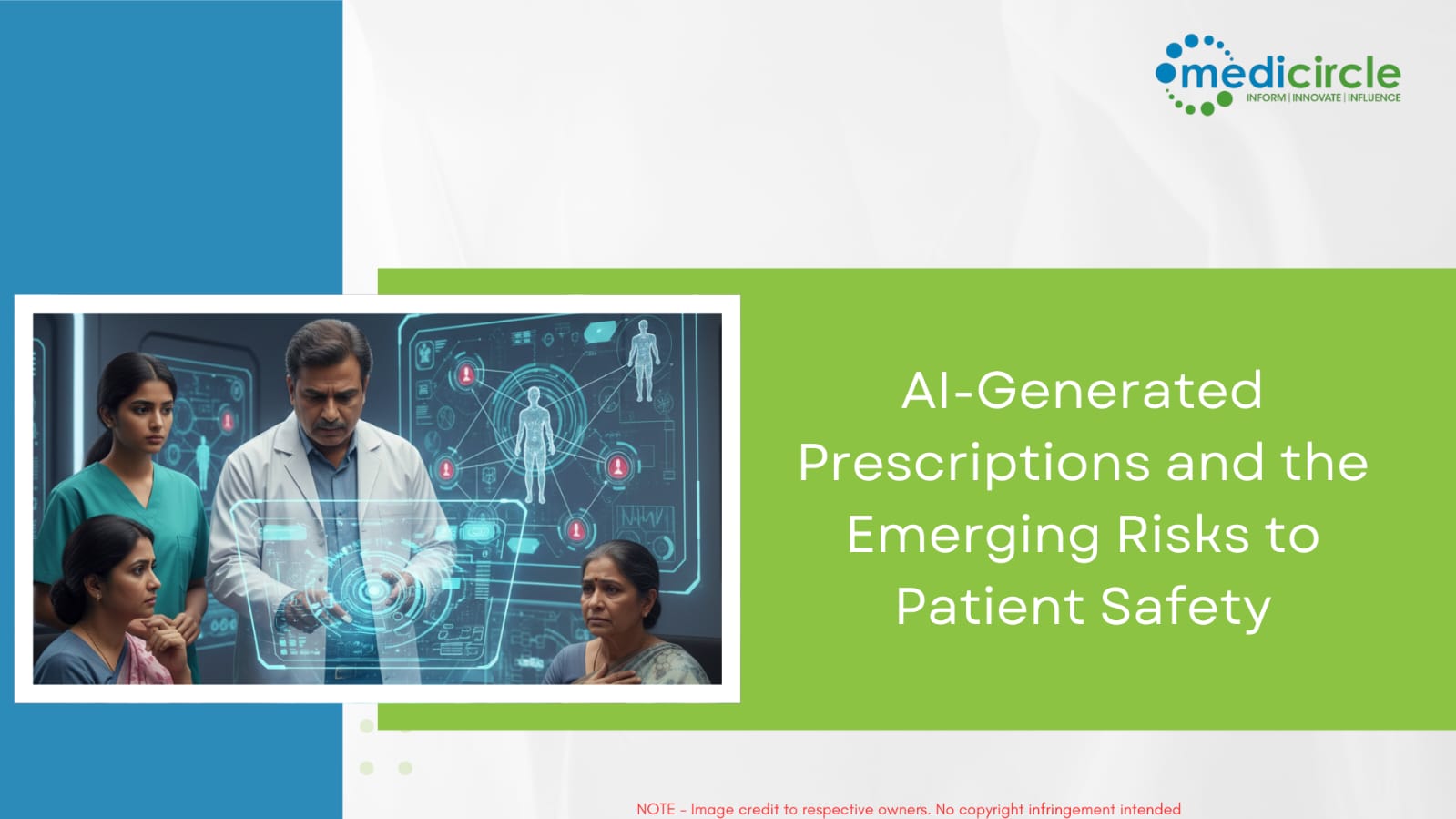
 The rise of AI-made prescriptions is a test of how seriously we value medical ethics, patient safety, and professional accountability in a digital age.




A prescription has always carried weight. It is more than ink on paper or text on a screen. It represents clinical judgment, responsibility, and a relationship of trust between a doctor and a patient. For decades, that trust has been the thin line separating healing from harm. Today, that line is being blurred by intelligent machines that were never meant to play doctor.
Artificial intelligence has entered Indian healthcare with promise. Faster reporting, smarter diagnostics, better workflow management, improved access to health information. Yet somewhere along this rapid digital march, a dangerous shortcut has emerged. AI systems are now being used to generate prescriptions that look authentic enough to unlock restricted medicines, without a doctor ever being involved. What appears convenient on the surface is, in reality, a slow erosion of one of medicine’s most critical safeguards.
Machines can imitate medical language, but they cannot practice medicine. They do not examine patients. They do not understand nuance. They do not carry legal or ethical accountability. And yet, their outputs are being treated as medical authority.
India already walks a fine line when it comes to prescription discipline. Self-medication is deeply ingrained, pharmacies are often overburdened, and digital medicine delivery has grown faster than regulatory clarity. In such an environment, AI-generated prescriptions act like fuel poured on a smouldering fire. They make it easier to skip consultations, bypass clinical judgment, and treat powerful drugs as routine consumer products.
Restricted medicines exist for a reason. Antibiotics, sedatives, psychiatric drugs, opioid-based painkillers, and steroid combinations can cause harm when used incorrectly. Doses matter. Duration matters. Interactions matter. An AI system has no way of knowing whether a patient is pregnant, diabetic, allergic, already on conflicting medication, or struggling with an undiagnosed condition. A real doctor pauses, probes, and adjusts. An algorithm simply responds.
The danger is not hypothetical. Improper antibiotic use is already pushing India deeper into the crisis of antimicrobial resistance. Every unnecessary or incomplete antibiotic course strengthens bacteria that medicine may soon fail to defeat. AI-generated prescriptions make it frighteningly easy to obtain these drugs repeatedly, often for viral illnesses where antibiotics offer no benefit at all. What looks like personal convenience today becomes collective vulnerability tomorrow.
The same risk applies to psychiatric medications. Anxiety, insomnia, low mood, and stress are deeply human experiences, but they are not interchangeable medical diagnoses. Treating them without evaluation can mask deeper issues, worsen symptoms, or create dependency. When AI outputs are mistaken for medical advice, patients may unknowingly step onto long-term treatment paths they never needed, without monitoring or support.
Online medicine delivery platforms and quick-commerce pharmacies, though designed to improve access, unintentionally magnify this problem. Speed has become the selling point. Verification often becomes a formality rather than a safeguard. In this ecosystem, a convincing-looking digital prescription, regardless of its origin, can sometimes be enough to trigger a sale. The system was not built with AI misuse in mind, and that gap is now visible.
Doctors, meanwhile, are left dealing with the consequences. Patients arrive with complications, side effects, drug interactions, and partial treatment histories. Time is lost undoing damage that could have been avoided with a proper consultation. Trust is strained when patients believe a machine’s recommendation should carry the same weight as a clinician’s expertise.
It is important to be clear that this is not an argument against artificial intelligence in healthcare. Used correctly, AI can support doctors, improve diagnostics, and reduce administrative burden. The problem arises when AI crosses the invisible boundary between assistance and authority. Writing a prescription is not clerical work. It is a clinical act.
Technology should amplify medical judgment, not replace it. An AI system can flag drug interactions, suggest guidelines, or help analyse data, but the final decision must rest with a trained professional who understands context, risk, and responsibility. Anything less turns healthcare into a transactional service rather than a human one.
Patients, too, play a role in this unfolding story. The temptation to avoid waiting rooms, consultation fees, and uncomfortable conversations is understandable. But health shortcuts often come with hidden costs. A pill taken without guidance may silence symptoms temporarily while allowing disease to progress silently. Relief today can translate into regret later.
What is urgently needed is a reset of boundaries. Digital prescriptions must be tied to verified medical practitioners through secure systems that cannot be imitated by text generators. Pharmacies, both physical and online, must treat prescription validation as a clinical responsibility rather than a logistical hurdle. Regulators must move faster than misuse, not behind it.
Public awareness is equally critical. People need to understand that AI-generated text, no matter how polished, is not medical care. A prescription without a doctor is not innovation; it is risk disguised as efficiency. Health literacy must include digital caution, not blind trust in technology.
India stands at a junction where healthcare innovation and patient safety must grow together. If one outruns the other, the system weakens. The rise of AI-made prescriptions is a test of how seriously we value medical ethics, patient safety, and professional accountability in a digital age.
Medicine has always evolved with tools. Stethoscopes, scanners, software, and now algorithms. But one principle must remain untouched: treatment decisions belong in human hands, guided by knowledge, empathy, and responsibility. When machines start writing prescriptions, it is not progress knocking at the door. It is a warning.
And the cost of ignoring that warning will not be paid in data points or debate, but in real patients, real harm, and a healthcare system struggling to regain trust it never should have lost





.jpeg)








.jpg)
.jpg)
.jpg)
.jpg)
.jpg)
.jpg)


.jpg)
.jpg)
.jpg)