 Wednesday, November 18, 2026
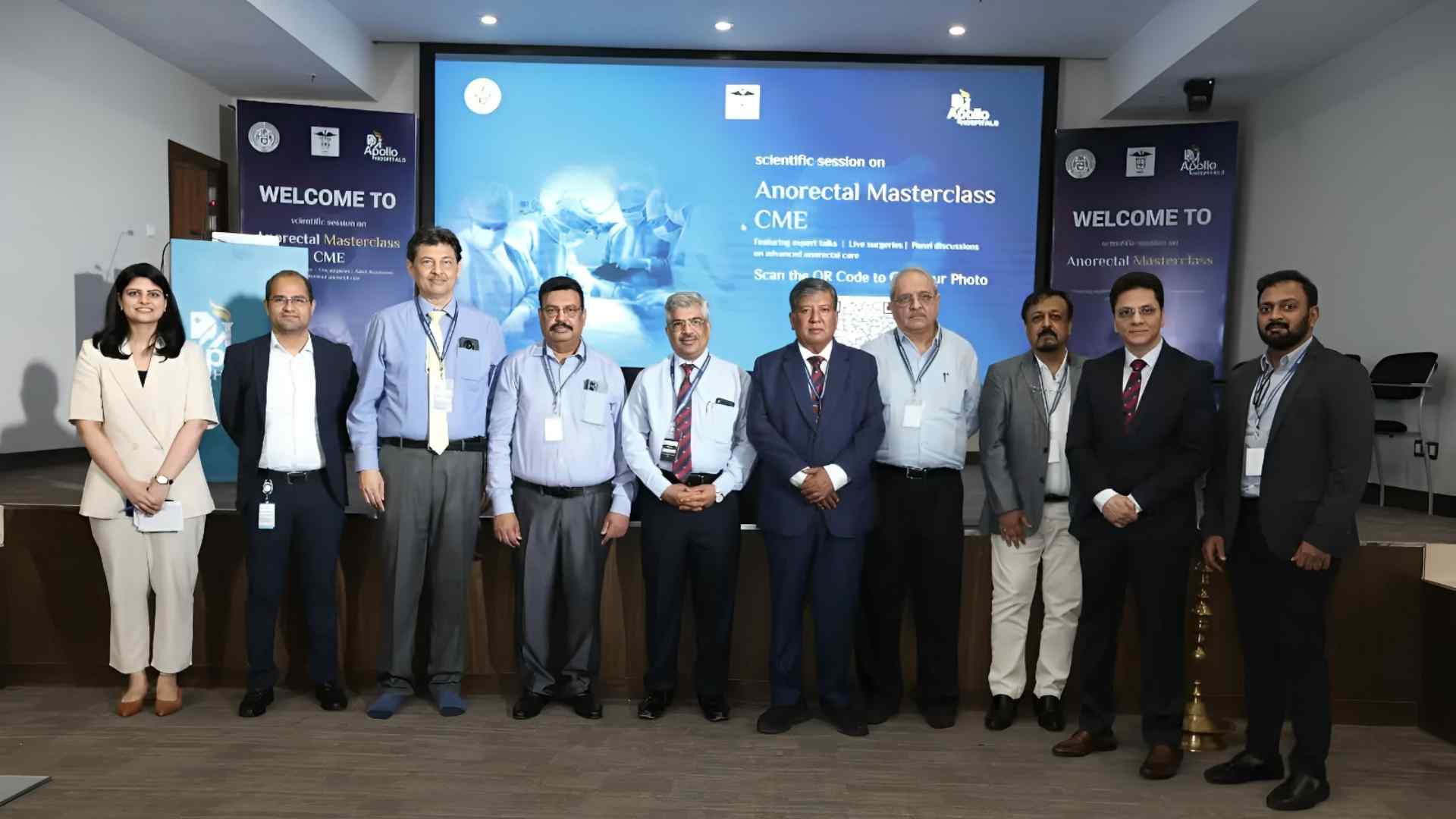
 More than 300 surgeons, gastroenterologists and postgraduate medical students from Mumbai, Navi Mumbai and across Maharashtra converged at Apollo Hospitals Navi Mumbai for the Anorectal Masterclass CME 2026, organised in association with the Association of Colon and Rectal Surgeons of India (ACRSI) and the Navi Mumbai Surgical Society (NMSS).





Mumbai, June 24, 2026: More than 300 surgeons, gastroenterologists and postgraduate medical students from Mumbai, Navi Mumbai and across Maharashtra converged at Apollo Hospitals Navi Mumbai for the Anorectal Masterclass CME 2026, organised in association with the Association of Colon and Rectal Surgeons of India (ACRSI) and the Navi Mumbai Surgical Society (NMSS).
The day-long academic programme featured expert lectures, panel discussions and multiple live surgeries demonstrating advanced procedures for common yet often neglected anorectal conditions such as haemorrhoids (piles), fissures, fistulas and pilonidal sinus disease.
The CME was organised under the leadership of Dr Nitish Jhawar, Senior Consultant General, Laparoscopic and Robotic Surgeon, Apollo Hospitals Navi Mumbai, and brought together some of the country's leading colorectal surgeons, Dr Kushal Mital, President of the Association of Colon and Rectal Surgeons of India (ACRSI), Dr Roy Patankar, Dr Parvez Shaikh, Dr Niranjan Agarwal and several other distinguished faculty members. International expert Dr Surinder Mantoo, Colorectal Surgeon from KTPH, Singapore, joined the scientific programme virtually.
The conference showcased live surgeries on fissure in ano, haemorrhoids, fistula and pilonidal sinus, enabling participants to observe advanced techniques such as Laser Haemorrhoidoplasty, MIPH (Stapler Haemorrhoidopexy), Laser Pilonidal Sinus, Laser Piles and Bascom cleft lift procedures.
Speaking on the occasion, Dr Nitish Jhawar said "Anorectal disorders affect millions of people and significantly impact quality of life. However, social stigma and lack of awareness often delay treatment. This masterclass aimed to provide surgeons with the latest evidence-based knowledge and minimally invasive surgical approaches that ensure faster recovery and improved outcomes for patients."
The scientific sessions also focused on imaging in anorectal sepsis, management of anorectal abscesses, open and closed haemorrhoidectomy, Botox therapy for fissures, and discussions on complex complications in anorectal surgery.
With sedentary lifestyles, changing dietary habits and rising prevalence of colorectal disorders, experts stressed the importance of early diagnosis and timely intervention. They also highlighted the growing role of minimally invasive and laser-based techniques in reducing pain, shortening hospital stays and enhancing patient recovery.
Commenting on the success of the programme, Dr Kiran Shingote, COO & Unit Head, Apollo Hospitals Navi Mumbai, said "Apollo Hospitals Navi Mumbai remains committed to fostering medical excellence through continuous learning and collaboration. By bringing together eminent experts and facilitating exchange of advanced surgical knowledge, we are strengthening colorectal care and improving access to world-class treatment for patients in the region."
The Anorectal Masterclass CME received an overwhelming response from the surgical fraternity and was awarded MMC credit points, underscoring its significance as an important academic platform for colorectal surgeons and healthcare professionals.





-23-300x250.png)





















