 Thursday, October 08, 2026
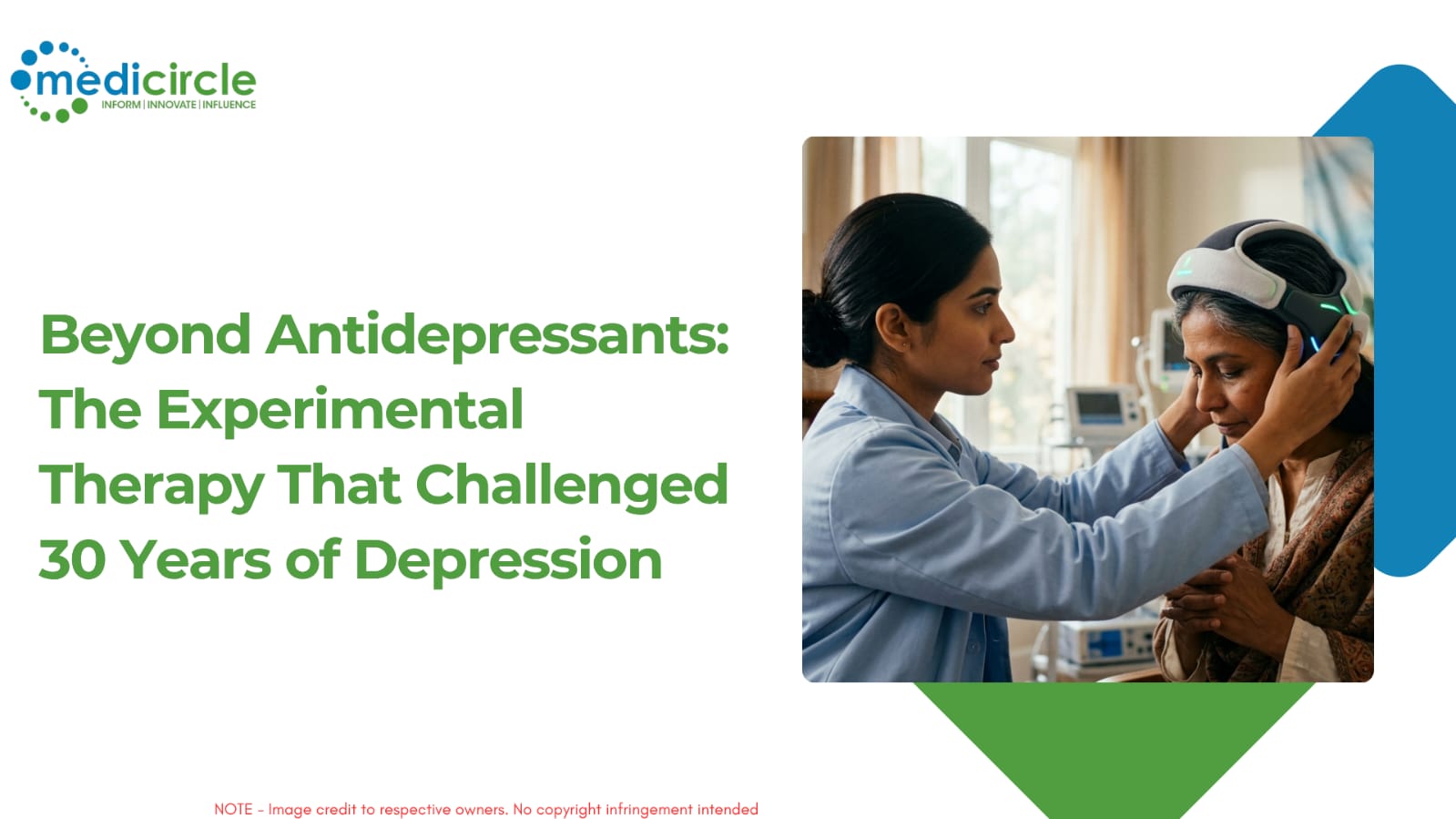
 The idea that the brain can be guided out of its most painful patterns through personalized neural intervention represents a fascinating shift in psychiatric thinking.




For millions of people living with depression, hope often arrives in the form of a new prescription. A new pill, a new therapy, a new attempt at relief. Yet for a large number of patients, these efforts slowly run out. Doctors try different medicines, adjust doses, add therapies, recommend procedures. Months turn into years. In some tragic cases, years turn into decades.
Eventually a painful sentence enters the conversation: there may be nothing left to try.
This is the difficult reality of treatment-resistant depression, one of the most challenging conditions in modern psychiatry. Around the world, a significant portion of patients diagnosed with major depressive disorder do not respond adequately to standard treatments. Antidepressant drugs, psychotherapy, and even advanced procedures such as electroconvulsive therapy can fail to provide meaningful relief.
For those patients, depression becomes more than a medical condition. It becomes a life that feels permanently overshadowed by emotional exhaustion, numbness, and persistent despair.
Against this bleak background, a remarkable medical case reported in August 2025 has begun attracting attention within the scientific community. The case involves a man who spent more than three decades living with severe depression that resisted every known treatment. For years, doctors tried medication after medication, therapy after therapy, procedure after procedure. Nothing produced lasting improvement.
An experimental approach involving personalized brain stimulation has now offered a glimpse of something many experts once believed impossible: a measurable and sustained recovery after decades of suffering.
The story begins with a 44-year-old patient whose mental health journey started in childhood. By his early teenage years, symptoms of depression had already begun to take hold. Over time the illness deepened, eventually merging with other conditions such as post-traumatic stress disorder and panic disorder.
Unlike the typical pattern of depression, where episodes come and go, this patient’s experience was different. Researchers later described his illness as a long and uninterrupted depressive state. There were no meaningful breaks from the emotional darkness.
For more than thirty years, daily life was shaped by persistent sadness, a loss of interest in activities, chronic fatigue, and an inability to experience pleasure. Even simple joys such as conversation, food, or music gradually lost their emotional impact.
Doctors pursued nearly every treatment available in modern psychiatry. Over time the patient tried at least nineteen different psychiatric medications, ranging from common antidepressants to more complex drug combinations. Psychotherapy was attempted in various forms. When medicines failed, doctors moved toward more aggressive interventions.
Electroconvulsive therapy, a procedure that uses controlled electrical stimulation to trigger therapeutic brain activity, was attempted multiple times. While the therapy has helped many patients with severe depression, in this case the benefit was short-lived.
Eventually, each option led to the same disappointing result. Temporary improvement followed by a return to the same emotional emptiness. For many individuals with treatment-resistant depression, this cycle becomes deeply discouraging. The repeated failure of therapies can create a sense that recovery may never arrive.
But in recent years neuroscience has begun exploring a different approach to mental illness. Instead of relying only on medicines that influence brain chemistry, researchers are studying ways to interact directly with the brain’s electrical networks.
The human brain operates through billions of neurons communicating through electrical signals. These signals form complex networks responsible for mood, motivation, memory, and emotional regulation. In conditions such as depression, these networks may begin functioning in abnormal patterns.
If scientists could identify those patterns and gently correct them, the theory suggests that symptoms might improve. This idea led researchers to propose an experimental method known as Personalized Adaptive Cortical Electro-Stimulation, or PACE.
Unlike traditional psychiatric treatments, PACE attempts to tailor brain stimulation to the unique neural activity of each individual patient. Instead of assuming that depression originates from the same brain region in every person, the approach maps how different areas of the brain interact in that particular individual.
In this patient’s case, researchers studied the networks involved in emotional processing, motivation, and decision-making. After detailed analysis, they identified three specific brain regions that appeared to be closely linked to the patient’s depressive symptoms.
These areas included the dorsolateral prefrontal cortex, a region associated with planning and cognitive control; the dorsal anterior cingulate cortex, which plays an important role in emotional awareness; and the inferior frontal gyrus, involved in regulating thoughts and impulses.
To interact with these areas, surgeons implanted very thin electrodes designed to deliver carefully controlled electrical stimulation.
While the idea may sound futuristic, brain stimulation therapies are not entirely new. Similar techniques are already used to treat neurological disorders such as Parkinson’s disease and certain forms of epilepsy. In those conditions, deep brain stimulation has helped many patients regain movement control or reduce seizure activity.
Depression, however, has proven far more complex. Earlier attempts to use brain stimulation for psychiatric conditions produced inconsistent results. Some patients improved dramatically, while others experienced little change. Many clinical trials failed to demonstrate clear benefits across large patient groups.
Researchers suspected that one major reason for these mixed outcomes was the lack of personalization. Traditional stimulation systems deliver electrical signals at fixed intensities and predetermined locations. Yet the brain is not a static organ. Neural activity shifts constantly depending on emotions, thoughts, and environmental stimuli.
The PACE system attempts to address this limitation. Instead of delivering continuous electrical pulses, the device continuously monitors brain signals. When it detects neural patterns associated with deep negative mood, it adjusts stimulation in real time. The goal is to interrupt those patterns and guide brain activity toward healthier states.
In simple terms, the device listens to the brain and responds. This adaptive approach represents a significant step toward what scientists call precision psychiatry. The concept involves designing treatments that match the biological characteristics of each individual patient rather than applying the same therapy to everyone.
For a person who had spent decades trapped in severe depression, the experiment carried enormous significance. Following the surgical procedure and activation of the stimulation system, researchers began carefully monitoring changes in the patient’s emotional state. Improvements did not appear suddenly. Instead, they arrived in small and subtle ways.
Within a few days, the patient began noticing brief moments of renewed awareness. Simple experiences that had long felt emotionally distant started to register again. The taste of food seemed slightly more vivid. Conversations felt more engaging. Sunlight entering through a window appeared strangely meaningful.
To an outside observer, these details might appear insignificant. For someone who had lived with emotional numbness for thirty years, they represented the earliest signs that the brain was slowly reconnecting with the world.
Researchers tracked progress through several methods. The patient kept daily journals describing mood changes and emotional experiences. Standard psychological assessments measured depression severity over time. Cognitive tests evaluated attention, memory, and decision-making ability.
Week by week, gradual improvement continued. Seven weeks after the therapy began, one of the most important changes occurred. The patient reported that suicidal thoughts, which had been present for years, had completely disappeared.
This development alone marked a drastic shift in the course of the illness.
Four months into the treatment, standardized depression rating scales indicated that the patient’s symptoms had decreased by nearly sixty percent. Researchers continued observing his condition for more than two years, and the improvement remained stable.
Such results naturally raise an important question within the medical community: could this technology transform the treatment of severe depression?
For decades, psychiatry has relied heavily on medications that influence neurotransmitters such as serotonin, dopamine, and norepinephrine. While these drugs have helped countless patients, their effectiveness remains limited for a significant percentage of individuals.
Treatment-resistant depression continues to affect millions worldwide. Patients often cycle through multiple medications without achieving long-term recovery. Newer approaches such as ketamine therapy and psychedelic-assisted psychotherapy have generated excitement in recent years. Still even these treatments may not work for everyone.
Brain-based interventions like adaptive stimulation could represent a new frontier. By focusing on the electrical activity of neural networks rather than only on chemical signaling, researchers may gain a deeper understanding of how mood disorders develop and persist. However, it is important to approach this breakthrough with caution.
The study described here involves only a single patient. The findings have not yet undergone formal peer review. Large clinical trials involving many participants will be necessary to determine whether the therapy works consistently.
Medical history contains many examples where early promising results failed to hold up during larger studies. There are also practical challenges. Brain surgery carries risks, even when performed with advanced technology. Implantable stimulation devices are expensive and require careful monitoring. Ethical considerations surrounding neuromodulation therapies must also be addressed.
Despite these uncertainties, the case represents an intriguing proof of concept. It suggests that depression may eventually be treated using methods that directly interact with neural circuits rather than relying solely on pharmaceutical drugs.
For patients who have exhausted every available treatment, such innovation could offer a long-awaited source of hope.
The case also reflects a broader transformation occurring in modern medicine. Increasingly, healthcare is moving toward personalized treatment strategies. Genetic testing, targeted cancer therapies, and precision diagnostics are already reshaping several medical fields.
Psychiatry, which has historically relied on symptom-based diagnosis, may now be entering its own era of biological precision. By analyzing each person’s unique brain activity patterns, doctors may eventually develop therapies that match individual neural profiles.
This vision remains in its early stages, but the implications are profound. Depression is currently one of the leading causes of disability worldwide. According to global mental health statistics, hundreds of millions of people struggle with depressive disorders. The condition affects relationships, employment, education, and overall quality of life.
In severe cases, depression can lead to suicide, making effective treatment a critical public health priority. The possibility that brain-adaptive stimulation could help individuals who have lived with decades of suffering deserves careful scientific exploration.
For the patient involved in this study, the experience has already been transformative. After spending most of his life in an emotional fog, he now describes moments of curiosity, motivation, and connection returning gradually.
The change is neither sudden nor perfect. Depression does not vanish overnight, even with advanced technology. But the difference between endless despair and renewed engagement with life can be enormous.
In many ways, this case reminds us that the human brain still holds many secrets. Mental illness, despite decades of research, remains one of medicine’s most complex challenges. Every new discovery brings the possibility that our understanding of the mind is slowly expanding.
Whether PACE and similar technologies will become widely used treatments remains uncertain. Years of research, clinical testing, and ethical evaluation lie ahead. But the idea that the brain can be guided out of its most painful patterns through personalized neural intervention represents a fascinating shift in psychiatric thinking.
For people living with treatment-resistant depression, the message emerging from this research is powerful. Even after decades of failed treatments, science may still have more answers to discover.






.jpeg)








.jpg)
.jpg)
.jpg)
.jpg)
.jpg)
.jpg)


.jpg)
.jpg)
.jpg)