Tuesday, October 27, 2026
 The idea that heat which is a basic element of nature, can trigger such sophisticated healing is both poetic and powerful. It may well redefine how we think about aging itself.




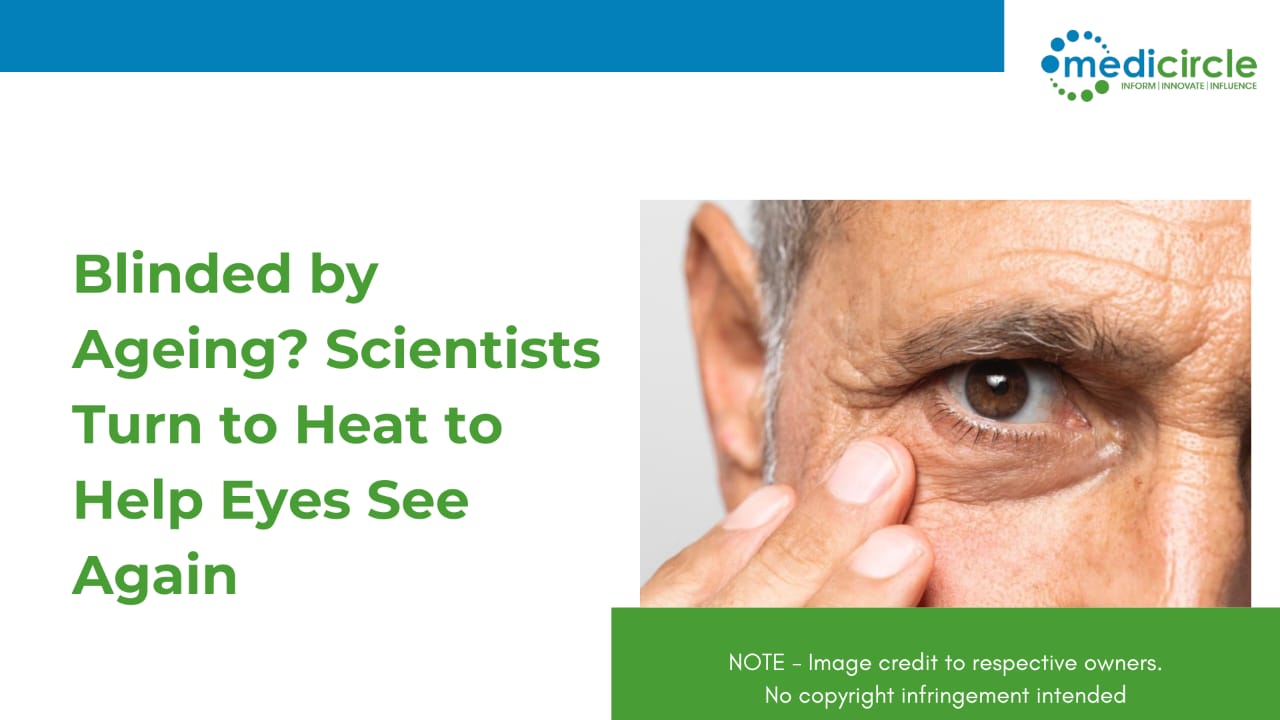
Losing sight is often one of the most feared parts of aging. It starts slowly, blurring what was once clear and vivid. For millions of older adults, that dimming world has a name; age-related macular degeneration, or AMD. It is a silent thief of vision that targets the central part of the retina (macula) making it hard to read, drive, or even recognize familiar faces. Across the globe, AMD has become one of the leading causes of irreversible vision loss, particularly in people over 60. In the United States alone, nearly 20 million adults above 40 live with this condition, and as life expectancy increases, that number continues to rise. Among those over 80, almost one in three faces some form of macular degeneration. The cruel truth, however, is that there is still no effective treatment for its most common form i.e. dry AMD.
But in a small laboratory at Aalto University, Finland, a group of researchers has turned a simple idea into a ray of hope. They have discovered a way to potentially slow down or even stop the early stages of dry AMD using nothing more than controlled warmth. Their approach doesn’t involve complex drugs or invasive surgeries. Instead, it relies on stimulating the eye’s natural repair systems through a gentle application of heat. It sounds almost unbelievable that something as simple as warmth could fight blindness. Yet, science often hides its miracles in simplicity.
Professor Ari Koskelainen, who led the research, explains that as our eyes age, their cellular defenses weaken. The back surface of the eye, known as the fundus, becomes vulnerable to oxidative stress which is a biological rusting process caused by harmful oxygen radicals. These radicals damage essential proteins, causing them to lose shape and clump together. Over time, these damaged proteins mix with lipids, forming fatty deposits called drusen i.e. the earliest sign of dry AMD. As these deposits grow, they disrupt the retina’s ability to process light, slowly stealing away one’s central vision.
The Finnish team’s idea was to use near-infrared light to gently warm the affected retinal tissue. However, the human eye is a fragile organ. Temperatures beyond 45°C can destroy tissue, and it’s almost impossible to measure heat levels safely behind the retina. That challenge could have ended the idea before it began. But the team designed an innovative real-time temperature monitoring system, allowing them to warm the retina precisely by a few degrees which was just enough to activate the body’s natural repair machinery without causing harm.
This heat, though subtle, triggers the production of heat shock proteins, nature’s in-built protectors. These proteins act like skilled repair workers, rushing to refold the misfolded proteins back into shape. When repair is no longer possible, these same mechanisms instruct the cells to recycle the faulty proteins, breaking them down into reusable components.
Yet the body has another, more powerful system for cleaning up deeper damage named autophagy, a process awarded the Nobel Prize in 2016 to Japanese scientist Yoshinori Ohsumi. Autophagy is like a microscopic housekeeping service. It wraps up the cellular waste in a protective membrane and sends it to lysosomes, the cell’s recycling units, where it is digested and cleared away. Professor Koskelainen’s team found that their heat-based therapy doesn’t just activate the heat shock proteins, it also stimulates autophagy, giving the eye a renewed ability to remove toxic protein build-up. “It’s like turning on the body’s natural waste disposal system,” Koskelainen said.
In simpler terms, this treatment reawakens the eye’s self-healing powers, a concept that feels almost futuristic. By restoring these internal processes, the therapy may prevent the gradual clogging and degeneration that define dry AMD.
Animal studies have already given promising results. Trials conducted on mice and pigs demonstrated measurable improvements in retinal health without damaging the delicate tissue. The next step, as Professor Koskelainen shared, is to begin human clinical trials in Finland by 2026. These initial trials will focus on safety, ensuring that the controlled heat application causes no harm. Once confirmed, researchers plan to explore how often the therapy should be repeated for lasting benefits. The early evidence suggests that the treatment might need to be periodic, as the heat-triggered response begins to decline a few days after application.
If successful, this discovery could reshape how ophthalmology approaches age-related blindness. The vision for the future is that this non-invasive laser therapy could become a routine procedure at local eye clinics, restoring quality of life to millions. A spin-off company called Maculaser has already been formed to fast-track the technology from research to real-world use. With the right momentum, Professor Koskelainen believes the treatment could reach hospitals and eye centers within the next three years.
For patients and ophthalmologists alike, such a timeline brings cautious optimism. For decades, dry AMD has had no approved treatment. While the “wet” form of AMD which is characterized by abnormal blood vessel growth, can be managed with injections that block vascular endothelial growth factor (VEGF), the dry variant has remained stubbornly untreatable. Patients are often told to rely on nutritional supplements, lifestyle changes, and early diagnosis, but nothing could truly stop its slow march towards blindness.
What makes this discovery especially compelling is its simplicity and accessibility. Unlike drug-based therapies, which take years of biochemical refinement and often come with high costs, this heat-based approach relies on the body’s natural biology. It activates existing repair systems instead of introducing foreign substances. The technology uses near-infrared lasers, already widely available in medical settings, making it relatively affordable and scalable once approved.
Our cells are designed to respond to temperature fluctuations. Heat has long been known to trigger stress responses that protect and rejuvenate cells. Ancient healing practices like sauna therapy and hot compresses may have unknowingly tapped into similar biological responses centuries ago. Science is now proving what tradition always hinted that warmth, in controlled doses, heals.
In an era where advanced gene editing and billion-dollar drug trials dominate headlines, it’s humbling that something so elemental could offer a breakthrough. It reminds us that the path to progress doesn’t always require complexity, it sometimes demands rediscovery.
From a public health perspective, the potential is enormous. With global populations aging rapidly, the burden of vision loss is rising. According to the World Health Organization, more than 2.2 billion people worldwide currently experience some form of vision impairment or blindness. AMD accounts for a significant portion of that, leading to loss of independence, mental health decline, and higher healthcare costs. A non-invasive, affordable, and safe treatment could dramatically reduce this burden.
Beyond science, there’s something deeply human about this discovery. It is not just a story about curing blindness; it’s about restoring dignity and independence to aging eyes that have witnessed decades of life. It’s about giving back the ability to see sunsets, to read stories, to live with clarity again.
What sets this breakthrough apart is that it bridges two worlds. The precision of modern medical technology and the natural intelligence of the human body. The treatment doesn’t fight against biology; it works with it, reminding us that sometimes healing lies not in domination, but in cooperation.
If this method reaches global use, ophthalmology could enter a new era that focuses on cellular rejuvenation rather than mere disease management. The idea that heat which is a basic element of nature, can trigger such sophisticated healing is both poetic and powerful. It may well redefine how we think about aging itself.
In the end, what the researchers at Aalto University have achieved is more than a scientific milestone. They’ve shown that hope doesn’t always come from synthetic molecules or high-tech miracles, it can emerge from understanding and awakening the untapped intelligence already within our bodies.
As we await the human trials in 2026, one thing is certain that the world will be watching closely. If successful, this innovation could transform the way we treat blindness, opening the door to a new era where losing vision to age is no longer inevitable.
So, when we think of the future of eye care, perhaps it’s time to imagine light not as something we see with but as something that heals us. And in that light, maybe warmth itself becomes the medicine our eyes have been waiting for




-23-300x250.png)

.jpeg)





.jpg)
.jpg)
.jpg)
.jpg)
.jpg)
.jpg)
.jpg)
.jpg)
.jpg)