Tuesday, October 27, 2026
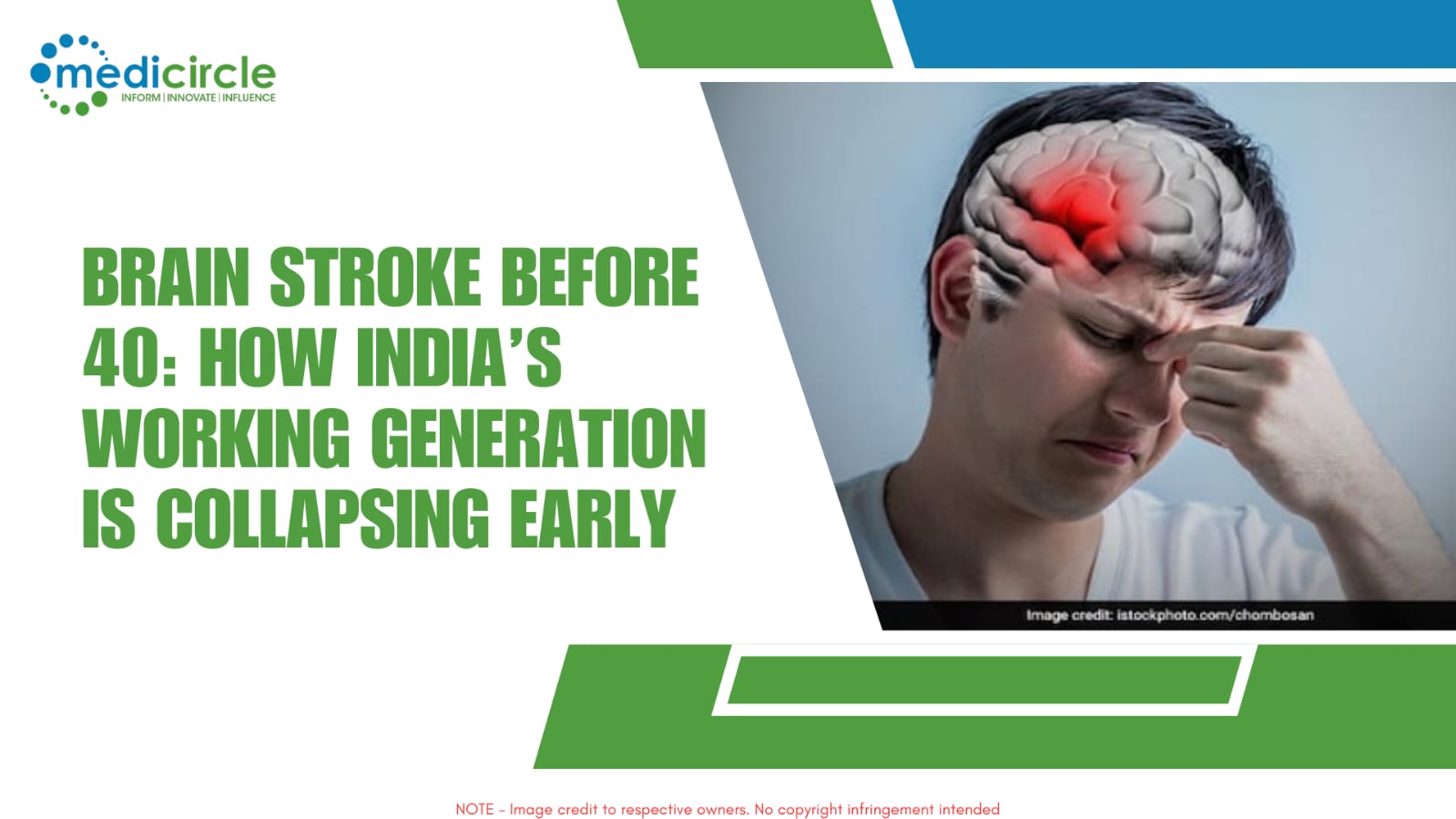
 The prime years of life should be defined by ambition and growth, not by hospital corridors and rehabilitation wards.




For generations, stroke has been viewed as an illness of advancing age, a medical crisis expected in the later decades of life. It was something families associated with grandparents, with retirement years, with fragile health that comes after a long journey. That belief no longer holds true. Across India, an unsettling shift is underway. Increasingly, men and women in their thirties and early forties are being rushed to emergency rooms with symptoms once thought rare in their age group. The numbers emerging from national data demand attention, reflection, and urgent action.
A large-scale analysis conducted by the Indian Council of Medical Research through its National Stroke Registry Programme has revealed that nearly one in seven stroke patients in India is younger than 45. The registry examined close to 35,000 cases reported from 30 hospitals across the country between 2020 and 2022. While the average age hovered around the late fifties, a significant 13.8 percent of patients fell into the under 45 category. These are individuals in the most productive phase of their lives, balancing careers, raising children, caring for ageing parents, and building futures that are suddenly disrupted by a medical emergency that offers little warning.
Stroke is not a minor health event. It occurs when blood supply to the brain is interrupted, either by a clot blocking an artery or by a blood vessel rupturing. Within minutes, brain cells begin to die. The damage can affect speech, movement, memory, and personality. In severe cases, it claims life itself. For a young adult, the impact is particularly devastating. Years of earning potential may vanish overnight. Families face emotional trauma and financial strain. Rehabilitation can stretch for months or even years, with no guarantee of full recovery.
The registry data points clearly to one dominant risk factor: hypertension. Nearly three-quarters of stroke patients had high blood pressure. Often called the silent killer, hypertension rarely produces symptoms until it has already caused significant harm. Among young Indians, routine health screening is uncommon. Many do not know their blood pressure numbers. They feel healthy, energetic, and resilient. Meanwhile, elevated pressure within their arteries gradually damages blood vessel walls, increasing the likelihood of clots or rupture in the brain.
Diabetes also features prominently. Rising blood sugar levels injure blood vessels and accelerate atherosclerosis, the process by which arteries narrow and harden. Tobacco use, whether smoked or consumed in smokeless forms, compounds this damage. Alcohol consumption adds further strain. These lifestyle-related conditions are spreading rapidly in urban and semi-urban India. Fast food culture, reduced physical activity, long commutes, and constant digital engagement have reshaped daily life. Waistlines expand, stress intensifies, and metabolic disorders appear earlier than before.
Doctors are increasingly drawing connections between modern work patterns and cardiovascular health. Extended office hours, irregular sleep cycles, high-performance expectations, and the pressure to remain constantly connected create a state of chronic stress. Stress hormones elevate heart rate and blood pressure. Over time, this physiological strain affects the delicate network of vessels supplying the brain. Sitting for prolonged hours, whether in corporate offices or while working remotely, reduces circulation and contributes to obesity. Physical inactivity weakens the body’s natural protective mechanisms against vascular disease.
Obstructive sleep apnoea has emerged as another concern. Interrupted breathing during sleep leads to repeated drops in oxygen levels and spikes in blood pressure. Many young adults remain undiagnosed, dismissing loud snoring or daytime fatigue as trivial. Heart rhythm disorders, including atrial fibrillation, can generate clots that travel to the brain. Certain inflammatory vascular conditions such as Takayasu arteritis, though less common, are seen more frequently in South Asian populations. Cerebral venous thrombosis, a clot affecting the veins of the brain, also appears in younger Indian patients more often than in some Western countries. These diverse factors highlight that stroke in youth is multifaceted and cannot be attributed to a single cause.
Despite advances in medical science, timely treatment remains a critical challenge. Stroke care operates within a narrow therapeutic window. Treatments such as intravenous thrombolysis, which dissolves clots, and mechanical thrombectomy, which physically removes them, can dramatically improve outcomes if administered quickly. International guidelines, supported by organisations like the World Health Organization, emphasise rapid recognition of symptoms and immediate hospital arrival. The acronym FAST serves as a simple reminder: facial drooping, arm weakness, speech difficulty, and time to call emergency services.
Registry findings reveal that only about one-fifth of patients reached a hospital within 4.5 hours, the crucial window for clot-busting therapy. Nearly 40 percent arrived after 24 hours, when many life-saving interventions were no longer feasible. Delays arise from lack of awareness, hesitation, reliance on local remedies, and inadequate emergency transport systems. In smaller towns, specialised stroke units may be unavailable. Even in metropolitan areas, traffic congestion can cost precious minutes.
The consequences of delayed care are severe. More than half of stroke survivors face death or significant disability within three months. For younger patients, disability can mean decades of physical limitations. Paralysis, speech impairment, and cognitive decline reshape personal identity and family dynamics. Rehabilitation services exist, but access is uneven. Physiotherapy, occupational therapy, and speech therapy require sustained commitment and financial resources that many families struggle to afford.
The misconception that stroke belongs to old age contributes to the crisis. A 35-year-old experiencing sudden numbness may attribute it to fatigue. A 40-year-old with slurred speech may blame stress or lack of sleep. Friends and colleagues may fail to recognise warning signs. Public health messaging has long focused on heart attacks in middle age, while stroke awareness remains limited among younger groups.
Prevention offers the most powerful defence. Regular blood pressure checks should begin early in adulthood. Monitoring blood sugar levels, maintaining a healthy body mass index, engaging in consistent physical activity, and adopting a balanced diet rich in fruits, vegetables, and whole grains can significantly reduce risk. Limiting tobacco and alcohol use is essential. Managing stress through adequate sleep, mindfulness practices, and structured routines supports vascular health. Employers can play a role by encouraging wellness programs and reasonable work hours.
Policy-level interventions are equally important. Expanding primary healthcare infrastructure ensures earlier detection of hypertension and diabetes. Integrating stroke education into community outreach programs can improve recognition of symptoms. Strengthening emergency response networks, including ambulance availability and pre-hospital notification systems, can shorten treatment delays. Telemedicine platforms may help connect smaller hospitals to neurologists in larger centres, enabling quicker decision-making.
India faces a dual burden of disease. While infectious illnesses remain present, non-communicable diseases are rising sharply. Stroke, once considered a disease of ageing societies, is now emerging as a leading cause of disability in younger Indians. The economic implications are substantial. Loss of productive years affects national growth. Healthcare costs escalate as rehabilitation demands increase.
Research into genetic predisposition and environmental triggers continues. Air pollution, sedentary urban lifestyles, and dietary transitions may interact with genetic factors unique to South Asian populations. Understanding these interactions can guide targeted prevention strategies. However, existing knowledge already provides sufficient grounds for action.
Families must cultivate a culture of proactive health monitoring. Annual check-ups should become routine rather than reactive. Young adults often postpone medical visits until symptoms become unavoidable. This approach is risky. Silent conditions like hypertension progress quietly. Early detection allows simple interventions such as lifestyle modification or medication to prevent catastrophic events.
Educational institutions can integrate cardiovascular health awareness into curricula. Teaching adolescents about blood pressure, nutrition, and exercise fosters long-term habits. Media campaigns highlighting real stories of young stroke survivors can challenge outdated perceptions and inspire vigilance.
The emotional dimension of young stroke cannot be ignored. Survivors frequently experience depression and anxiety. The sudden shift from independence to dependence can erode self-esteem. Social support systems are vital. Peer groups, counselling services, and workplace accommodations can ease reintegration into daily life.
Technology also offers promise. Wearable devices that track heart rate, sleep patterns, and physical activity encourage self-monitoring. Mobile applications can remind users to measure blood pressure or take prescribed medication. Digital health tools, when used responsibly, empower individuals to take charge of their wellbeing.
The findings from the National Stroke Registry Programme serve as a stark reminder that disease patterns evolve. Assumptions based on past decades may no longer apply. India’s demographic dividend depends on the health of its young population. Protecting that asset requires collective responsibility.
Stroke is largely preventable. It is also treatable when addressed promptly. The tragedy lies in missed opportunities such as undiagnosed hypertension, ignored warning signs, delayed hospital arrival. Each represents a moment where intervention could have altered destiny.
The narrative must change. Stroke awareness campaigns should target workplaces, gyms, universities, and social media platforms frequented by young adults. Corporate health insurance policies can incentivise regular screening. Public-private partnerships can expand stroke units and training for emergency physicians. The rise of young stroke patients reflects deeper shifts in lifestyle, urbanisation, and healthcare access. A coordinated strategy encompassing prevention, early detection, rapid treatment, and rehabilitation is essential. The cost of inaction will be measured in lives disrupted at their peak.
When a 38-year-old collapses from a stroke, it challenges our understanding of vulnerability. Youth is no longer a shield against vascular disease. The message is clear. Monitor blood pressure. Control diabetes. Quit tobacco. Move more. Recognise symptoms. Act fast.
The prime years of life should be defined by ambition and growth, not by hospital corridors and rehabilitation wards. India has the knowledge and capacity to curb this growing epidemic. What remains is the will to act decisively, before more young dreams are paused by a condition once thought distant from their age





-23-300x250.png)

.jpeg)






.jpg)
.jpg)
.jpg)
.jpg)
.jpg)
.jpg)
.jpg)
.jpg)
.jpg)