 Thursday, October 08, 2026
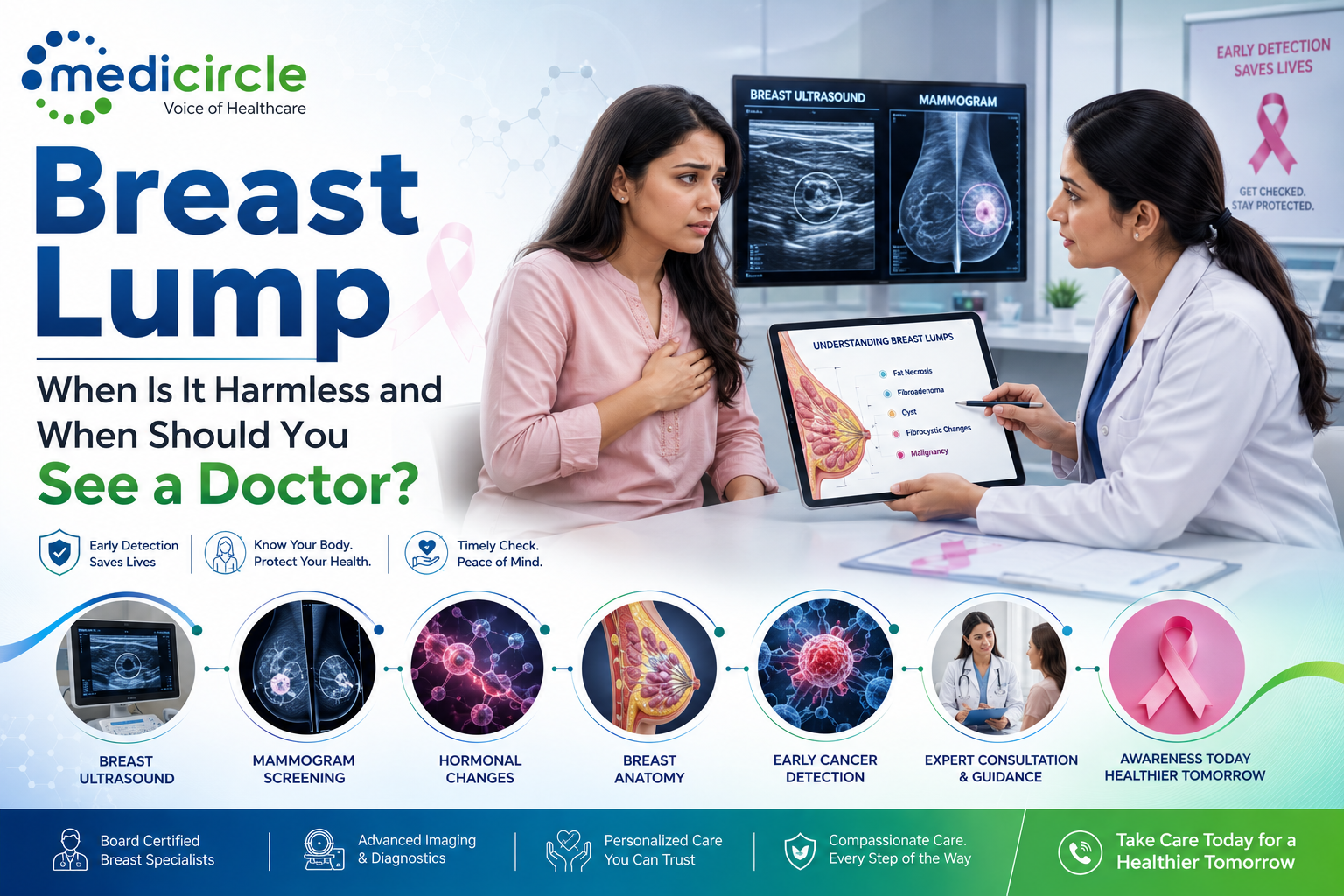
 The vast majority of physical changes in the breast turn out to be entirely non-cancerous and harmless. Protecting your health simply requires consistent self-awareness and timely medical consultation.




Finding an unexpected breast lump during a shower or a routine self-examination can cause an immediate wave of intense panic. In India, where open conversations about reproductive anatomy, physical wellness, and women health are often restricted by social taboos, this fear is frequently intensified by isolation. The immediate, terrifying assumption for many individuals is breast cancer. However, clinical data and oncological realities tell a very different and much more reassuring story. The vast majority of physical changes, structural abnormalities, and tissue variations in the breast turn out to be entirely non-cancerous, medically manageable, and harmless.
While taking any new physiological symptom seriously is crucial for long-term health, understanding how breast tissue behaves can transform blind panic into practical, calm action. By looking closely at the biological facts and stripping away the surrounding cultural stigma, you can better understand your body, recognize what is a completely normal hormonal fluctuation, and know exactly when it is time to seek professional medical advice from a qualified healthcare provider.
Understanding Breast Tissue Anatomy
To understand why a breast lump forms, it helps to know what lies beneath the skin surface. The human breast is not a static organ made of uniform material. It is a highly complex, dynamic network composed of milk-producing glands, transport ducts, structural fibrous connective tissue, and cushioning fat layers. Because this complex environment is incredibly responsive to regular hormonal shifts, the overall breast density, localized texture, and physical feel can change dramatically from week to week.
When an unexpected anomaly or a painful breast lump develops, it is usually just an isolated area of tissue reacting strongly to these internal chemical signals. A fluid backup, a dense cluster of fibrous strands, or localized changes in fat tissue can all manifest physically as a distinct mass. Most of these variations are completely localized, meaning they remain contained within their specific area and do not invade surrounding structures, which is the defining clinical characteristic of a benign breast lump.
Common Benign Breast Conditions
Our bodies go through distinct biological chapters, spanning from the hormonal surges of youth to pregnancy, nursing, and menopause. Different types of harmless tissue developments tend to surface during these specific life stages, helping to explain why a breast tumor is often non-cancerous.
Fibroadenoma Characteristics
Frequently occurring in young women between the ages of 15 and 35, a fibroadenoma is a benign breast tumor formed by an overgrowth of both glandular and connective tissue. To the touch, a fibroadenoma feels firm, smooth, and distinctly rubbery. Because these masses are entirely unattached to the surrounding tissue, they tend to slip away easily under your fingers when pressed, which is why they are sometimes called breast mice. They are generally painless and often fluctuate in size alongside your menstrual cycle, sometimes dissolving completely on their own as hormone levels drop later in life.
Breast Cyst SymptomsBreast cysts are essentially tiny, fluid-filled bubbles or sacs that emerge within the delicate tissue channels. They are most prevalent in women in their 30s and 40s who are moving toward menopause. A breast cyst can feel like a smooth, water-filled balloon or a soft grape, though it can feel surprisingly solid if it is nested deep within dense breast tissue. These sacs often swell and become tender or painful in the days leading up to a period as the body naturally retains more fluid.
Fibrocystic Breast DiseaseRather than a specific disease, fibrocystic breast changes are a broad category for generalized variations in tissue texture. Extremely common among Indian women of childbearing age, this condition causes the breasts to feel distinctly uneven, dense, granular, or cord-like. This widespread lumpiness is typically accompanied by a dull, heavy ache that peaks right before menstruation and dissipates almost entirely once the cycle ends.
Mastitis and AbscessesWhen a milk duct becomes blocked or bacteria enters the tissue, which is a common occurrence during breastfeeding, it can cause an inflammatory condition called mastitis. This results in a hard, highly painful, swollen area that feels hot to the touch, often accompanied by redness, chills, and a high fever. If a localized infection is left untreated, the body may form a pocket of pus called a breast abscess, which requires a doctor to drain it and prescribe targeted antibiotics.
Comparing Benign v/s Malignant Lumps
While nothing can replace an objective evaluation by a qualified physician, observing the physical traits of a new mass can give you a clearer sense of what is happening.
|
Texture and Feel |
Typically Benign Signs |
Concerning Cancer Symptoms |
|
Consistency |
Soft, squishy, or rubbery |
Distinctly hard, firm, or rock-like |
|
Mobility |
Rolls around easily under the fingers |
Fixed firmly in place; feels anchored |
|
Borders |
Smooth, even, and well-defined edges |
Irregular, fuzzy, or jagged margins |
|
Discomfort |
Painful or tender before a period |
Completely painless in early stages |
|
Surface Skin |
Stays smooth, moving naturally |
Dimpling, puckering, or redness |
Recognizing Breast Cancer Symptoms
While the statistical odds favor a non-cancerous diagnosis, certain clinical markers mean you should skip waiting and book an immediate consultation with a general surgeon or an oncologist. Early diagnostic clarity is the most powerful tool available for protecting your health, making it essential to identify critical breast cancer symptoms without delay.
You should seek immediate medical attention if you find a breast lump that is rock-hard, completely painless, and immovable when pressed. Pay close attention to the visual appearance of the breast skin as well. Any sudden dimpling, unexplained puckering, or an indentation of the skin, or a change in texture that resembles the porous surface of an orange peel, requires investigation. Furthermore, look out for sudden structural changes like a newly inverted or pulled-in nipple, localized swelling that does not alter with your menstrual cycle, or spontaneous, blood-stained nipple discharge leaking from a single duct.
Hormones and Lifecycles
Your endocrine system acts as the primary architect of your breast anatomy. Every month, fluctuating levels of estrogen and progesterone command the tissue to expand in preparation for potential pregnancy and then contract when it does not occur. This relentless cycle of growth and regression can occasionally leave behind small residual irregularities, dense fibers, or localized fluid pockets.
Major life milestones alter this landscape completely. During pregnancy and lactation, tissue rapidly remodels itself to prioritize milk production, frequently causing temporary blockages, painful inflammation, or structural shifts. During menopause, as hormone production winds down, the glandular, milk-producing structures naturally shrink. They are gradually replaced by softer, uniform fatty tissue, changing how the breasts feel overall and altering your baseline density.
The Diagnostic Protocol
When you consult a medical doctor about a breast change, they will guide you through a standardized medical protocol called the triple assessment. This combined approach ensures an exceptionally high degree of accuracy and removes any ambiguity from the diagnosis.
- The Clinical Exam: A physician manually examines both breasts and the underarm areas to evaluate the physical characteristics of the mass and check the surrounding lymph nodes for swelling.
- Advanced Imaging: The choice of technology depends heavily on tissue density. For individuals under 30, a breast ultrasound is preferred because younger tissue is naturally dense, and sound waves can easily distinguish a solid mass from a fluid-filled cyst. For those over 30 or 35, a diagnostic mammogram, which is a specialized, low-dose X-ray, is standard for mapping subtle tissue variations and spotting micro-calcifications.
- Pathological Biopsy: If the imaging reveals any ambiguous, complex, or suspicious traits, the doctor will take a small sample of cells using a fine needle or a core needle. A pathologist then examines these cells under a microscope to definitively identify their structure and rule out malignancy.
Proactive Wellness Habits
Taking proactive care of your health involves building a few simple, consistent habits into your lifestyle. This ensures you remain connected to your body's baseline and can catch changes early.
The most effective approach is developing a regular habit of breast self-awareness. Rather than performing a rigid, stressful exam, simply get used to how your breasts normally look and feel at different times of the month. The ideal time to check is roughly three to five days after your period ends, when your hormonal influence is lowest and the tissue is at its softest. If you are over the age of 40, schedule an annual conversation with your doctor to discuss preventative mammogram screenings. Combining this awareness with general wellness choices, such as staying physically active, managing a healthy weight, and minimizing alcohol intake, proactively supports your systemic health.
Frequently Asked Questions
Can Stress Cause Lumps?Stress cannot directly create a physical lump in your breast tissue. However, chronic stress can disrupt your body's delicate hormonal balance. This disruption can amplify existing fibrocystic changes, making your breasts feel significantly more tender, sensitive, or uneven than usual.
Does Pain Mean Danger?As a general trend, benign conditions like cysts and infections tend to be tender or painful, whereas early-stage malignant lumps are frequently painless. However, this is not an absolute clinical rule. Some benign masses cause zero discomfort, and certain fast-growing malignancies can cause localized aching, so every new lump needs professional verification regardless of pain.
Is Surgery Always Required?No, the vast majority of lumps never require surgical intervention. Fluid-filled cysts can simply be monitored or quickly drained if they cause physical discomfort, while stable fibroadenomas are frequently left alone. Surgical removal is generally reserved for confirmed malignancies, benign masses that are growing aggressively, or lumps that cause persistent pain.
Can Men Get Lumps?Yes, this is possible. Men have a small amount of residual breast tissue located directly behind the nipple. They can experience benign swelling or lumps due to a hormonal imbalance known as gynecomastia. However, men can also develop breast cancer, so any new mass in a male chest requires prompt evaluation by a healthcare provider.
Conclusion
Discovering a change in your breast tissue is bound to cause a moment of worry, but it helps to remember that your body is a dynamic system that changes across every chapter of life. From a simple fluid-filled breast cyst to hormonal texture shifts, most irregularities are completely harmless indicators of a normal biological process. Protecting your health does not require hyper-vigilance or anxiety. It simply requires consistent self-awareness and the willingness to consult a professional when something feels unfamiliar. By understanding your body and partnering openly with medical experts, you can navigate your healthcare journey with confidence, clarity, and peace of mind.
For a detailed look at how modern medical professionals use advanced imaging to identify different types of breast abnormalities without causing unnecessary stress, watching this Diagnostic Breast Ultrasound Overview can be highly informative. This clip offers a clear explanation of how specialists evaluate tissue patterns to provide accurate diagnoses.






.jpeg)








.jpg)
.jpg)
.jpg)
.jpg)
.jpg)
.jpg)


.jpg)
.jpg)
.jpg)