Tuesday, October 27, 2026
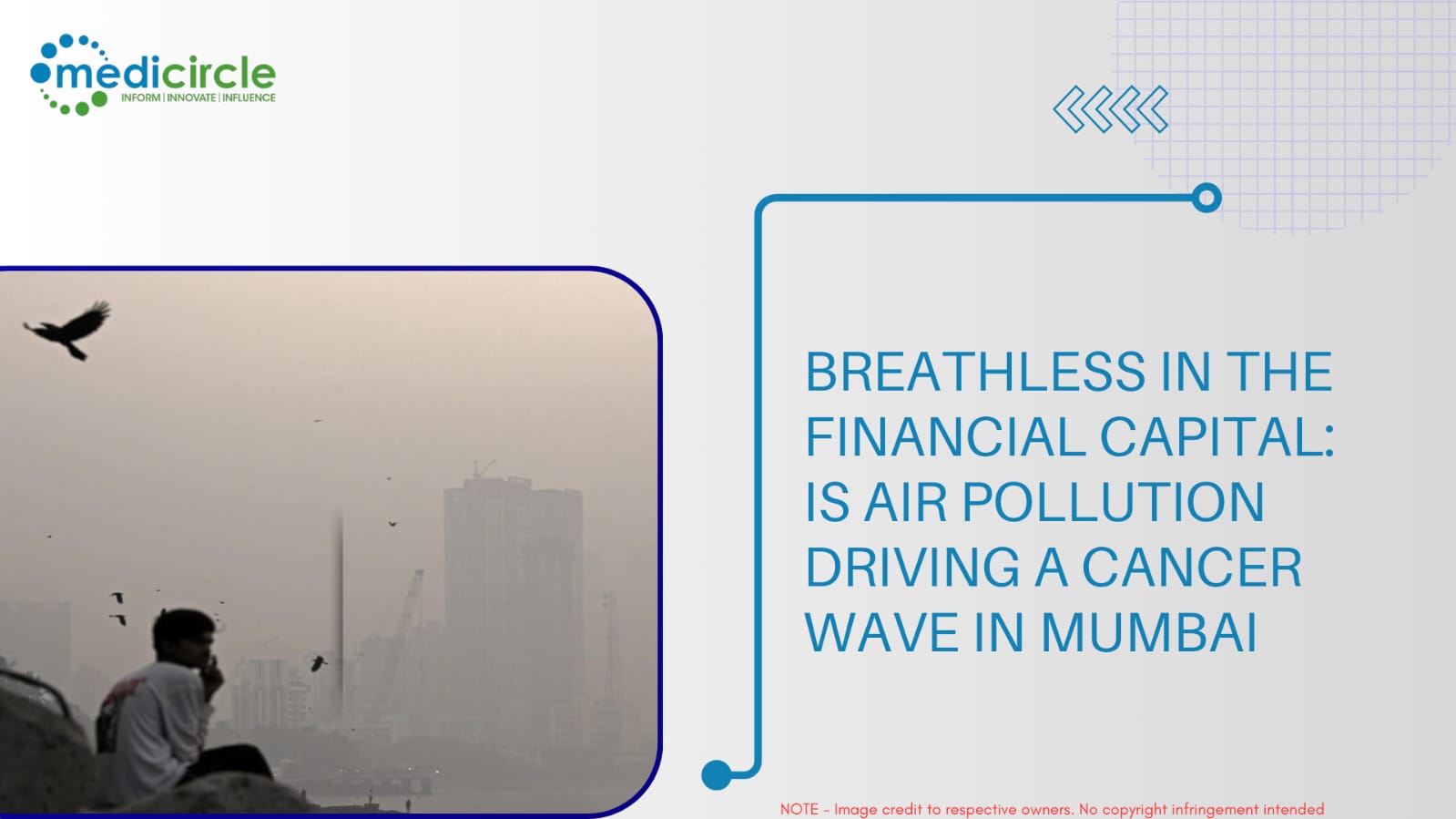
 The data presented in the Maharashtra Assembly illuminate a reality of environmental pollution that's reshaping the landscape of cancer in India’s most dynamic city.




Mumbai has long been celebrated as India’s financial capital, a city that rarely sleeps and never slows down. Its skyline glitters with ambition, its roads pulse with traffic, and its industries power economic growth. Beneath this narrative of progress lies a dangerous threat. The air that fuels the city’s movement is steadily undermining the health of its people. Recent data presented in the Maharashtra Legislative Assembly have cast a harsh light on a troubling reality: lung cancer now represents a staggering proportion of cancer diagnoses in Mumbai, and worsening air pollution is emerging as a central driver.
During a statewide cancer screening initiative conducted by the Maharashtra Public Health Department, 1,677 individuals were identified with various forms of cancer. Of these, cases linked to environmental exposure formed a significant share, with lung cancer alone accounting for 57 percent of the diagnoses in Mumbai. Health Minister Prakash Abitkar described the findings as deeply concerning, pointing to prolonged exposure to polluted air as a major contributing factor. These numbers represent families disrupted, livelihoods halted, and lives reshaped by a disease that is increasingly affecting even those who have never smoked a cigarette.
For decades, tobacco has been the dominant narrative in discussions about lung cancer. While smoking remains a leading cause, global research has steadily highlighted the role of ambient air pollution as a powerful carcinogen. Leading institutions such as the World Health Organization and the Union for International Cancer Control classify outdoor air pollution as a significant risk factor for lung cancer. In many urban environments, the danger posed by chronic exposure to polluted air now rivals traditional risk factors.
Mumbai’s air contains a complex mixture of harmful substances. Fine particulate matter known as PM2.5 is among the most dangerous. These microscopic particles are less than 2.5 microns in diameter, small enough to bypass the body’s natural respiratory defenses and penetrate deep into lung tissue. Once lodged in the alveoli, they trigger persistent inflammation and oxidative stress. Over time, this process can damage DNA and alter cellular function, laying the groundwork for malignant transformation.
Traffic-related pollutants further compound the problem. Nitrogen dioxide, a gas emitted primarily from vehicle exhaust, has been strongly associated with lung cancer risk. The International Agency for Research on Cancer has examined evidence linking nitrogen dioxide exposure to increased incidence of lung malignancies. Studies suggest that even incremental rises in long-term exposure can elevate risk. In a densely populated city where traffic congestion is routine, residents inhale this toxic mix daily.
Sulphur dioxide, ground-level ozone, and carbon monoxide are also present in varying concentrations. Together, these pollutants form a hazardous cocktail that burdens the respiratory system. Chronic exposure does not always produce immediate symptoms. Many individuals adapt to persistent smog, unaware that invisible particles are gradually reshaping lung architecture at a microscopic level. Years later, a persistent cough or unexplained fatigue may signal something far more serious.
One of the most concerning trends worldwide is the rise of lung cancer among non-smokers. The subtype known as adenocarcinoma has become increasingly prevalent, particularly in urban populations exposed to environmental pollutants. Researchers have observed that individuals with no history of tobacco use are being diagnosed at higher rates than before. This shift highlights the importance of viewing lung cancer through a broader environmental lens.
Global data suggest that nearly one-third of lung cancer deaths may be linked to outdoor air pollution. In rapidly urbanising cities, this burden is magnified by industrial emissions, construction dust, diesel exhaust, and limited green cover. Mumbai’s geography adds complexity. Coastal humidity can trap pollutants closer to ground level, reducing dispersion. High-rise buildings create urban canyons that limit airflow, allowing particulate matter to linger.
The economic cost of air pollution extends beyond healthcare spending. Lost productivity, long-term treatment expenses, and emotional tolls weigh heavily on families and public systems. Cancer care demands advanced diagnostics such as PET scans, biopsy procedures, chemotherapy, radiotherapy, and sometimes surgical intervention. Access to these services remains uneven across regions, placing additional strain on patients from lower-income backgrounds.
Recognising these challenges, the Maharashtra government has announced plans to strengthen cancer screening and treatment infrastructure. A proposed three-tier cancer care model aims to expand services at taluka, district, and state levels. Mobile diagnostic units are expected to reach underserved communities, and additional radiotherapy centres are planned to improve access. Integrating advanced imaging under public health schemes may shorten the gap between suspicion and confirmation of disease. Such initiatives are essential, yet they address consequences more than causes.
Prevention remains the most powerful intervention. Air quality control policies must move beyond seasonal measures. Sustained reductions in emissions from transport, industry, and construction are critical. Cleaner fuel standards, expansion of public transport, electric vehicle incentives, and stricter monitoring of industrial discharge can collectively reduce pollutant load. Urban planning that prioritises green spaces and tree cover can help absorb particulate matter and improve overall air quality.
Public awareness also plays a pivotal role. Many residents underestimate the long-term health effects of chronic exposure. The haze that blurs the skyline may appear cosmetic, yet its impact on lung health is profound. Regular health check-ups, especially for high-risk groups such as traffic police, industrial workers, and individuals with pre-existing respiratory conditions, can facilitate early detection. Low-dose CT screening has demonstrated value in identifying lung cancer at earlier, more treatable stages, particularly among high-risk populations.
The science linking pollution and lung cancer is biologically plausible and increasingly robust. Fine particles initiate inflammation. Inflammatory cells release reactive oxygen species that damage cellular DNA. Damaged DNA accumulates mutations over time. When cellular repair mechanisms fail, uncontrolled growth can begin. This chain reaction does not require cigarette smoke. It requires sustained exposure to toxins small enough to enter the bloodstream and disrupt normal physiology.
The World Health Organization estimates that air pollution contributes to millions of premature deaths each year. Respiratory illnesses, cardiovascular disease, and cancer form a substantial portion of this toll. Children growing up in polluted environments may experience reduced lung development, increasing vulnerability later in life. Pregnant women exposed to high pollution levels face elevated risks of adverse outcomes. The burden is intergenerational.
Mumbai’s experience mirrors challenges faced by other megacities across Asia and beyond. Rapid urbanisation often outpaces environmental safeguards. Economic growth can overshadow environmental accountability. Yet the cost of inaction is visible in hospital wards and oncology clinics. Each diagnosis reflects years of exposure that could have been mitigated through stronger policy enforcement.
Healthcare professionals emphasise that lung cancer symptoms often appear late. Persistent cough, chest pain, unexplained weight loss, and shortness of breath may develop when the disease has already advanced. Early stages can remain silent. This shows the need of screening programs and public education campaigns. Awareness that air pollution is a cancer risk factor may encourage individuals to seek evaluation sooner.
Individual-level precautions can offer partial protection. Wearing certified masks during high pollution days, using indoor air purifiers, and avoiding outdoor exercise near traffic-heavy roads can reduce exposure. However, personal measures cannot substitute systemic change. Clean air is a collective responsibility, requiring coordinated action from policymakers, industries, and citizens.
The Maharashtra Public Health Department’s findings should serve as a wake-up call. When more than half of lung cancer cases in a major metropolis are linked to environmental exposure, the narrative shifts from personal choice to public health emergency. Pollution ceases to be an abstract environmental issue. It becomes a direct threat to human survival.
Investment in pollution monitoring technology can enhance transparency. Real-time air quality indices allow residents to make informed decisions about outdoor activities. Data-driven interventions can target pollution hotspots. Community engagement, including school-based education programs about respiratory health, can cultivate long-term behavioural awareness.
The intersection of environmental science and oncology is gaining recognition. Researchers continue to explore genetic susceptibility, epigenetic changes induced by pollutants, and interactions between environmental toxins and other lifestyle factors. Understanding these mechanisms can inform targeted therapies and preventive strategies.
As Mumbai confronts its air quality crisis, the broader lesson extends beyond city limits. Urban development must integrate health impact assessments into planning decisions. Infrastructure expansion should not compromise breathable air. Sustainable growth requires balancing economic ambition with environmental stewardship.
The rising incidence of lung cancer in polluted cities demands sustained action. Strengthening healthcare infrastructure addresses immediate needs. Reducing emissions addresses future risk. Transparent communication fosters trust. Without decisive intervention, the trajectory may continue upward, placing further strain on healthcare systems and families alike.
Breathing is instinctive. It is the most basic human function, performed thousands of times each day without thought. When the very act of inhaling becomes hazardous, society must pause and reconsider priorities. Mumbai’s challenge is formidable, yet not insurmountable. Clean air policies have transformed cities elsewhere. With commitment, collaboration, and accountability, similar progress is possible.
The data presented in the Maharashtra Assembly illuminate a reality of environmental pollution that's reshaping the landscape of cancer in India’s most dynamic city. The solution will require more than medical treatment. It will demand environmental reform, public engagement, and sustained political will. Until then, every breath carries a question that can no longer be ignored.





-23-300x250.png)

.jpeg)




.jpg)
.jpg)
.jpg)
.jpg)
.jpg)
.jpg)
.jpg)
.jpg)
.jpg)