Tuesday, October 27, 2026
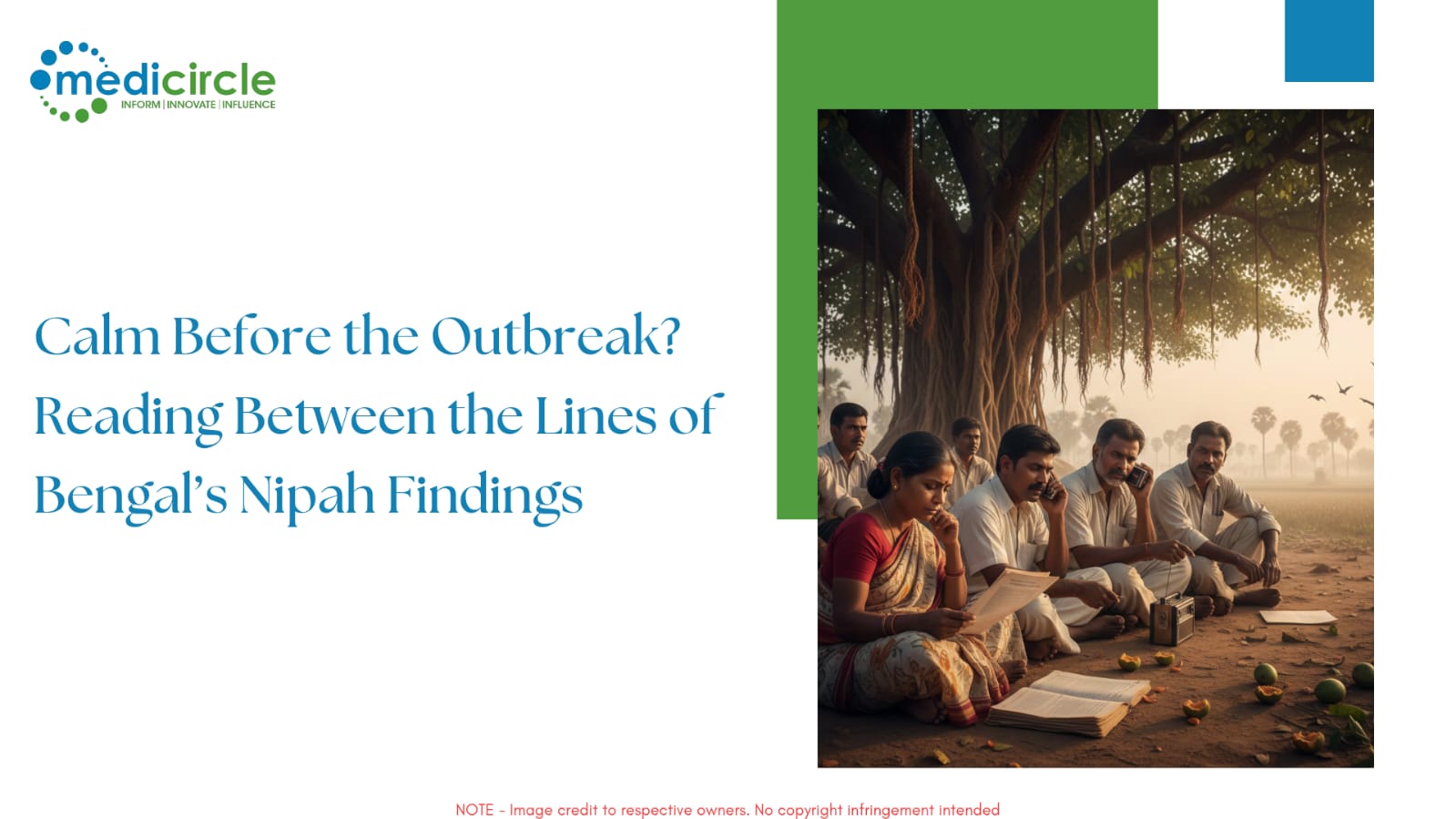
 India’s repeated encounters with Nipah virus, particularly in states like Kerala in previous years, have shown that early detection and swift isolation can save lives.




Preliminary findings from a bat surveillance exercise showed no active Nipah virus infection in West Bengal. For people still worried by the long shadow of COVID-19, this news offered temporary relief. Yet, beneath the surface of these reassuring results lies a more complex story of the fragile boundary between wildlife and human health, and the lessons the country can no longer afford to ignore.
The surveillance was triggered after two confirmed cases of Nipah virus infection were detected in the state, both involving nurses. Nipah, a zoonotic virus known for its high fatality rate and potential for human-to-human transmission, immediately sets off alarm bells wherever it appears. Even a sign of its presence demands attention. In response, the West Bengal forest department, working closely with scientists from the National Institute of Virology, launched a targeted survey of bats near Kuberpur, an area along the busy Kolkata–Basirhat Road in Madhyamgram. Bats are recognised globally as natural reservoirs for the Nipah virus, making them a critical focus of any outbreak investigation.
Nine bats were captured and tested using RT-PCR, the gold standard for detecting active viral infection. All samples returned negative results. On paper, this suggests that there is no immediate threat of Nipah virus transmission from bats in that locality. However, the story does not end there. One bat tested positive for Nipah antibodies. This finding indicates prior exposure to the virus, meaning that the virus had circulated in the bat population at some point in the past, even if it was not actively present at the time of testing.
This single antibody-positive result carries weight. It signals that the virus has found its way into the local ecosystem before, and where it has been once, it can return. Antibodies do not transmit disease, but they act as markers of history, reminders that the environment retains memory even when humans prefer to forget.
State officials were quick to strike a balanced tone. The findings were described as reassuring, yet caution was emphasised. Surveillance, they said, would continue until authorities were confident that there was no residual risk. This measured response reflects a growing maturity in outbreak management, shaped by hard-earned lessons from recent years. Declaring victory too early has proven costly in the past.
Kuberpur, located near Badu Road in the Madhyamgram–Barasat belt of North 24 Parganas district, is not a remote forest fringe. It is an area where urban expansion, road networks, and human activity intersect with wildlife habitats. Such zones are increasingly recognised as hotspots for zoonotic spillover. As cities stretch outward and natural ecosystems shrink or fragment, encounters between humans and wildlife become more frequent and more intimate. In this context, bat surveillance is not an isolated scientific exercise; it is a window into the evolving relationship between development and disease.
Despite extensive contact tracing, the origin of their infection has not been identified. Samples from all known contacts were tested at AIIMS Kalyani and the National Institute for Research in Bacterial Infections in Beliaghata, Kolkata. All results were negative. From a containment perspective, this is encouraging.
Unidentified sources are among the most unsettling aspects of infectious disease control. They suggest either an environmental exposure that has gone unnoticed or a transient chain of transmission that has already burned out. In both cases, uncertainty persists. Public health thrives on clarity, and uncertainty demands humility.
One of the infected nurses is currently being treated at Barasat Hospital. Officials have reported signs of improvement, though she remains on ventilator support. Her discharge will depend on a repeat RT-PCR test returning negative. Each update on her condition is closely watched, not just by colleagues and family, but by a healthcare community acutely aware of the risks frontline workers face. Nurses often bear the brunt of exposure during outbreaks, standing at the intersection of patient care and personal vulnerability.
In parallel with clinical management, preventive efforts have moved into the realm of education and preparedness. The Institute of Health and Family Welfare has organised sensitisation seminars for medical personnel, focusing on Nipah management protocols. Such initiatives may not make headlines, but they form the backbone of effective outbreak response. Protocols rehearsed in calm times are far more likely to be followed accurately under pressure.
Senior health officials have described the episode as a litmus test for pandemic preparedness in the post-COVID era. This framing is telling. COVID-19 did more than strain healthcare systems; it altered public expectations. Governments are now judged not only on outcomes but on speed, transparency, and coordination. Nipah, though far less widespread, tests the same fundamentals.
One significant development emerging from this episode is the state’s move to form a One Health Committee. The One Health approach recognises that human health, animal health, and environmental health are deeply interconnected. In the context of Nipah virus, this perspective is not optional; it is essential. Bats, domestic animals, humans, land use patterns, and healthcare infrastructure all form parts of a single system. Treating them in isolation creates blind spots.
The proposed committee is expected to oversee treatment guidelines and the use of antivirals for Nipah cases. If implemented effectively, it could help bridge gaps between departments that traditionally operate in silos. Forest officials, veterinarians, clinicians, epidemiologists, and policymakers rarely sit at the same table. Yet outbreaks demand exactly that kind of collaboration.
The West Bengal episode highlights an uncomfortable truth that absence of evidence is not evidence of absence. Negative RT-PCR results in bats reduce immediate concern, but they do not erase risk. Viruses like Nipah do not follow administrative boundaries or timelines convenient to human institutions. They emerge, retreat, and re-emerge based on ecological and social conditions that are constantly shifting.
For public, such nuances can be difficult to process. After years of pandemic fatigue, there is a natural desire for definitive answers and quick reassurance. However, responsible communication requires resisting the temptation to oversimplify. Declaring an all-clear when antibodies hint at past exposure would be misleading. Equally, fuelling fear despite negative findings would be irresponsible. The challenge lies in maintaining vigilance without panic.
India’s repeated encounters with Nipah virus, particularly in states like Kerala in previous years, have shown that early detection and swift isolation can save lives. West Bengal’s response, marked by coordinated surveillance, testing, and professional training, suggests that those lessons have not been forgotten. Yet the unresolved source of infection serves as a reminder that preparedness is an ongoing process, not a box to be ticked.
There is also a deeper, often overlooked dimension to such outbreaks: trust. Trust between the public and health authorities, between clinicians and administrators, and between science and policy. Transparent reporting of both reassuring and unresolved findings strengthens this trust. Acknowledging uncertainty does not signal weakness; it signals honesty.
As surveillance continues and investigations deepen, West Bengal stands at a familiar crossroads. The state can treat this episode as a near-miss, something to be filed away once immediate danger passes. Or it can treat it as an opportunity to strengthen systems, refine coordination, and invest in long-term monitoring of zoonotic threats. The decision will shape responses to future outbreaks, whether they involve Nipah or another pathogen waiting quietly in the wings.
In the end, the silence of the virus in current bat samples is welcome, but silence should never be mistaken for surrender. Nipah has reminded the world before that it thrives on complacency. The real measure of success will not be the absence of headlines, but the presence of sustained vigilance long after public attention has moved on. For a healthcare system still rebuilding confidence after COVID-19, that vigilance may be the most valuable protection of all




-23-300x250.png)

.jpeg)






.jpg)
.jpg)
.jpg)
.jpg)
.jpg)
.jpg)
.jpg)
.jpg)
.jpg)