Wednesday, October 07, 2026
 The echoes of this decision may extend far beyond hospital corridors, shaping conversations about universal healthcare, medical affordability, and the moral architecture of public policy




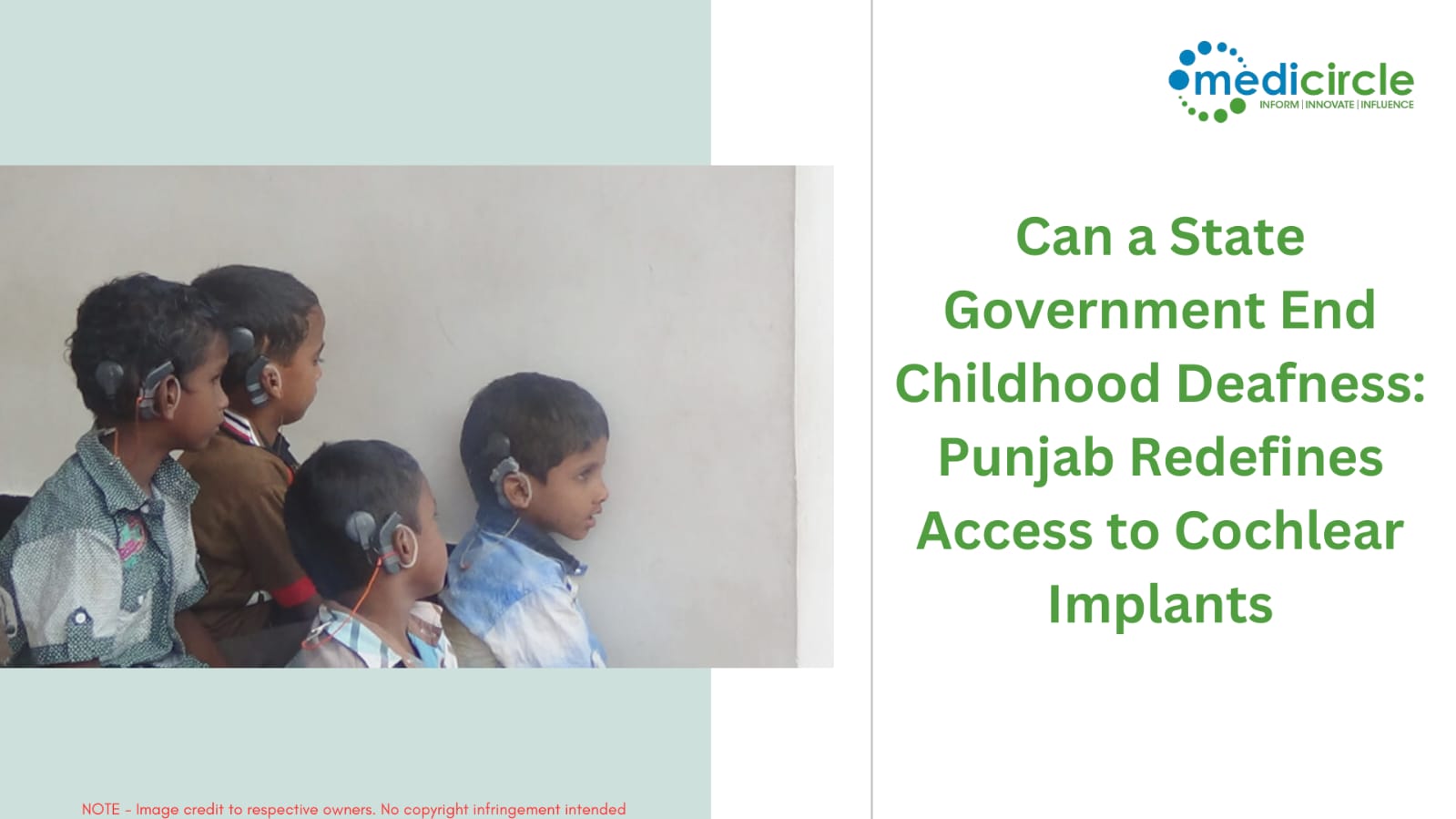
In a country where advanced medical procedures often come with a price tag that can unsettle an entire family’s future, the idea of receiving a high-end surgical intervention without paying a single rupee sounds almost improbable. In Punjab, a quiet transformation is taking place that may alter the course of thousands of young lives. The state government has made sophisticated cochlear implant surgery available free of cost across its tertiary care medical network, opening the doors of sound to children who would otherwise remain in silence.
For years, cochlear implants have represented one of the most remarkable achievements in modern hearing restoration. These devices are designed for individuals with severe to profound sensorineural hearing loss who derive little or no benefit from conventional hearing aids. Unlike hearing aids, which amplify sound, a cochlear implant bypasses damaged portions of the inner ear and directly stimulates the auditory nerve, allowing sound signals to reach the brain. For a child born with profound deafness, this technology can mean the difference between lifelong silence and the ability to develop speech, language, and social connection.
Still access has always been the greatest barrier. In private hospitals across India, the cost of a single cochlear implant surgery can range between six lakh and ten lakh rupees per ear. This figure typically includes the device, surgical expenses, hospital stay, and immediate post-operative care. For many middle-class and lower-income families, such an expense is overwhelming. It often requires loans, asset sales, or prolonged fundraising efforts. In countless cases, parents are forced to accept a heartbreaking reality: treatment exists, but it is financially out of reach.
Punjab’s recent decision to provide completely free cochlear implant surgery through its government medical colleges signals a major shift in public healthcare delivery. Following a successful implantation procedure at Government Medical College and Hospital, Amritsar, the state established a structured, four-centre surgical network to address childhood deafness in a systematic manner. The service is now operational at Government Medical College and Hospital, Patiala, Government Medical College and Hospital, Faridkot, and Dr. B.R. Ambedkar State Institute of Medical Sciences, Mohali, in addition to Amritsar. This statewide framework ensures that advanced hearing restoration is no longer confined to metropolitan private hospitals.
The initiative is being implemented under the leadership of Punjab’s Health Minister, Balbir Singh, as part of the broader welfare vision of Chief Minister Bhagwant Mann. Through the Mukhya Mantri Sarvan Ashirwad Yojana, known as “Sunan Da Haq Sabda,” the government has committed to bearing the full financial burden of cochlear implant procedures. This includes the implant device itself, surgical intervention, hospitalisation, and associated medical care. The phrase “Sunan Da Haq Sabda,” which translates to “the right to hear belongs to everyone,” reflects a moral commitment as much as a policy decision.
Childhood hearing loss is not merely a medical diagnosis; it is a developmental emergency. The first few years of life represent a critical window for speech and language acquisition. When hearing impairment is left untreated, children often face delays in communication skills, academic challenges, and social isolation. Early cochlear implantation, combined with speech therapy and rehabilitation, can dramatically improve long-term outcomes. Numerous global studies in otolaryngology and pediatric audiology have demonstrated that children implanted before the age of three show significantly better language development compared to those who receive intervention later.
India continues to face a considerable burden of congenital and early-onset hearing loss. According to various public health estimates, thousands of children are born each year with severe hearing impairment. While newborn hearing screening programs are gradually expanding, financial constraints remain a formidable obstacle to timely intervention. In many rural areas, families may not even be aware that advanced hearing restoration surgery is possible. Awareness campaigns, early screening, and affordable treatment form the backbone of effective hearing healthcare policy.
Punjab’s four-node surgical model is designed to address both awareness and accessibility. By integrating cochlear implant services within government medical colleges, the state is leveraging existing tertiary care infrastructure. These institutions are equipped with otolaryngology departments, operating theatres, trained surgeons, audiologists, and post-operative rehabilitation teams. The decentralised model reduces the need for families to travel long distances to major cities. It also strengthens the public healthcare system’s credibility in delivering highly specialised procedures.
The economic dimension of this initiative cannot be overstated. Catastrophic health expenditure remains a pressing concern in India. A single major surgery can push families below the poverty line. When the condition involves a child, emotional distress compounds financial strain. By removing the cost barrier, Punjab is addressing a structural inequity that has long defined access to advanced medical technology. The move signals that specialised care should not remain a privilege of the affluent.
Cochlear implant surgery itself is a delicate and highly technical procedure. The surgeon creates a small opening in the mastoid bone behind the ear to insert the implant electrode array into the cochlea. An external sound processor, worn behind the ear, captures sound and transmits signals to the implanted device. Over time, the brain learns to interpret these signals as meaningful sound. The process requires careful programming, regular follow-up, and speech therapy. The success of implantation depends on early diagnosis, surgical expertise, device quality, and structured rehabilitation.
By committing to cover every aspect of the intervention, including hospitalisation and device procurement, the Punjab government is taking on a substantial financial responsibility. Cochlear implant devices are sophisticated biomedical instruments developed by global manufacturers, and they represent one of the costliest components of the procedure. Ensuring procurement, quality control, and long-term support requires coordinated planning and transparent implementation.
This development also reflects a broader shift in Indian public healthcare policy, where states are increasingly investing in tertiary and quaternary care services within government hospitals. Historically, public hospitals were associated primarily with primary care and basic surgeries. Over the past decade, however, several states have expanded into cardiac surgery, organ transplantation, oncology, and now advanced auditory implants. Such investments strengthen medical education, enhance surgical training, and improve patient trust in government institutions.
For families whose children are diagnosed with profound hearing loss, the announcement offers more than policy assurance. It offers possibility. The ability to hear shapes cognitive development, social interaction, and educational participation. It influences self-confidence and emotional well-being. While deafness should never be viewed as a limitation to dignity or identity, access to hearing restoration technology empowers families with choice. It allows parents to decide whether they wish to pursue implantation without being constrained by financial hardship.
The emphasis on equitable healthcare resonates with global conversations around universal health coverage. The World Health Organization has consistently highlighted the importance of accessible ear and hearing care as part of comprehensive public health strategies. Untreated hearing loss carries long-term economic costs, including reduced educational attainment and employment opportunities. By investing in early intervention, governments reduce downstream societal expenditure.
Punjab’s initiative may also encourage other states to evaluate their hearing healthcare policies. Public health programs often gain momentum when one region demonstrates feasibility. The success of cochlear implant surgeries within government medical colleges can serve as a blueprint for replication. Scaling such programs across India could significantly narrow the treatment gap in pediatric deafness.
At the same time, sustainability will depend on rigorous implementation. Post-surgical follow-up, auditory training, and speech therapy are crucial for optimal outcomes. Families require counselling and long-term support. Audiology departments must be adequately staffed and equipped to manage device programming and troubleshooting. A holistic approach ensures that the promise of surgery translates into real-world hearing and language development.
There is also a symbolic significance in positioning hearing restoration as a right rather than a luxury. Healthcare policy often reveals societal priorities. When advanced medical interventions are integrated into public systems, they reflect a commitment to human development. Sound is more than sensory input; it is a gateway to communication, culture, and connection.
The phrase “Sunan Da Haq Sabda” carries emotional weight. It frames hearing as an entitlement embedded in human dignity. For children born into economically vulnerable families, such framing is transformative. It signals that their future will not be dictated solely by income.
Healthcare journalism plays an essential role in translating policy into public understanding. Complex surgical terminology and bureaucratic announcements must be interpreted through the lens of lived experience. When a child hears their parent’s voice for the first time, the impact cannot be captured in statistics alone. Yet the policy decisions that make that moment possible deserve attention.
The operationalisation of free cochlear implant surgeries across Punjab’s government medical colleges represents more than administrative expansion. It is a statement about what public healthcare can achieve when guided by inclusive intent. It demonstrates that high-cost medical innovation can coexist with social equity.
As the program unfolds, data will reveal its reach and outcomes. How many children receive implants each year? What are the long-term speech and educational results? How effectively is rehabilitation integrated? These metrics will determine the initiative’s enduring success.
For now, the silence imposed by economic limitation has been challenged. In government operating theatres across Amritsar, Patiala, Faridkot, and Mohali, surgeons are restoring access to sound without sending families into debt. The echoes of this decision may extend far beyond hospital corridors, shaping conversations about universal healthcare, medical affordability, and the moral architecture of public policy.
In a nation aiming to balance innovation with inclusion, Punjab’s cochlear implant program offers a compelling example. It reminds us that progress in healthcare is measured not only by technological sophistication but by who is allowed to benefit from it. And in giving children the chance to hear, the state is affirming that advanced medical care should never be reserved for the fortunate few, but woven into the fabric of public responsibility.






.jpeg)




.jpg)
.jpg)
.jpg)
.jpg)
.jpg)
.jpg)


.jpg)
.jpg)
.jpg)
.jpg)
.jpg)
.jpg)