Tuesday, October 06, 2026
 For families who depend on public medical institutions, such progress offers reassurance that innovation is not limited to private healthcare centres




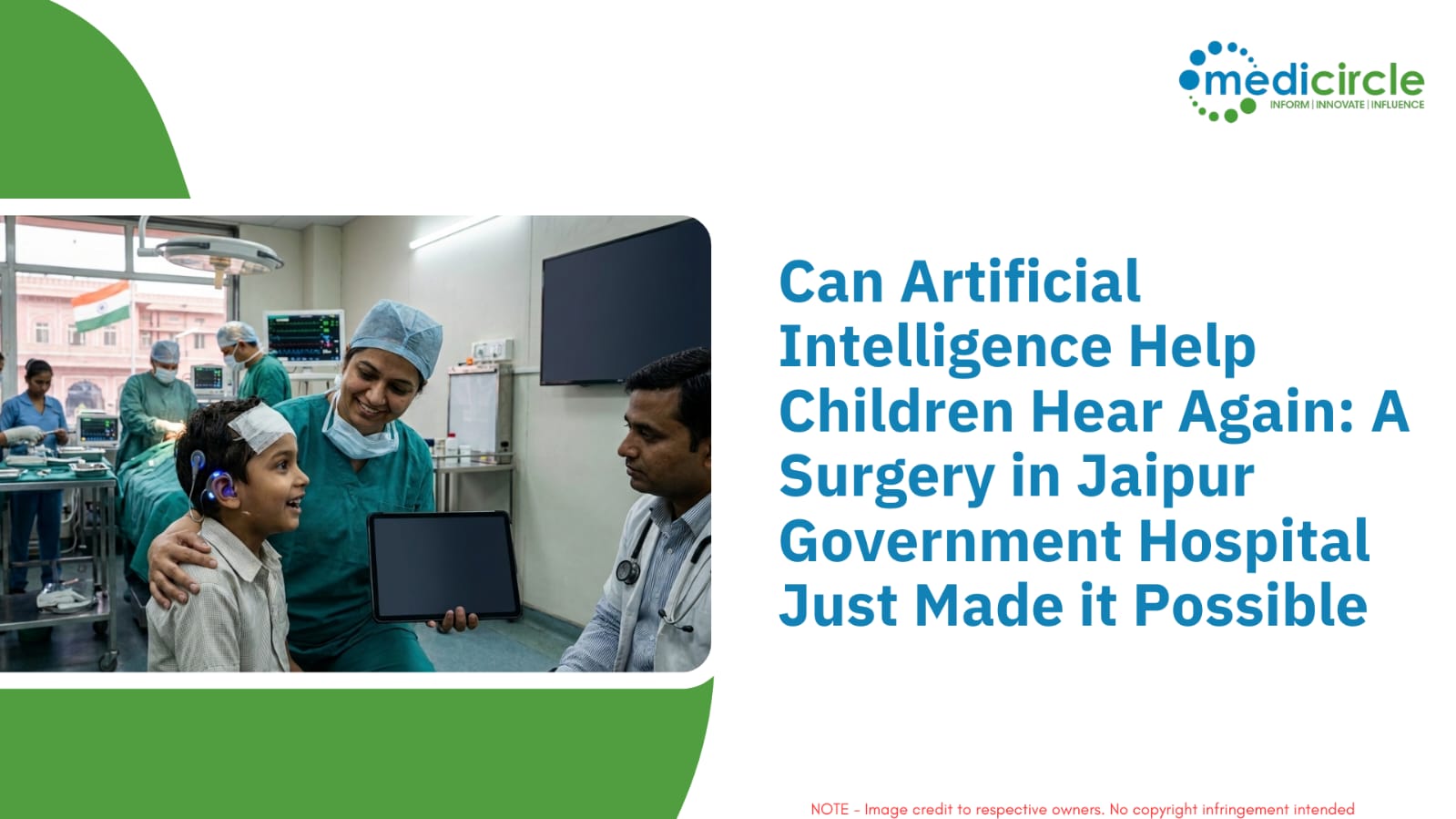
In an operation theatre at the Rajasthan University of Health Sciences in Jaipur, a medical milestone unfolded that could reshape the future of hearing treatment in India’s public healthcare system. A three-year-old girl, who had gradually slipped into a world of silence, became the first patient in a government hospital in Rajasthan to receive an artificial intelligence-powered smart cochlear implant. The surgery, which lasted close to three hours, was not merely another medical procedure. For doctors involved in the operation, it represented a turning point in how advanced hearing technology could reach children who might otherwise never have access to such treatment.
For the child and her family, the operation holds the possibility of hearing voices, recognising sounds, and eventually learning to speak. Doctors believe that within a few weeks, once the device is activated and calibrated, she may begin responding to sound. For a family that has watched their child struggle with hearing loss during the most crucial years of development, this moment carries immense hope.
The procedure also highlights a broader transformation taking place within India’s healthcare landscape. Advanced technologies that were once available only in elite private hospitals are slowly entering government medical institutions. The introduction of artificial intelligence-based cochlear implants in a public hospital setting suggests that modern hearing restoration techniques may gradually become accessible to a wider population.
Congenital hearing impairment remains one of the most overlooked health challenges affecting children worldwide. According to global health estimates, thousands of infants are born each year with varying degrees of hearing loss. In many cases, the condition goes undetected during early childhood, particularly in regions where routine hearing screening is not widely available. Without early diagnosis and treatment, children with hearing impairment often face difficulties in language development, communication, and social interaction.
For young children, the first few years of life play a critical role in the development of speech and language skills. The brain rapidly processes auditory signals during this period, building neural pathways that help children understand and produce speech. When hearing is compromised during this stage, the ability to learn language may be severely affected. That is why early intervention through hearing aids, therapy, or cochlear implants is considered vital for children born with significant hearing loss.
In the case of the young girl treated in Jaipur, doctors observed that she was not entirely deaf from birth. During infancy she could perceive certain sounds, which offered some hope that her auditory nerve was capable of transmitting signals. However, as she grew older, her hearing gradually declined. By the time she reached the age of two, her parents noticed that she was no longer responding to sounds around her. The loss of hearing raised serious concerns about her ability to develop speech and communicate effectively in the future.
Medical specialists evaluated the child carefully before deciding on the course of treatment. Cochlear implantation was considered the most suitable option because conventional hearing aids were unlikely to restore adequate hearing in her case. Unlike hearing aids, which simply amplify sound, cochlear implants bypass damaged portions of the ear and directly stimulate the auditory nerve. This allows sound signals to reach the brain in a way that the child can gradually learn to interpret.
Cochlear implants have existed for decades, but recent technological advances have significantly improved their effectiveness. Modern devices are far more sophisticated than earlier models. They contain advanced processors that analyse sound signals and convert them into electrical impulses that the auditory nerve can understand. Over time, the brain learns to interpret these signals as meaningful sounds, allowing the patient to recognise voices, environmental noises, and eventually spoken language.
What makes the recent procedure in Rajasthan particularly noteworthy is the use of a smart cochlear implant system that integrates artificial intelligence-based features. According to the medical team involved in the surgery, the implant contains a high-speed sound processing chip designed to improve the clarity and precision of auditory signals. Such technology enables the device to adapt to different listening environments, enhancing speech recognition and reducing background noise.
Another key feature of the implant lies in its intelligent nerve-monitoring system. During the surgery, the device assists surgeons in identifying the optimal position for electrode placement inside the inner ear. Accurate placement is crucial because it determines how effectively sound signals can stimulate the auditory nerve. By providing real-time feedback during the procedure, the technology helps doctors achieve greater surgical precision.
The internal component of the implant is designed to remain functional for decades once it is placed inside the ear. Doctors involved in the procedure explained that the implanted device may continue working for nearly thirty years, allowing the patient to benefit from long-term hearing restoration. The external sound processor, which captures sound and transmits signals to the implant, operates through a battery system that can last several years before replacement is required.
One of the most innovative aspects of the device is its ability to store patient-specific data within an internal memory system. This allows doctors to record and update sound mapping settings, ensuring that the implant continues to function optimally as the child grows and her hearing requirements change. The technology even allows periodic updates, somewhat similar to software upgrades in modern smartphones.
For surgeons performing the operation, the procedure required meticulous planning and technical expertise. Cochlear implant surgery involves accessing the inner ear through a delicate pathway while avoiding damage to surrounding structures. The electrodes must be inserted carefully into the cochlea so they can transmit electrical impulses directly to the auditory nerve. Any error during placement could reduce the effectiveness of the implant.
The operation at the Rajasthan University of Health Sciences took nearly three hours, with the surgical team working carefully to ensure that the implant was positioned correctly. After the procedure, the child was placed under observation and doctors confirmed that she was stable. The next stage will involve activating the external processor and conducting a series of sound-mapping sessions to calibrate the device.
Activation of a cochlear implant is often a transformative moment for patients and families. For many children, it marks the first time they experience sound in a meaningful way. Yet doctors emphasise that hearing restoration does not occur instantly. The brain must learn to interpret the new signals delivered through the implant. This process requires patience, regular follow-up appointments, and speech therapy sessions that help the child gradually develop listening and speaking abilities.
Experts estimate that the child in this case may begin responding to sound within a few weeks after activation of the device. Over time, with consistent therapy and family support, she may learn to recognise voices and produce words. The journey from silence to speech is often gradual, but for many children who receive cochlear implants early in life, the results can be remarkable.
The successful surgery also signals a broader shift in how advanced medical technologies are reaching public healthcare institutions. Cochlear implants are among the most expensive medical devices used in hearing restoration. For many families, the cost of surgery and rehabilitation can be prohibitive if treatment is available only in private hospitals. The introduction of such procedures in government medical facilities opens the door for more children to benefit from life-changing treatment.
Healthcare administrators in Rajasthan have described the surgery as an important step towards expanding access to advanced medical care within the state. By integrating modern technologies such as artificial intelligence-based cochlear implants into government hospitals, authorities hope to strengthen the public healthcare system and reduce the need for patients to travel to major metropolitan centres for specialised treatment.
India has made significant progress in recent years in addressing hearing impairment through national health initiatives and early screening programmes. Yet challenges remain, particularly in rural and underserved regions where awareness about hearing loss is limited. Many children with hearing impairment are diagnosed late, often after critical years of language development have already passed.
Medical experts say that improving early detection is essential for ensuring better outcomes. Universal newborn hearing screening programmes, greater public awareness, and improved access to audiology services can help identify hearing loss at an early stage. When children receive timely treatment whether through hearing aids, therapy, or cochlear implants, they have a far greater chance of developing normal communication skills.
Technological innovations are also transforming the future of hearing restoration. Artificial intelligence is increasingly being integrated into medical devices, allowing implants to adapt more intelligently to the user’s environment. AI-enabled processors can analyse patterns in sound signals, improve speech clarity, and reduce the interference caused by background noise. Such advancements may significantly enhance the listening experience for patients using cochlear implants.
For children with congenital hearing impairment, these developments hold immense promise. Improved sound processing can make it easier for young patients to understand speech in classrooms, interact with family members, and participate in everyday conversations. As the technology continues to evolve, future cochlear implants may become even more responsive and personalised.
The success of the recent surgery also highlights the importance of collaboration between surgeons, audiologists, speech therapists, and healthcare administrators. Cochlear implantation is not simply a surgical procedure; it represents a long-term rehabilitation process that requires coordinated care. Families must remain actively involved in therapy sessions and follow-up appointments to ensure the child gains maximum benefit from the device.
In many ways, the story of the three-year-old girl in Jaipur represents a larger narrative about hope and medical progress. Her journey from hearing loss to the possibility of speech mirrors the journey of India’s healthcare system as it embraces advanced technology to improve patient outcomes.
For decades, the idea of implanting a device inside the ear to restore hearing sounded like science fiction. Today, cochlear implants have become a powerful tool in modern medicine, enabling thousands of individuals around the world to reconnect with the world of sound. The addition of artificial intelligence to this technology represents the next step in that evolution.
The true significance of the achievement lies in where it happened. When cutting-edge medical technology reaches government hospitals, it signals a commitment to making advanced healthcare accessible to all sections of society. For families who depend on public medical institutions, such progress offers reassurance that innovation is not limited to private healthcare centres.
The success of the operation theatre in Jaipur may therefore carry implications far beyond a single patient. It suggests a future in which children born with hearing impairment in smaller cities and towns can receive the same advanced treatment available in major urban hospitals.
As the young girl recovers and prepares for the activation of her implant, her family waits for a moment that could change her life forever i.e. the first sound she hears. Whether it is a parent’s voice, a familiar melody, or the gentle rhythm of everyday life, that sound will mark the beginning of a new chapter.
In that moment, the promise of artificial intelligence in medicine will become deeply human. And the silence that once defined her early years may slowly give way to a world filled with voices, laughter, and language.






.jpeg)
.jpg)
.jpg)
.jpg)
.jpg)
.jpg)
.jpg)


.jpg)
.jpg)
.jpg)
.jpg)
.jpg)
.jpg)