 Tuesday, October 27, 2026
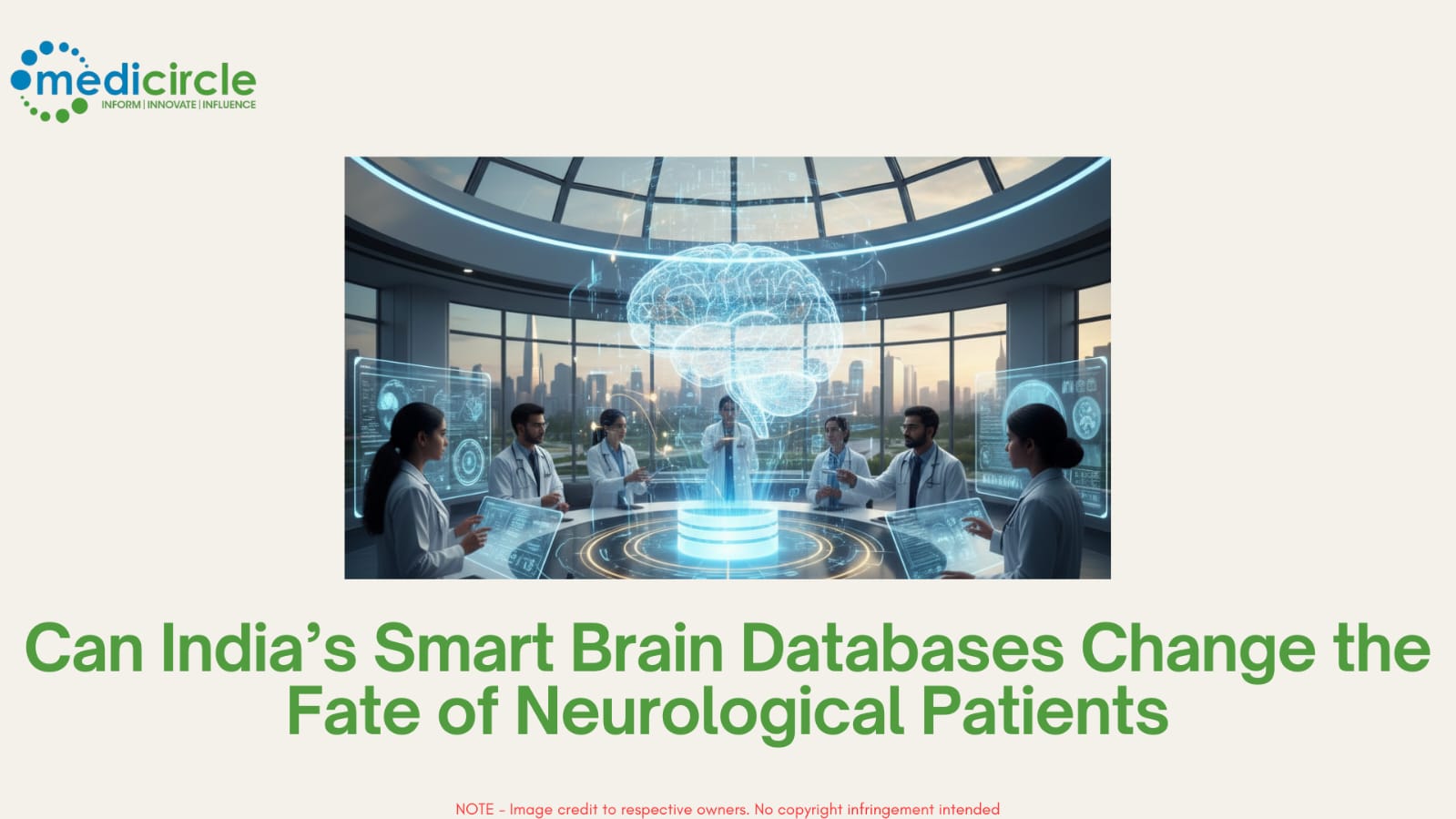
 The story of BrainProt and DrugProtAI is about changing the pace and direction of neurological research in a way that keeps patients at the centre.




Recently, a shift is underway in India that could reshape how brain diseases are understood, diagnosed, and treated. At the crux of this shift is a scientific effort that brings scattered knowledge together and turns it into actionable insight.
A team of bioengineers at Indian Institute of Technology Bombay has developed two smart digital platforms that could change how researchers, doctors, and eventually patients approach brain diseases. Called BrainProt and DrugProtAI, these tools offer structure in chaos, direction in complexity, and hope grounded in data rather than hype.
Brain diseases are notoriously difficult to study. Unlike conditions that affect a single organ or pathway, neurological disorders often involve thousands of genes, proteins, and biological processes interacting across different regions of the brain. Alzheimer’s disease, Parkinson’s disease, epilepsy, depression, autism, and dozens of other conditions share overlapping symptoms, yet differ sharply at the molecular level. For years, research data on these diseases has existed in isolation. Genes stored in one database, protein data in another, biomarkers in a third, and patient sample studies scattered across journals and institutions. For scientists, this fragmentation slows discovery. For patients, it delays answers.
BrainProt changes this landscape by doing what no single resource has done before. It brings together multiple layers of biological information into one unified platform, allowing researchers to see the brain as it truly is: a deeply interconnected system. The latest version of BrainProt integrates data from genomics, transcriptomics, proteomics, and biomarker studies, covering both healthy brains and diseased states. It includes information on 56 human brain diseases and draws from more than 1,800 patient samples across 52 multi-omics datasets. This depth matters because real patients rarely fit neatly into textbook definitions. Disease expression varies from person to person, and understanding that variation is key to better diagnosis and personalised care.
What makes BrainProt especially significant is its ability to show how genes and proteins behave differently in disease compared to health. Researchers can explore which genes are frequently linked to a condition, how active those genes are in patient samples, and how strong the existing scientific evidence is around them. This helps separate long-standing assumptions from data-backed signals. For patients, this kind of clarity is crucial. It lays the groundwork for biomarkers that can detect disease earlier, track progression more accurately, and guide treatment decisions with greater confidence.
One of the most striking features of BrainProt is its focus on the brain’s left and right hemispheres. The human brain is not symmetrical in function, yet most databases treat it as if it were. BrainProt is the first resource to systematically map protein expression differences between the two hemispheres across 20 neuroanatomical regions. As explained by Prof. Sanjeeva Srivastava from the Department of Biosciences and Bioengineering at IIT Bombay, this opens new doors for understanding how diseases manifest differently within the brain itself. For patients with conditions like stroke, epilepsy, or neurodegenerative disorders, where one side of the brain may be more affected than the other, this insight could be transformative over time.
Yet understanding disease is only half the battle. The next challenge is treatment. Even when researchers identify a protein linked to a brain disorder, the road to developing a drug is long, expensive, and uncertain. The harsh reality is that only about 10 percent of human proteins currently have an FDA-approved drug targeting them, with just a small fraction under active investigation. Many promising targets fail after years of work because they turn out to be unsuitable for drug development. For patients waiting on new therapies, each failure represents lost time and hope.
This is where DrugProtAI enters the picture. Developed as an intelligent prediction tool, DrugProtAI assesses whether a protein has the characteristics needed to become a viable drug target before costly laboratory experiments begin. Instead of focusing only on the protein’s sequence, the platform evaluates a wider set of features, including cellular location, structural properties, and other biological traits that influence drug interaction. As explained by Dr. Ankit Halder, the goal is to reduce wasted effort and focus scientific energy where it has the best chance of success.
DrugProtAI generates what is called a druggability index i.e. a probability score that estimates how likely a protein is to respond to drug development. A higher score suggests that the protein resembles others that already have approved medicines, while a lower score signals greater challenges ahead. For researchers, this guidance can save years of work. This means that future treatments are more likely to reach the clinic rather than stall in early research stages.
The true power of this innovation lies in the way BrainProt and DrugProtAI work together. By integrating druggability analysis directly into BrainProt, the IIT Bombay team has created a seamless pipeline. A researcher can begin by identifying a disease-associated gene, examine how it behaves in patient brain samples, assess whether the resulting protein is druggable, and even explore existing compounds or clinical trial data, all within a single workflow. What once took months of cross-referencing multiple databases can now be done in a fraction of the time.
While these platforms are designed for scientists, their implications reach far beyond laboratories. Faster discovery cycles mean quicker translation of research into diagnostics and therapies. Better target selection reduces the risk of failed drugs and lowers development costs, which ultimately influences affordability. For countries like India, where the burden of neurological disorders is rising sharply alongside an ageing population, such efficiency is a necessity.
Brain diseases already account for a significant share of disability-adjusted life years worldwide, and in India, access to specialised neurological care remains uneven. Many patients are diagnosed late, often after years of symptoms that are dismissed or misunderstood. Tools like BrainProt strengthen the scientific backbone needed to change this reality. They support the development of objective biomarkers that can complement clinical judgement, reducing reliance on symptom-based diagnosis alone. Over time, this could lead to earlier detection and more precise treatment pathways.
In an era dominated by flashy health claims and quick-fix narratives, BrainProt and DrugProtAI represent the opposite approach. They are built on patience, rigour, and respect for biological complexity. They do not oversimplify brain diseases or promise miracle solutions. Instead, they acknowledge how much remains unknown and offer a structured way to explore those unknowns responsibly.
Trust in healthcare is shaped by transparency and evidence. When new treatments emerge from platforms that openly integrate data from thousands of patient samples and multiple scientific domains, confidence grows. It becomes easier to believe that medicine is moving forward with care rather than guesswork.
India’s growing role in global biomedical research is also reflected in this achievement. By creating tools that integrate international datasets while addressing questions relevant to local populations, IIT Bombay’s bioengineering team demonstrates that meaningful innovation does not always require massive commercial backing. It requires clarity of purpose and an understanding of real-world needs. Neurological disorders do not recognise national borders, and platforms like BrainProt position India as a contributor to global brain health knowledge rather than just a consumer of it.
As these tools gain wider adoption, their value will compound. Each new dataset added, each disease further explored, and each protein evaluated strengthens the system as a whole. For patients diagnosed today, the benefits may still feel distant. But for the next generation, the impact could be tangible with more accurate diagnoses, better targeted therapies, and a healthcare ecosystem that treats brain diseases with the seriousness and sophistication they demand.
The story of BrainProt and DrugProtAI is about changing the pace and direction of neurological research in a way that keeps patients at the centre. It is about moving from fragmented knowledge to connected understanding, from trial-and-error to informed choice, and from prolonged uncertainty to clearer paths forward. In a field where time is often the most precious resource, this may be the most powerful promise of all.
Source: ndtv.com




-23-300x250.png)

.jpeg)





.jpg)
.jpg)
.jpg)
.jpg)
.jpg)
.jpg)
.jpg)
.jpg)
.jpg)

