Tuesday, October 27, 2026
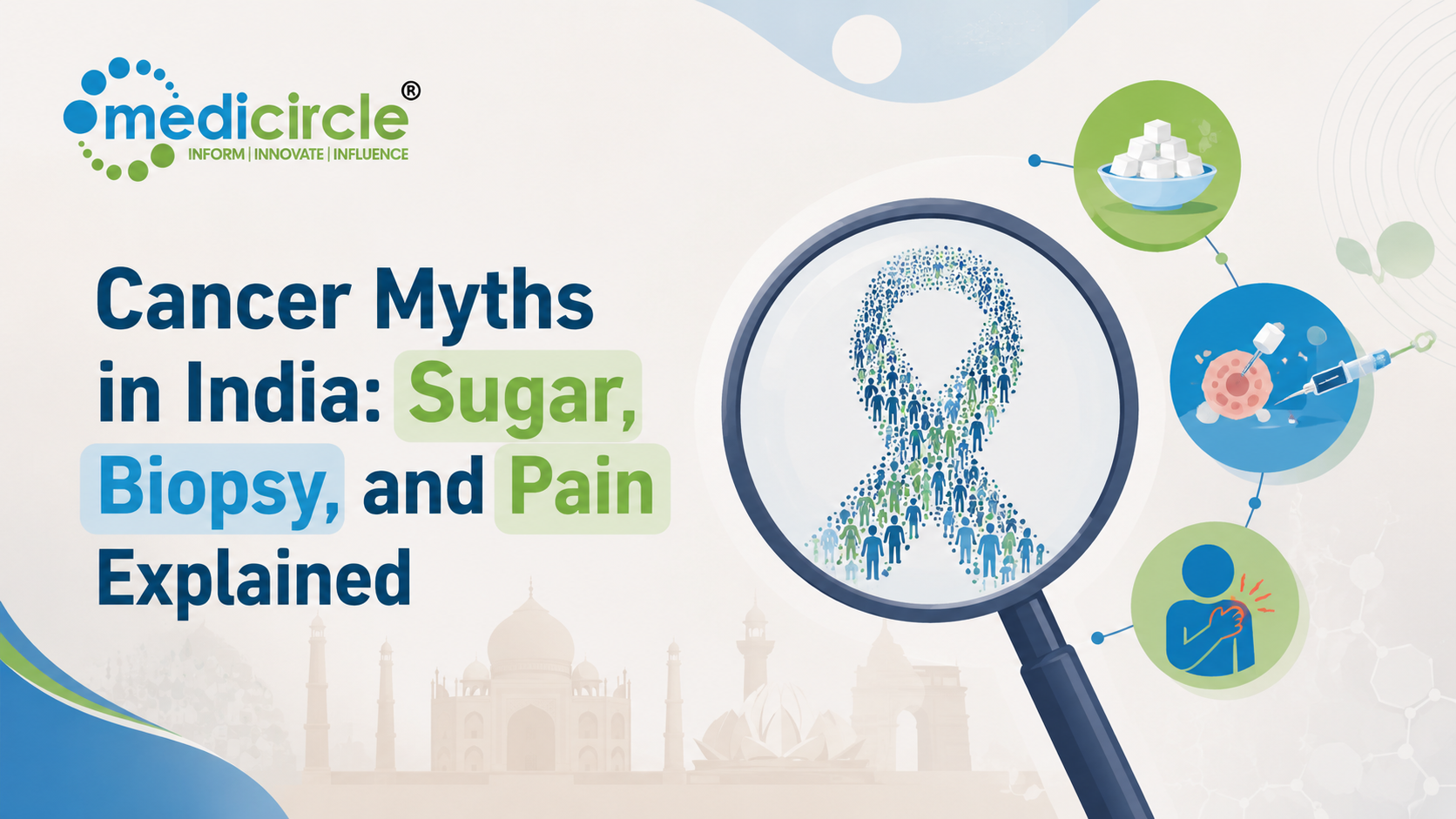
 This article examines common Indian cancer myths surrounding sugar, biopsies, pain, and treatment fear, using medical evidence to help patients and families make informed, confident healthcare decisions.




Introduction
Cancer remains one of the most misunderstood diseases in India, not because information is unavailable, but because misinformation travels faster than facts. According to ICMR's National Centre for Disease Informatics and Research, India recorded an estimated 14.6 lakh new cancer cases in 2022, and this number is projected to rise further in the coming years. Behind these numbers lies a quieter problem. A large number of patients delay diagnosis or refuse timely treatment because of beliefs that have no medical basis. Myths about sugar feeding tumors, biopsies spreading cancer, pain being the only warning sign, and chemotherapy being worse than the disease itself continue to influence real decisions in real families.
This article addresses these specific myths with medical clarity, drawing on established oncology research and Indian healthcare context. The goal is not to alarm readers but to replace fear with understanding, because informed patients make better decisions and seek help sooner. Whether a person is trying to understand a recent diagnosis, supporting a family member, or simply trying to separate fact from forwarded messages, this article is meant to offer dependable, doctor-reviewed clarity.
Understanding Why Cancer Myths Spread So Widely in India
Cancer myths do not spread because people are careless. They spread because cancer is frightening, and fear makes people search for explanations that feel within their control. If a person believes sugar feeds cancer, cutting out sugar feels like doing something. If a person believes biopsies cause spread, refusing one feels like avoiding a risk. Unfortunately, these beliefs often work against the very outcomes patients are trying to protect.
Several factors make India particularly susceptible to the spread of such myths. Limited health literacy in many regions, especially outside major Tier 1 cities, means that medical decisions are often guided by word of mouth rather than verified sources. Social media and messaging platforms accelerate the circulation of unverified health claims, often packaged as concerned advice from a relative or well-wisher. Additionally, the emotional weight attached to a cancer diagnosis in Indian households, where the word itself is sometimes avoided in conversation, creates an environment where myths fill the silence that should otherwise be occupied by a doctor's explanation.
Public health bodies, including the National Health Mission and Ayushman Bharat, have been expanding screening access for common cancers such as oral, breast, and cervical cancer. However, screening uptake depends heavily on whether people trust the process, and myths around biopsy and treatment directly undermine that trust.
Myth One: Sugar Feeds Cancer and Cutting It Out Will Shrink a Tumor
This is perhaps the most persistent cancer myth, repeated so often that many patients believe avoiding sugar entirely is a form of treatment. The actual science is more nuanced. Cancer cells do use glucose for energy, often at a faster rate than normal cells, a phenomenon researchers have studied for decades. However, this does not mean that dietary sugar selectively feeds tumors while sparing healthy tissue. Every cell in the human body, including brain cells, muscle cells, and immune cells, relies on glucose. The body breaks down nearly all carbohydrates, and even proteins and fats to some extent, into glucose. There is no dietary approach that can starve a tumor of glucose without also depriving healthy organs of the fuel they need to function.
What does have scientific support is the connection between obesity, metabolic health, and cancer risk. Excess body weight and poorly controlled blood sugar levels, particularly relevant given India's rising burden of type 2 diabetes, are associated with increased risk for certain cancers, including breast and colorectal cancer. This is a meaningfully different claim from saying sugar directly feeds an existing tumor. Patients who drastically restrict their diets based on this myth sometimes end up malnourished during treatment, which can affect their ability to tolerate chemotherapy or recover from surgery. Oncologists generally recommend balanced nutrition during cancer treatment, often working with a dietitian to maintain strength rather than eliminating entire food groups without medical guidance.
Myth Two: A Biopsy Can Cause Cancer to Spread Through the Body
Fear of biopsies is common, and it is understandable given how invasive the idea sounds. The belief that inserting a needle or cutting into a tumor will release cancer cells into the bloodstream and cause widespread spread has led some patients to delay or avoid diagnostic procedures altogether. This delay is medically concerning because a biopsy is often the only definitive way to confirm whether a growth is cancerous and to determine its type, which directly shapes the treatment plan.
Large-scale research has examined this question directly. Mayo Clinic researchers studied thousands of patients, including a Medicare-based analysis of pancreatic cancer patients, comparing those who underwent biopsy with those who did not. The findings showed no meaningful difference in cancer spread or survival outcomes between the two groups. In fact, patients who underwent biopsy generally had better-documented outcomes, likely because accurate diagnosis allowed for timely and appropriate treatment. Modern biopsy techniques, whether needle-based, endoscopic, or surgical, are designed with precision specifically to minimize tissue disruption. The rare instances of tumor seeding reported in older medical literature involved unusual surgical circumstances and are not representative of routine diagnostic biopsies performed today.
For Indian patients weighing this decision, the more relevant question is rarely whether a biopsy is risky. It is whether avoiding one delay a diagnosis that could otherwise be treated effectively at an early stage.
Myth Three: Cancer Always Causes Pain, So No Pain Means No Cancer
Many people in India associate serious illness with visible suffering, and cancer is no exception. The assumption that a person would feel pain if something were seriously wrong leads many to skip screening tests, especially for cancers that develop silently in their early stages. This is one of the more dangerous myths because it directly affects screening behavior.
The reality is that several common cancers, including early-stage breast cancer, oral cancer, and cervical cancer, often present no pain whatsoever in their initial stages. Symptoms, when they do appear, are frequently subtle. A lump that does not hurt, a mouth ulcer that does not heal within the usual timeframe, or irregular bleeding may be the only early indicators. Pain typically emerges as a cancer progresses or spreads, which is precisely the stage doctors are trying to avoid through early detection programs. This is why the National Health Mission's screening initiatives for oral, breast, and cervical cancer target individuals above the age of thirty, regardless of whether they report any symptoms. Screening exists because the absence of pain cannot be relied upon as a sign of safety. Encouraging routine screening, particularly in Tier 2 and Tier 3 cities where access and awareness are comparatively lower, remains one of the most effective tools in shifting India's cancer detection timeline earlier.
Myth Four: A Cancer Diagnosis Is Always a Death Sentence
The emotional shock of hearing a cancer diagnosis often leads people to assume the worst possible outcome immediately. This assumption is understandable given how cancer has historically been portrayed, but it does not reflect the current medical reality for many cancer types. Survival outcomes have improved substantially over the past two decades due to earlier detection methods, more precise diagnostic tools, and treatment protocols that did not exist a generation ago.
Outcomes vary considerably depending on cancer type, stage at diagnosis, and how promptly treatment begins. Cancers detected at an early, localized stage generally have considerably better outcomes than the same cancers detected after they have spread to other organs. This is precisely why early detection matters so much in the messaging around cancer awareness. Treating a cancer diagnosis as an automatic death sentence can lead to two harmful responses. Some patients give up on seeking treatment altogether, while others turn toward unproven alternative remedies instead of evidence-based care, often losing valuable time in the process. A more accurate and genuinely more hopeful framing is that a cancer diagnosis is the beginning of a treatment journey whose outcome depends heavily on staging, cancer type, and timely medical intervention, not an inevitable conclusion.
Myth Five: Chemotherapy and Treatment Cause More Harm Than the Cancer Itself
Fear of chemotherapy side effects, including hair loss, nausea, and fatigue, leads some patients and families to question whether treatment is worth pursuing at all. This fear is not irrational. Chemotherapy does carry real side effects, and no responsible doctor would claim otherwise. However, the comparison being drawn in this myth is misleading. The relevant comparison is not between a side-effect-free life and chemotherapy. It is between the outcomes of patients who receive timely, evidence-based treatment and those who delay or decline it.
Supportive care has advanced considerably alongside cancer treatment itself. Anti-nausea medications, growth factor support, and personalized dosing have made many regimens significantly more tolerable than they were a decade ago. Most chemotherapy-related side effects are temporary and resolve after treatment concludes, while the disease itself, left unaddressed, tends to progress. Patients who delay treatment due to fear of side effects often present at a later, more advanced stage when they eventually do seek care, which generally requires more intensive treatment with a narrower margin for favorable outcomes. Open conversations with the treating oncologist about what specific side effects to expect, and how they will be managed, tend to be far more useful than avoiding treatment altogether based on general fear.
How Patients and Families Can Evaluate Cancer Information Responsibly
Given how quickly health information circulates through messaging apps and social media in India, it helps to have a simple filter before accepting any cancer-related claim as fact. A few practical habits make a meaningful difference. Checking whether a claim originates from a recognized medical body such as ICMR, WHO, or a qualified oncologist, rather than an anonymous forwarded message, is a reasonable first step. Being cautious of any claim that promises a guaranteed cure, especially one that asks patients to avoid conventional treatment entirely, is equally important, since legitimate medical advances are communicated through peer-reviewed research and clinical guidelines, not viral messages.
It is also worth remembering that a single study or anecdote, even if genuine, does not override decades of accumulated clinical evidence. When in doubt, the most reliable step is to ask the treating doctor directly rather than acting on unverified information. Platforms that connect verified medical experts with the public, sharing context and explanation rather than alarm, play a meaningful role in closing this information gap, particularly for patients navigating a diagnosis for the first time.
Conclusion
Cancer myths persist in India not because people are misinformed by choice, but because fear creates fertile ground for misinformation to take root. The five beliefs addressed in this article, around sugar, biopsy, pain, prognosis, and treatment side effects, each carry real consequences when they influence medical decisions. Replacing these myths with accurate, doctor-reviewed information will not eliminate the fear that comes with a cancer diagnosis, but it can prevent that fear from leading to avoidable delays in screening and treatment. As India's cancer burden continues to grow, awareness grounded in evidence, rather than assumption, remains one of the most practical tools available to patients, families, and the healthcare system at large.
Frequently Asked Questions
Q1: Does eating sugar cause cancer or make it grow faster?
Sugar does not directly cause cancer, and avoiding sugar does not starve a tumor. All cells in the body, including healthy ones, rely on glucose for energy. Excess sugar intake can contribute to obesity, which is a recognized risk factor for certain cancers, but the specific idea that sugar feeds cancer differently than it feeds normal cells is not supported by current medical evidence.
Q2: Can a biopsy cause cancer to spread in the body?
Large-scale research, including studies involving thousands of patients, has found no meaningful evidence that biopsies cause cancer to spread. Modern biopsy techniques are precise and minimally invasive, and biopsies remain essential for confirming a diagnosis and planning appropriate treatment.
Q3: Is cancer always painful in its early stages?
No. Many cancers, including early-stage breast, oral, and cervical cancer, often cause no pain at all in their initial stages. This is why routine screening, rather than waiting for symptoms like pain, is recommended for early detection.
Q4: Is a cancer diagnosis always a death sentence?
No. Survival outcomes have improved considerably for many cancer types due to earlier detection and advances in treatment. Outcomes depend on factors such as cancer type, stage at diagnosis, and how promptly treatment begins, rather than being uniformly fatal.
Q5: Does chemotherapy cause more harm than the cancer itself?
Chemotherapy does carry real side effects, but most are temporary and manageable with supportive care. Delaying or avoiding treatment due to fear of side effects is generally associated with poorer outcomes than completing the treatment plan advised by an oncologist.





-23-300x250.png)

.jpeg)





.jpg)
.jpg)
.jpg)
.jpg)
.jpg)
.jpg)
.jpg)
.jpg)
.jpg)