Wednesday, October 07, 2026
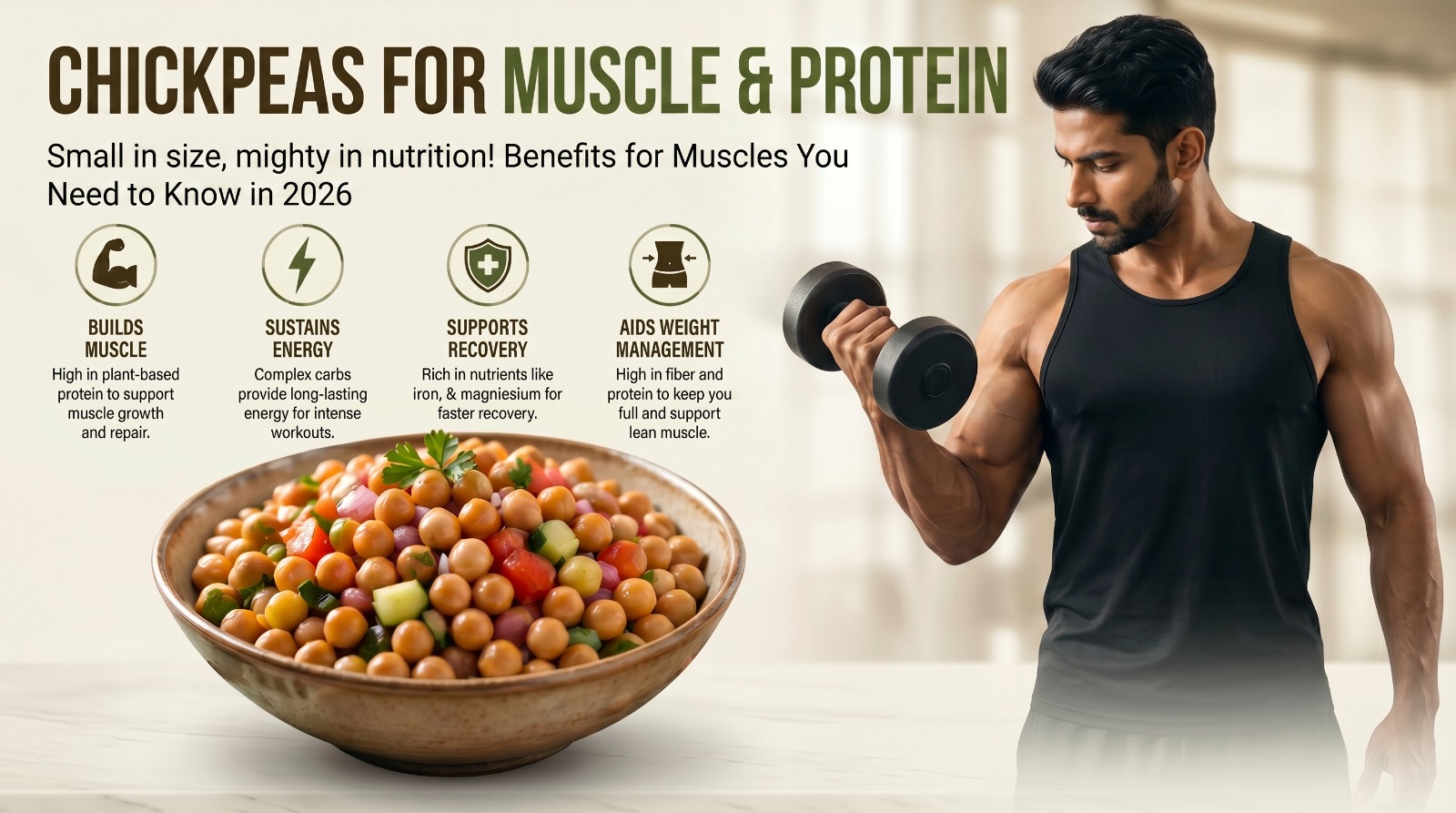
 Chickpeas provide a reliable plant protein source with steady digestion, supporting muscle growth when combined with balanced meals and proper timing. Understanding protein in chickpea per 100g and daily intake helps build an effective, budget-friendly muscle nutrition strategy.




Many people trying to build muscle assume protein must come from expensive supplements or animal sources. But affordable, everyday foods like chickpeas offer a powerful alternative. Understanding how chickpeas for protein work in real-life diets can change how you approach muscle gain. Whether you are a beginner in fitness or someone exploring plant-based protein, knowing the amount of protein in chickpeas and how to use them effectively can make a real difference.
Understanding Chickpeas as a Practical Protein Source
Chickpeas are often grouped with legumes, but their role in muscle nutrition goes deeper than that. When we talk about chick peas and protein, we are looking at both quantity and usability. The chick pea protein content is significant enough to support muscle repair, especially when combined with other foods.
From a practical standpoint, chickpeas are not just about protein numbers. They are part of a broader plant protein system that includes fiber, micronutrients, and slow-digesting carbohydrates. This combination supports sustained energy and recovery, which is essential for people training regularly.
A common question is whether chickpea contains protein in a form that the body can use efficiently. While chickpeas are not a complete protein on their own, they provide essential amino acids like lysine, which are often limited in grains. When paired with foods like rice or whole wheat, they create a balanced amino acid profile that supports muscle growth.
How Much Protein Do Chickpeas Actually Provide
Understanding the chickpea protein per cup helps in planning daily intake. A single cup of cooked chickpeas provides around 14 to 15 grams of protein. This makes them a reliable option for people trying to meet their daily protein goals.
If we look deeper into chickpea how much protein per serving, it varies depending on preparation. For example:
- Boiled chickpeas retain moisture, slightly lowering protein density per gram
- Roasted chickpeas increase protein concentration per serving due to reduced water content
The protein in chickpea per 100g is typically around 8 to 9 grams when cooked. For those consuming larger portions, 250g chickpeas protein contain roughly 20 grams of protein, which is a meaningful contribution toward daily needs.
For gym-goers asking how much gram protein needed daily, the answer depends on body weight and activity level. Most active individuals aim for 1.2 to 2 grams of protein per kilogram of body weight. Chickpeas can cover a significant portion of this requirement when used consistently.
Are Chickpeas a Complete Protein for Muscle Growth
A common concern is whether chickpea complete protein status is sufficient for muscle building. Technically, chickpeas are not a complete protein because they are low in methionine. However, this does not make them ineffective.
The body does not require every amino acid in a single meal. Instead, it balances amino acids across the day. This means combining chickpeas with grains or seeds creates a functional high-quality protein intake.
Chickpeas provide important amino acids such as:
- Lysine, which supports muscle repair
- Leucine, which plays a role in muscle protein synthesis
- Cysteine in smaller amounts, contributing to overall balance
In real-world diets, people rarely rely on a single food source. This is why chickpea is protein enough when part of a mixed diet.
How Chickpeas Support Muscle Growth in Real Life
Muscle growth is not just about protein intake. It depends on digestion, absorption, and consistent intake. The protein digestibility of chickpeas is moderate compared to animal proteins, but this is balanced by their overall nutritional profile.
For someone working out regularly, chickpeas provide:
- Sustained energy due to complex carbohydrates
This helps maintain workout intensity and prevents energy crashes during long sessions. It is especially useful for people training in the evening after long workdays. - Steady protein release rather than rapid spikes
Unlike protein isolates, chickpeas digest slowly, which supports recovery over a longer period. This can be beneficial for people who do not consume frequent meals. - Support for gut health through fiber content
A healthy gut improves nutrient absorption, indirectly supporting muscle recovery and growth.
This makes chickpeas particularly useful for beginners and budget-conscious individuals.
Different Forms of Chickpeas and Their Protein Value
Chickpeas are available in multiple forms, and each has a slightly different role in nutrition.
Common Forms and Their Uses- Whole cooked chickpeas for balanced meals
These are the most common form and provide a mix of protein, carbs, and fiber. They are ideal for lunch or dinner and work well in both veg and non-veg diets. - Roasted chickpeas as high-protein snacks
Roasting removes moisture, making them more protein-dense per serving. They are convenient for post-workout snacking and help control hunger. - Chick pea flour protein for versatile recipes
Chickpea flour can be used in pancakes, flatbreads, or snacks. It offers flexibility and is naturally gluten-free, making it suitable for people with dietary restrictions. - Chickpea sprouts protein for enhanced digestion
Sprouting improves nutrient absorption and slightly increases protein availability. It is a good option for people with sensitive digestion.
Timing and Practical Ways to Eat Chickpeas for Muscle Gain
Timing plays an important role in how effectively the body uses protein. Chickpeas can be consumed at different times depending on individual goals.
Eating chickpeas before a workout provides sustained energy. After a workout, combining chickpeas with a faster protein source can improve recovery. For example, pairing chickpeas with yogurt or eggs creates a more balanced meal.
For those asking about chickpea can protein be used daily, the answer is yes. Regular consumption helps maintain consistent protein intake, which is more important than occasional high-protein meals.
Comparing Chickpeas with Other Protein Sources
When compared to animal protein or supplements, chickpeas have both advantages and limitations.
Advantages of Chickpeas as a Protein Source- Affordable and accessible for most people
Unlike protein powders or meat, chickpeas are widely available and budget-friendly, making them suitable for daily use. - Rich in additional nutrients beyond protein
They provide fiber, vitamins, and minerals that support overall health, not just muscle growth. - Suitable for plant-based and gluten-free diets
Chickpeas fit into multiple dietary patterns without restrictions.
- Lower protein density compared to meat or isolates
Larger portions are required to meet high protein needs. - Not a complete protein on their own
They need to be combined with other foods for a full amino acid profile. - Digestive discomfort for some individuals
High fiber content may cause bloating if introduced suddenly.
Role of Chickpeas in a Balanced Muscle-Building Diet
Chickpeas work best when integrated into a broader diet. They should not replace all protein sources but complement them.
For example, combining chickpeas with lentils improves overall chickpea lentil nutrition. Adding seeds or dairy further enhances protein quality.
For people relying on plant-based protein, chickpeas provide a stable foundation. They also reduce dependence on processed protein isolates or concentrates, which may not always be necessary.
Real-World Usage Patterns for Gym-Goers
In practical scenarios, people use chickpeas in different ways depending on their routine.
Some prefer them as part of a main meal, while others use roasted versions as snacks. Busy individuals often choose chickpea flour recipes for convenience.
Consistency matters more than perfection. Even moderate daily intake of chickpeas contributes to long-term muscle development when combined with regular training.
Conclusion
Chickpeas are more than just a basic food. They offer a reliable and affordable way to meet protein needs, especially for those focused on muscle growth. Understanding the amount of protein in chickpeas and how to combine them with other foods helps unlock their full potential.
While they may not replace all protein sources, they play a strong supporting role in a balanced diet. With the right approach, chickpeas for protein can become a practical and effective part of your fitness journey.
Frequently Asked Questions (FAQs)
1. Can chickpeas alone help in muscle gain effectively?Chickpeas can support muscle gain, but they work best as part of a balanced diet. Since they are a form of plant protein, combining them with grains helps complete the amino acid profile. This improves overall protein quality and supports better use of essential amino acids needed for muscle repair.
2. How much chickpea protein should I eat daily for muscle growth?The amount depends on your body weight and activity level. If you are calculating how much gram protein needed daily, chickpeas can contribute a good portion of that intake. Tracking protein in chickpea per 100g helps you plan portions more accurately.
3. Is chickpea protein better before or after a workout?Chickpeas can be consumed both before and after workouts. Before exercise, they provide steady energy due to complex carbs. After exercise, they support recovery as a high-quality protein source when combined with other foods, improving protein digestibility.
4. Are roasted chickpeas good for protein intake?Yes, roasted chickpeas are a convenient way to increase protein intake. They are more concentrated in nutrients due to reduced moisture and work well as a snack. They also support protein content intake while being easy to carry and consume.
5. Do chickpeas digest slower than other protein sources?Yes, chickpeas digest more slowly compared to protein isolates. This slower protein digestibility helps provide a steady release of nutrients. It also supports gut health and works well with bioactive peptides formed during digestion.
6. Are chickpeas suitable for people on a plant-based diet?Chickpeas are ideal for a plant-based protein diet because they are widely available and versatile. They help meet protein needs without relying on processed foods and support overall gut health through fiber content.
7. Can chickpea flour be used as a protein-rich alternative in meals?Yes, chick pea flour protein is a flexible option for adding protein to meals like pancakes or flatbreads. It is also naturally gluten-free, making it suitable for people with dietary restrictions while contributing to daily protein intake.
8. Do chickpea sprouts provide more protein than cooked chickpeas?Chickpea sprouts protein is often easier to absorb because sprouting improves nutrient availability. While the total protein may not increase significantly, the body can use it more efficiently due to better protein digestibility.
9. How do chickpeas compare with protein supplements?Chickpeas provide natural nutrition, while supplements offer concentrated protein. Unlike protein isolates/concentrates, chickpeas include fiber and micronutrients that support digestion and long-term health, making them a more balanced option.
10. Can chickpeas help in maintaining energy during workouts?Yes, chickpeas provide both protein and complex carbohydrates, which support sustained energy. This combination helps maintain performance and supports recovery, making them a reliable part of a plant protein-based diet.






.jpeg)




.jpg)
.jpg)
.jpg)
.jpg)
.jpg)
.jpg)


.jpg)
.jpg)
.jpg)
.jpg)
.jpg)
.jpg)