 Thursday, October 08, 2026
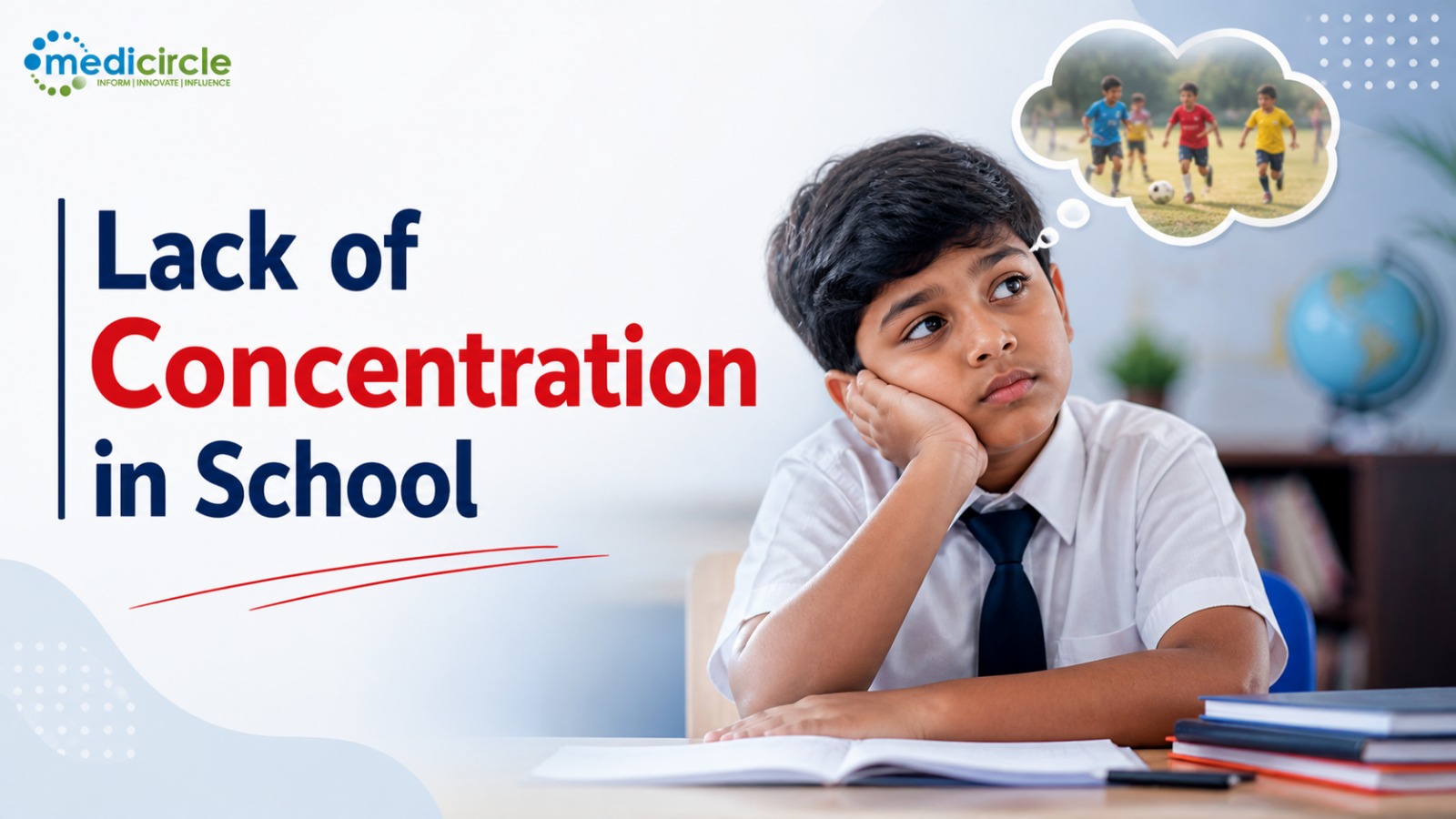
 Understanding lack of concentration in children involves recognizing both cognitive and health-related factors that affect focus and learning. Using attention span activities for preschoolers and consistent routines helps improve focus, reduce distraction, and support healthy child development.




A child who seems distracted, forgetful, or unable to concentrate in school is often misunderstood as careless or uninterested. In reality, lack of focus can come from deeper cognitive patterns or underlying health-related factors. Many parents notice signs early but struggle to identify whether it is behavioral, emotional, or physical. Understanding how attention span in preschoolers develops and what disrupts it is essential to support children in a meaningful way.
How Attention Span Develops in Preschoolers and Early School Years
The attention span in preschoolers is not fixed. It grows gradually as the brain develops the ability to filter distractions and stay engaged with tasks. At a young age, it is natural for children to shift focus quickly. However, repeated patterns of being unable to focus or being unable to concentrate on tasks may signal that the development process is facing obstacles.
In real-life settings, attention is influenced by stimulation. A child who can focus on a game but struggles with schoolwork is not necessarily inattentive. It reflects how the brain prioritizes interest, novelty, and reward. This explains why structured environments like classrooms can feel challenging compared to playful activities.
The system behind attention involves memory, emotional regulation, and sensory processing. When one of these areas is underdeveloped, it affects the ability to stay focused. For example, a child dealing with emotional stress may appear distracted, not because of cognitive weakness but because the brain is managing internal discomfort.
Understanding this foundation helps parents move beyond labeling children as inattentive and instead focus on supporting their development.
Cognitive Causes Behind Lack of Concentration in School
Cognitive factors are among the most common reasons children appear unable to concentrate in academic settings. These causes are often linked to how the brain processes information rather than external health issues.
One key factor is working memory. Children who struggle to retain instructions may appear distracted because they lose track of what they are supposed to do. This creates a cycle where they become being unable to concentrate on tasks, especially in multi-step activities.
Another important aspect is processing speed. Some children take longer to understand instructions, which makes them fall behind in class. As a result, they may seem disengaged or unable to focus, even though they are trying to keep up.
Cognitive overload is another real-world issue. Modern learning environments often involve multiple stimuli such as visual aids, digital tools, and group interactions. For some children, this becomes overwhelming, leading to scattered attention.
There are also variations in learning styles. A child who learns better through movement or interaction may struggle in traditional classroom setups. This mismatch can result in behaviors that look like distraction but are actually a sign of unmet learning needs.
These cognitive causes are often subtle and require observation rather than quick conclusions.
Health-Related Factors That Affect a Child’s Focus
While cognitive causes are common, physical and emotional health also play a significant role in attention. A child who is unable to focus may be experiencing underlying health-related challenges that are not immediately visible.
Sleep quality is one of the most overlooked factors. Children who do not get adequate rest often appear tired, irritable, and being unable to concentrate during the day. This is especially noticeable in early school hours.
Nutrition also affects focus. Irregular meals or diets lacking essential nutrients can lead to fluctuations in energy levels. This may cause periods where the child feels dizzy and unable to focus, especially during long school sessions.
Emotional health is another major contributor. Conditions such as anxiety unable to concentrate or anxiety unable to focus are increasingly seen in children. Anxiety does not always appear as fear. It can manifest as restlessness, distraction, or avoidance of tasks.
Sensory sensitivities also play a role. Some children are more affected by noise, light, or crowded environments. In such cases, the brain spends more energy managing sensory input than focusing on tasks.
Understanding these health-related factors helps parents recognize that attention issues are not always behavioral and may require a broader perspective.
How Real-Life Situations Reveal Attention Problems
Attention challenges often become visible in everyday scenarios rather than structured tests. A child may seem fine at home but struggle in school, or vice versa.
For example, a child who can spend hours on a favorite activity but is unable to concentrate on homework may be dealing with interest-based attention patterns. This does not mean the child lacks focus entirely. It means the brain responds differently depending on engagement levels.
Another scenario is when a child starts tasks but does not complete them. This may indicate difficulty with sustained attention rather than initial focus. Parents often interpret this as laziness, but it is usually a sign of cognitive fatigue.
Children who frequently forget instructions or lose track of tasks may be experiencing working memory challenges. This can make them appear careless, even when they are trying to follow along.
In social settings, children who are unable to focus at work like group activities may feel overwhelmed by multiple interactions. This can lead to withdrawal or distraction.
These real-life patterns provide valuable insights into how attention works beyond structured environments.
Activities to Increase Attention Span in Preschoolers
Improving focus requires consistent practice rather than quick fixes. The right activities to increase attention span in preschoolers can help build concentration gradually.
Practical Attention-Building Activities- Structured play that involves step-by-step tasks
Activities like puzzles or building blocks encourage children to follow sequences. These tasks help improve memory and focus while keeping the child engaged in a meaningful way. - Interactive storytelling and listening exercises
Listening to stories and answering simple questions helps children practice sustained attention. It also improves comprehension and encourages active participation. - Movement-based learning activities
Activities that combine physical movement with learning help children who struggle with sitting still. These are effective attention span activities for preschoolers as they align with natural energy levels. - Timed focus sessions with breaks
Short periods of focused activity followed by breaks help children build endurance. This method prevents cognitive fatigue and supports gradual improvement.
These activities work because they align with how children naturally learn and process information.
Lifestyle Patterns That Influence Attention and Focus
Attention is not only shaped by cognitive ability or health. Daily routines and lifestyle patterns also play a significant role.
Irregular sleep schedules, excessive screen time, and lack of physical activity can reduce a child’s ability to focus. These factors create an environment where the brain struggles to maintain consistent attention.
Family dynamics also influence focus. A child exposed to constant interruptions or high levels of stress may develop difficulty concentrating. This is not due to lack of ability but because the brain is adapting to a chaotic environment.
Consistency in daily routines helps the brain develop predictable patterns. Regular meal times, structured activities, and balanced rest create a stable environment for attention to improve.
These lifestyle adjustments may seem simple, but they have a strong impact on how children engage with tasks.
Challenges in Identifying the Root Cause of Attention Issues
One of the biggest challenges parents face is distinguishing between cognitive and health-related causes. Many symptoms overlap, making it difficult to identify the exact reason behind attention problems.
A child who is unable to focus may be experiencing cognitive overload, emotional stress, or physical fatigue. Without careful observation, these factors can be misinterpreted.
Another challenge is variability. A child may show focus in one situation and struggle in another. This inconsistency often leads to confusion and delayed support.
There is also a tendency to compare children, which can create unrealistic expectations. Attention development varies widely, and each child progresses at a different pace.
Recognizing these challenges helps parents approach the issue with patience and a more informed perspective.
Practical Ways to Support Better Focus in Children
Supporting focus requires a balanced approach that combines understanding, structure, and consistency.
Supportive Strategies for Daily Life- Create a distraction-free environment for tasks
Reducing noise and visual clutter helps children focus better. A calm space allows the brain to process information without unnecessary interruptions. - Break tasks into smaller, manageable steps
Large tasks can feel overwhelming. Dividing them into smaller parts helps children stay engaged and complete activities successfully. - Encourage positive reinforcement instead of pressure
Recognizing effort rather than outcomes builds confidence and motivation. This encourages children to stay engaged with tasks. - Maintain consistent routines and expectations
Predictable schedules help children understand what to expect, reducing anxiety and improving focus.
These strategies work because they address both cognitive and emotional aspects of attention.
Conclusion
Lack of concentration in school is rarely a simple issue. It is often a combination of cognitive development, health factors, and environmental influences. Understanding why a child is unable to concentrate or unable to focus helps parents respond with clarity rather than frustration.
By supporting attention span in preschoolers through structured activities, balanced routines, and awareness of underlying causes, it becomes possible to improve focus gradually. With patience and the right approach, children can develop stronger attention skills that support both learning and overall well-being.
Frequently Asked Questions (FAQs)
1. Why does my child seem attentive at home but unable to concentrate in school?Children often respond differently to structured environments. At home, activities are flexible and familiar, while school demands sustained attention and task-switching. This shift can make a child appear unable to concentrate or being unable to concentrate on tasks. Differences in stimulation, expectations, and peer presence all influence how focus behaves in real situations.
2. Can emotional stress or anxiety affect a child’s attention span?Yes, emotional factors play a strong role. Children experiencing anxiety unable to concentrate or anxiety unable to focus may appear distracted because their mind is processing internal stress. This is not a lack of ability but a response to emotional overload, which can interfere with normal attention patterns.
3. How do screen habits impact attention span in preschoolers?Excessive screen exposure can overstimulate the brain, making it harder to focus on slower-paced tasks. This can reduce attention span in preschoolers and lead to patterns where children become unable to focus during structured activities. Balanced screen use supports better concentration over time.
4. What are early signs that a child’s focus issue needs attention?Signs include frequent distraction, difficulty completing tasks, and forgetfulness. If a child is consistently being unable to concentrate or shows patterns of being unable to concentrate on tasks, it may indicate underlying cognitive or environmental factors that need observation.
5. Can physical symptoms affect a child’s ability to focus?Yes, physical conditions like fatigue or poor nutrition can impact attention. In some cases, children may feel dizzy and unable to focus, especially during long school hours. These symptoms often reflect underlying health-related factors rather than behavioral issues.
6. How do group activities influence a child’s concentration?Group settings can be stimulating but also overwhelming. Some children may feel unable to focus at work in group tasks due to multiple inputs at once. This can lead to distraction, even if they can focus well in one-on-one or quiet settings.
7. Are attention span activities for preschoolers effective in real life?Yes, attention span activities for preschoolers are effective when practiced consistently. These activities help train the brain to stay engaged and improve focus gradually. They also reduce patterns of being unable to focus by building attention through structured play.
8. How long should a preschooler be able to focus on one task?Attention span varies, but preschoolers typically focus for short periods depending on age and interest. If a child is frequently unable to concentrate or shifts tasks too quickly, it may indicate a need for structured activities to increase attention span in preschoolers.
9. Can learning style differences cause focus issues in children?Yes, children learn in different ways. A mismatch between teaching style and learning preference can make a child appear unable to concentrate or disengaged. Adjusting activities to suit the child’s natural learning pattern can improve focus significantly.
10. How can parents support focus without creating pressure?Creating a supportive environment is key. Encouraging routine, using engaging attention span activities for preschoolers, and avoiding constant correction helps children feel comfortable. This reduces stress and prevents patterns of being unable to concentrate on tasks, allowing focus to improve naturally over time.






.jpeg)








.jpg)
.jpg)
.jpg)
.jpg)
.jpg)
.jpg)


.jpg)
.jpg)
.jpg)