 Tuesday, October 27, 2026
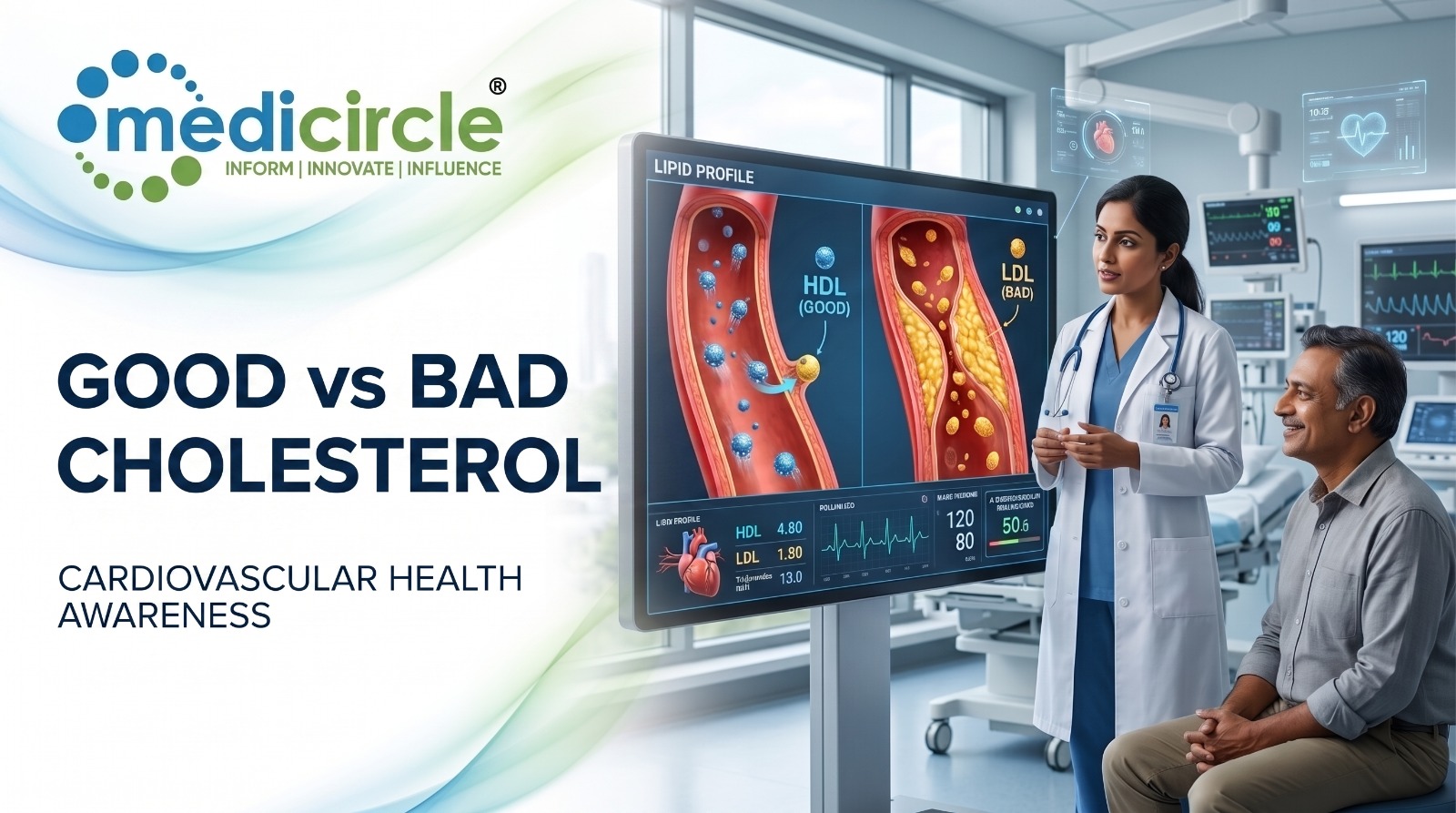
 This article explains good and bad cholesterol, why HDL, LDL, and triglyceride balance matters for Indian hearts, and how testing, diet, and lifestyle changes support long-term prevention.





Introduction
Cholesterol has become one of the most talked about, and most misunderstood, terms in Indian health conversations. Many people assume that all cholesterol is harmful and that a low number on a blood report is always something to celebrate. The truth is more nuanced. Cholesterol is essential for the body, and the real question is not whether it is present, but what type is circulating and in what amount.
For Indians, this conversation carries particular weight. Large-scale research, including the nationwide ICMR-INDIAB study, has found that the overall prevalence of dyslipidemia in India stands at 81.2 percent, with low HDL cholesterol being the most common abnormality at 66.9 percent. These are not small numbers. They point to a population-wide pattern that deserves attention, awareness, and action.
This article breaks down what good and bad cholesterol actually mean, why the balance between them matters more than any single number, and how Indian adults can approach testing, prevention, and management in a way that is grounded in evidence rather than fear.
Understanding Cholesterol: The Basics
Cholesterol is a waxy, fat-like substance that the body needs to build healthy cells, produce hormones, and support digestion. The liver produces most of the cholesterol the body requires, while the remaining portion comes from food, particularly animal-based products such as dairy, meat, and eggs.
Because cholesterol does not dissolve in blood on its own, it travels through the bloodstream attached to proteins. This combination of fat and protein is called a lipoprotein. There are two lipoproteins that most people should understand.
Low-density lipoprotein, commonly known as LDL, is often referred to as bad cholesterol. When LDL levels rise too high, this cholesterol can settle into the walls of arteries, gradually forming a hardened deposit known as plaque. Over time, this narrows the arteries and restricts blood flow.
High-density lipoprotein, or HDL, is often called good cholesterol. It works in the opposite direction, helping to carry excess cholesterol away from the arteries and back to the liver, where it is broken down and removed from the body. A healthy HDL level supports this protective function, although it does not eliminate the risk posed by high LDL.
A third component, triglycerides, is technically a different type of fat rather than cholesterol itself. Triglycerides store unused calories from food. When triglyceride levels are high, especially alongside high LDL or low HDL, the combined effect significantly raises cardiovascular risk.
Total cholesterol is simply the sum of LDL, HDL, and a portion of triglycerides. While it offers a quick snapshot, doctors rarely rely on total cholesterol alone. The individual components tell a far more accurate story about heart health.
Why This Balance Matters for Indian Hearts
India carries a disproportionately high burden of cardiovascular disease relative to its population, and cholesterol imbalance is one of the central contributors. What makes the Indian situation distinct is not simply that cholesterol levels are high, but that the pattern of abnormality often differs from what is typically seen in Western populations.
Research shows that total and LDL cholesterol levels have been rising across Indian communities and among South Asians living abroad, a trend that runs counter to developed countries where these numbers are declining. At the same time, low HDL cholesterol appears with striking frequency across the country, cutting across income groups and body types. This means that even Indians who are not visibly overweight can carry meaningful cardiovascular risk due to an unfavourable lipid profile.
Regional variation adds another layer of complexity. National data have found that hypercholesterolemia prevalence across Indian states ranges widely, from under five percent in some regions to over fifty percent in others, with northern states along with Kerala, Goa, and West Bengal showing greater prevalence. Urban populations tend to show higher rates of high LDL and high total cholesterol, while rural populations often show a higher burden of low HDL cholesterol and elevated triglyceride-to-HDL ratios, indicating that the risk is widespread rather than confined to any single demographic.
Dietary habits common across many Indian households, including a higher reliance on refined carbohydrates, deep-fried snacks, ghee, and organ meats in some regional cuisines, interact with genetic predisposition to create this pattern. Add to this rising rates of diabetes, sedentary urban lifestyles, and increasing obesity in Tier 1 and Tier 2 cities, and the picture becomes clearer. Cholesterol management in India cannot simply borrow international guidelines without adapting them to these local realities.
Recognizing the Risk Factors
Unlike conditions such as chest pain or breathlessness, abnormal cholesterol rarely announces itself through obvious symptoms. Most people discover a problem only through a routine blood test, which is precisely why regular screening matters more than waiting for warning signs.
That said, certain factors consistently raise the likelihood of developing an unhealthy lipid profile.
- A family history of high cholesterol or early heart disease, which points to a genetic component that no amount of diet or exercise can fully override
- Poor dietary patterns high in saturated fat, trans fat, and refined sugar, common in many urban Indian diets built around convenience foods
- Sedentary lifestyles, particularly among desk-based professionals in metro cities who spend long hours without physical activity
- Being overweight or having excess abdominal fat, which is strongly linked to both high triglycerides and low HDL
- Underlying conditions such as diabetes, hypothyroidism, or kidney disease, all of which are known to disturb normal lipid metabolism
- Smoking, which directly lowers HDL cholesterol and damages the inner lining of blood vessels
- Advancing age and, for women, the hormonal changes that follow menopause, which can shift LDL upward and HDL downward
It is worth noting that some individuals develop high LDL cholesterol due to a genetic condition called familial hypercholesterolemia, where the body is unable to clear LDL efficiently regardless of lifestyle. This condition is often underdiagnosed in India and deserves greater clinical attention, particularly when heart disease appears at a young age within a family.
Getting Tested: What the Numbers Mean
The only reliable way to know where you stand is through a lipid profile, a blood test that measures total cholesterol, LDL, HDL, and triglycerides together. This test typically requires a fasting period of around twelve hours, during which only water is permitted.
Once results are available, they are usually reported in milligrams per decilitre of blood, written as mg per dL. Broadly, Indian cardiology guidance considers the following ranges reasonable starting points for most adults, though individual targets should always be discussed with a doctor.
Total cholesterol below 200 mg per dL is generally considered acceptable, while levels between 200 and 239 fall into a borderline category and anything above 240 is classified as high. For LDL cholesterol, below 100 mg per dL is the general goal, though people with existing heart disease or multiple risk factors are often advised to aim lower, sometimes below 70. HDL cholesterol tells a different story, since higher is better here. Levels above 40 mg per dL in men and above 50 mg per dL in women are considered protective, while levels below these thresholds are flagged as a concern. Triglycerides below 150 mg per dL are considered normal.
It is important to understand that these numbers are not judged in isolation. A doctor will look at the complete picture, including the ratio between total cholesterol and HDL, alongside age, weight, blood pressure, blood sugar levels, and family history, before forming a view on cardiovascular risk.
The frequency of testing depends on individual circumstances. Adults in their twenties and early thirties with no risk factors may only need a check every five years, while those in their mid-forties onward, or anyone with diabetes, obesity, or a family history of heart disease, benefit from testing every one to two years. Once past the age of sixty-five, annual testing becomes advisable for most people.
Diagnosis and Medical Evaluation
A single high reading does not automatically mean a person has a serious problem, and a single normal reading does not guarantee safety either. Doctors typically evaluate cholesterol trends over time and in context.
During evaluation, a physician will usually consider the ratio of LDL to HDL, since this often reveals more about risk than either number alone. They will also assess whether triglycerides are elevated alongside low HDL, a combination that Indian data shows is particularly common and particularly risky. Additional factors such as blood pressure, fasting blood sugar, waist circumference, and smoking history are woven into this assessment to calculate an overall cardiovascular risk score.
In select cases, especially where family history suggests a genetic pattern or where cholesterol is markedly abnormal despite a healthy lifestyle, doctors may recommend additional testing such as apolipoprotein B levels or lipoprotein(a), which can provide a more detailed risk picture. This is where access to a knowledgeable cardiologist or endocrinologist becomes valuable, and where platforms that connect patients with credible medical expertise play a meaningful role in helping people navigate next steps with confidence rather than confusion.
Treatment Options and Management Strategies
Managing cholesterol is rarely about a single intervention. It usually involves a combination of dietary change, physical activity, and, where necessary, medication, tailored to the individual.
Dietary adjustments remain the foundation for most people. Reducing saturated fat from sources such as ghee, butter, red meat, and full-fat dairy, while limiting fried and processed foods, can meaningfully lower LDL cholesterol over time. On the other hand, increasing intake of soluble fibre from foods such as oats, legumes, and vegetables, along with fatty fish, nuts, and plant-based oils like mustard or olive oil, supports a healthier lipid balance. Traditional Indian cooking methods that rely heavily on deep frying can be gradually shifted toward steaming, grilling, or shallow frying without sacrificing flavour.
Physical activity plays an equally important role. At least 150 minutes of moderate intensity activity each week, such as brisk walking, cycling, swimming, or yoga combined with cardiovascular exercise, has been shown to raise HDL and lower triglycerides. For many working professionals in Indian cities, even a consistent daily walk of thirty to forty minutes can produce measurable improvement over a few months.
When lifestyle changes alone are not sufficient, doctors may prescribe medication. Statins remain the most widely used and well-studied option for lowering LDL cholesterol, and newer classes of medication are now available for patients who cannot tolerate statins or who need additional LDL reduction. The choice of treatment depends on individual risk profile, existing health conditions, and how the body responds, which is why self-medication or following generic online advice without medical supervision is strongly discouraged.
Quitting smoking and moderating alcohol intake also contribute meaningfully to improving HDL levels and overall cardiovascular health. Chronic stress and poor sleep, both increasingly common in fast-paced Indian urban life, have also been linked to unfavourable shifts in cholesterol metabolism, making stress management and adequate rest an underrated part of any treatment plan.
Prevention and Proactive Health Measures
Prevention is ultimately more sustainable than treatment, and it does not require a drastic lifestyle overhaul overnight. Small, consistent changes tend to produce the most lasting results.
Building meals around whole grains, seasonal vegetables, pulses, and healthy fats, while reducing reliance on packaged snacks and sugary beverages, is a practical starting point for most Indian households. Regular physical movement, even outside of formal exercise, such as taking stairs, walking for errands, or active household chores, adds up over time. Routine health checkups, rather than reactive visits only when symptoms appear, allow early detection of abnormal lipid patterns before they progress to more serious cardiovascular events.
Public health initiatives in India, including awareness campaigns under the National Programme for Prevention and Control of Non-Communicable Diseases, alongside growing access to digital health records through the Ayushman Bharat Digital Mission, are gradually making it easier for individuals to track their health data over time and share it with doctors. Encouraging this kind of continuity in care, rather than treating each checkup as an isolated event, is an important step toward reducing India's cardiovascular disease burden.
Awareness itself is a form of prevention. Understanding what good and bad cholesterol actually mean, rather than relying on partial information or fear-driven headlines, empowers individuals to have more informed conversations with their doctors and to make choices that genuinely protect long-term heart health.
Conclusion
Cholesterol is not inherently the enemy it is often made out to be. The body needs it to function, and the real focus should be on maintaining the right balance between LDL, HDL, and triglycerides rather than eliminating cholesterol altogether. For Indians, this balance carries added significance given how widespread lipid abnormalities have become, cutting across urban and rural populations, and often appearing even in individuals who do not fit the stereotypical profile of someone at risk.
The path forward involves regular testing, honest conversations with qualified doctors, and steady lifestyle habits built around Indian dietary and cultural realities rather than borrowed templates. Cholesterol management is not a one-time fix but an ongoing part of overall heart health, one that deserves consistent attention rather than occasional worry.
Frequently Asked Questions
Q1: What is a normal cholesterol level for Indians?
Most Indian cardiologists recommend keeping total cholesterol below 200 mg per dL, LDL cholesterol below 100 mg per dL, and HDL cholesterol above 40 mg per dL for men and above 50 mg per dL for women. Individuals with diabetes or existing heart disease are often advised to aim for lower LDL targets, sometimes below 70 mg per dL, based on their doctor's assessment.
Q2: Can cholesterol be controlled through diet alone in India?
For many people with mildly elevated cholesterol, dietary changes such as reducing fried foods, ghee, and refined carbohydrates while increasing fibre, nuts, and fatty fish can meaningfully improve lipid levels. However, some individuals, particularly those with genetic predisposition or significantly high LDL, may still require medication alongside lifestyle changes. This decision should always be made with a doctor.
Q3: At what age should Indians start cholesterol testing?
Given the earlier onset of cardiovascular disease among Indians compared to Western populations, many experts recommend a baseline lipid profile by the age of 18 to 20, with regular testing every five years for healthy adults and more frequent testing for those with risk factors such as family history, diabetes, or obesity.
Q4: Does high HDL cholesterol always protect the heart?
A healthy HDL level is generally protective, but having high HDL does not cancel out the risk from elevated LDL cholesterol. Doctors evaluate the complete lipid profile, including LDL, HDL, triglycerides, and total cholesterol, along with other risk factors, rather than relying on a single favourable number.
Q5: Why do Indians have low HDL cholesterol even without being overweight?
Research, including the ICMR-INDIAB study, has found that low HDL cholesterol is unusually common among Indians across both urban and rural populations, even in people who are not overweight. This is believed to be linked to genetic predisposition, dietary patterns, and metabolic factors that make South Asians more prone to this specific lipid abnormality.
Resources
- Indian Council of Medical Research, INDIAB Study Publications: Nationwide data on dyslipidemia prevalence across Indian states
- World Health Organization, Cardiovascular Diseases Fact Sheet: Global guidance on cholesterol and heart disease risk
- Ministry of Health and Family Welfare, National Programme for Prevention and Control of Non-Communicable Diseases: Government framework for NCD screening and management in India
- PubMed Central, Cardiological Society of India Guidelines on Dyslipidemia Management: Clinical practice recommendations tailored to Indian patients
- Ayushman Bharat Digital Mission: National initiative supporting digital health records for continuity of cholesterol and cardiovascular care
Interlinking Keywords
heart disease risk in India, lipid profile test, statins for high cholesterol, healthy diet for heart health, cardiovascular disease prevention India, triglycerides explained, HDL cholesterol, LDL cholesterol, diabetes and heart health, National Programme for Prevention and Control of Non-Communicable Diseases
Last medically reviewed by:
Medicircle Editorial Health Review Board on July 10, 2026
Medical Disclaimer:
This article is intended for general informational and educational purposes only and does not constitute medical advice. Cholesterol levels, risk factors, and treatment needs vary from person to person. Readers should consult a qualified physician or cardiologist before making any decisions related to diagnosis, diet changes, or medication. Medicircle does not endorse self-medication or self-diagnosis based on this content.





-23-300x250.png)

.jpeg)







.jpg)
.jpg)
.jpg)
.jpg)
.jpg)
.jpg)
.jpg)
.jpg)
.jpg)

