Tuesday, October 27, 2026
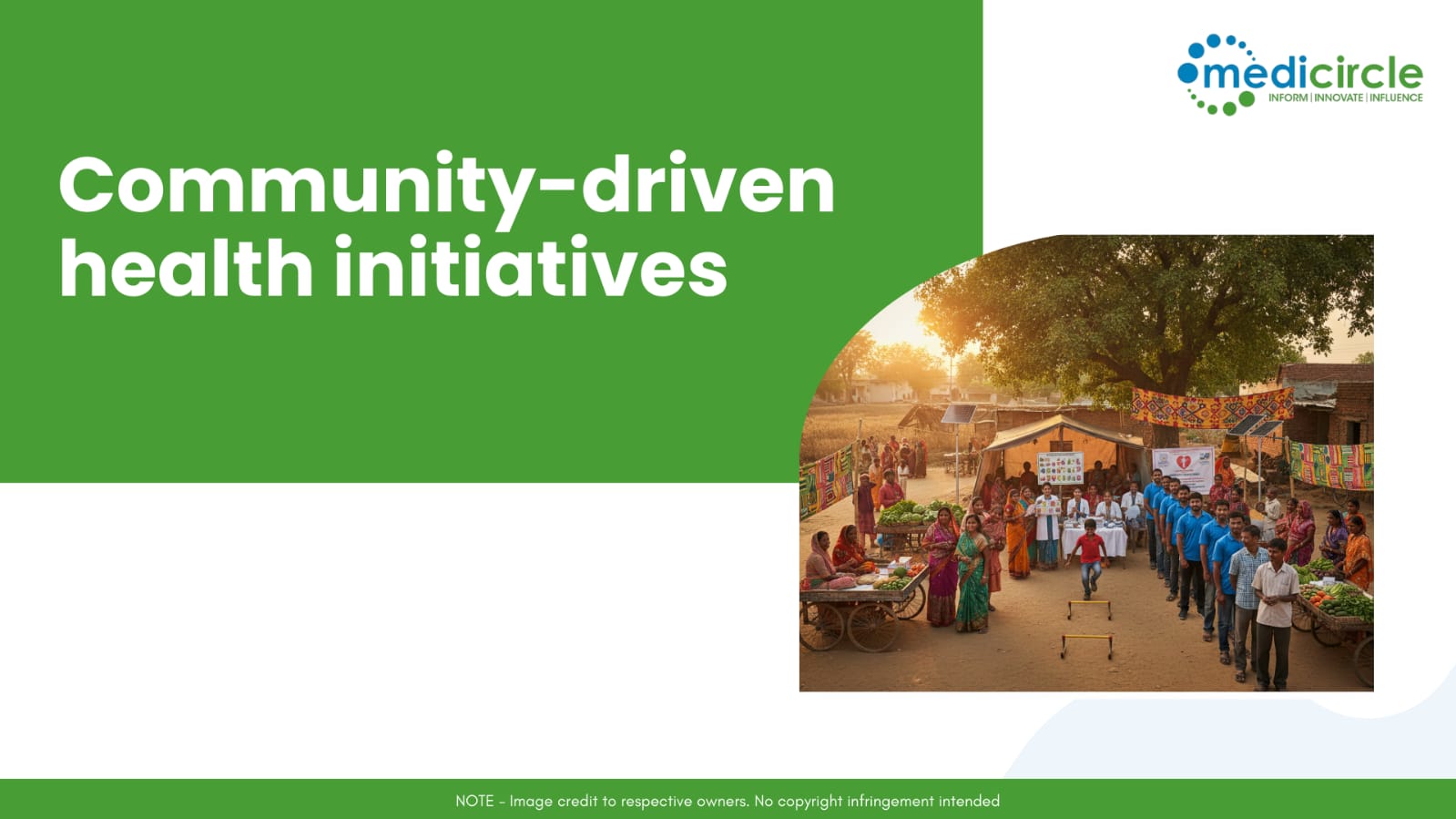
 Community-driven health initiatives bring care beyond hospitals, relying on neighbors, volunteers, and women leaders to promote prevention, awareness, and early intervention, bridging gaps before illness becomes emergencies




For years, most Indians have carried a single picture of healthcare in their heads. A doctor sits behind a large table. A stethoscope rests around the neck. A long queue of patients holds crumpled prescription slips. That picture is real and it exists in many places. However, walking into any neighborhood today reveals another picture beginning to emerge. This new picture does not feature a doctor at all. Instead, a young man at a kirana shop reminds a customer to collect his mother’s blood pressure medicine. A group of college students measures blood sugar at a local temple on a Sunday morning. A grandmother learns to check for early signs of stroke from a nurse who lives two floors above her apartment. This is not a story about large hospitals expanding their reach. This is something entirely different. This is healthcare stepping out of the clinic and finding its way back to the people.
Understanding Community Health:
It is very easy to misunderstand what community health truly means. Some people assume it involves a mobile van with a doctor inside, stopping at different villages on designated days. Others believe it is about distributing pamphlets at crowded railway stations. However, genuine community health work operates with far less noise. It does not announce itself through colorful banners or public address systems. Instead, it reveals itself in small and almost forgettable moments. An ASHA worker sits on the floor of a hut, patiently explaining to a young mother why her underweight child requires more than just milk. A retired bank officer volunteers to drive patients from his residential colony to the dialysis center because he owns a car and they do not have any means of transport. A local chemist maintains a handwritten notebook of customers on long-term medication and calls them when their stock is about to finish.
None of these individuals are qualified doctors. None of them receive any payment for the work they undertake. They simply observed a gap in the system and decided to step forward.
The Limitations of Hospitals:
No reasonable person is suggesting that hospitals and clinics lack importance. These institutions form the backbone of any serious medical system. However, a hospital represents a destination that people reach after something has already gone wrong. What about all the time that precedes that moment? What about the weeks and months during which a person ignores a persistent cough or dismisses recurring headaches as mere stress? The hospital does not exist in that time frame. The hospital only enters the picture when the cough transforms into pneumonia or the headache reveals itself as something far more serious.
This is precisely where community involvement becomes indispensable. Not as a substitute, but as a continuous presence. Someone notices that the vegetable vendor has lost considerable weight and casually asks if he has been feeling unwell. Someone tells a young man that the wound on his foot is not healing properly and suggests checking his blood sugar levels. These actions are not clinical interventions. These are human interventions. And they matter tremendously.
The Unsung Work:
There exists a clear reason why community health rarely occupies newspaper headlines. The work lacks dramatic spectacle. No camera crew films the forty-five minutes a volunteer spends convincing an elderly widow that she need not suffer in silence simply because she fears becoming a burden to her family. No reporter documents the weekly meetings where ten women from a crowded slum cluster sit together and discuss strategies for getting their children vaccinated before the monsoon season spreads infection.
Yet, this is precisely where the most meaningful work takes place. This is where prevention ceases to be a theoretical policy document and transforms into a genuine conversation between two individuals who trust one another. The success of community health cannot be quantified through the number of surgeries performed or the number of hospital beds occupied. Its success can only be measured in the emergencies that never occur.
Women Shoulder the Weight:
Spending time with community health programmes across India reveals one pattern that becomes impossible to overlook. The individuals performing the work, the ones who appear day after day without fail, are overwhelmingly women. This arrangement did not result from deliberate planning. It simply reflects how circumstances have naturally unfolded. Women typically remain the first to notice when something feels wrong within the household. They track fevers, they remember which family member has which allergy, and they maintain mental notes about whose pregnancy carries high risk and whose elderly father has stopped taking his heart medication.
When these women receive even minimal training, when they are given basic information and simple tools, the impact proves immediate. They do not need to earn trust because they already possess it. They are not outsiders arriving with clipboards and official forms. They are neighbors, sisters, daughters-in-law, and friends. When they speak, people listen in a manner they would never extend to a complete stranger.
The Persistent Struggle:
It would be dishonest to pretend that everything proceeds smoothly in this domain. Community health workers face profound exhaustion. They encounter families who fail to understand why their mother or wife dedicates so many hours to work that brings no monetary return. They confront communities that sometimes reject their advice because it contradicts what a local quack has confidently asserted. Funding sources dry up unexpectedly. Programmes shut their doors permanently. Volunteers burn out and walk away.
Yet, despite all these obstacles, new volunteers continue to arrive. Young people who witnessed what happened when a neighbor delayed seeking medical care and subsequently lost a parent decide to step forward. Housewives who realized they possessed more knowledge about nutrition than the anganwadi worker begin sharing what they know. Retired men searching for something meaningful to fill their mornings discover purpose in service. They do not volunteer because the work is easy. They volunteer because they have witnessed the alternative with their own eyes.
Where the True Answer Resides:
Healthcare was never intended to function as a commodity purchased only during moments of desperation. It was meant to be woven directly into the fabric of everyday existence. The doctor will always occupy an essential position. The hospital will always remain necessary. However, the distance between a symptom and its diagnosis, between a lingering worry and a professional consultation, represents the space where most of life actually unfolds. That distance can only be bridged by people who are already present in that space.
The solution does not lie in waiting indefinitely for the government to recruit additional workers. It does not lie in hoping that corporations will fund more medical camps. The solution lies in recognizing what is already functioning effectively. The neighbor who checks in regularly. The local shopkeeper who offers timely reminders. The grandmother who learned something new at seventy-two years of age and refuses to keep that knowledge to herself.
This arrangement is not a formal system with charts and hierarchies. This is simply people, taking care of other people, without expecting anything in return. And in India, this arrangement is nothing new. It is merely being remembered once again.





-23-300x250.png)

.jpeg)


.jpg)
.jpg)
.jpg)
.jpg)
.jpg)
.jpg)
.jpg)
.jpg)
.jpg)