Tuesday, October 27, 2026
 Recognising the seriousness of respiratory disease is the beginning of meaningful change. India cannot afford to normalise breathlessness as a consequence of urban living.




The story of India’s growing respiratory crisis is unfolding in the corridors of urban hospitals, where patients arrive in waves, gasping for relief long before the statistics catch up. What once seemed like occasional spells of smog-blurred mornings has now turned into an everyday reality for millions. And as the air grows heavier, the pressure on India’s healthcare system grows with it. The capital’s hospitals alone have recorded over two lakh cases of acute respiratory illness in just the last three years, painting a picture of a nation struggling to breathe. The numbers represent families watching loved ones struggle for air, children missing school because coughing fits won’t stop, and elderly citizens walking into emergency wards with oxygen levels dipping dangerously low.
The Ministry of Health has now acknowledged what doctors have been warning for years. Air pollution is acting as a triggering factor behind the surge in respiratory emergencies. Though the pathway between polluted air and acute respiratory illness is multilayered and still being scientifically mapped, the daily evidence is impossible to ignore. Hospitals in Delhi reported over 67,000 ARI emergencies in 2022, rising further to more than 69,000 in 2023, before touching nearly 68,500 in 2024. Admissions too climbed steadily, from close to 10,000 a year to nearly 11,000. Every year, more people are walking into crowded emergency rooms because the air they breathe is becoming incompatible with healthy living.
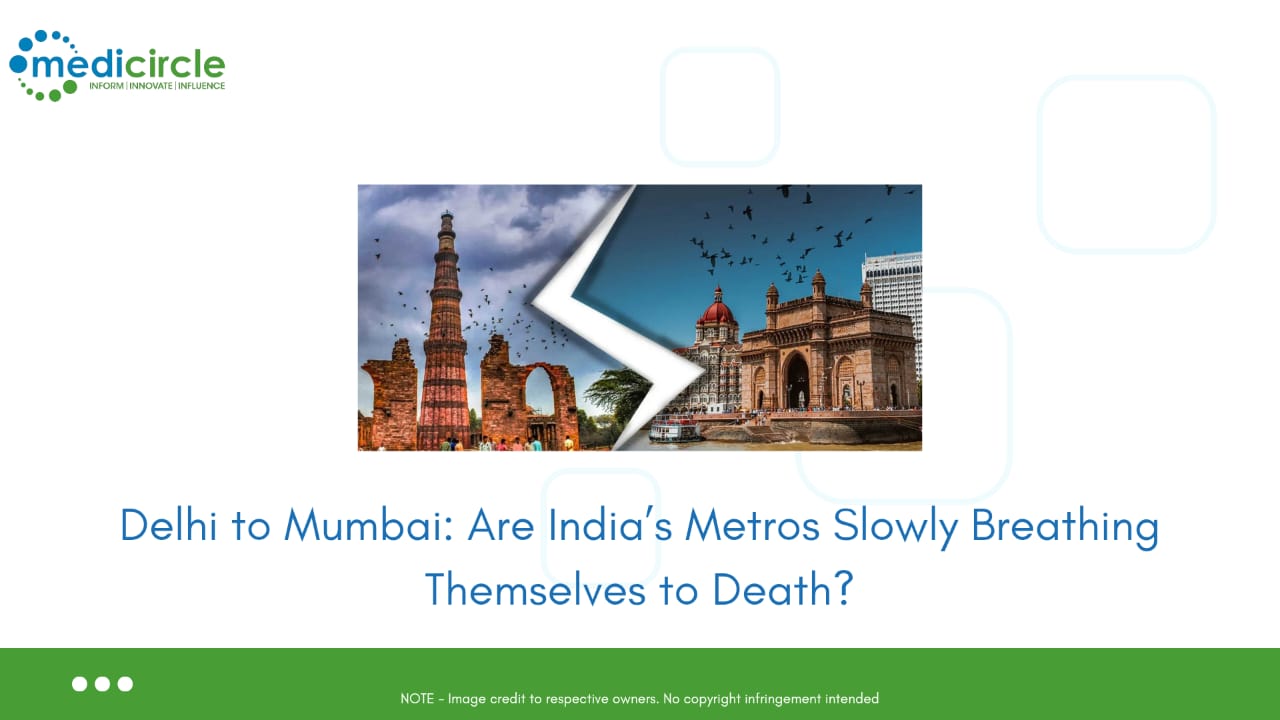
This is not Delhi’s story alone. Chennai and Mumbai, cities that pride themselves on resilience, are witnessing similar spikes. Severe pollution episodes have become seasonal health disasters, forcing thousands to seek urgent medical care for breathlessness and wheezing. Doctors in some of the busiest wards describe how pollution-heavy days bring predictable surges in patients, as though the hospital clocks have learned to move in sync with the city’s AQI monitors.
The government’s response has shifted from concern to active monitoring. A growing network of national surveillance sites is now tracking respiratory illnesses in real time. Today, more than 230 sentinel surveillance centres across 30 states and union territories feed data into the National Centre for Disease Control, weaving together patterns that help public health teams understand how pollution, weather, demographics, and disease history intersect. In 2023, the digital ARI surveillance system began functioning through the Integrated Health Information Portal, capturing cases rapidly and helping experts chart emerging hotspots before hospitals are overwhelmed.
Still, air pollution’s impact does not play out uniformly across populations. The health ministry has highlighted that food habits, work environments, socio-economic status, immune strength and individual medical history influence who gets sick and how severely. In a country where millions work outdoors, commute long distances through traffic fumes, or live in densely packed neighbourhoods with limited ventilation, the risks pile up silently. The lungs, already coping with stress, become vulnerable to toxins, particulate matter and allergens drifting invisently across urban landscapes.
Scientific evidence continues to accumulate. The Indian Council of Medical Research recently concluded a massive multi-site study across five hospitals, tracking more than 33,000 emergency room patients with respiratory symptoms. The findings echoed what global data has shown repeatedly i.e when pollution levels rise, emergency visits for breathing problems spike. The link between dirty air and respiratory distress grows clearer with every dataset, even as officials caution that causation remains complex. But complexity does not change the lived reality of patients whose bodies react instantly to changes in the air.
In clinics across metro cities, pulmonologists describe a shifting pattern in respiratory illnesses. Children who once came in with seasonal colds now present with deeper inflammation and prolonged coughing. Young adults, previously healthy, report unexplained breathlessness during routine activity. Senior citizens struggle through the winters, their lungs wrestling against a toxic mix of cold air and particulate matter that settles like dust inside the body. And in many households, inhalers and nebulisers have become as common as over-the-counter painkillers.
Acute respiratory illness, once looked at as episodic, now resembles a constant, lingering threat in urban India. It is becoming embedded into the healthcare routine of families who never imagined they would need long-term respiratory care. Clinics are witnessing more cases of asthma flare-ups, bronchitis, COPD exacerbations, viral respiratory infections that refuse to settle, and lung irritation that mimics diseases without evolving into one. For some, these episodes are mild and manageable. For others, they escalate into hospital stays marked by oxygen support and continuous monitoring.
Delhi’s data stands out because of its scale, but the narrative is national. Major metro cities offer the clearest picture because their reporting systems are strong, yet countless cases in smaller cities and towns go uncounted. The burden is likely heavier than the numbers suggest, especially among low-income families who delay visiting hospitals due to cost, distance or lack of awareness. In such homes, respiratory symptoms often become chronic before medical attention is sought.
Behind the scenes, health experts are racing to understand the evolving nature of respiratory diseases in India. They point out that long-term exposure to polluted air weakens lung function even in healthy individuals. It increases inflammation, irritates the airways, and affects immunity. For those with underlying conditions, pollution accelerates decline. For children, prolonged exposure may limit lung development. For the elderly, it can trigger complications that lead to emergency admissions or intensive care.
Yet, despite this growing crisis, respiratory illnesses struggle for attention compared to more dramatic health challenges. They don’t always arrive with the urgency of heart attacks, nor the long-term dread of cancer. But their cumulative impact on quality of life is deeply damaging. A city with millions coughing at once is a city in the grip of a silent epidemic. And in India’s metros, this epidemic is now a yearly companion.
Policymakers, doctors, environmental scientists, and public health specialists all agree that improving air quality is central to reducing respiratory disease burden. Cleaner cities can ease the load on hospitals, reduce healthcare expenditure, improve productivity and significantly enhance everyday wellbeing. But while long-term solutions require systemic change, awareness becomes the first line of defence for millions of residents. People are increasingly investing in masks, air purifiers, and lifestyle adjustments. Yet these measures offer temporary relief. They do not alter the fact that polluted air continues to infiltrate lungs with every breath.
The government’s ongoing surveillance efforts are a step forward, offering real-time insight into how respiratory illnesses evolve. But better data alone cannot clean the air. The urgency lies in reducing pollution from vehicles, industrial emissions, waste burning, construction dust and household fuels. India’s fight against respiratory illness cannot be limited to the healthcare system; it must extend to environmental reform, urban planning and public behaviour.
Most importantly, the conversation around respiratory diseases needs to shift. It is not simply about coughing and congestion. It is about lung health, immune response, long-term risk, mental stress, absenteeism, hospitalisation, and the enormous human cost of pollution. It is about families watching an elderly parent struggle every winter, or a child missing classes due to repeated respiratory attacks. It is about adults feeling fatigue during everyday tasks because their lungs are working harder than they should.
The link between acute respiratory illness and air pollution may not have a single, definitive line of causation, but it has a strong, undeniable rhythm that doctors observe every day and patients experience every season. As India’s cities continue to expand upward and outward, the challenge is to ensure that progress does not come at the cost of people’s lungs. Breathing should never feel like a burden, especially in a country that is working tirelessly to strengthen its healthcare system.
The rising cases of ARI in Delhi, Mumbai, Chennai and other metros serve as a warning that must be taken seriously. The lungs of the nation are signalling distress, and hospitals are becoming the first witnesses to this unfolding public health challenge. Cleaner air may take time, but recognising the seriousness of respiratory disease is the beginning of meaningful change. India cannot afford to normalise breathlessness as a consequence of urban living.
In a world where every breath counts, the real question is whether we are listening to what our air is trying to tell us.




-23-300x250.png)

.jpeg)





.jpg)
.jpg)
.jpg)
.jpg)
.jpg)
.jpg)
.jpg)
.jpg)
.jpg)