 Thursday, November 19, 2026
 In a rare and highly complex surgery, doctors at Nanavati Max Super Speciality Hospital removed a cancerous bone tumour as big as the heart from the centre of a patient’s chest.





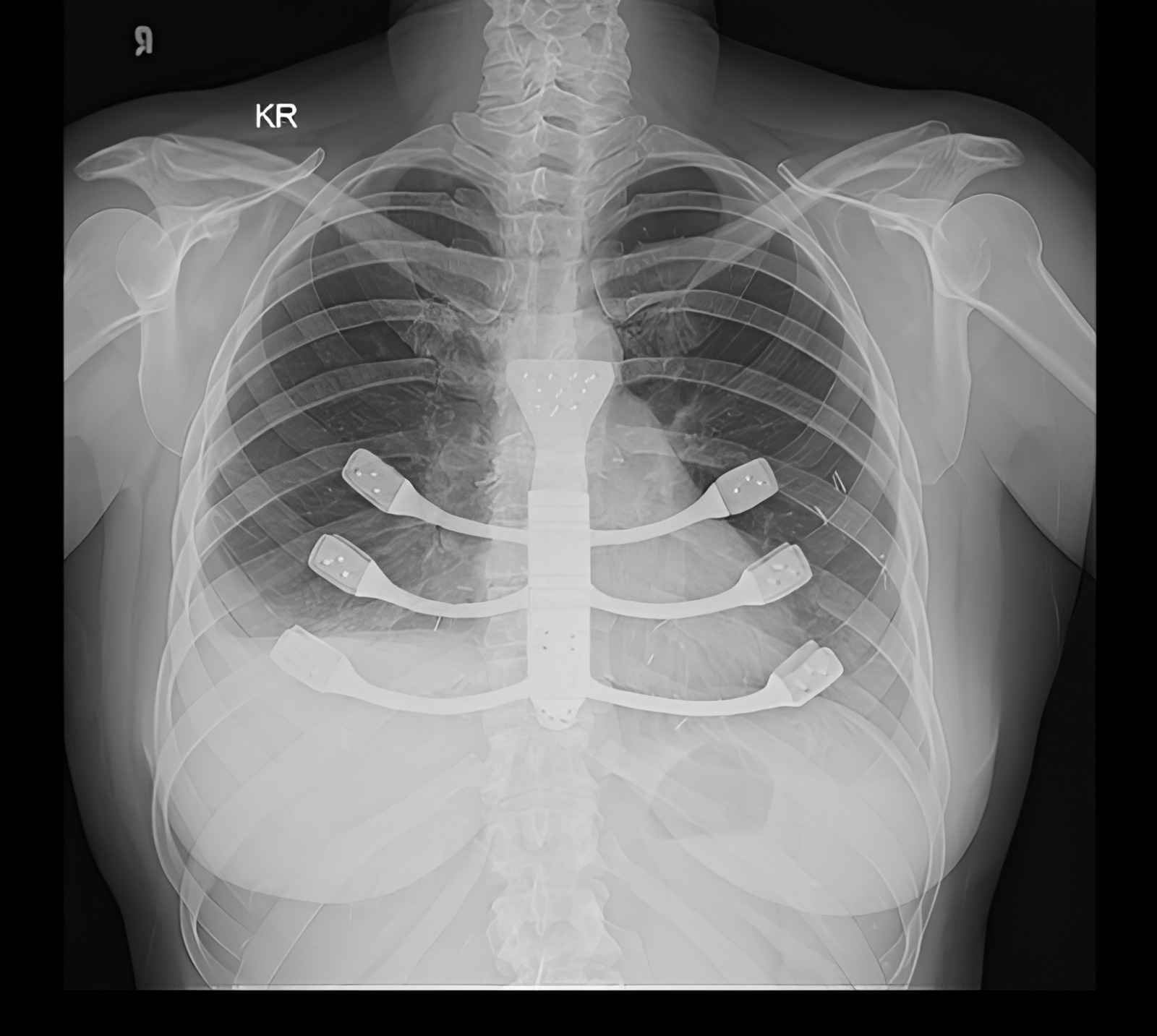
Mumbai, 16th March 2026: In a rare and highly complex surgery, doctors at Nanavati Max Super Speciality Hospital removed a cancerous bone tumour as big as the heart from the centre of a patient’s chest. After removing the tumour, the team successfully rebuilt her chest wall using a customised 3D-printed titanium implant made specifically for her body.
The patient, a 41-year-old fitness trainer from Mumbai, had noticed an unusual swelling in the middle of her chest. After imaging and biopsy, she was diagnosed as a grade 2 chondrosarcoma, a bone cancer and referred to Dr Manish Agarwal for management. Scans showed that it had grown from the sternum (breastbone) and spread to nearby ribs. Because this type of cancer does not respond well to chemotherapy or radiation, complete surgical removal was recommended as effective treatment.
The surgery was led by Dr. Manish Agarwal, Vice Chairman, Orthopaedic Oncosurgery and Lead – Innovations, and Dr. George Karimundackal, Principal Director – Thoracic Surgery, along with multidisciplinary team including plastic and reconstructive surgeons. To completely remove the cancer, the surgical team had to take out the central sternum and parts of several ribs. This left a large gap in the chest wall. Rebuilding this area was critical not just to protect the heart and lungs, but also to allow the patient to breathe normally and move comfortably.
Instead of relying on older materials like mesh and cement, the team created a custom 3D-printed titanium implant designed specifically for her body. The implant was designed and manufactured in India using high-precision technology, with the entire plan was conceived and developed in the hospital’s in-house 3D lab that is routinely used for complex surgical planning and patient-specific implants. The implant had nine pieces, one to replace the breastbone and eight for the ribs, each carefully fixed to remaining ribs and breastbone with screws to restore the natural shape of the chest and allow movement during breathing. Each titanium rib was design to match the dimensions of the patient’s rib and had a lattice structure to allow bony ingrowth in all bone contact areas. The implant was manufactured by “3D incredible” based in Pune.
The reconstruction was then covered using a prolene mesh and muscle from both sides of the chest to provide strong protection over the implant. In the days following the surgery, the patient showed encouraging recovery with comfortable movement and stable breathing.
Commenting on the case, Dr. Manish Agarwal, Vice Chairman, Orthopaedic Oncosurgery and Lead – Innovations, Nanavati Max Super Speciality Hospital said, “Tumours of the breastbone are rare. In this case, the cancer was sitting right next to the heart and lungs, which made removing it challenging. But once the tumour is removed, the bigger challenge is rebuilding the chest so that the patient can breathe normally and the vital organs remain protected. The custom 3D-printed implant allowed us to rebuild her chest almost exactly as it was before. Such reconstructions are extremely rare worldwide, especially using a patient-specific, multi-piece design like this.”
Dr. George Karimundackal, Principal Director – Thoracic Surgery, Nanavati Max Super Speciality Hospital added, “The breastbone and ribs play a major role in breathing. If this area is not reconstructed properly, patients can face serious breathing difficulties. The design of this implant helped restore both safety and function in a way older techniques often could not.”
This case highlights how advanced surgical techniques and teamwork across specialties are helping doctors treat rare cancers in safer and more effective ways.





-23-300x250.png)





















