 Thursday, October 08, 2026
 Whether this approach becomes widely available will depend on future research, regulatory approval, and continued technological refinement




Modern medicine often advances through large clinical trials, global research collaborations, and years of slow, careful experimentation. But every once in a while, a single patient changes the direction of science. A rare disease, a desperate situation, and an unconventional idea can come together to create a moment that reshapes the future of healthcare. Such a moment may have arrived with the story of a nine-month-old baby known as KJ.
For the first time in medical history, doctors designed and delivered a personalized gene editing treatment specifically created for one individual patient. The procedure targeted a rare genetic disorder that affects the liver and threatens life within months of birth. If the early results continue to hold, the experiment could signal the beginning of a new era in precision medicine, genetic therapy, and rare disease treatment.
The details of this remarkable case were published in May in the New England Journal of Medicine, drawing attention from researchers around the world. While scientists have been exploring CRISPR gene editing technology for years, the treatment given to this infant represents something fundamentally different. It was not a generic therapy designed for a large patient population. Instead, it was crafted to correct a specific mutation in a single child’s DNA.
KJ was born with a condition called carbamoyl-phosphate synthase 1 deficiency, often abbreviated as CPS1 deficiency. The disorder is extremely uncommon, appearing in roughly one out of every 1.3 million births. For the families affected by it, the consequences are devastating.
The illness originates from a mutation in a gene responsible for producing an enzyme essential for liver function. This enzyme plays a crucial role in the body’s urea cycle, a biological process that removes ammonia and other toxic substances generated during protein metabolism.
In healthy individuals, the liver converts ammonia into harmless compounds that can be safely eliminated from the body. Without the enzyme produced by the CPS1 gene, this process fails.
The result is a dangerous buildup of ammonia in the bloodstream. High ammonia levels are extremely toxic to the brain. In infants, the damage can develop rapidly, leading to seizures, severe neurological injury, developmental delays, and in many cases death. Even with intensive medical care, the condition often leaves children with lifelong complications.
For many patients, the only long-term solution is a liver transplant. However, the path to transplantation is difficult and uncertain. Babies must grow strong enough to survive major surgery, and suitable donor organs are limited. Medical statistics suggest that only about half of infants with CPS1 deficiency live long enough to receive a transplant.
For KJ and his family, time was becoming a dangerous adversary. Doctors initially attempted the standard approach used in metabolic disorders. KJ was placed on medication designed to help his body eliminate ammonia. His diet was carefully restricted, particularly in terms of protein intake, since protein metabolism produces ammonia as a by-product.
This strategy can sometimes stabilize patients temporarily, but it does not solve the underlying genetic problem. The defective gene continues to produce insufficient enzyme activity, leaving the child constantly vulnerable to ammonia spikes.
Even minor infections or dietary changes can trigger dangerous metabolic crises. As weeks passed, doctors faced a difficult reality. Waiting for a liver transplant could take months. During that time, the risk of irreversible brain injury remained high. It was at this point that a bold idea entered the conversation.
Rebecca Ahrens-Nicklas, a pediatric specialist and researcher working at the Children’s Hospital of Philadelphia, had been studying advanced gene editing technologies aimed at correcting inherited metabolic diseases. Her work focused on a newer form of CRISPR-based therapy known as base editing, a method capable of repairing individual genetic letters within DNA.
Traditional CRISPR gene editing works by cutting DNA strands at specific locations. The cell’s natural repair machinery then reconnects the strands, sometimes correcting harmful mutations in the process. While powerful, this technique can introduce unintended changes because the DNA strands are completely broken during editing.
Base editing takes a more delicate approach. Instead of cutting the DNA, the technology chemically converts one DNA letter into another. This allows scientists to repair certain mutations with extraordinary precision. In diseases caused by a single letter change in the genetic code, base editing can theoretically restore normal gene function.
For KJ’s illness, this possibility was particularly relevant. The mutation affecting his CPS1 gene involved a very specific genetic error. If that mistake could be corrected inside liver cells, the body might regain the ability to process ammonia normally.
The concept sounded promising in theory. Yet there was one enormous obstacle. No human patient had ever received such a customized base-editing therapy designed specifically for their unique genetic mutation.
For decades, scientists had been refining gene editing tools in laboratories and animal studies. Some CRISPR therapies had already entered clinical trials for blood disorders such as sickle cell disease. However, those treatments were developed for groups of patients who shared similar genetic mutations.
What KJ required was far more complex. His therapy would have to be designed from scratch to match his exact genetic sequence. Every component of the treatment from the editing molecule to the delivery system would need to be engineered specifically for him. After careful discussions with KJ’s parents, the medical team decided to move forward.
What followed was an extraordinary scientific effort involving researchers, clinicians, and biotechnology experts across multiple institutions. The goal was to develop a clinical-grade personalized gene editing therapy within months, a process that normally requires years of development.
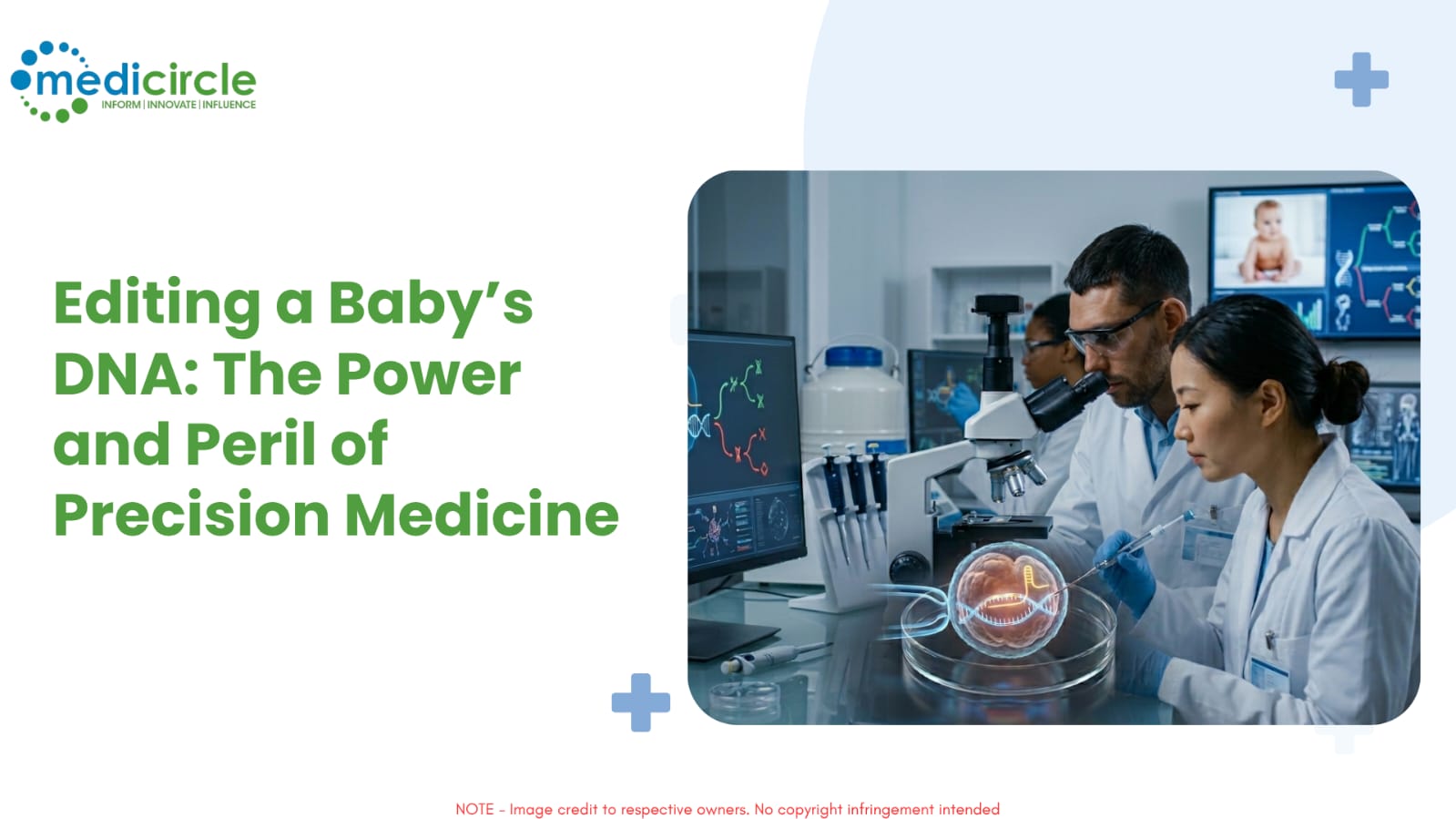
Scientists first mapped the exact mutation responsible for the enzyme deficiency. They then engineered a base-editing molecule capable of correcting the faulty DNA letter. The next challenge involved delivering this editing system safely into the patient’s liver cells.
To achieve this, the therapy was packaged within tiny lipid nanoparticles, microscopic fat-based structures often used to transport genetic material through the bloodstream. These lipid particles protect the editing molecules while allowing them to enter target cells.
Once inside the liver, the base-editing system would seek out the defective DNA sequence and correct it. The entire treatment was designed to function like a microscopic repair tool operating within the body’s genetic blueprint. The first infusion was administered on February 25 at a very cautious dose.
Doctors monitored KJ closely for signs of side effects or immune reactions. Gene editing therapies carry potential risks, including unintended genetic changes or inflammatory responses. Safety was therefore the highest priority. Encouragingly, the initial infusion produced no serious complications.
Over the following weeks, subtle changes began to appear. One of the most promising developments involved KJ’s diet. After the treatment, doctors observed that he could tolerate protein intake at levels similar to a healthy infant.
For a patient with CPS1 deficiency, this was a remarkable shift. The medical team continued to monitor ammonia levels and liver function carefully. A second infusion was administered roughly three weeks later, again with careful dose adjustments. Gradually, the clinical picture improved. The amount of medication required to control ammonia levels was reduced significantly. KJ also managed to recover smoothly from viral infections that would previously have triggered dangerous metabolic episodes.
These early results suggest that the edited gene may be producing at least some functional enzyme. A third infusion has since been given as doctors continue evaluating the therapy’s long-term impact. Researchers remain cautious about declaring success. Gene editing therapies require extended follow-up to determine whether benefits persist and whether any delayed side effects emerge.
The early signals are encouraging enough to spark global scientific interest. For experts in genomic medicine, CRISPR therapy, and rare disease research, this case represents something more than a medical curiosity. It demonstrates that a fully personalized gene editing treatment can be designed, manufactured, and delivered within a timeframe that could save lives.
Historically, developing gene therapies for extremely rare conditions has been economically challenging. Pharmaceutical companies typically focus on diseases affecting larger populations where treatment development costs can be recovered.
This leaves thousands of rare genetic disorders without effective treatments. The personalized approach used in KJ’s case could potentially change that equation. If gene editing platforms become flexible enough, scientists might design targeted therapies for individual patients or very small patient groups. The concept is sometimes described as “n-of-one medicine,” meaning treatment developed for a single person. Such an approach would represent a profound shift in how healthcare systems address rare genetic diseases.
Instead of waiting decades for large pharmaceutical programs, families facing rare conditions might one day benefit from rapidly developed genetic interventions tailored to their specific mutations. Of course, many challenges remain.
The cost of developing personalized gene therapies could be enormous. Manufacturing regulatory-grade treatments requires advanced laboratories, rigorous quality control, and extensive safety testing. Ethical questions also arise when experimental therapies are offered under urgent medical circumstances. Doctors must balance the potential benefits against unknown risks, particularly when treating infants or children.
Despite these complexities, the successful development of KJ’s treatment in just six months surprised even experienced scientists. Experts in molecular therapeutics have described the timeline as unprecedented in the field of genetic medicine. Achieving clinical-grade CRISPR-based therapy within such a short period would have seemed impossible only a few years ago.
The rapid progress reflects decades of foundational research in genetics, biotechnology, and molecular biology. Today, gene sequencing technologies can identify disease-causing mutations within days. CRISPR editing systems allow scientists to design targeted genetic modifications with remarkable precision. Lipid nanoparticle delivery systems, refined during the development of mRNA vaccines, provide effective methods for transporting genetic material into human cells.
Together, these innovations are transforming the landscape of medical research. For families affected by rare diseases, the potential impact is massive. More than 7,000 rare genetic disorders have been identified worldwide. Many lack effective treatments because the small number of patients makes traditional drug development impractical.
Personalized gene editing could eventually provide solutions for some of these conditions. Yet the story of KJ also serves as a reminder of the courage required from families participating in experimental medicine. Agreeing to a therapy never before attempted in humans involves enormous trust in medical science. It reflects a willingness to explore uncertain paths when conventional treatments offer little hope.
For KJ’s parents, the decision was guided by a simple truth: without intervention, the disease carried a serious risk of brain damage or death. In that context, the promise of genetic repair offered a chance worth pursuing. Whether this approach becomes widely available will depend on future research, regulatory approval, and continued technological refinement. Clinical trials involving larger groups of patients will be necessary to confirm safety and effectiveness.
Still, the early success of this personalized gene editing therapy suggests that medicine may be approaching a new frontier. For decades, genetic diseases were considered permanent errors written into the human genome. Doctors could manage symptoms, but correcting the underlying mutation seemed impossible. Today, that assumption is slowly changing.
The idea that a defective gene inside the body can be repaired using precisely engineered molecular tools once belonged to the realm of science fiction. Now it is becoming a scientific reality. For one infant fighting a rare metabolic disease, that reality may already be making a difference.
And for the future of gene editing therapy, precision medicine, CRISPR technology, and rare disease treatment, the story of baby KJ may one day be remembered as the moment when personalized genetic medicine truly began.






.jpeg)










.jpg)
.jpg)
.jpg)
.jpg)
.jpg)
.jpg)


.jpg)