Tuesday, October 27, 2026
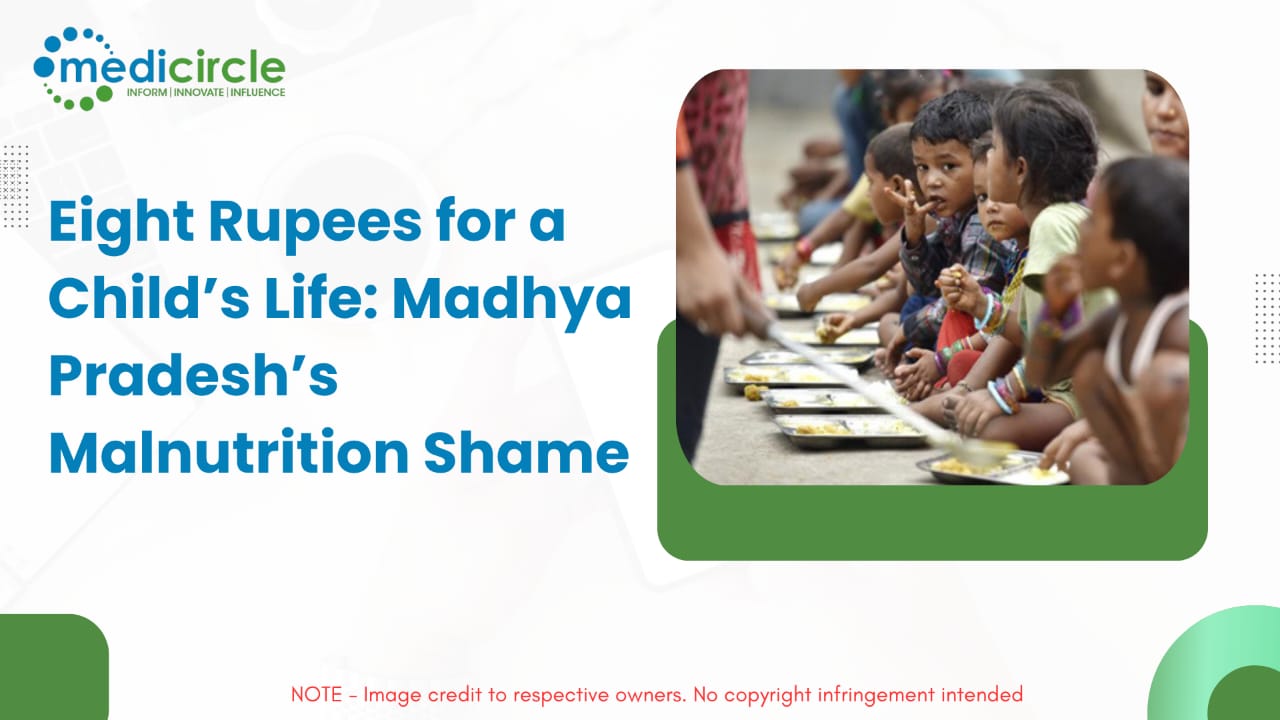
 No GDP number can justify a system where a baby’s life is worth less than a plate of food. The real progress of a nation is not in skyscrapers or satellites it’s in the strength of its children.




In India, where government records shine with promises and welfare schemes parade their success in official reports, a four-month-old baby named Hussain Raza died not because medicine failed, but because the system forgot he existed. His death in Satna, Madhya Pradesh, is not just another tragedy. It’s a question that stings: what is the value of a child’s life in a nation that claims to spend crores on nutrition?
The Anganwadi records in Satna paint a picture of efficiency where Rs 8 spent daily per malnourished child, Rs 12 for the severely malnourished. The government files are full of figures, targets, and slogans about “Poshan for All.” Yet in Marwa village, where dust coats every surface and hunger hides in every home, those eight and twelve rupees never turned into milk, food, or medicine. They stayed on paper just like the promises.
At the Satna District Hospital, where the air smells faintly of antiseptic and exhaustion, Hussain’s mother, Asma Bano, sat beside her baby’s cot for four nights, watching the machines blink and beep until they went silent. “He felt so light,” she whispered, remembering her child. “Like he was resting on my soul.” Her baby, once born healthy at three kilos, had wasted away to two-and-a-half before his tiny heart stopped. There were no vaccines, no follow-ups, no Anganwadi visits. There was only the sound of hunger.
Her husband, a daily wage worker earning Rs 250 on good days, had taken him from one hospital to another in Jaitwara, Satna, even private clinics through Ayushman Bharat. “Everywhere they said wait. He’ll get better. But no one came to check. The Anganwadi people came once, wrote his name, and vanished,” Aamir said. His anger is quiet, like the silence after a storm. “They say the government feeds children. But my son starved between two entries in a register.”
When officials came after Hussain’s death, they claimed the family was “unavailable during surveys.” But an inspection proved otherwise because Asma and Aamir had never left Marwa. The Anganwadi workers had simply stopped showing up. Hussain was never marked as malnourished, never admitted to a Nutrition Rehabilitation Centre, never even listed under the Dastak Abhiyan, the state’s own program for identifying undernourished children. On government records, he never existed until his death gave him a place in the statistics.
The scale of this failure is concerning. Satna district alone has nearly 8,000 malnourished children of whom over 1,400 are classified as severely malnourished. Between April and September 2025, over 1,200 such children were admitted to rehabilitation centers. Yet every month, hundreds more slip through the cracks, unseen and unrecorded. In some Anganwadi centers, nearly one in three children show signs of severe malnutrition i.e. six times higher than what’s considered “acceptable” under government standards.
But numbers can’t capture what hunger looks like in Madhya Pradesh’s villages. Under a neem tree in Marwa, women gather with tired eyes and heavier hearts. Their children play in the dust, bellies swollen from protein deficiency, limbs frail like dry branches. “There is an ASHA worker here,” one woman says, “but she never visits. No one comes to see our children. No iron tablets, no vaccines, no food. They write our names in their books and disappear.” Another woman adds, “We stand all day at the hospital for vaccinations. Then they tell us to come next week. Some weeks we just don’t go back.”
Dr. Rupesh Soni, Block Medical Officer of Majhgawan, confirmed that Hussain’s death was due to pneumonia aggravated by malnutrition. “He was admitted on October 17 and died within three days,” he said. But the doctor’s confirmation did little to change the larger reality. Show-cause notices were issued to local health staff including the medical officer, the health worker, the ASHA. But accountability in such cases rarely travels beyond a few official memos. The problem is not the negligence of one worker, it is the decay of an entire system.
Across Satna’s 2,054 Anganwadi centers, thousands of workers are supposed to monitor children, distribute supplements, and track growth. Yet on ground, the machinery is crumbling. Salaries are delayed, supplies run short, and supervision is sporadic. In some centers, the weighing machines don’t work; in others, nutritional supplements expire before they are distributed. The outcome is predictable with hungry children, helpless mothers, and empty reports filled with fake data.
Madhya Pradesh, once hailed for its “Poshan Abhiyan” efforts, still ranks among India’s worst in child malnutrition. The National Family Health Survey (NFHS-5) reveals that over 40% of children in the state are underweight and more than 35% are stunted. These are children growing up without strength, futures fading before they begin. Yet, year after year, the government’s response remains a blend of tokenism and paperwork. Each new tragedy brings fresh orders, fresh committees, and the same old silence.
When questioned, Nirmala Bhuria, the state’s Minister of Women and Child Development, said, “Malnutrition is a global issue. Awareness is equally important. We are constantly working to eliminate it.” Her words sound familiar that fills press releases and press conferences but never the empty plates of hungry children.
For families like Asma’s, such statements mean nothing. What they need is presence, an Anganwadi worker who visits, a health worker who follows up, a system that sees them as people, not data points. What they get instead is neglect disguised as procedure.
The tragedy of Hussain’s death lies not only in one family’s grief but in what it reveals about India’s welfare machinery. For every baby who dies in a hospital, there are hundreds more growing up invisible who are too weak to cry, too forgotten to count. Behind each Anganwadi wall, there are records filled with signatures and tallies, names of children who exist only in ink, not in care.
The irony is that the government spends crores on “nutrition awareness” campaigns with posters, television spots, and slogans urging parents to give their children healthy meals. But in villages where families survive on one meal a day, such advice sounds cruelly out of touch. What good are slogans when there’s no food to serve?
Hussain’s story is one among thousands, but it should haunt every policy maker who talks of development. Because the real measure of governance is whether a child in a small hut in Satna can live through his first year of life. Eight rupees a day may sound like charity on paper, but it’s barely enough to buy half a packet of milk. Somewhere between those eight and twelve rupees, a baby’s life was priced, processed, and forgotten.
India has the technology to map malnutrition in real time, the manpower to run outreach programs, and the funds to ensure every child receives basic nutrition. Yet the gap between promise and practice remains as wide as ever. The Anganwadi model, once hailed as a pillar of rural health, now stands as a symbol of bureaucratic rot where attendance registers are filled, but cupboards are empty.
Every report that celebrates “improvement in child nutrition” hides the truth of villages like Marwa. The truth that mothers still give their children watered-down tea because there’s no milk. The truth that children go to bed hungry while reports boast of “mid-day meal success.” The truth that somewhere in Satna, a mother still holds a photograph of her baby, waiting for answers that will never come.
In India’s rural heartland, hunger doesn’t always announce itself dramatically. It creeps in through missed vaccines, delayed supplements, absent workers, and neglected mothers. It’s a slow violence that kills by indifference, not by intent. Hussain’s death wasn’t sudden. It was the final outcome of countless missed chances each one small enough to ignore, together large enough to destroy.
If governance means anything, it must mean that no child dies because someone failed to visit, to weigh, to feed. Accountability must go beyond paper inquiries. The state must audit outcomes, not attendance. Every rupee claimed as “spent” must be traced to the meal it bought, the child it fed, the life it saved.
As India dreams of becoming a $5 trillion economy, the death of one malnourished baby should force a pause. Because development cannot coexist with starvation. No GDP number can justify a system where a baby’s life is worth less than a plate of food. The real progress of a nation is not in skyscrapers or satellites it’s in the strength of its children.
In Marwa, the Anganwadi register still records Rs 8 for “malnourished” and Rs 12 for “severely malnourished.” Asma’s lap remains empty, her house silent. The government files are full, the reports complete, the expenditure justified. But somewhere between those eight and twelve rupees another heartbeat stopped.




-23-300x250.png)

.jpeg)






.jpg)
.jpg)
.jpg)
.jpg)
.jpg)
.jpg)
.jpg)
.jpg)
.jpg)