 Thursday, October 08, 2026
 Regular moderate exercise can strengthen immunity and reduce the frequency of infections. However, intense or prolonged workouts—especially when you are already sick—can suppress immune function.




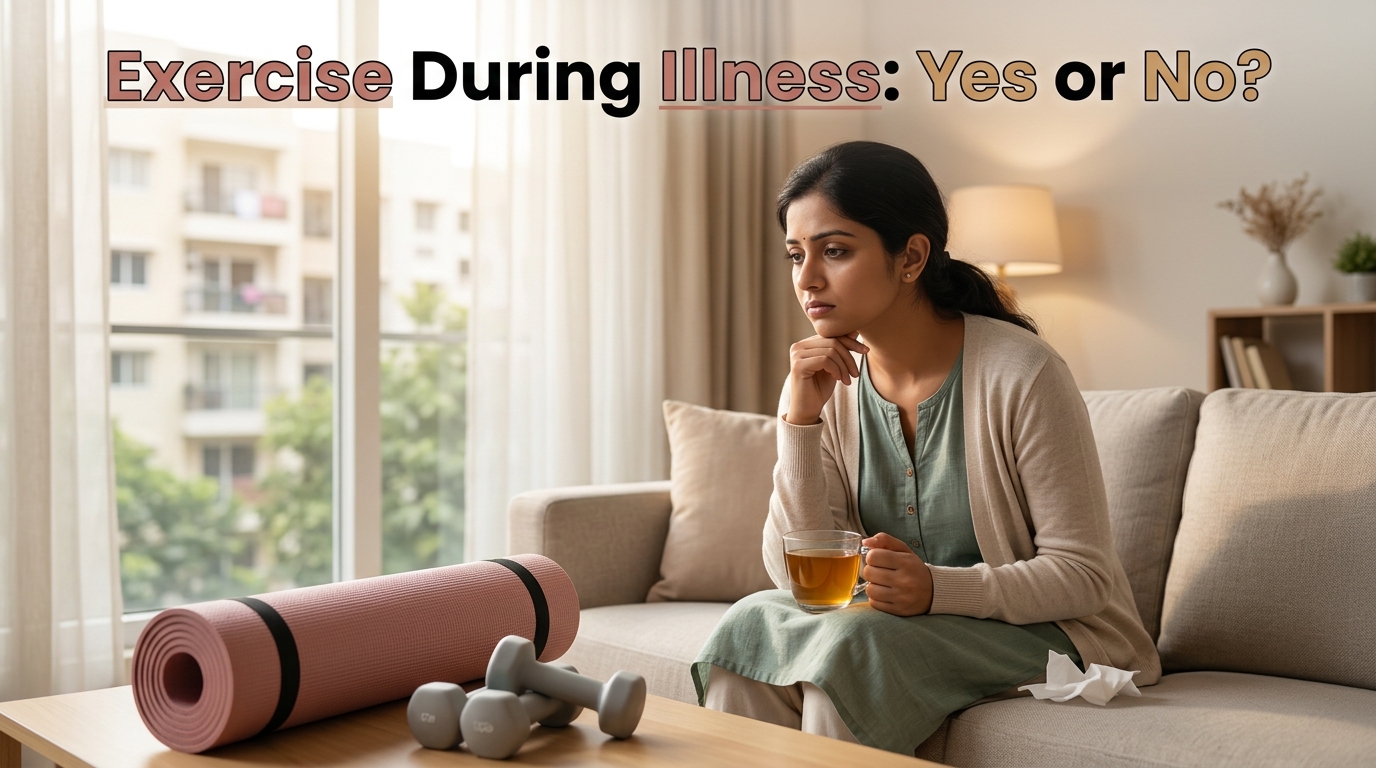
Exercise During Illness: Yes or No?
When you’re committed to your fitness routine, even a mild cold can create a dilemma. You start wondering whether to push through your workout or take a break. Many people fear that skipping even a day might affect their progress.
But here’s the truth—your body doesn’t work on guilt, it works on recovery.
Understanding whether exercise during illness is safe depends entirely on the type and severity of your symptoms. Sometimes, light movement can actually help you feel better. Other times, forcing a workout can worsen your condition and delay healing.
The Real Answer: It Depends on Your Symptoms
There is no one-size-fits-all answer to whether you should exercise when sick. According to experts, the decision depends on what kind of illness you are dealing with.
If your symptoms are mild, such as a runny nose or slight sore throat, light activity may be acceptable. However, if your body is dealing with something more serious like fever, fatigue, or body aches, exercise can do more harm than good.
Experts emphasize that fever is a clear signal to stop exercising. When your body temperature is already elevated, physical activity can increase it further, making your condition worse. (WebMD)
This is where listening to your body becomes crucial.
The “Above the Neck” Rule
One of the most widely used guidelines for exercise during illness is the “above the neck” rule.
If your symptoms are limited to areas above the neck—like nasal congestion, sneezing, or a mild sore throat—it is generally safe to engage in light to moderate exercise.
However, if symptoms extend below the neck—such as chest congestion, coughing, stomach issues, or body aches—it is better to rest.
This simple rule helps you quickly assess whether your body is capable of handling physical activity without adding stress.
When Exercise Can Actually Help
In some cases, light exercise may provide relief from mild symptoms.
Activities like walking, stretching, or yoga can improve blood circulation and temporarily relieve nasal congestion. Some people even report feeling more energized after light movement during a mild cold.
Moderate exercise has also been shown to support the immune system by improving circulation of infection-fighting cells.
However, the key here is moderation. Overdoing it can reverse these benefits and slow down recovery.
When You Should Avoid Exercise Completely
There are situations where exercise should be avoided entirely.
If you have a fever, your body is actively fighting an infection. Adding physical stress can worsen your symptoms and prolong recovery. (WebMD)
Similarly, if you experience extreme fatigue, muscle aches, or flu-like symptoms, rest is essential.
Chest congestion and breathing difficulties are also warning signs. Exercising in such conditions can strain your respiratory system and increase the risk of complications.
In these cases, your body needs energy to heal—not to perform.
The Impact of Exercise on Your Immune System
Your immune system plays a central role in how your body responds to illness.
Regular moderate exercise can strengthen immunity and reduce the frequency of infections. However, intense or prolonged workouts—especially when you are already sick—can suppress immune function.
Studies suggest that excessive training without adequate recovery can reduce infection-fighting cells and increase stress hormones, making you more vulnerable to illness. (WebMD)
This is why pushing yourself during illness often leads to longer recovery times.
Why Rest Is Sometimes the Best Medicine
Rest is not a setback—it is a strategy.
When you are sick, your body diverts energy toward healing. Exercising during this time forces your body to split its resources, slowing down recovery.
Taking a break for a few days will not ruin your fitness progress. In fact, it may help you return stronger and more energized.
Many people underestimate how powerful rest can be. It allows your body to repair, restore, and rebuild.
How to Modify Workouts When Sick
If you decide to stay active during mild illness, it is important to adjust your routine.
Instead of high-intensity workouts, opt for low-impact activities. Walking, light stretching, or gentle yoga can keep your body moving without overwhelming it.
Reducing the duration and intensity of your workout is essential. This is not the time to push limits or chase performance goals.
Think of it as maintenance, not progress.
The Risk of Exercising Too Soon
Another common mistake is returning to exercise too quickly after illness.
Even if you start feeling better, your body may still be recovering internally. Jumping straight into intense workouts can lead to relapse or prolonged fatigue.
It is always better to ease back gradually. Start with light activity and slowly increase intensity as your energy levels improve.
Patience during recovery ensures long-term progress.
The Social Responsibility Factor
Exercising while sick is not just about your health—it also affects others.
Going to the gym or attending group classes while contagious can spread illness to others. This is why many experts recommend avoiding public workouts when you are unwell.
Maintaining hygiene, washing hands, and staying home when necessary are essential practices for protecting the community.
My Perspective: Fitness Should Support Health, Not Fight It
One of the biggest mistakes people make is treating fitness as a rigid routine instead of a flexible lifestyle.
Your body is not a machine—it changes daily based on sleep, stress, nutrition, and health. Expecting it to perform the same way every day is unrealistic.
True fitness is about adaptability.
Some days, your best workout might be a high-intensity session. Other days, it might be complete rest. Both are equally important.
Learning to respect your body’s signals is what separates sustainable fitness from burnout.
Conclusion
So, exercise during illness—yes or no?
The answer is simple: it depends.
If your symptoms are mild and above the neck, light exercise may be safe. But if your body is dealing with fever, fatigue, or deeper symptoms, rest is the better choice.
Your health should always come before your routine.
Because the goal of fitness is not just to stay active—it is to stay well.
FAQs
- Is it safe to exercise during illness?
Yes, but only if symptoms are mild and above the neck.
- Should I exercise with a fever?
No, exercising with a fever can worsen your condition.
- Can exercise help a cold?
Light exercise may relieve mild symptoms temporarily.
- What is the “above the neck” rule?
It suggests exercising only if symptoms are mild and above the neck.
- Can exercise make illness worse?
Yes, intense workouts can delay recovery.
- Should I go to the gym when sick?
No, it’s better to avoid spreading illness to others.
- How long should I rest when sick?
Until symptoms improve and energy levels return.
- Can I do light workouts when sick?
Yes, if symptoms are mild and manageable.
- Does exercise affect immunity?
Moderate exercise boosts immunity, but excessive exercise can weaken it.
- When should I resume normal workouts?
Gradually, once you feel fully recovered.






.jpeg)








.jpg)
.jpg)
.jpg)
.jpg)
.jpg)
.jpg)


.jpg)
.jpg)
.jpg)