Tuesday, October 27, 2026
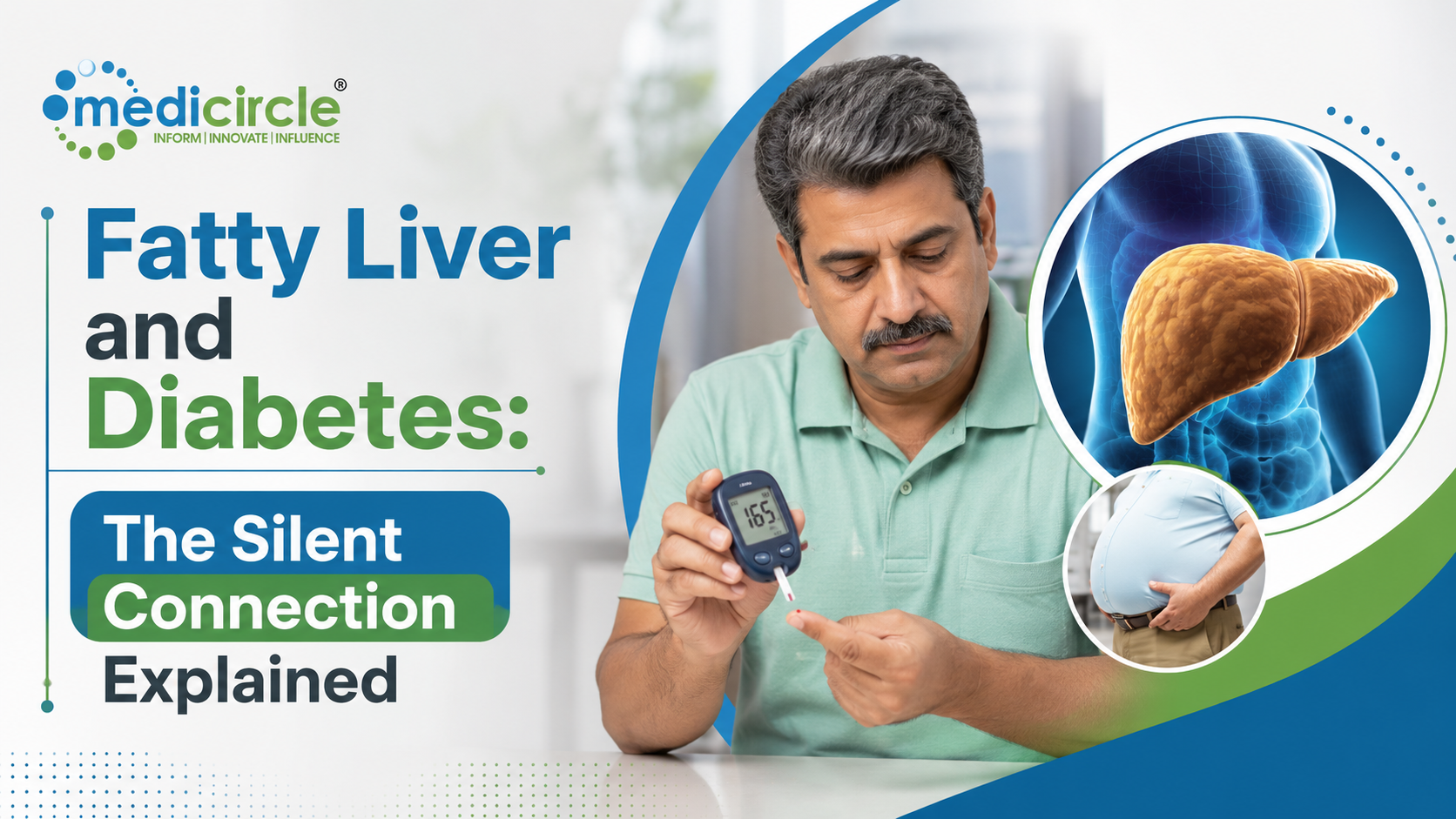
 Fatty liver and diabetes share insulin resistance as a common root cause, creating a harmful cycle that millions of Indian patients face silently. Early awareness, screening, and integrated lifestyle management can reverse both conditions effectively.





India carries one of the heaviest metabolic disease burdens in the world. According to a landmark study published in The Lancet by the Indian Council of Medical Research, over 101 million Indians are currently living with diabetes, making the country one of the most affected nations on the planet. At the same time, research published in 2025 across multiple Indian endocrine clinics estimates that metabolic dysfunction-associated steatotic liver disease (MASLD), previously known as non-alcoholic fatty liver disease (NAFLD), affects between 16 and 52 percent of Indian adults, depending on their risk profile.
What makes these two numbers alarming is not just their scale but their relationship. Fatty liver disease and type 2 diabetes are not independent conditions that happen to coexist in the same patient. They are metabolically entangled. They accelerate each other. They share the same root cause. And in most cases, patients remain entirely unaware of this connection until significant damage has already occurred.
Understanding why fatty liver and diabetes are linked, how each condition worsens the other, what warning signs to watch for, and what steps to take in the Indian context is no longer optional health knowledge. For millions of people across urban and semi-urban India, it is essential.
What Is Fatty Liver Disease and Why Is It Rising in India?
The liver is one of the most metabolically active organs in the human body. It processes everything that enters the bloodstream from the digestive system, regulates blood sugar, produces proteins essential for clotting, and is responsible for the metabolism of fats. When fat accumulates beyond five percent of the liver's total weight, a condition called hepatic steatosis or fatty liver disease develops.
There are two main categories of fatty liver disease. Alcoholic fatty liver disease is directly caused by excessive alcohol consumption. Non-alcoholic fatty liver disease, now more accurately termed MASLD, occurs independent of alcohol intake and is driven instead by metabolic factors such as obesity, high blood sugar, insulin resistance, and dyslipidemia.
MASLD has become the most common chronic liver condition globally, affecting an estimated 38 percent of adults worldwide. In India, the situation carries unique characteristics. Indians tend to develop metabolic complications at lower body mass indices compared to Western populations. The "Asian Indian phenotype," well documented in medical literature, describes a pattern of higher visceral fat, greater insulin resistance, and lower adiponectin levels even in individuals who do not appear overtly obese by standard weight classifications. This means a lean Indian adult can still have significant liver fat accumulation, a phenomenon that makes the condition even harder to detect.
The Central Mechanism: Insulin Resistance
To understand the connection between fatty liver and diabetes, one must first understand insulin resistance. Insulin is a hormone produced by the pancreas that enables cells throughout the body to absorb glucose from the bloodstream and use it for energy. When cells stop responding effectively to insulin, the pancreas compensates by producing increasingly larger amounts of the hormone. This state is called insulin resistance.
Insulin resistance is the common thread running through both type 2 diabetes and fatty liver disease. Here is how it works in both directions.
When insulin resistance develops, the body's cells fail to absorb glucose efficiently. Blood sugar levels rise. The liver, which is supposed to store glycogen when glucose is abundant, instead continues producing more glucose on its own through a process called gluconeogenesis. Over time, this persistent elevation of blood glucose leads to prediabetes and eventually to type 2 diabetes.
But the liver is not merely a passive participant. Under conditions of insulin resistance, the liver also receives a flood of non-esterified fatty acids from fat tissue, particularly from visceral or abdominal fat. The liver converts this excess fat into triglycerides and stores them within its own cells. Additionally, a high-carbohydrate diet common in many Indian households contributes to a process called de novo lipogenesis, where the liver converts excess dietary carbohydrates into fat. The result is fat accumulation within liver cells, which is the defining feature of fatty liver disease.
This creates a bidirectional cycle. Fatty liver worsens insulin resistance by releasing inflammatory signals and excess lipids into the bloodstream. Worsening insulin resistance, in turn, drives more fat into the liver. Each condition feeds and sustains the other.
How Diabetes Damages the Liver Over Time
For patients who already have type 2 diabetes, the liver faces a compounded threat. Chronically elevated blood glucose levels trigger a state of systemic inflammation. Advanced glycation end-products, which are harmful compounds formed when glucose binds to proteins, accumulate in liver tissue and impair its function. The enzyme pathways responsible for fat processing become dysregulated.
Research data from India is instructive here. A multicenter study spanning 105 diabetes and endocrine clinics across six geographic regions of India, conducted between May 2023 and February 2024, found significant rates of liver fibrosis among diabetic patients assessed using FibroScan technology. Liver fibrosis refers to the formation of scar tissue within the liver, which is a progression beyond simple fat accumulation. It signals that the liver is under sustained stress.
If left unmanaged, fatty liver disease in a diabetic patient can progress through several stages. Simple steatosis, which is fat accumulation without inflammation, can advance to metabolic dysfunction-associated steatohepatitis (MASH), which involves active inflammation and liver cell injury. This can further progress to fibrosis, then cirrhosis, and in severe cases to hepatocellular carcinoma, which is a form of liver cancer. Each stage represents a loss of liver function that simultaneously worsens the body's ability to regulate blood sugar, creating an accelerating downward spiral.
Recognizing the Warning Signs: What Patients Often Miss
One of the most dangerous aspects of both fatty liver disease and type 2 diabetes is that they are, in their early stages, largely asymptomatic. Patients feel normal. Routine blood tests may show mildly elevated liver enzymes that are dismissed or overlooked. Weight gain, particularly around the abdomen, is often attributed to lifestyle factors rather than recognized as a metabolic warning sign.
Fatty liver disease, when it does produce symptoms, typically causes non-specific complaints such as persistent fatigue, a dull heaviness or discomfort in the upper right side of the abdomen, and general sluggishness. These symptoms are easy to ignore or attribute to other causes. In more advanced stages, patients may develop jaundice, abdominal swelling due to fluid accumulation (ascites), or easy bruising, which are signs of significant liver damage.
Diabetes, particularly type 2 diabetes, similarly tends to develop gradually. Increased thirst and frequent urination are classic symptoms. However, many Indian patients present to their doctors only after complications have already developed, such as reduced vision related to diabetic retinopathy, kidney problems, or foot ulcers related to peripheral neuropathy. By this point, the liver may already be harboring significant disease.
This is why proactive screening matters enormously. In Indian clinical practice, many patients are diagnosed with fatty liver incidentally during an ultrasound done for another reason. This is a missed opportunity for earlier detection through structured, regular metabolic screening.
The Indian Diet and Lifestyle Factor
Any meaningful discussion of fatty liver and diabetes in India must acknowledge the role of diet and lifestyle. The Indian dietary pattern, particularly in urban households, has undergone a significant shift over the past two to three decades. Traditional foods rich in fiber, complex carbohydrates, and healthy fats have increasingly been replaced by refined grains, processed snacks, sugary beverages, and high-fat fast food.
Refined carbohydrates, including white rice, white bread, maida-based products, and packaged foods, drive rapid spikes in blood glucose and contribute directly to hepatic fat accumulation through de novo lipogenesis. High-fructose intake, whether from sugary drinks or processed foods, is particularly damaging to the liver because fructose is metabolized almost exclusively by the liver, and excess fructose is directly converted to fat.
Physical inactivity compounds the problem. Urban India has seen a dramatic reduction in daily physical activity with the rise of desk-based work, prolonged screen time, and a preference for motorized transport. Skeletal muscle is a primary site of glucose disposal. When muscle mass is low or when physical activity is insufficient, glucose is not effectively cleared from the blood, contributing to both insulin resistance and hyperglycemia.
Stress, poor sleep, and disrupted circadian rhythms are increasingly recognized as contributors to both conditions. India's growing burden of occupational stress in its urban workforce has metabolic consequences that are only beginning to receive adequate clinical attention.
How Both Conditions Are Diagnosed
Diagnosing fatty liver disease typically begins with a liver function test, which may reveal elevated levels of liver enzymes such as ALT and AST. An abdominal ultrasound is a widely accessible and affordable tool that can detect moderate to severe fat accumulation in the liver. For a more precise assessment of liver stiffness and fibrosis, a FibroScan, or transient elastography, provides non-invasive quantitative data without the need for a liver biopsy.
Diabetes is diagnosed through fasting blood glucose levels, the two-hour oral glucose tolerance test, or the HbA1c test, which reflects average blood sugar control over the preceding two to three months. Patients with established diabetes should also undergo regular liver enzyme testing and periodic ultrasound screening because of their elevated risk of MASLD.
The HOMA-IR index, a calculation based on fasting glucose and fasting insulin levels, is a useful clinical tool for assessing insulin resistance in Indian patients, particularly because it does not depend solely on body weight or BMI.
Management: Treating Both Conditions Together
The most effective approach to managing fatty liver and diabetes simultaneously is one that addresses their shared root cause, which is insulin resistance and metabolic dysfunction, rather than treating each condition in isolation.
Weight reduction remains the most powerful intervention for both conditions. Studies consistently show that a body weight reduction of seven to ten percent significantly reduces liver fat content and improves insulin sensitivity. Even modest weight loss through dietary changes and physical activity produces measurable improvements in liver enzyme levels and blood glucose control.
Dietary modification for Indian patients should focus on reducing refined carbohydrates and added sugars, increasing dietary fiber through vegetables, whole grains, legumes, and pulses, incorporating healthy fats from sources such as nuts, seeds, and cold-pressed oils in appropriate quantities, and ensuring adequate lean protein to support muscle mass and satiety.
Physical activity should ideally combine both aerobic exercise, such as brisk walking, cycling, or swimming, and resistance training. Resistance training is particularly valuable because it builds and preserves skeletal muscle mass, which is the body's primary site of glucose disposal and is often deficient in metabolically unfit Indian adults.
For diabetes management, medications such as metformin remain the first-line pharmacological treatment and have also demonstrated modest benefits for liver fat reduction. A newer class of diabetes medications called GLP-1 receptor agonists, including semaglutide, has shown significant promise in reducing liver fat and improving markers of MASH in recent clinical trials, and their use in India is growing with increasing clinical evidence. SGLT-2 inhibitors, another class of diabetes drugs, also appear to have beneficial effects on liver fat accumulation.
It is important to note that no medication should replace lifestyle modification as the foundation of management for either condition. Pharmacological treatment works best when it supports, rather than substitutes for, dietary discipline and regular physical activity.
Patients with both conditions should be managed jointly by an endocrinologist or diabetologist working in coordination with a hepatologist or gastroenterologist. Regular monitoring of liver function, HbA1c, lipid profile, and kidney function ensures that the management plan is adapted as the patient's condition evolves.
The Role of Medicircle in Bridging the Awareness Gap
Platforms like Medicircle play an important role in addressing one of the most persistent challenges in Indian healthcare, which is the gap between what clinicians know and what patients understand. India has thousands of skilled endocrinologists, hepatologists, diabetologists, and metabolic specialists whose expertise never reaches the tens of millions of patients who need it most.
Medicircle, as a healthcare communication and media platform, connects expert voices from across the medical community with the broader Indian public. Through credible, awareness-driven content featuring the perspectives of practicing specialists, hospital networks, diagnostic laboratories, and healthcare technology companies, Medicircle helps translate complex medical knowledge into actionable patient guidance.
For a condition as interlinked as fatty liver and diabetes, where patient awareness directly determines the likelihood of early diagnosis and successful management, trusted healthcare media is not a secondary concern but a critical part of the public health response. Medicircle's commitment to responsible, evidence-based healthcare communication ensures that patients receive information they can trust and act upon.
Conclusion: Early Awareness Is the First Step Toward Better Health
Fatty liver disease and type 2 diabetes are not separate problems that happen to occur together in the same patient. They are expressions of the same underlying metabolic disruption, driven primarily by insulin resistance, poor dietary habits, physical inactivity, and in the Indian context, a unique genetic susceptibility that requires even greater vigilance.
The good news is that both conditions respond meaningfully to the same lifestyle interventions. Weight management, dietary improvement, physical activity, and appropriate medical care can break the cycle, reduce liver fat, improve blood sugar control, and prevent the progression to serious complications such as cirrhosis or end-stage diabetes.
The critical first step is awareness. Patients need to understand that these two conditions are connected, that symptoms are often absent until significant damage has occurred, and that regular screening is not a luxury but a necessity. For Indian patients, especially, where metabolic risk exists even at lower body weights and younger ages, the imperative to act early has never been greater.
Frequently Asked Questions
Can fatty liver disease develop even if a person does not have diabetes?
Yes, fatty liver disease can develop independent of a diabetes diagnosis. Obesity, high triglycerides, high blood pressure, poor diet, and a sedentary lifestyle are all independent risk factors for liver fat accumulation. However, the presence of fatty liver disease significantly increases the risk of developing type 2 diabetes in the future because it worsens insulin resistance. This is why doctors often recommend blood sugar testing for patients newly diagnosed with fatty liver disease, even if they have no current diabetic symptoms.
How do doctors know if the liver is damaged in a diabetic patient?
Liver damage in diabetic patients is typically assessed through a combination of blood tests and imaging. Elevated liver enzymes, specifically ALT and AST, are often the first indication. An abdominal ultrasound can detect fat accumulation and structural changes in the liver. For a more detailed assessment of fibrosis, a FibroScan or, in selected cases, a liver biopsy may be recommended. Diabetic patients are generally advised to undergo periodic liver screening as part of their routine follow-up care.
Is fatty liver disease reversible in diabetic patients?
Yes, fatty liver disease in its early stages is largely reversible. Studies have demonstrated that structured lifestyle interventions leading to even a seven to ten percent reduction in body weight can substantially reduce liver fat and improve liver enzyme levels. Improved blood sugar control through both lifestyle changes and appropriate medication also contributes to liver recovery. However, advanced stages such as fibrosis and cirrhosis involve structural changes to the liver that are not fully reversible, which is why early intervention is critical.





-23-300x250.png)

.jpeg)






.jpg)
.jpg)
.jpg)
.jpg)
.jpg)
.jpg)
.jpg)
.jpg)
.jpg)