 Wednesday, October 28, 2026
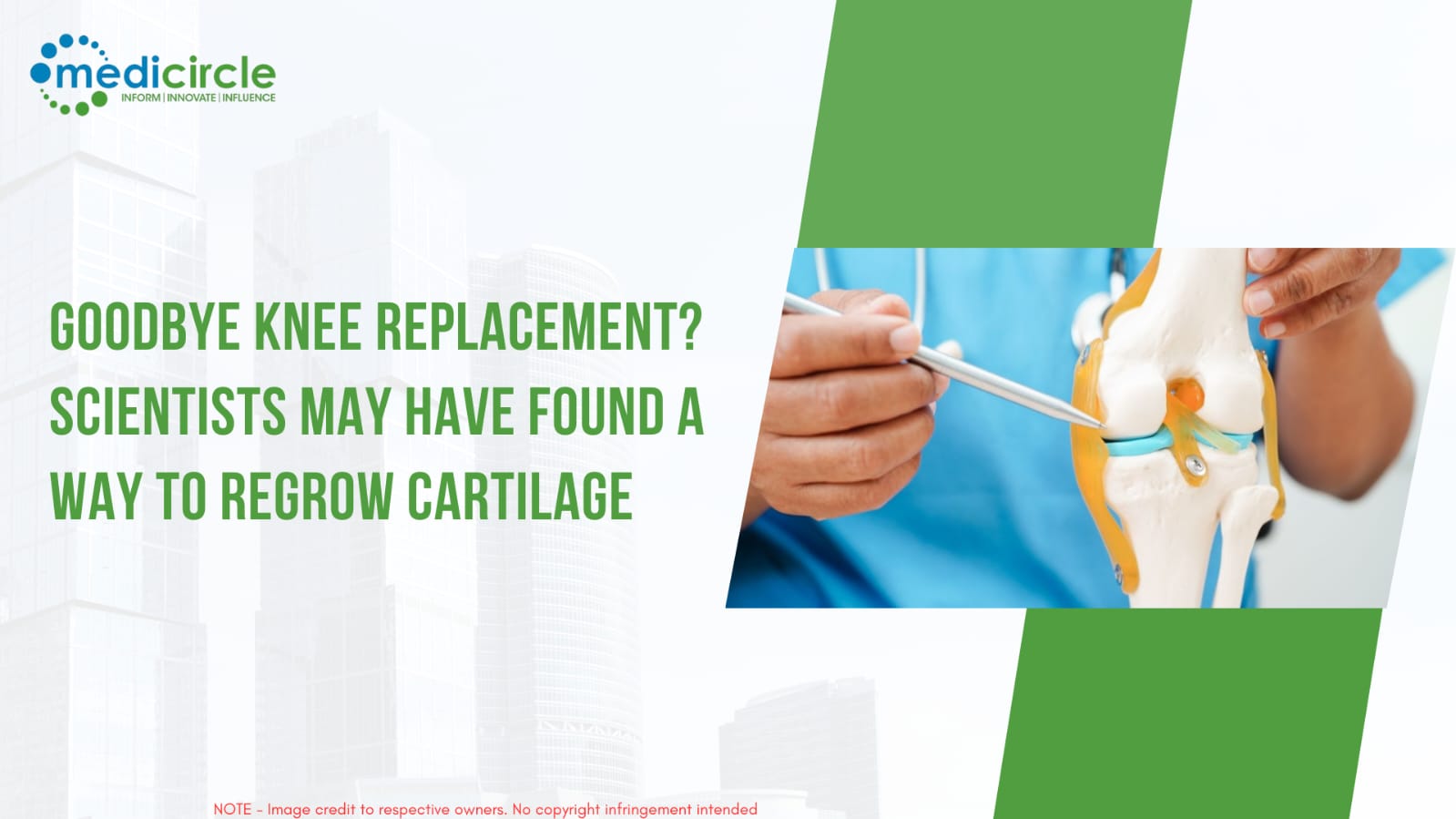
 Whether delivered through injection or oral therapy, a treatment that regrows cartilage would reshape the landscape of arthritis care, reduce healthcare costs, and spare countless patients the pain and disability associated with joint degeneration




Osteoarthritis has carried a quiet finality. Once the cartilage in a joint wears down, doctors have largely focused on easing pain, slowing further damage, and, when all else fails, replacing the joint entirely. Millions of patients with chronic knee pain, hip stiffness, and reduced mobility have been told that degeneration is inevitable, that age and wear take their toll, and that treatment is about management rather than repair. Now, new research published in Science on November 27, 2025, is challenging that belief with findings that sound almost radical: damaged cartilage may be coaxed into regenerating.
The study presents evidence that blocking a specific age-related protein can restore lost cartilage in aging joints and even prevent osteoarthritis after serious knee injuries. For a condition that affects nearly one in five adults in the United States and contributes to an estimated $65 billion in annual healthcare costs, such a development signals more than incremental progress. It hints at a fundamental shift in how we understand joint degeneration and cartilage repair.
Osteoarthritis, often referred to as a wear-and-tear disease, is the most common form of arthritis. It develops when articular cartilage, the smooth, shock-absorbing tissue that cushions the ends of bones, gradually breaks down. Without this protective layer, bones rub against each other, leading to pain, swelling, stiffness, and loss of movement. In advanced cases, patients turn to total knee replacement or hip replacement surgery. More than one million Americans undergo joint replacement procedures each year, and that number is expected to rise as populations age and obesity rates increase.
Until now, most osteoarthritis treatment options have been directed at symptom control. Pain medications, anti-inflammatory drugs, physical therapy, weight management, and steroid injections help many patients cope. Hyaluronic acid injections aim to lubricate the joint. Regenerative medicine approaches such as platelet-rich plasma and stem cell therapy have generated interest, though results remain mixed. None of these strategies reliably regrow hyaline cartilage, the durable, load-bearing tissue that naturally lines healthy joints.
The new research focuses on a protein known as 15-PGDH, described by scientists as a “gerozyme,” or an enzyme that rises with age and gradually diminishes tissue function. As humans grow older, levels of this protein increase in multiple tissues. Earlier investigations connected elevated 15-PGDH to age-related muscle weakness. In laboratory models, blocking the protein improved muscle strength and endurance in older animals, while artificially increasing it in young animals led to premature muscle decline. Similar links were observed in bone, nerve, and blood cell regeneration.
Cartilage, however, presents a unique biological puzzle. Unlike skin or blood, cartilage has very limited regenerative capacity. It lacks its own blood supply, and traditional thinking has suggested that once cartilage cells, called chondrocytes, are damaged or depleted, repair is minimal. This is why osteoarthritis is considered progressive and irreversible. Yet the new findings indicate that cartilage cells may not be as fixed in their fate as once believed.
In experiments involving aging mice, researchers administered a small-molecule drug designed to inhibit 15-PGDH. The treatment was delivered either systemically through abdominal injection or directly into the knee joint. The results were striking. Areas of cartilage that had thinned with age began to thicken across the joint surface. Importantly, the regenerated tissue resembled true hyaline cartilage, also known as articular cartilage, rather than fibrocartilage, a less durable form that often appears in scar tissue repair. Hyaline cartilage is essential for smooth joint movement and long-term joint health, making its restoration particularly significant for osteoarthritis therapy.
The implications extend beyond age-related degeneration. Knee injuries such as anterior cruciate ligament tears are a major risk factor for post-traumatic osteoarthritis. Studies suggest that nearly half of individuals who experience significant ACL injuries develop osteoarthritis within 10 to 15 years, even with surgical reconstruction. In the new research, mice subjected to ACL-like knee injuries were treated repeatedly with the 15-PGDH inhibitor. Untreated animals rapidly developed arthritic changes within weeks. Treated animals showed far less cartilage damage and maintained more normal movement patterns, placing greater weight on the injured limb. This suggests that early intervention following joint trauma could alter the long-term trajectory of osteoarthritis development.
At the molecular level, the therapy works by influencing prostaglandin E2, a compound often associated with inflammation and pain. In high concentrations, prostaglandin E2 contributes to inflammatory responses. Yet controlled increases appear to activate regenerative pathways. By blocking 15-PGDH, the treatment allows beneficial levels of prostaglandin E2 to persist, creating an environment that encourages tissue repair rather than breakdown.
A closer look at the treated cartilage revealed a transformation in gene activity. Aging chondrocytes typically express genes linked to inflammation and cartilage degradation. Genes associated with cartilage growth and maintenance decline over time. After exposure to the inhibitor, these patterns shifted. Cells that promote cartilage breakdown decreased in number. Cells producing fibrocartilage were reduced. Meanwhile, a population of chondrocytes associated with healthy articular cartilage and extracellular matrix support increased significantly. Rather than introducing stem cells or implanting new tissue, the therapy appeared to “re-educate” existing cartilage cells, restoring a more youthful biological profile.
Human tissue studies offer additional encouragement. Cartilage samples obtained during knee replacement surgeries were exposed to the 15-PGDH inhibitor in laboratory settings. The treated tissue demonstrated lower markers of degeneration and signs consistent with articular cartilage regeneration. While laboratory findings do not guarantee clinical success, they strengthen the biological plausibility of this approach in human osteoarthritis treatment.
Safety is a critical consideration in any regenerative medicine breakthrough. A version of the 15-PGDH inhibitor is already undergoing early-phase clinical trials as an oral therapy for age-related muscle weakness. Initial results in healthy volunteers have shown a favorable safety profile. Researchers are now planning further clinical trials focused specifically on cartilage repair and osteoarthritis management. If future studies confirm effectiveness in humans, the treatment could be delivered as a simple joint injection or possibly as an oral medication, offering a far less invasive alternative to joint replacement surgery.
Osteoarthritis is a leading cause of disability worldwide. Chronic knee pain and hip arthritis limit mobility, reduce productivity, and diminish quality of life. As life expectancy increases, the burden on healthcare systems grows heavier. Joint replacement surgery, while highly effective for many patients, carries risks, recovery time, and substantial cost. A therapy that restores cartilage and delays or eliminates the need for surgery could transform orthopedic care.
For athletes and active adults, sports injuries often mark the beginning of long-term joint problems. An intervention that prevents post-traumatic osteoarthritis could extend athletic careers and preserve long-term joint health. Even for non-athletes, maintaining mobility into older age has profound benefits for cardiovascular health, mental well-being, and independence.
Still, caution is warranted. Many promising therapies show dramatic results in animal models yet falter in human trials. Cartilage regeneration in a controlled laboratory environment may differ from the complex biological and mechanical forces present in human joints. Factors such as obesity, chronic inflammation, metabolic syndrome, and genetic predisposition influence osteoarthritis progression. Long-term studies will be essential to determine whether regenerated cartilage remains durable under everyday stress.
The concept of targeting age-related enzymes represents a broader frontier in geriatric medicine. As researchers better understand the molecular drivers of aging, therapies may emerge that restore function in tissues once considered irreversibly damaged. Muscle weakness, bone loss, neurodegeneration, and joint disease all share elements of age-related decline. Interventions that recalibrate cellular behavior rather than replace tissue outright may define the next era of regenerative therapy.
For now, patients living with osteoarthritis continue to rely on established treatments. Weight management remains one of the most effective strategies for reducing joint stress. Regular physical activity strengthens surrounding muscles and supports joint stability. Early management of knee injuries, blood sugar control in diabetes, and smoking cessation contribute to better joint outcomes. Advances in orthopedic surgery and rehabilitation continue to improve recovery after joint replacement. Yet the possibility of true cartilage regeneration introduces a new narrative, one that shifts focus from coping with deterioration to actively reversing it.
In clinics across the country, conversations about knee pain and hip stiffness often end with a discussion of “when” surgery might become necessary. If ongoing research confirms these findings, that conversation could change. Physicians may one day offer a treatment that restores articular cartilage before irreversible damage occurs. The psychological impact of such a shift should not be underestimated. Hope plays a powerful role in healthcare, influencing adherence, outlook, and quality of life.
As the global population ages, the search for sustainable solutions to chronic disease intensifies. Osteoarthritis, long viewed as a predictable consequence of aging joints, may prove more dynamic than once believed. The discovery that existing cartilage cells can revert to a regenerative state challenges decades of conventional wisdom. It suggests that aging tissues retain a latent capacity for repair, waiting for the right biological signal.
The findings reported in Science do not mark the end of osteoarthritis. They represent an early chapter in what could become a transformative story in regenerative medicine and orthopedic research. Whether delivered through injection or oral therapy, a treatment that regrows cartilage would reshape the landscape of arthritis care, reduce healthcare costs, and spare countless patients the pain and disability associated with joint degeneration.
For the millions living with stiff knees, aching hips, and limited mobility, the idea that cartilage can be restored once seemed implausible. Today, it stands as a serious scientific pursuit. The road from laboratory discovery to widespread clinical use is long, paved with rigorous trials and careful evaluation. Yet the direction is clear. Instead of accepting cartilage loss as permanent, medicine is beginning to ask a different question: what if aging joints can heal themselves when given the right molecular push?
If that question is answered with lasting evidence, the future of osteoarthritis treatment may no longer revolve around replacing worn-out joints. It may focus on renewing them.





-23-300x250.png)

.jpeg)








.jpg)
.jpg)
.jpg)
.jpg)
.jpg)
.jpg)
.jpg)
.jpg)
.jpg)

