Tuesday, October 27, 2026
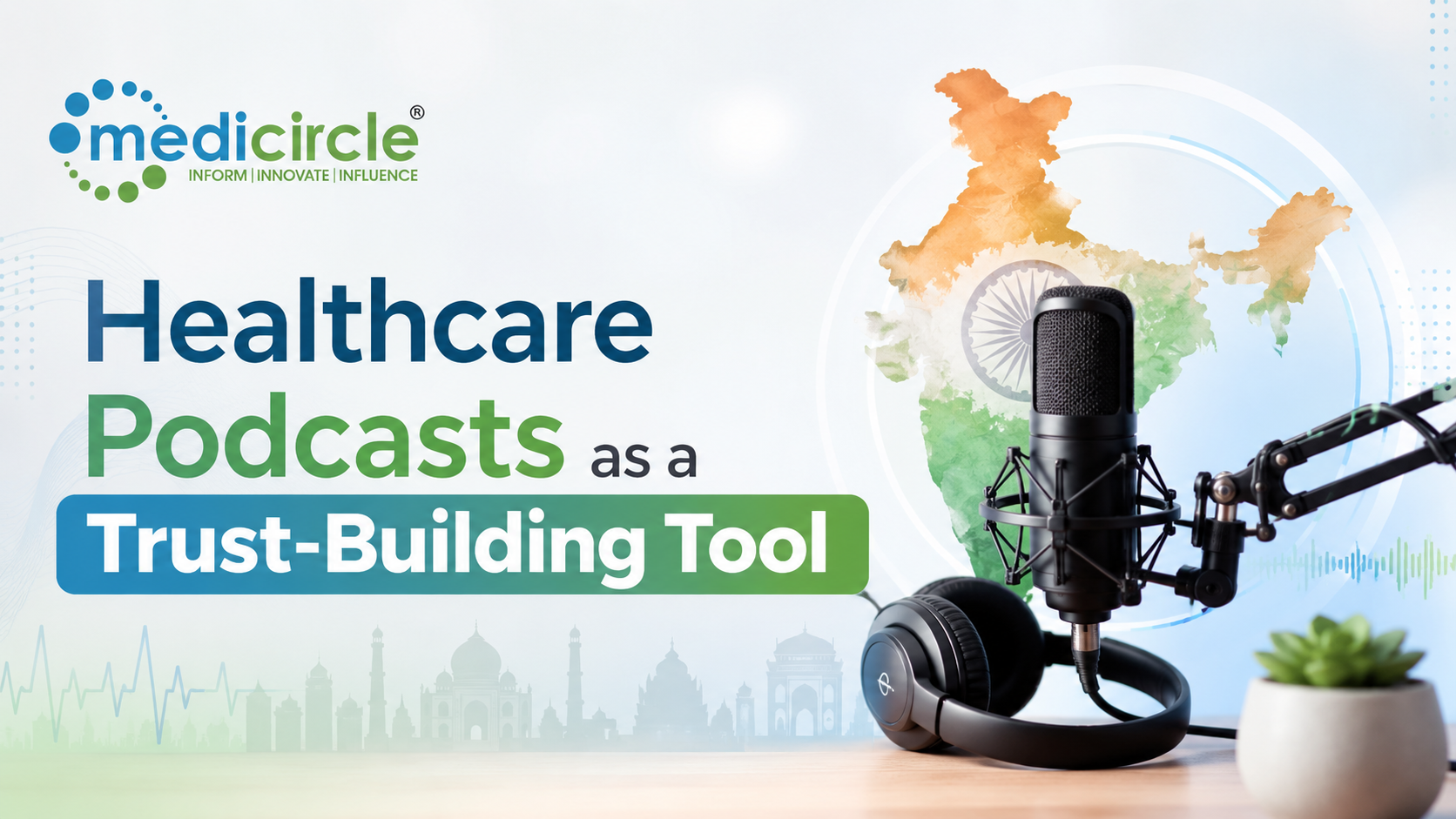
 Healthcare podcasts strengthen patient engagement, improve healthcare communication, and help audiences navigate modern healthcare trends through trusted expert conversations. Their ability to support healthcare education, digital trust, and informed decision-making makes them an increasingly valuable tool in the evolving healthcare ecosystem.




Healthcare information has never been more accessible, yet trust in healthcare information has rarely been more complex. People can search symptoms online within seconds, watch medical videos, join health communities, and interact with healthcare content across multiple platforms. However, access to information does not automatically create confidence. In many cases, it creates confusion. This is where healthcare podcasts have emerged as a powerful trust-building tool, offering deeper conversations, authentic expertise, and a human connection that many other formats struggle to achieve.
Why Trust Has Become the Most Valuable Currency in Healthcare Communication
Healthcare decisions are deeply personal. Whether someone is choosing a hospital, evaluating a treatment option, considering a healthcare technology solution, or simply trying to understand a diagnosis, trust influences every decision.
The challenge is that modern audiences are exposed to an overwhelming amount of health information. Search engines, social media platforms, discussion forums, influencers, and artificial intelligence tools continuously provide answers. While this abundance of information is useful, it often creates conflicting narratives. Two sources may provide completely different perspectives on the same issue.
Healthcare podcasts address this challenge differently. Unlike short-form content, podcasts create space for context. Experts can explain not only what a recommendation is but also why it exists, where its limitations lie, and how it applies to different situations.
For healthcare organizations, this distinction matters. People rarely trust institutions simply because they claim expertise. They trust people who demonstrate expertise consistently over time. A podcast creates recurring opportunities for that relationship to develop naturally.
This is why trust-building through healthcare content has become less about broadcasting information and more about creating meaningful conversations.
The Psychology Behind Why Podcasts Feel More Trustworthy
One reason healthcare podcasts have gained influence is that they closely resemble natural human communication. Listening to a healthcare professional discuss a topic for thirty or forty minutes creates a different experience than reading a brief article or watching a short social media clip.
Voice carries emotional signals that text cannot fully communicate. Tone, pauses, explanations, and conversational flow all contribute to credibility.
People often describe podcast hosts as feeling familiar, even when they have never met them. This phenomenon, sometimes called a parasocial relationship, helps explain why podcasts build strong audience loyalty.
Several factors contribute to this effect:
- Listeners spend significantly more uninterrupted time with podcast hosts than with most digital content creators. A single episode may involve thirty minutes of focused attention, allowing deeper understanding and stronger familiarity than short-form content.
- Conversations feel more authentic because they include nuance and uncertainty. Healthcare professionals can discuss complexities, limitations, and different viewpoints instead of presenting overly simplified conclusions.
- Regular listening creates consistency, which strengthens credibility over time. Trust develops when audiences repeatedly encounter reliable information delivered in a transparent and understandable manner.
This dynamic is particularly important in healthcare, where confidence often depends on understanding context rather than simply receiving information.
How Healthcare Podcasts Improve Patient Engagement
Patient engagement has become one of the most important goals in modern healthcare systems. Engaged patients are generally more informed, ask better questions, participate more actively in treatment decisions, and often experience improved health outcomes.
Healthcare podcasts support patient engagement by making complex topics easier to understand.
Traditional healthcare communication sometimes relies heavily on technical terminology. While accurate, such communication can unintentionally create barriers. Podcasts allow experts to explain concepts in plain language while maintaining accuracy.
Consider a patient trying to understand diabetes management. A brochure may explain dietary guidelines and treatment recommendations. A podcast can go further by discussing real-life challenges, common misconceptions, patient experiences, and practical lifestyle adaptations.
This additional context helps transform information into understanding.
Healthcare organizations increasingly use podcasts to:
- Educate patients before appointments
- Explain new healthcare technologies
- Discuss preventive healthcare strategies
- Address common concerns and misconceptions
- Improve healthcare literacy
As a result, podcasts become more than content channels. They become educational ecosystems that support informed decision-making.
Healthcare Podcasts as a Bridge Between Expertise and Accessibility
One of the largest communication gaps in healthcare exists between expert knowledge and public understanding.
Medical professionals spend years developing specialized expertise. Patients and consumers often encounter healthcare information only when a need arises. This creates an unavoidable knowledge gap.
Healthcare podcasts help bridge this gap because they allow experts to gradually unpack complex topics.
Instead of presenting conclusions without explanation, podcasts can explore the reasoning process behind healthcare decisions. This approach helps audiences understand not only recommendations but also the thinking that supports them.
For healthcare students, podcasts provide exposure to practical perspectives that textbooks sometimes cannot capture. For entrepreneurs and business owners operating in healthcare-related sectors, podcasts offer insights into industry challenges, emerging trends, patient expectations, and innovation opportunities.
This makes healthcare podcasts valuable across multiple audiences:
For StudentsStudents gain exposure to real-world healthcare discussions, industry developments, and practical perspectives beyond academic environments.
For Healthcare ProfessionalsProfessionals stay informed about evolving technologies, policy discussions, and patient engagement strategies.
For Business LeadersEntrepreneurs and healthcare businesses better understand market needs, communication trends, and patient expectations.
The ability to serve multiple audience groups simultaneously increases the strategic value of podcast content.
Why Healthcare Podcasts Are Becoming Essential in the Digital Trust Economy
Modern trust is increasingly earned through repeated interactions rather than single transactions.
People rarely choose healthcare providers based solely on advertising. Instead, they evaluate expertise through content, reviews, recommendations, educational resources, and public engagement.
Healthcare podcasts contribute significantly to this evaluation process.
When listeners repeatedly hear knowledgeable professionals discuss relevant topics, trust develops naturally. Over time, this trust influences perceptions of organizations, services, and expertise.
Several trends are accelerating this shift:
- Consumers increasingly research healthcare decisions independently before consulting providers. Educational content often shapes first impressions long before direct interaction occurs.
- Digital audiences expect transparency rather than promotional messaging. Podcasts provide opportunities for honest discussion that feels educational rather than sales-driven.
- Healthcare decisions are becoming more collaborative. Patients increasingly want to understand options rather than simply receive instructions.
These changes make podcasts particularly effective because they align with how modern audiences prefer to learn and evaluate information.
Building Authority Without Sounding Promotional
A common challenge for healthcare organizations is balancing authority with authenticity.
Audiences are highly sensitive to overt promotional messaging, especially in healthcare. People seeking health information typically want education first and marketing second.
Healthcare podcasts provide an effective solution because they focus on expertise rather than promotion.
The most successful healthcare podcasts rarely attempt to sell directly. Instead, they prioritize:
- Providing useful information
- Addressing audience questions
- Sharing practical experiences
- Exploring emerging healthcare developments
- Discussing challenges openly
Interestingly, this educational approach often produces stronger long-term business outcomes than direct promotional efforts.
When organizations consistently deliver valuable insights, audiences begin associating them with expertise and reliability. This perception creates trust that eventually influences decision-making.
In many cases, authority becomes a byproduct of education rather than the primary objective.
Emerging Trends Shaping the Future of Healthcare Podcasting
Healthcare podcasting continues to evolve as technology, audience behavior, and healthcare systems change.
Artificial intelligence, digital health platforms, telehealth services, wearable devices, and personalized healthcare are creating entirely new areas of discussion. Patients and professionals alike are seeking guidance on how these innovations affect healthcare delivery.
Future healthcare podcasts will likely become more interactive, personalized, and integrated with broader digital health ecosystems.
Several trends are particularly important:
Increased Focus on Preventive HealthcareAudiences are showing growing interest in prevention rather than treatment alone. Podcast content increasingly focuses on lifestyle, early awareness, and long-term wellness.
Greater Integration with Digital Health PlatformsHealthcare organizations are beginning to connect podcast content with patient portals, educational resources, and digital engagement initiatives.
More Specialized Content NichesRather than covering healthcare broadly, many podcasts are focusing on highly specific areas such as mental health, healthcare technology, medical entrepreneurship, healthcare leadership, or patient advocacy.
This specialization allows creators to build stronger trust within targeted communities.
The Real Value of Healthcare Podcasts Goes Beyond Information
Perhaps the most important insight about healthcare podcasts is that their value extends beyond education.
Information alone rarely changes behavior. Trust often does.
A person may know they should adopt healthier habits, schedule screenings, or seek professional advice. Yet action often depends on confidence, understanding, and reassurance.
Healthcare podcasts help create these conditions by combining expertise with accessibility. They humanize complex topics, encourage informed decision-making, and provide audiences with the context needed to navigate healthcare more confidently.
In an era where information is abundant but trust is scarce, that role becomes increasingly valuable.
Conclusion
Healthcare podcasts have evolved from niche educational tools into powerful trust-building platforms. By combining expert insight, authentic communication, and long-form engagement, they help bridge the gap between information and understanding. For patients, students, healthcare professionals, and business leaders, podcasts provide a reliable way to navigate complex healthcare topics while building confidence in the sources they choose to trust.
FAQ (Frequently Asked Questions)
1. Why are healthcare podcasts becoming so popular in healthcare education?Healthcare podcasts make complex topics easier to understand through conversations rather than formal explanations. They improve healthcare education by breaking down industry trends, patient experiences, and healthcare innovations into accessible discussions. This approach also strengthens healthcare communication by making expert knowledge more relatable and easier to consume.
2. How do healthcare podcasts help build trust with listeners?Trust develops when audiences consistently receive accurate and useful information over time. Healthcare podcasts create a human connection through authentic conversations, helping listeners feel more confident in the information they receive. This supports stronger patient engagement and improves confidence in healthcare decision-making.
3. Are healthcare podcasts useful for students entering the healthcare industry?Yes, healthcare podcasts provide practical insights that often go beyond textbooks. Students gain exposure to real-world challenges, healthcare leadership perspectives, and industry developments. This enhances healthcare learning while helping them understand current digital health trends shaping the future of the industry.
4. What topics are commonly discussed in healthcare podcasts?Healthcare podcasts cover a wide range of subjects, including patient care, healthcare technology, wellness, healthcare entrepreneurship, public health, and innovation. Many also focus on healthcare industry insights and healthcare trends, helping listeners stay informed about developments affecting healthcare systems worldwide.
5. How can healthcare businesses benefit from launching a podcast?Healthcare businesses can use podcasts to establish credibility, share expertise, and educate their audience. Instead of direct promotion, podcasts allow organizations to build authority through valuable content. This improves brand trust in healthcare and strengthens long-term audience engagement.
6. Do healthcare podcasts influence patient decision-making?Healthcare podcasts can influence decisions by helping people understand options more clearly. When listeners gain a better understanding of healthcare topics, they often feel more confident discussing concerns and exploring solutions. This contributes to improved healthcare awareness and stronger patient engagement.
7. What makes a healthcare podcast credible and trustworthy?A trustworthy healthcare podcast focuses on accuracy, transparency, and balanced discussions. It explains not only what recommendations exist but also why they matter. Consistent expert-led content supports healthcare communication and helps build long-term digital trust among listeners.
8. How do podcasts compare with blogs and videos for healthcare information?Blogs are useful for quick reading, while videos provide visual explanations. Podcasts offer a unique advantage by allowing deeper discussions and longer engagement. This format supports healthcare education and enables listeners to understand complex healthcare topics with greater context and clarity.
9. Can healthcare podcasts help professionals stay updated with industry changes?Absolutely. Healthcare professionals often use podcasts to learn about policy updates, healthcare technology, leadership strategies, and emerging trends. This ongoing learning supports professional growth and provides valuable healthcare industry insights that may not always be available through traditional channels.
10. What is the future of healthcare podcasts in the digital healthcare landscape?Healthcare podcasts are expected to become more integrated with digital health platforms, patient education programs, and healthcare communities. As demand for trustworthy information grows, podcasts will continue supporting digital health engagement and improving healthcare awareness through accessible expert conversations.





-23-300x250.png)

.jpeg)



.jpg)
.jpg)
.jpg)
.jpg)
.jpg)
.jpg)
.jpg)
.jpg)
.jpg)