Tuesday, October 27, 2026
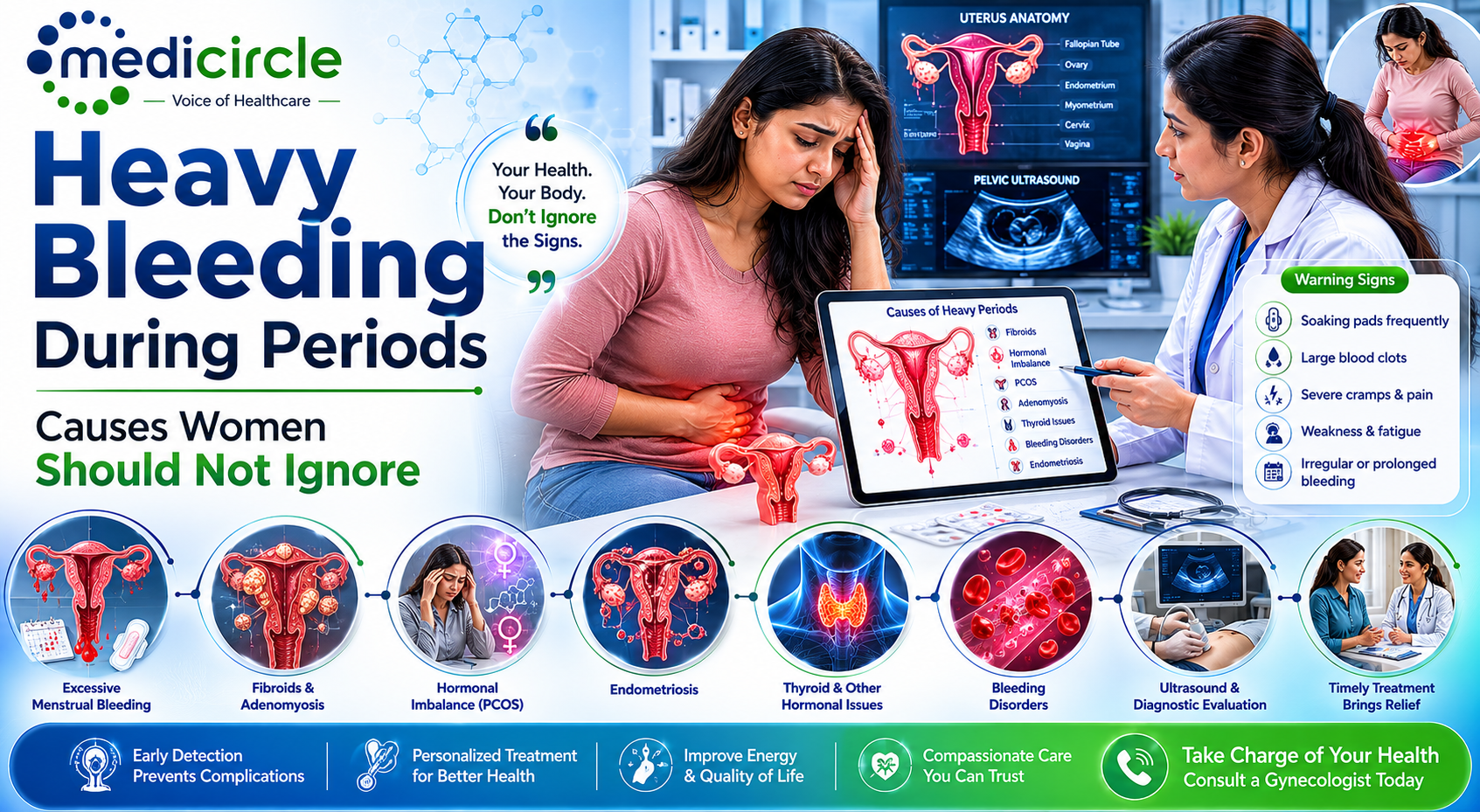
 Heavy menstrual bleeding, or menorrhagia, is a serious medical concern caused by hormonal imbalances, structural uterine growths, or systemic conditions, requiring professional gynecological care to prevent severe iron-deficiency anemia.




A woman’s menstrual cycle is an excellent barometer for her overall physical health. While every woman experiences variations in flow from month to month, an excessively heavy period is something that requires careful attention. In many parts of India, open conversations about reproductive wellness are still held back by deep-rooted cultural hesitations. Because of this, countless women put the requirements of their family ahead of their own health, choosing to tolerate extreme physical exhaustion and discomfort without complaint. It is important to realize that a cycle that interferes with daily responsibilities, career, or peace of mind is not just a minor inconvenience, for it is a medical condition known as menorrhagia.
Enduring a severe menstrual flow month after month can take a massive toll on both physical vitality and mental peace. When the body loses blood at an unsustainably rapid pace, it quickly depletes its iron reserves, opening the door to chronic fatigue and systemic weakness. Furthermore, severe bleeding is rarely an isolated problem, because it is usually a clear message from the body pointing toward an underlying gynecological issue. Recognizing the difference between a heavy flow and a clinical health concern allows women to seek timely medical guidance and live a healthier, more comfortable life. Incorporating targeted strategy and understanding the exact physical indicators can help women navigate these challenges successfully.
Defining Heavy Flow
Because everyone’s body functions differently, determining if a period has crossed the line into an unhealthy volume can feel subjective. Medical specialists, however, look for specific, objective patterns to diagnose menorrhagia. A primary indicator is the need to replace a sanitary pad or tampon every single hour for several hours in a row. Similarly, if a woman finds herself using double protection, such as wearing two pads simultaneously or using a tampon alongside a heavy-duty pad, the bleeding is significantly heavier than normal.
The quality of the flow and its impact on sleep are also critical indicators. Waking up repeatedly during the night to change stained sheets or sanitary products suggests an excessive volume. The same rule applies if a woman regularly notices blood clots that are larger than the size of a one-rupee coin. Furthermore, any menstrual cycle that lasts beyond seven straight days, or causes persistent pelvic cramping, warrants investigation. If managing the cycle requires missing work, skipping social commitments, or staying confined to the home due to a constant fear of leakage, it is time to consult a doctor.
Hormonal Imbalances
The intricate monthly dance of the female reproductive system relies entirely on a precise chemical balance between two main hormones, which are estrogen and progesterone. Together, they orchestrate the growth and eventual shedding of the uterine lining, known as the endometrium. When these two hormones lose their equilibrium, the endometrium can overgrow, creating a lining that is far thicker than necessary. When the time comes for this thick layer to shed, the result is an intensely heavy and prolonged period.
These hormonal imbalances occur most frequently during life stages marked by natural transition, particularly during puberty and the approach to menopause. Teenagers who have recently crossed menarche, as well as women in their late forties navigating perimenopause, often experience cycles where the ovaries fail to release an egg. These anovulatory cycles cause a sudden drop in progesterone levels while estrogen continues to build up the uterine lining unchecked. This specific hormonal gap is a major reason why severe bleeding spikes during these life phases.
Structural Issues
In many instances, the root cause of an intensely heavy flow is a physical change or non-cancerous growth inside the uterus. Uterine fibroids are incredibly common, benign muscular tumors that develop within the walls of the womb during the reproductive years of a woman. As these fibroids grow, they stretch and distort the uterine cavity, significantly expanding the surface area that bleeds every month.
Uterine Polyps
Smaller, teardrop-shaped growths called uterine polyps can also attach themselves to the internal lining, triggering unpredictable and heavy spotting or bleeding.
Adenomyosis
Another structurally disruptive condition is adenomyosis, which occurs when the tissue that belongs on the inside lining begins to burrow deep into the muscular walls of the uterus itself. This condition causes the entire organ to become enlarged, tender, and engorged, resulting in deeply painful, prolonged, and exhausting periods.
Medical Triggers
Beyond structural changes, several full-body medical issues can alter menstrual health. Polycystic Ovary Syndrome, which is commonly abbreviated as PCOS, affects millions of young Indian women. This condition creates a baseline of chronic hormonal disruption that stalls regular ovulation. When a woman does not ovulate regularly, the uterine lining simply keeps growing for months on end. When a period finally arrives, it often manifests as an overwhelmingly heavy, prolonged, and unpredictable flow.
Your metabolic engine, which is the thyroid gland, also holds tremendous influence over reproductive health. Both an underactive thyroid, known as hypothyroidism, and an overactive thyroid, known as hyperthyroidism, can scramble the delicate hormonal messages traveling between the brain and the ovaries. Because the thyroid helps manage overall cellular function, its imbalance frequently leads to irregular and heavy periods. Similarly, chronic infections like pelvic inflammatory disease can inflame the reproductive tract, leading to painful and excessive bleeding.
Coagulation and Medications
Sometimes, the issue originates outside the reproductive organs entirely, pointing instead to how the body processes blood clotting. Inherited conditions such as Von Willebrand disease prevent the blood from clotting efficiently, which can make the periods of a young woman exceptionally heavy right from her very first cycle. While platelet deficiencies and other blood disorders are less common, they are vital possibilities for doctors to explore when standard gynecological scans come back clear.
It is also worth reviewing any current medications or birth control methods that are currently in use. For example, the non-hormonal copper intrauterine device, while a highly effective contraceptive, is well-documented to cause heavier bleeding and sharper cramps for the first few months after insertion. Additionally, taking prescription blood thinners, anticoagulants for a heart condition, or high doses of certain anti-inflammatory drugs can naturally increase the overall menstrual volume.
Health Risks
Choosing to ignore a consistently heavy period can severely damage long-term health and vitality. The most immediate physical threat is iron-deficiency anemia. Because the body is losing blood faster than it can build new red blood cells, internal iron stores drop dangerously low. This lack of iron starves organs and tissues of vital oxygen, leaving a woman dealing with a pale complexion, persistent dizziness, shortness of breath during light walks, and chronic exhaustion.
The emotional and psychological toll of living this way can be just as draining as the physical symptoms. Navigating life with the constant anxiety of a public bleeding mishap, combined with unpredictable pain, creates a state of chronic stress. It can quietly chip away at career productivity, limit social interactions, and pull women away from the activities they love. Acknowledging that this is a genuine medical issue, rather than something to simply endure, is the critical first step toward recovery.
Seeking Guidance
Recognizing when to move past home remedies and seek professional medical guidance is a crucial milestone in taking charge of personal health. An individual should prioritize an appointment with a gynecologist if periods routinely last more than seven days, or if sanitary protection is completely soaked through every hour. Experiencing sharp, agonizing pelvic pain during the cycle, or noticing unexpected bleeding and spotting in the weeks between periods, are also clear signs that require a professional evaluation.
If a woman is constantly battling unexplained fatigue, feeling lightheaded when standing up, or experiencing breathlessness, a medical assessment is absolutely essential. Modern gynecologists have access to precise, safe diagnostic tools, such as pelvic ultrasounds and targeted blood tests, to find out exactly what is causing the symptoms. From simple hormonal therapies and targeted medications to advanced, minimally invasive treatments, excellent options are available to ensure that women no longer have to manage this condition in silence.
Common Questions
Is it normal to pass blood clots during a period?
Seeing small, occasional blood clots during the heaviest days of the flow can be completely normal. However, if a woman is consistently passing clots that are larger than a coin, or if the clotting is paired with severe abdominal pain, it indicates an excessive flow that must be investigated by a medical professional.
Can high stress levels cause heavy menstrual bleeding?
Yes, intense emotional or physical stress can disrupt the hypothalamus, which is the region of the brain that manages reproductive hormones. This disruption can throw off the ovulation schedule, causing missed periods, delayed cycles, or unexpectedly heavy bleeding when the period finally arrives.
Does a heavy period mean a woman definitely has uterine fibroids?
Not necessarily. While fibroids are a very common cause of menorrhagia, they are far from the only explanation. A heavy flow could be driven by a variety of other factors, including thyroid issues, hormonal imbalances, polyps, adenomyosis, or underlying conditions like PCOS. Only a medical evaluation can confirm the precise cause.
Can changing lifestyle habits reduce a heavy menstrual flow?
If the heavy bleeding is connected to metabolic issues like PCOS, or mild hormonal fluctuations caused by stress, then a nutritious diet, regular exercise, and stress management can support recovery. However, these positive habits should be used alongside professional medical advice, rather than as a replacement for it.





-23-300x250.png)

.jpeg)






.jpg)
.jpg)
.jpg)
.jpg)
.jpg)
.jpg)
.jpg)
.jpg)
.jpg)