Tuesday, October 06, 2026
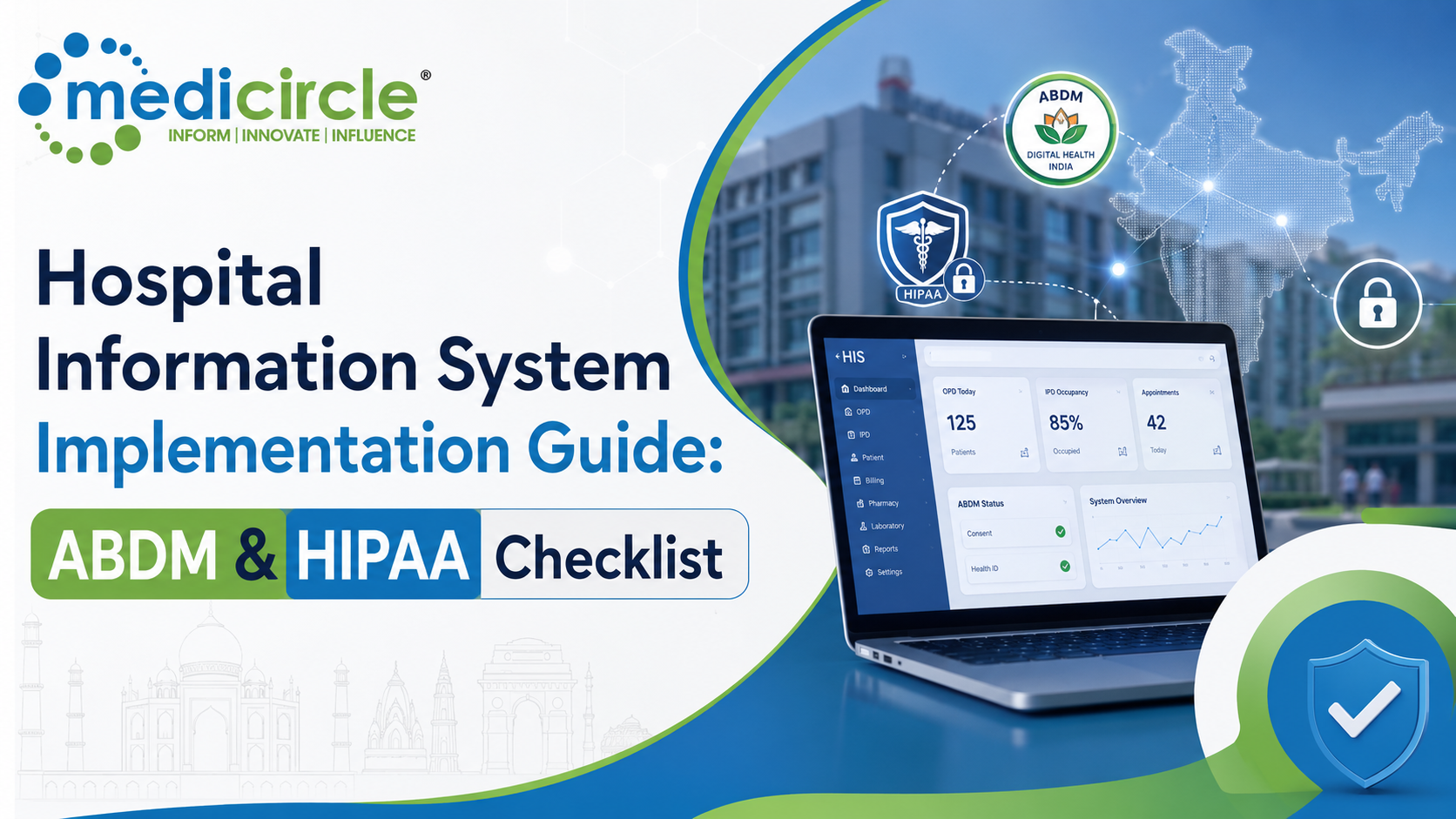
 Implementing a Hospital Information System (HIS) is far more than a software upgrade—it is a strategic transformation that reshapes clinical workflows, administrative operations, and patient care delivery. Hospitals transitioning from paper-based records or disconnected applications often face challenges related to data migration, staff adoption, process standardization, and regulatory compliance.




Hospital Information System Implementation Guide: Executing Seamless Digital Transitions
Implementing a Hospital Information System (HIS)—also known as a Hospital Management Software (HMS)—is a high-stakes operational transformation. Whether you are running a 50-bed multi-specialty facility or an enterprise healthcare network, the transition from legacy paper records or fragmented software tools to an integrated digital gateway is notoriously complex.
An HIS deployment rarely fails because of a flaw in the software's code; it fails due to broken workflows, unstructured data migration, and a lack of role-based preparation. To insulate your institution against revenue leakage, technical bugs, and clinical staff pushback, your leadership team must follow a meticulous, chronological deployment protocol across the entire implementation lifecycle.
1. Phase-by-Phase HIS Implementation Checklist
Phase 1: Discovery, Scoping & Governance ArchitectureBefore signing a vendor agreement, establish your internal governance framework and map out your physical requirements.
- [ ] Assemble the Cross-Functional Steering Committee: Appoint a dedicated Project Manager and establish representatives from each primary operational wing (Medical Director, Nursing Head, Laboratory Chief, Billing/TPA Manager, and IT Director).
- [ ] Lock In Your Deployment Strategy: Decide between a cloud-native SaaS model or a legacy on-premise infrastructure based on your long-term capital expenditure and hardware maintenance budget.
- [ ] Audit Physical & Network Prerequisites: Verify that your hospital floors are equipped with high-speed, hardwired internet backbones, uninterruptible power supplies (UPS) for workstations, and mobile tablets if using bedside nursing charting modules.
- [ ] Enforce Regulatory and Security Standards: Ensure the prospective HIS platform holds universally recognized health-data certifications (such as complete ABDM certification for native ABHA ID logging in India, or strict HIPAA/NABH compliance globally).
A system is only as reliable as the data fed into it. Use this phase to standardize your administrative and clinical registries.
- [ ] Build the Master Room & Bed Matrix: Map out your physical facility's architecture. Code every bed into the system by ward type (General, Semi-Private, Deluxe, ICU, CCU) so the visual bed board updates billing parameters automatically upon patient transfer.
- [ ] Configure the Unified Billing & TPA Tariff Registry: Standardize your pricing models. Input exact consultation fees, diagnostic rates, procedure charges, and specific corporate panel discount metrics to eliminate manual invoicing errors.
- [ ] Consolidate the Pharmacy Inventory Master: Import your entire pharmaceutical stock ledger, incorporating batch numbers, manufacturer details, tax structures (like local GST parameters), and strict expiration alerts.
- [ ] Map Specialty-Specific EMR Templates: Work with medical department heads to configure custom digital charting templates. A cardiologist requires vastly different tracking inputs than a pediatrician or a general surgeon.
Never deploy a new software platform live across your hospital without simulating workflows inside a secure, sandboxed environment first.
- [ ] Execute an "Analyzer-to-Ledger" Proof of Concept: Run a live test loop. Verify that a blood panel result or a radiology scan flows automatically from the automated lab analyzer or PACS system directly onto a test patient's running invoice file without manual data re-entry.
- [ ] Configure Granular Role-Based Access Controls (RBAC): Establish strict internal data partitions. Configure user profiles so a floor nurse can only view vitals and medication schedules, a pharmacist can only view stock levels, and a front-desk billing assistant has absolute zero visibility into private clinical pathology charts.
- [ ] Establish Data Migration Protocols: Determine your legacy data crossover strategy. Most successful migrations involve freezing old logs, migrating active, running IPD patient records first, and porting historical patient lifecycles as background data tracks.
The single biggest point of failure during a new hospital software rollout is staff pushback. Mitigate this by organizing focused, department-specific workshops.
- [ ] Conduct Front-Desk & Admission Simulations: Train administrative personnel to generate ABHA IDs, process rapid patient registrations, and navigate real-time visual bed boards seamlessly.
- [ ] Run Physician Documentation Bootcamps: Train consulting doctors on custom EMR charting. Emphasize using productivity tools like built-in macro phrases, stylus handwriting digitization, or vernacular Speech-to-Rx dictation engines to minimize typing burnout.
- [ ] Train Floor Nurses on Medication Administration Logs: Ensure the nursing staff can fluidly execute shift handoffs, log real-time vitals streams, and process direct drug requisitions to the central pharmacy from their ward terminals.
- [ ] Execute a Complete Mock Go-Live Day: Run a full-scale rehearsal across the hospital, simulating a peak-hour operational day with mock patients moving from OPD registration to the lab, pharmacy, and final billing clearance.
The transition phase requires high-touch oversight to catch and resolve immediate system friction.
- [ ] Deploy On-Site "Super Users" in Every Ward: Place tech-fluent, pre-trained hospital staff members directly on the floor during the first week of go-live to provide real-time troubleshooting support to struggling colleagues.
- [ ] Enforce Strict Multi-Factor Authentication (MFA) Discipline: Ensure all medical and administrative staff members maintain perfect security hygiene, completely banning the practice of sharing login credentials across shifts.
- [ ] Monitor Core Financial & Operational KPIs: Track five major performance metrics over a 4-to-6-week post-live window: the reduction in average patient discharge processing times, the drop in pharmacy dispensing errors, the acceleration of TPA insurance claim settlements, and daily patient throughput metrics across OPD queues.
2. Real-Time Clinical Integration and Data Flows
Modern hospital networks rely on continuous, low-latency interoperability to eliminate manual errors and speed up care delivery.
3. Comprehensive Matrix: HIS Implementation Risk Mitigation
The table below contrasts critical implementation vulnerabilities with their proactive operational countermeasures to keep your project on track.
|
Critical Implementation Vulnerability |
Direct Operational Root Cause |
Proactive Systemic Countermeasure |
Target Quality Metric Impact |
|---|---|---|---|
|
Medical Staff Resistance |
Forcing doctors to type complex, clunky notes |
Deploy speech-to-text dictation and custom templates |
Enhances EMR record richness and reduces clinician burnout. |
|
Financial Revenue Leakage |
Fragmented billing, disconnected pharmacy tools |
Use a unified database; enforce analyzer-to-ledger links |
Eliminates unbilled consumables and plugs billing gaps. |
|
System Down-Time Crises |
Local server failures, power/internet drops |
Choose high-availability cloud SaaS or local backup loops |
Guarantees around-the-clock clinical operational continuity. |
|
Legal Compliance Liability |
Shared passwords, exposed patient histories |
Implement granular role-based access control and MFA |
Protects Patient Health Information (PHI) from data leaks. |
4. Actionable Strategy: Maximizing Your Go-Live Success
- Establish a Rigid Post-Live Support Level-Agreement (SLA): Before final sign-off, ensure your software vendor commits to a binding technical support protocol. You must have guaranteed access to 24/7 priority troubleshooting assistance during your initial transition phase, as hospital environments operate around the clock.
- Prioritize a Single Source of Truth Over Modular Patchwork: Avoid the temptation to buy a standalone billing package, a separate pharmacy spreadsheet tool, and an independent EMR from different providers. The friction of keeping third-party APIs synced routinely leads to broken data links, billing errors, and immense technical frustration.
- Celebrate Initial Wins to Build Long-Term Momentum: Shifting system architectures is emotionally taxing for medical teams. Publicly acknowledge and reward departments that achieve rapid data migration or master their EMR templates early to foster a positive, technology-forward institutional culture.
Frequently Asked Questions (FAQs)
Q1. What is the single most common reason a Hospital Information System implementation fails?The primary driver of HIS implementation failure is staff resistance caused by poor change management. If an administrative board selects a clunky, overly complex system without consulting the frontend medical staff, and forces doctors to type out tedious forms, the clinical team will simply bypass the platform. Successful implementations prioritize intuitive, doctor-first interfaces and structured, department-wise onboarding.
Q2. How long does a standard cloud-native HIS implementation take to go live?While legacy, on-premise installations routinely require 6 months to a year of heavy manual configuration, modern web-based architectures can achieve fully integrated deployment in a fraction of the time. Depending on the complexity of your bed matrix and the volume of department modules activated, a cloud-native platform can achieve complete data migration and go-live status within a few days to a couple of weeks.
Q3. How should a hospital manage legacy data migration when transitioning to a new HIS?Hospitals should avoid the trap of trying to migrate decades of messy, unstructured historical data into a clean new system all at once, as this routinely corrupts the new database. The recommended clinical protocol is to freeze old records for archive access, migrate active running IPD cases immediately on go-live day, and gradually port historic patient lifecycle files over as background data tracks.
Q4. What exactly does an "Analyzer-to-Ledger" integration mean?Analyzer-to-ledger integration means your Laboratory Information System (LIS) is linked directly with your central billing engine. When a floor nurse draws a blood sample and places it inside an automated lab analyzer, the machine processes the sample, signs off the result, and instantly maps the pre-configured test rate onto the patient's running invoice file with zero manual data entry.
Q5. What are Role-Based Access Controls (RBAC), and why are they critical for hospital safety?Role-Based Access Controls are granular software settings that restrict user visibility based strictly on their specific employment function. For example, a consulting physician holds full clearance to view and edit clinical EMR charts, a ward nurse locks purely into medication schedules and vitals logs, and a front-desk billing assistant sees invoicing metrics with absolute zero access to a patient’s private pathology or diagnostic notes.
Q6. Can an ABDM-compliant HIS save a hospital money during implementation?Yes. Operating an ABDM-compliant system in India streamlines your digital workflow, enables immediate participation in national digital health initiatives, and significantly accelerates the tracking and settlement of public insurance claims (such as Ayushman Bharat panels), vastly reducing administrative collection delays and overhead costs.
Q7. What is a "Super User," and what role do they play on go-live day?A Super User is a tech-fluent member of your internal hospital staff (such as a senior nurse, resident doctor, or billing executive) who receives advanced, high-touch training from the software vendor early in the project. On go-live day, these Super Users are deployed across different wards to act as immediate, on-site problem solvers, guiding their colleagues and preventing operational bottlenecks.
Q8. Why is an on-premise HIS implementation more expensive than a cloud SaaS model?An on-premise deployment demands a massive upfront capital investment to construct air-conditioned server rooms, purchase local servers, build physical backup systems, and pay a dedicated, in-house IT team to handle software updates and bugs. A cloud SaaS model replaces this heavy infrastructure cost with a predictable subscription fee that covers secure cloud hosting, automated data protection, and real-time compliance updates.
Q9. How do speech-to-text and tablet integrations reduce doctor resistance during a rollout?When doctors are forced to type out long, tedious summaries into a clunky computer interface, they often resort to brief shorthand or skip logging secondary procedures to save time. Incorporating specialized Speech-to-Rx dictation engines or stylus-optimized tablet handwriting interfaces allows consultants to write or dictate naturally on a screen, auto-converting their words into structured electronic health records without disrupting their preferred clinical workflow.
Q10. How frequently should the hospital steering committee meet during the implementation phase?During the critical phases of data preparation, sandbox testing, and staff training, the internal steering committee should meet at least once a week to review module configurations, resolve departmental workflow blockers, and audit data preparation timelines. Once the system goes live, brief daily morning stand-up meetings are highly effective during the first week to address immediate operational friction on the floor.
Implementing a Hospital Information System (HIS) is far more than a software upgrade—it is a strategic transformation that reshapes clinical workflows, administrative operations, and patient care delivery. Hospitals transitioning from paper-based records or disconnected applications often face challenges related to data migration, staff adoption, process standardization, and regulatory compliance.






.jpeg)
.jpg)
.jpg)
.jpg)
.jpg)
.jpg)
.jpg)


.jpg)
.jpg)
.jpg)
.jpg)
.jpg)
.jpg)