Tuesday, October 27, 2026
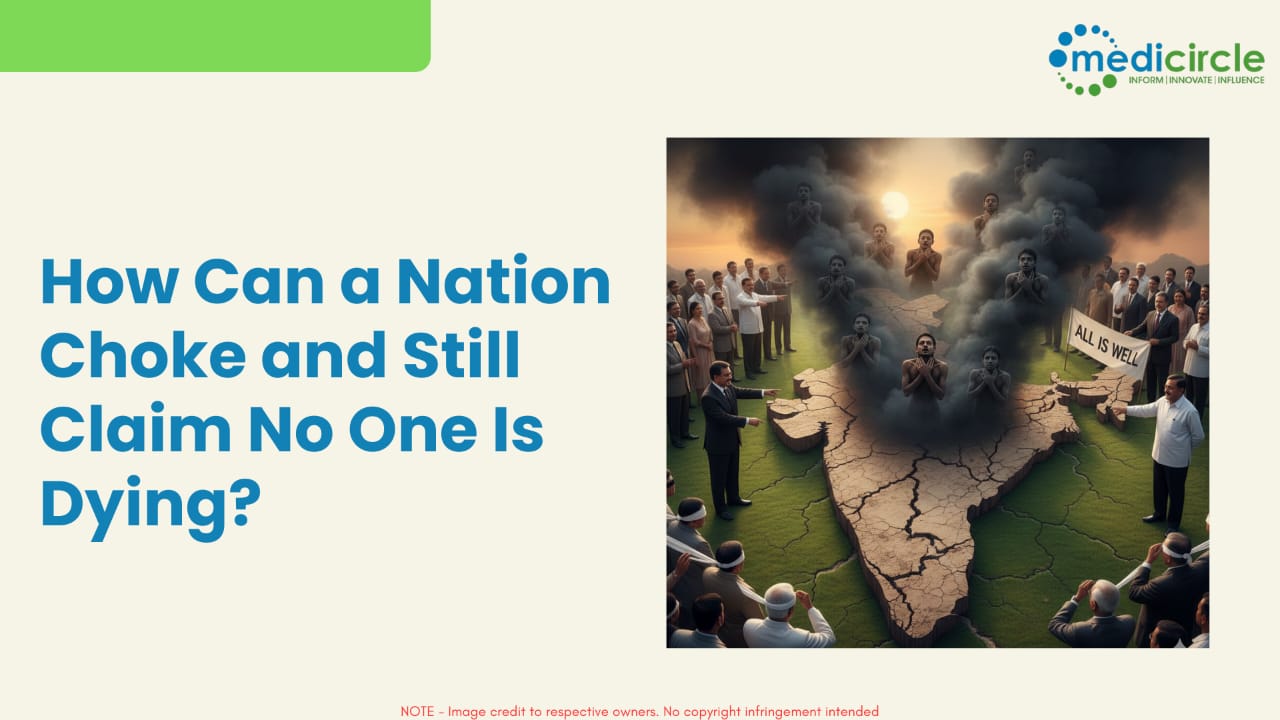
 The nation has reached a point where denial is no longer an option, and delay has consequences that cannot be undone.




The conversation around India’s air pollution crisis has entered a strange place, where lived reality, scientific evidence, and official statements seem to drift in different directions. As thick grey skies hang over millions of Indians each winter, the government recently told Parliament that there is no conclusive national data proving that deaths or diseases are caused solely by polluted air. It is a sentence that may appear technically accurate in a narrow scientific sense, but it lands heavily at a time when hospital wards are crowded with respiratory patients, pharmacies are recording increased sales of inhalers, and global studies repeatedly warn that India carries one of the highest pollution-related health burdens in the world. The contradiction between what science has been signalling for years and what official records are willing to acknowledge creates a moment that demands reflection, honesty, and urgency.
This debate unfolds against the backdrop of Delhi and several other major Indian cities choking each winter under toxic smog that burns the eyes, irritates the throat, and leaves even healthy individuals short of breath. Air quality levels cross 800 on the Air Quality Index at times, drifting far from the World Health Organization’s idea of safe exposure. People have begun stepping out of their homes wearing masks again but this time not for a virus, but for the air they breathe. Protests, small and large, appear across neighbourhoods, and environmental activists continue to remind us that while our cities grow, the space to breathe seems to shrink. It is within this reality that the Centre’s stand feels almost surreal. It points to the complexity of proving causation while also highlighting a deeper discomfort: quantifying the silent, lifelong harm that polluted air inflicts on bodies across generations.
Global studies, however, tell a different story. A major analysis published in The Lancet Planetary Health last December stated that long-term exposure to polluted air in India contributes to roughly 15 lakh additional deaths every year. This estimate imagines a scenario where India meets WHO’s recommended limits for PM2.5 i.e. the fine particulate matter that slips deep into the lungs and bloodstream. The number is unsettling because PM2.5 is something Indian cities experience far beyond global safety thresholds almost every day. These particles are small, but their impact is massive. They slowly wear down lung function, strain the heart, affect the nervous system, and compromise organs in ways that build up quietly over the years. When such studies say millions are paying the price of this exposure, it is a warning that has been echoing for too long.
Public health experts have long warned that India’s air pollution is not a seasonal inconvenience but a deep-rooted crisis. Very few Indian cities experience what can be called “healthy air” on any day of the year. The danger is constant, slow, and far-reaching. It affects children whose lungs are still developing, older adults with fragile immunity, and individuals with heart disease, diabetes, or respiratory conditions. Over time, this exposure reduces quality of life, productivity, and lifespan. Keywords such as poor air quality, PM2.5 pollution, respiratory illnesses, asthma, COPD, and pollution-related mortality now show up with increasing frequency in health research coming from India. Hospitals too notice the patterns. Each winter, there is a familiar rise in breathing problems, wheezing episodes, and heart complications.
One encouraging step is the use of early warning systems. The India Meteorological Department provides air-quality forecasts that help cities anticipate pollution spikes. This allows hospitals to prepare, local bodies to issue alerts, and vulnerable communities, especially children, the elderly, and those with chronic illnesses to take precautions such as reducing outdoor exposure or using masks and air purifiers during severe episodes. While these systems offer some protection, they remain tools of adaptation rather than prevention. Without strong long-term measures to cut emissions from vehicles, industries, construction, and crop burning, India will continue to rely on warnings rather than solutions.
The question, then, is not whether air pollution is harmful. That answer has been obvious for decades. The real question is how long a nation can afford to look away from what its people breathe every day. Scientific evidence, medical observations, and real-world experiences converge on one point: toxic air is reducing life expectancy, raising respiratory illness cases, and eroding overall well-being. India’s pollution crisis needs clear data, aggressive monitoring, and bold public health policy. It also requires honest communication that reflects the urgency of the situation.
Air pollution, climate change, and public health are no longer separate conversations. They intersect in every hospital ward, every congested city road, and every winter morning when children walk to school through smog. The longer the crisis remains framed as a matter of data gaps rather than health outcomes, the harder it will be to protect millions of lungs from irreversible damage. India stands at a crossroads where acknowledging risk is the first step toward reducing it. The country needs cleaner air, stronger healthcare responses, and a commitment to measurable action that goes beyond reports and warnings.
The air we breathe shapes our lives. It influences how long we live, how often we fall sick, and how healthy our children grow. To recognise this is not to assign blame but to accept reality. The future of India’s public health depends on this acceptance. The nation has reached a point where denial is no longer an option, and delay has consequences that cannot be undone. Pollution may be invisible, but its impact is written across the lungs, hearts, and lives of millions. That truth deserves attention, action, and honesty because the country’s health cannot wait for consensus on what people already feel in every breath.




-23-300x250.png)

.jpeg)





.jpg)
.jpg)
.jpg)
.jpg)
.jpg)
.jpg)
.jpg)
.jpg)
.jpg)