Sunday, October 25, 2026
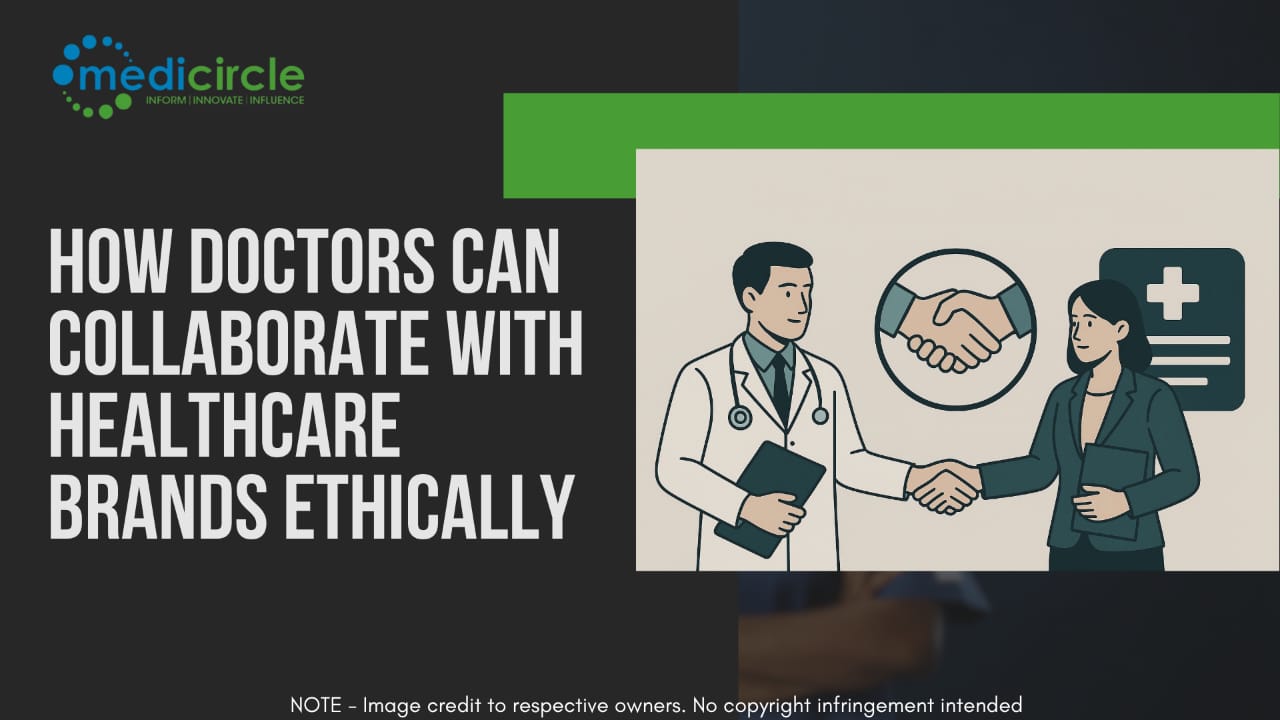
 This article explores how Indian doctors can form ethical, transparent and educational partnerships with healthcare companies under the new UCPMP 2024, ensuring trust driven, patient-centered medical practice.




Walk into any clinic in India today and you will notice a shift. Patients are no longer passive recipients of care. They come with questions, often armed with printouts from the internet. This new dynamic is just one part of a larger transformation sweeping across the country's medical landscape. As regulations tighten and public awareness grows, the relationship between doctors and healthcare companies is undergoing its most significant change in decades.
For years, these collaborations existed in a grey area. Today, the rules are becoming clearer and stricter. The introduction of the Uniform Code for Pharmaceutical Marketing Practices (UCPMP) 2024 by the government has set down a new marker. It establishes a firm boundary between professional education and commercial influence. At the same time, the modern Indian patient expects treatment decisions to be based purely on clinical need, not on any behind the scenes incentives.
This article aims to walk through this new terrain, exploring how medical professionals can cultivate relationships with healthcare brands that are not only productive but also principled, preserving the sacred trust at the heart of healing.
Understanding new rulebook:
Decoding the UCPMP 2024:
The Department of Pharmaceuticals has rolled out a code that fundamentally reshapes interactions. While the UCPMP 2024 primarily directs pharmaceutical and device companies, its success hinges on doctors understanding and embracing its spirit.
The guidelines draw a clear red line around practices that have long been ethically questionable. They explicitly prohibit gifts, cash incentives and lavish hospitality extended to doctors or their family members. This is not a gentle suggestion; it is a definitive move from a loose, voluntary system to one with accountability.
Another critical change is the mandate for financial transparency. Drug companies must now publicly disclose money spent on conferences, seminars and workshops meant for doctor education. This sunlight is the best disinfectant, allowing everyone to see if an educational event is truly about science or if it is a promotional holiday in disguise.
Restoring trust in care:
These rules are not about creating bureaucratic obstacles. They represent a vital cultural renewal for Indian medicine. Consider the moment a patient sits across from you. Their faith in your prescription rests on a simple, unspoken belief: that your choice of treatment is guided solely by what is best for them.
The old way of working, a system sometimes built on personal favors and informal understandings is fading. It is being replaced by a fresh standard where clarity and openness are not just ideals but non-negotiable requirements. This change is a victory for every doctor who has always put patient outcomes first.
Charting a path:
Informed alliances:
A stricter regulatory climate does not mean doctors should retreat into isolation from industry advances. Instead, it calls for a more deliberate and conscious approach to working together. Pharmaceutical companies are correctly pivoting their focus toward robust scientific evidence, peer-reviewed studies, solid clinical data and clear treatment pathways, instead of relying on persuasive perks.
Continuing Medical Education (CME) programs remain a valuable channel for knowledge, provided their core intention is genuinely educational. The real test lies in the quality and independence of the content. Doctors are encouraged to seek out programs shaped by academic minds, those that present a balanced view of all treatment possibilities and steer clear of heavy handed sales talk.
The digital world now offers a powerful medium for this knowledge exchange, sidestepping many ethical tightropes. A brief, informative video on a platform like YouTube fits perfectly into a busy doctor's schedule. Similarly, WhatsApp groups moderated by healthcare experts can foster peer to peer learning. These tools put the doctor in control, allowing them to access new clinical insights on their own time.
Harnessing the digital wave:
India is in the midst of a healthcare digital revolution, opening up novel avenues for ethical engagement. With the number of smartphone users in the country soaring past 780 million, it has become second nature for people to look up symptoms online long before they book a doctor’s appointment. This digital shift is also reshaping professional interactions.
Healthcare brands are now tapping into online portals and smart decision support tools designed to offer genuine assistance without the hard sell. For the medical community, this translates to getting clinically useful information through platforms built for professional growth, not product pushing.
The true value of these digital aids is realized when they complement a doctor’s judgment, not replace it. They serve their purpose when they offer authentic insights instead of disguised advertisements, ultimately broadening a doctor’s understanding of available options without undermining clinical freedom.
Trust and integrity:
Actionable steps:
As professional boundaries continue to evolve, here are some concrete steps doctors can integrate into their practice:
- Set your own personal code: Before any meeting with a company representative, know your own red lines. Your personal ethical standards should meet or exceed the regulatory requirements.
- Anchor decisions in patient welfare: Let solid clinical evidence and the unique needs of the person in front of you be the sole compass for your treatment decisions. Stay mindful of how external information sources might subtly shape your choices.
- Practice openness with your patients: Be prepared to discuss why a particular treatment is right for them. Share how you stay abreast of the latest medical advancements, building trust through straightforward communication about your learning process.
- Evaluate the educational core: When considering an industry supported event, scrutinize its learning objectives and the credibility of its speakers. Choose those that promise a balanced, evidence based dialogue.
Unshakable foundation:
Beneath all these guidelines and strategies lies one fundamental principle: the preservation of trust. This trust is multidimensional, it exists between doctor and patient, between the medical community and healthcare brands and between the healthcare system and the society it serves.
This evolution is not about shutting doors. It is about raising standards. We are moving towards a professional environment where transparency is the default setting, not an aspirational goal. The doctors who will truly thrive in this new era are those who see that ethical practice and professional success are two sides of the same coin, both essential for a lasting and respected career.
More trustworthy future:
The current changes in Indian healthcare should be seen not as a constraint, but as a profound opportunity. It is a chance to strengthen the foundational covenant of medicine: that the patient’s well-being is the only priority.
Moving ahead will demand genuine commitment, continuous learning and a focus on the long term health of the profession. By choosing to engage with healthcare brands through a lens of ethics, Indian doctors can continue to benefit from innovation and knowledge while holding fast to their professional integrity.
The goal is a healthcare system that is more open, more trustworthy and more resilient, a system where clinical decisions are guided by evidence and the doctor-patient relationship remains the sacred center of everything we do. This is a future that benefits everyone and one worth working toward together.





-23-300x250.png)

.jpeg)


.jpg)
.jpg)
.jpg)
.jpg)
.jpg)
.jpg)
.jpg)
.jpg)
.jpg)