 Thursday, October 08, 2026
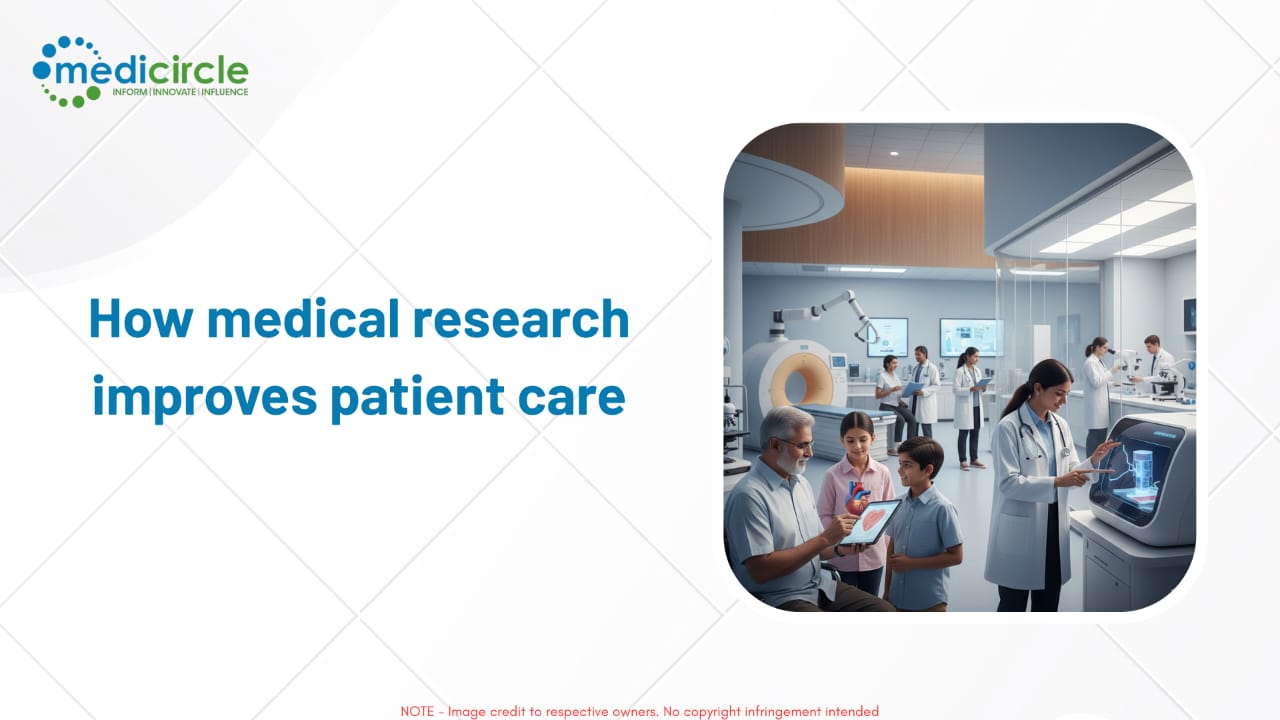
 Medical research underpins every modern treatment, shaping safer drugs, personalized care, preventive strategies and healthcare innovations that directly influence everyday clinical practice across India.




Think about the last time you visited a doctor. You might have been prescribed a new medication, advised on a different lifestyle or maybe referred for a specific test. Have you ever wondered how your doctor knows that particular treatment is the right one? The answer does not just come from a textbook. It comes from a long, careful journey of medical research. This is not a distant concept. It is the very reason healthcare evolves, directly shaping the care in clinics across India today.
From question to prescription:
Medical research, at its heart is about solving puzzles. It starts with a simple, powerful question: How can we make this better? Scientists and doctors look at diseases, treatments and health systems with a critical eye. They do not just accept the current way of doing things. They test, they trial and they validate. A new drug is not born overnight. It goes from a laboratory concept to animal studies, then through rigorous human trials for safety and effectiveness. Only after clearing these many hurdles does it reach your local pharmacy. This meticulous process is our collective safety net. It gives us confidence that the antibiotics for an infection or the stent for a heart attack have been proven to work.
Care, just for you:
Gone are the days when the same treatment was given to everyone with the same disease. Research has shown us that each person and each illness, can be unique. This has given birth to personalized medicine. A clear example is in breast cancer treatment. Through research, doctors learned that a specific type called HER2 positive breast cancer behaves differently. Because of that discovery, a targeted drug was developed that specifically blocks the HER2 protein. This means patients with this subtype get a treatment that works much better for them, often with fewer side effects. Research is making healthcare less of a guessing game and more of a precise science.
Preventing disease early:
What is better than a great cure? A great prevention strategy. This is another area where research changes lives. Think of the vaccines your children receive. They are the result of decades of research, teaching the body to fight off diseases like measles or hepatitis before an encounter or consider common screening tests. The Pap smear, for instance; can detect cervical cell changes long before they turn into cancer, allowing for simple, early intervention. By investing in prevention research, we save countless lives and reduce the immense strain on our hospitals and families.
Safer healthcare experience:
Research is not only about flashy new gadgets or drugs. Much of it focuses on making everyday care safer and more reliable. Simple things like the best way for nurses and doctors to wash their hands have been studied to cut down hospital infections. Research into better surgical methods has given us minimally invasive techniques. In many Indian hospitals now, operations for gallbladders or even heart repairs are done through tiny incisions. This means less pain, smaller scars and a faster return home for the patient. Every one of these improvements comes from someone asking, how can we do this more safely?
Learning, adapting and growing:
The impact of global research is visible here. The rapid rise of telemedicine, especially after the pandemic is a perfect example. Research into digital health made it possible for patients in villages to consult specialists in cities via a video call. Many hospitals have also adopted electronic health records, reducing errors and keeping patient history in one secure place.
Yet, the story has another side. India faces unique health challenges, from dengue to diabetes. To find solutions that work best for Indian people, in Indian settings, more homegrown research is essential. This requires support, better funding, encouraging young doctors to ask questions and creating an ecosystem where research is valued. It is about applying global knowledge and generating local solutions.
A healthier tomorrow:
So, the next time you hear about a medical breakthrough, know that it is not just a news headline. It is a future promise of better care. The medical advice you get today is built on the hard work of researchers from yesterday. By valuing this process, whether by understanding its importance, supporting ethical research initiatives or even participating in well run clinical trials, we all play a part. Better health for everyone is not just a doctor’s job. It is a goal we reach together, one discovery at a time.






.jpeg)








.jpg)
.jpg)
.jpg)
.jpg)
.jpg)
.jpg)


.jpg)
.jpg)
.jpg)