 Tuesday, October 27, 2026
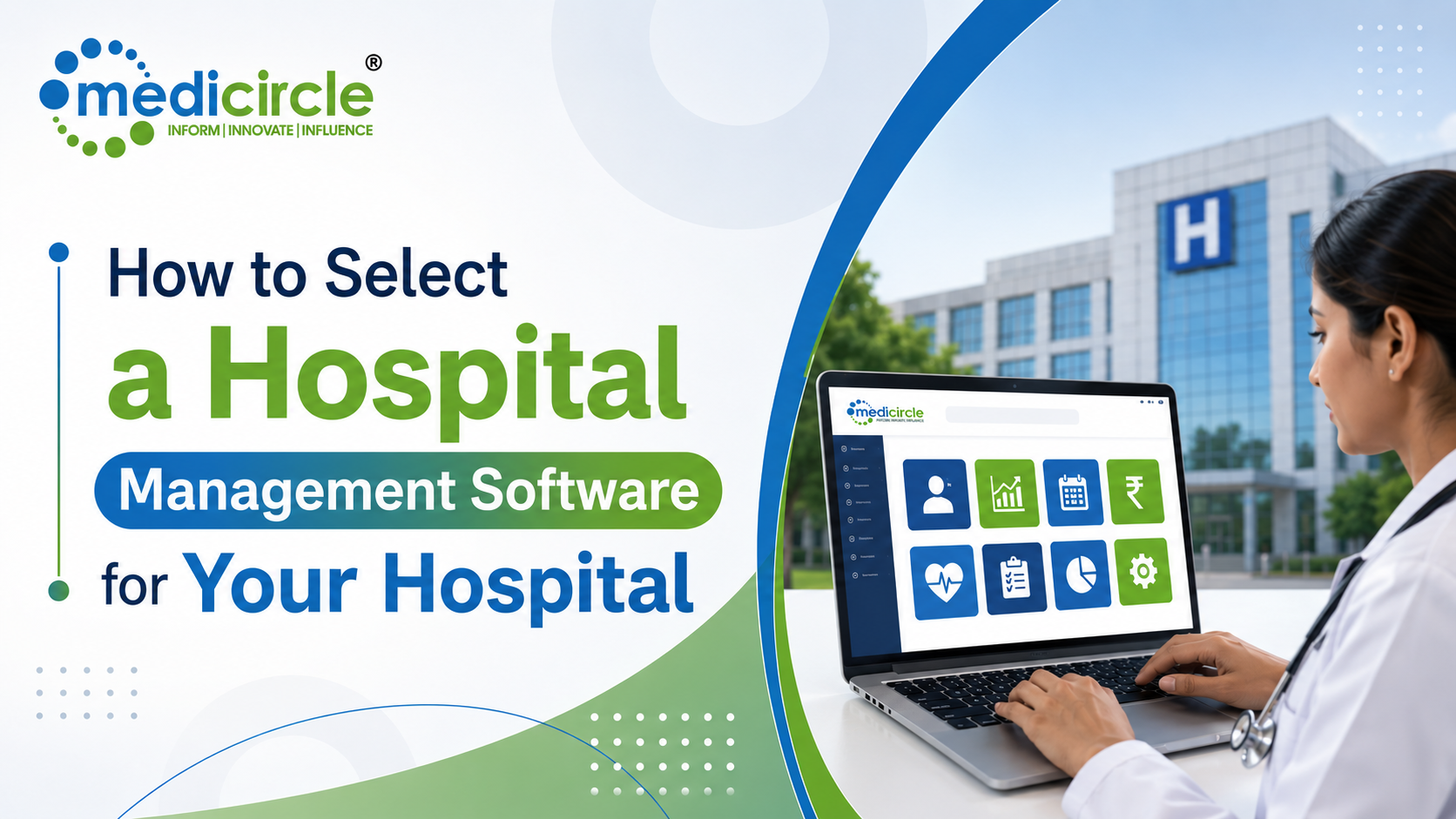
 Selecting the right Hospital Management Software (HMS) or Hospital Information System (HIS) is far more than a technology investment—it is a strategic decision that directly influences clinical efficiency, patient care quality, and financial performance. From streamlining nursing workflows and physician documentation to accelerating billing and insurance claim processing, the right system becomes the operational backbone of the entire healthcare facility.




How to Select a Hospital Management Software for Your Hospital
Selecting a Hospital Management Software (HMS)—also known as a Hospital Information System (HIS)—is one of the most critical operational decisions a healthcare executive, director, or medical founder will make. Your choice does not just impact your IT department; it dictates how quickly a floor nurse can execute a medication schedule, how smoothly a doctor can chart a patient's lifecycle, and how efficiently your front desk can settle complex insurance claims.
The health-tech landscape has evolved far beyond basic electronic record spreadsheets. Modern healthcare facilities function like high-volume, multi-department corporate networks. Relying on an outdated, rigid, or clunky system triggers profound operational friction, resulting in administrative bottlenecks, revenue leakage, and clinical staff burnout. To safeguard your institution, you need a structured, high-performance protocol to evaluate, test, and implement your digital infrastructure.
1. The Hospital Software Evaluation Matrix
The ideal platform must seamlessly bind your entire facility into a centralized, data-driven hub, transforming how clinical, financial, and administrative metrics interact.
2. Step-by-Step Guide to Selecting an HMS Platform
Choosing the right partner requires moving past generic feature checklists and executing a deliberate, step-by-step institutional audit.
- Map Out Institutional Bottlenecks
Step 1
Conduct a comprehensive baseline audit across all working wards. Document exactly how long a patient spends in your outpatient (OPD) queue, list the primary reasons your inpatient (IPD) discharge processing faces delays, and pinpoint where your manual pharmacy inventory logging errors occur. - Determine the Cloud vs. On-Premise Architecture
Step 2
Decide whether your facility will deploy a web-based Cloud SaaS model or a legacy On-Premise server array. Cloud-native systems eliminate the upfront capital expenditure of buying heavy local servers and hiring a large, full-time IT maintenance squad, substituting it with automatic security updates and predictable subscription fees. - Audit Inter-Departmental Interoperability
Step 3
Verify that your prospective vendor operates on a unified database stack. The platform must natively bridge your Laboratory Information System (LIS), Radiology Information System (RIS), electronic health records (EHR), and central billing module, ensuring a blood test or an X-ray cost maps directly to the patient's final ledger without manual data re-entry. - Validate National Digital and Regulatory Compliance
Step 4
Enforce strict data security standards. Ensure the platform is certified by regional health bodies (such as holding a complete ABDM certification in India to natively manage ABHA IDs, or maintaining strict HIPAA/NABH compliance globally). The software must feature robust data encryption and absolute multi-factor authentication (MFA) discipline to lock down Patient Health Information (PHI).
3. Core Operational Features to Prioritize
To secure a highly scannable, fluid, and error-free operation, ensure your future vendor delivers these three core technical capabilities natively:
- Doctor-First Clinical Customization: Avoid rigid, one-size-fits-all medical templates. A consulting pediatrician requires drastically different data input graphs and dosage calculators than a surgeon planning a complex orthopedic procedure. The system should offer specialty-wise configurations and support advanced Speech-to-Rx dictation engines or stylus handwriting recognition to eliminate typing burnout.
- Real-Time Visual Bed Board Tracking: For facilities containing inpatient wards and intensive care units (ICUs), the IPD module must feature a real-time graphical map of the building. Admission staff and floor nurses should see every single bed color-coded by occupancy status (occupied, vacant, reserved, or dirty/cleaning needed) to manage patient throughput effortlessly.
- Automated Revenue Cycle and TPA Management: The billing engine must function as a comprehensive financial shield. It should automatically bundle OPD consulting fees, LIS panel costs, surgical consumable rates, and room charges into a clean invoice, while natively processing Third-Party Administrator (TPA) corporate insurance frameworks to mitigate claims rejections.
Comparative Matrix: Evaluating System Classifications
The table below contrasts the operational profiles of distinct software architectures to help you align your selection with your facility's physical scale.
|
Software Deployment Profile |
Target Institutional Scale |
Upfront Capital Demand |
Key Technological Moat |
|---|---|---|---|
|
Cloud-Native SaaS Ecosystem |
Rapid-Growth Clinics, Mid-to-Large Multi-Specialty Hospitals |
Minimal; predictable monthly or annual licensing fee |
Zero local IT maintenance overhead; accessible via any secure browser with instant updates. |
|
AI-Assisted Hybrid Platform |
High-Volume Outpatient Wings, Specialized Surgical Centers |
Moderate; includes specialized hardware or tablet setups |
Vernacular voice recognition and stylus digitization that minimizes doctor resistance. |
|
Legacy On-Premise System |
Massive Academic Teaching Wards, Multi-Facility Public Networks |
Extremely Heavy; demands upfront servers and server rooms |
Total physical isolation of data banks; highly insulated from general internet disruptions. |
Actionable Strategy: Executing a Leakage-Proof Trial Run
- Demand a Live "Analyzer-to-Ledger" Proof of Concept: Never purchase an HMS based entirely on pre-recorded marketing videos. Require the vendor to run a live demonstration inside your clinic: watch exactly how a diagnostic result flows automatically from a lab analyzer directly onto a test patient's running invoice file to verify true integration.
- Enforce Strict Role-Based Access Controls (RBAC): Safeguarding your hospital from legal liabilities requires internal data partitioning. Ensure you can configure granular user profiles: a floor nurse must lock purely into vitals and medication schedules, a pharmacist should see inventory logs, and a front-desk billing assistant must hold absolute zero visibility into a patient's private clinical pathology notes.
- Inquire About the Post-Live Support Infrastructure: Software updates, sudden network drops, or incoming administrative freshers will require quick troubleshooting. Prioritize vendors that deliver high-touch, structured onboarding workshops and back their platform with a dedicated, 24/7 technical support level-agreement (SLA).
Frequently Asked Questions (FAQs)
Q1. What is the difference between an Electronic Medical Record (EMR) and a Hospital Management Software (HMS)?An Electronic Medical Record (EMR) is a purely clinical tracking tool used by doctors and nurses to document a patient's diagnoses, prescription charts, and medical history. A Hospital Management Software (HMS) is a much broader, all-encompassing enterprise architecture that packages the EMR alongside advanced administrative systems, including front-desk scheduling, ward management, laboratory equipment integrations, inventory control, and central financial revenue cycle management.
Q2. Why do generic single-doctor clinic apps fail when scaled in a multi-specialty hospital?Generic clinic applications are built around a simple, linear workflow: one doctor tracking one patient at a time and printing a basic receipt. A multi-specialty hospital environment operates on multiple concurrent tracks—requiring a system capable of cross-referencing multi-department data simultaneously, adjusting automated pricing dynamically based on assigned ward categories, and updating shift logs for nursing teams seamlessly without crashing.
Q3. How does a cloud-native HMS lower a hospital's Total Cost of Ownership (TCO)?A traditional, legacy on-premise system requires a massive upfront investment to build secure local server rooms, construct physical backup arrays, and pay an in-house IT squad to handle system errors and manual updates. A cloud-native SaaS model replaces this heavy capital drain with a predictable subscription fee that covers encrypted cloud hosting, automated data protection, and real-time compliance updates.
Q4. What exactly does a "Visual Bed Board" do inside a hospital information system?A Visual Bed Board is an interactive, graphical map of a hospital's physical wards. It allows administrative teams and nursing supervisors to instantly see every single bed in the facility color-coded by occupancy status. A single click can transfer a patient between wards, trigger an automated update to the nursing floor team, and instantly recalibrate the active billing ledger from a general room rate to an ICU pricing tier.
Q5. Are modern web-based hospital management platforms safe from sophisticated cyberattacks?Yes, provided the vendor leverages world-class, secured cloud infrastructure (such as Amazon Web Services or Microsoft Azure). Top-tier cloud-native systems implement deep end-to-end data encryption, automated real-time off-site backups, routine penetration testing, and absolute consent-driven data handling. This configuration delivers a significantly higher defensive posture than a local server sitting vulnerable in a physical backroom.
Q6. How do AI-augmented features like Speech-to-Rx help a hospital recover lost revenue?When consulting doctors are forced to type out long, tedious summaries into a clunky computer interface, they often resort to brief shorthand or skip logging secondary procedures to save time. Using natural speech-to-text dictation or tablet-handwriting tools allows doctors to capture rich, comprehensive clinical records in seconds. This detailed data ensures the billing system automatically captures every single consumable and procedure executed, completely eliminating structural revenue leakage.
Q7. Can an ABDM-compliant hospital management software help an Indian facility attract more patients?Yes, absolutely. Operating a fully certified ABDM platform unlocks seamless integration with public insurance programs (like Ayushman Bharat), enables immediate participation in national digital welfare initiatives, and allows tech-fluent patients to effortlessly pull their digitized labs and discharge summaries directly into their personal digital health lockers, heavily driving patient trust and long-term retention.
Q8. What is the typical deployment and go-live timeline for a modern cloud-based HIS?While old-school on-premise setups routinely require 6 months to a year of heavy manual configuration, modern web-based architectures can achieve fully integrated deployment in a fraction of the time. Depending on the room matrix complexity and the volume of department modules activated, platforms can achieve complete data migration and go-live status within a few days to a couple of weeks.
Q9. How do cross-referrals operate within an integrated multi-specialty patient file?Within a true, single-tenant HIS, a patient’s medical chart functions as a unified lifecycle log. If a general physician routes an internal cross-referral to a consulting cardiologist, the receiving specialist instantly views the patient's past vitals, active medication lists, and emergency lab reports directly inside their dashboard with zero delay, entirely bypassing the risk of duplicate testing or lost paper records.
Q10. What metrics should a hospital board track to evaluate the return on investment (ROI) of a new HIS?The board should closely monitor five distinct operational KPIs over a 4-to-6-week window post-implementation: the reduction in average patient discharge processing times, the drop in manual pharmacy billing errors, the acceleration of TPA insurance claim settlements, the drop in IT server maintenance costs, and the measurable improvement in daily patient throughput metrics across the OPD queues.





-23-300x250.png)

.jpeg)






.jpg)
.jpg)
.jpg)
.jpg)
.jpg)
.jpg)
.jpg)
.jpg)
.jpg)

