 Thursday, October 08, 2026
 The improvement in surveillance proves that the machinery guiding the country’s TB efforts is stronger than before. But the persistence of TB as a national burden shows that the fight is far from over.




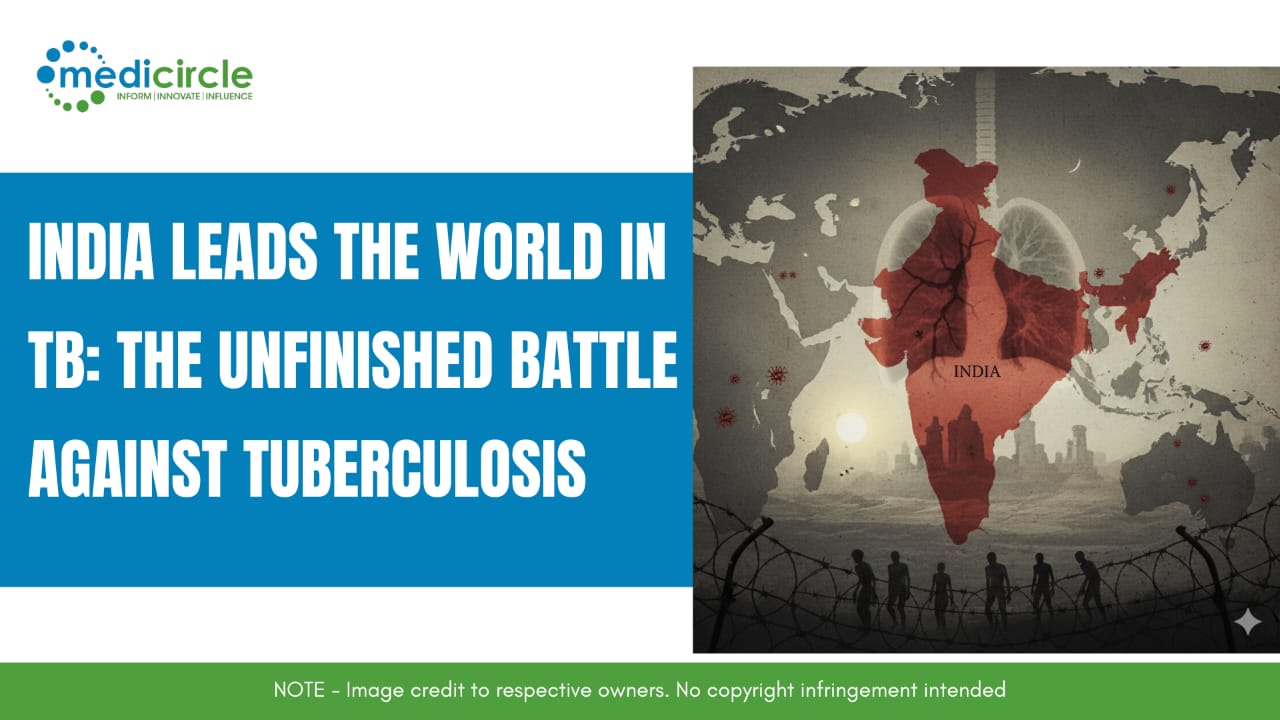
Tuberculosis has lived far too long in India’s shadow. It hides in crowded lanes, slips through neglected corners, and thrives in places where healthcare systems struggle to keep pace with human need. The latest Global Tuberculosis Report 2025 from the World Health Organisation reminds of how deeply this infection has woven itself into the country’s story. Each year we speak of progress, and yes, progress is visible, but the pace at which we move is still far behind the promise we once made i.e. to make India free of TB by 2025. That dream now stands under a harsh light, and the numbers speak louder than any speech. India recorded the highest burden of tuberculosis cases in 2024, holding 25% of the world’s total TB load. A quarter of humanity’s TB cases lived within our borders, raising questions that deserve honest reflection.
When the WHO report placed India at the top of the global TB chart, it was not a ranking that brought pride. Indonesia followed at 10%, the Philippines at 6.8%, China at 6.5%, and Pakistan at 6.3%. Together with Nigeria, the Democratic Republic of the Congo, and Bangladesh, these eight nations carried two-thirds of all TB cases worldwide. The weight is immense, but India shoulders the largest portion. The country’s TB incidence in 2024 was 187 cases per one lakh population, a clear drop from 237 in 2015. This decline counts as progress, but not the kind that fulfils the promise of eliminating the disease. The national target for 2025 is 77 cases per lakh which is a mark that now feels more like a distant landmark than an approaching milestone.
There is a sense of urgency when numbers tell a story of improvement yet reveal the distance left to travel. The mortality rate in India fell from 28 deaths per lakh in 2015 to 21 in 2024. A reduction, yes, but still three times higher than the target set for elimination. Every drop in mortality represents lives saved, children protected, families kept whole. Yet the shadow remains large when thousands still lose their lives to a disease completely treatable with timely diagnosis and proper medication. The global community aims to end tuberculosis by 2030, but countries with high burdens will need sharper strategies, faster responses, and deeper community engagement to turn ambition into reality.
The story does not end with regular TB. The report adds another layer of concern. India also recorded the largest share of drug-resistant TB cases in 2024. Around 32% of all multidrug-resistant (MDR) and rifampicin-resistant TB cases in the world emerged here. These forms of TB are far more difficult to treat and demand longer, more complex therapy. Drug-resistant TB refuses to respond to rifampicin and isoniazid, two of the most powerful medicines that usually bring swift recovery. Patients with rifampicin-resistant TB deal with bacteria that have outsmarted one of the key antibiotics relied upon by health systems.
Yet, the overall rate of drug-resistant TB is slowly declining. More than 1.64 lakh people in India received treatment for drug-resistant TB in 2024, signalling that surveillance systems are strengthening and treatment networks are expanding. There is movement, steady and determined, driven by the country’s evolving TB control mechanisms.
India’s Health Ministry highlighted the achievements with confidence, stating that the country’s strategy for finding and treating TB cases has transformed significantly. Treatment coverage soared to 92% in 2024, a dramatic rise compared to 53% in 2015. This shift alone shows how India has cast its net wider, locating and treating more patients than ever before. Among an estimated 27 lakh total cases in 2024, 26.18 lakh were diagnosed and reported. Fewer than one lakh remained “missing” i.e. a term that represents individuals who fall out of the radar of reporting systems despite having the disease. This gap, once much wider, has narrowed through improved tracking and widespread awareness campaigns.
The ministry further stressed that MDR-TB cases have not seen a major rise and that mortality continues to decline, reassuring the public that the nation is moving in the right direction. These statements reflect effort and intent. Yet the disease continues to challenge us at every step. Ending TB is not just a medical task, it is a social, economic, cultural, and behavioural challenge. It lives where poverty lingers. It spreads where nutrition is lacking. It thrives in places where people fear stigma more than illness.
Public health experts have been vocal about the deeper gaps that need attention. Many speak of the need for early diagnosis, especially in remote and rural regions, where access to healthcare remains uneven. They emphasise the importance of uninterrupted medication, timely follow-ups, and community-based support systems. They remind us that TB is not merely a biological infection; it is a test of whether a society can protect its most vulnerable.
India’s National TB Elimination Programme (NTEP) has expanded its mission with a strong commitment to track every case, ensure treatment continuity, and reduce stigma through nationwide campaigns. The programme has placed a strong emphasis on free diagnostic services, nutritional support, treatment adherence, and home-based care, strengthening the foundation needed for long-term change. But as the clock ticks toward 2025, it is clear that the goalpost will be missed unless the momentum accelerates drastically.
The path forward demands a collective push where government systems starts working in harmony with community workers, healthcare professionals reinforcing trust, families supporting treatment schedules, and patients feeling safe enough to step forward without fear. Stigma has long been TB’s silent partner. People often hide symptoms, fearing judgement from neighbours or family members. This secrecy delays diagnosis and fuels transmission. Breaking stigma may, in many ways, be as important as delivering medication.
The fight against TB also depends heavily on robust awareness programs. Many individuals still cannot recognise early signs such as persistent cough, unexplained weight loss, night sweats, or fever. Awareness can turn hesitation into action, pushing patients to seek help before the disease spreads or deepens. Technology too has a growing role. Digital tools, mobile notifications, teleconsultation platforms, and AI-assisted screening models are transforming the way we track symptoms and monitor patients, giving India new strength in its pursuit of elimination.
Rural India remains a critical battlefield. Limited infrastructure, distance from diagnostic centres, shortage of medical professionals, and social barriers keep people away from early intervention. These regions demand targeted efforts like mobile clinics, village health volunteers, nutritional kits, and community-led monitoring. Without fully addressing rural challenges, elimination will remain a target on paper rather than a milestone achieved in reality.
What India faces today is a paradox. The nation has made admirable strides, yet the disease continues to hold on. It is like a fire reduced in size but still burning quietly under the surface. The drop in incidence and mortality shows the impact of strong policies. The rise in treatment coverage reflects the dedication of healthcare workers who walk to remote communities to track patients. The improvement in surveillance proves that the machinery guiding the country’s TB efforts is stronger than before. But the persistence of TB as a national burden shows that the fight is far from over.
The year 2025 stands close, almost touching distance, yet the gap between promise and reality widens. India must now move with resolute speed, transforming every insight into action. The disease has decades of history behind it, and undoing that legacy requires more than medical interventions, it requires societal transformation. People must learn to recognise symptoms early, governments must continue to invest in innovation, industries must support workplace screening, and communities must create safe spaces for open conversations.
Tuberculosis is not invincible. It bends under the force of persistent effort. It fades when medicine reaches on time. It weakens when nutrition improves. It loses ground when people feel safe to speak about their illness. Ending TB is a collective responsibility that demands a shared commitment from every corner of society.
As we stand midway between aspiration and achievement, the challenge is clear. India has the power to rewrite the future of TB control. With stronger action, faster diagnosis, wider access to treatment, and communities united in awareness, the country can inch closer to its dream of a TB-free future. The clock is ticking, but progress is possible. The disease has lived long enough in our shadows. It is time to push it out into history, where it belongs.





.jpeg)








.jpg)
.jpg)
.jpg)
.jpg)
.jpg)
.jpg)


.jpg)
.jpg)
.jpg)