Tuesday, October 06, 2026
 Without significant changes in policy implementation, outreach, and access, the lives of thousands will remain at risk, with preventable illnesses and workplace deaths continuing unchecked.




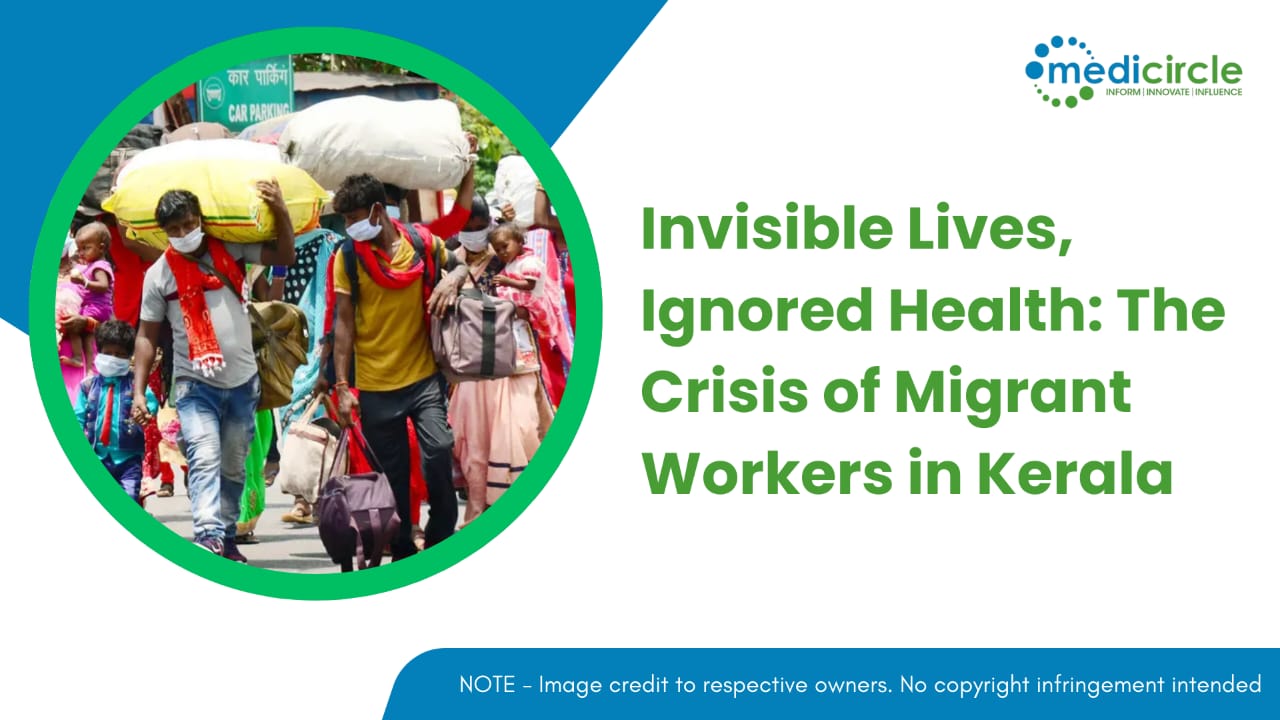
Kerala has long been celebrated for its social indicators, high literacy, and public health achievements, yet beneath the progress lies a troubling story about the state’s interstate migrant workforce. While the government claims strides in welfare measures for these workers, ground realities tell a different tale. Health, a fundamental pillar of human dignity, remains largely inaccessible to the very individuals who contribute significantly to the state’s economy, spanning construction sites, manufacturing units, and service sectors.
Recent research by Mahatma Gandhi University, Kottayam, highlights the alarming state of health access among migrant workers in Kerala. The study reveals that only 9.8 percent of these workers have any form of health insurance coverage. The majority, a staggering 87.7 percent, remain unaware of central or state health policies aimed at their welfare. This disconnect between policy and practice raises serious questions about the efficacy of government schemes and whether they are reaching those most in need. Despite ambitious initiatives and repeated claims of progress, the systemic neglect of migrant workers’ health persists.
The human cost is visible in statistics that are rarely acknowledged in public discourse. Earlier this year, the Centre for Migration and Inclusive Development (CMID) published a report documenting the deaths of at least 690-700 migrant labourers every year in Kerala. On average, two migrant workers die daily, and one of these deaths is directly linked to workplace accidents. The lack of systematic documentation leaves these tragedies invisible, depriving families of justice and denying the state an accurate assessment of occupational risk. Each death represents a preventable loss, exposing the urgent need for structural reforms in health coverage and workplace safety.
The Mahatma Gandhi University study sheds light on why access to healthcare remains poor among migrants. A key factor is the layered employment structure, with workers rarely hired directly by principal employers. Instead, labourers are engaged through multiple tiers of contractors and sub-contractors. This system of intermediaries undermines legal provisions, as the focus shifts from worker welfare to simple labour arrangement. The result is a workforce caught in legal grey areas, where insurance coverage, occupational safety, and access to healthcare are compromised at every level.
Working conditions further compound the problem. Nearly half of the migrant workers reported being overworked in hazardous environments. High-risk sectors include construction and manufacturing, where exposure to heavy machinery, chemicals, and unsafe structures is common. Lower-risk sectors, such as restaurants or salons, still demand long hours and physical strain. Around 57 percent of workers said they labor nine to twelve hours a day, with some reporting sleep limitations of less than six hours despite twelve to fourteen-hour workdays. The physical toll is clear, yet the safety nets that might mitigate risk remain ineffective or inaccessible.
Efforts to provide health insurance coverage for migrant workers have existed on paper but falter in execution. The Awaz Health Insurance Scheme (AHIS), introduced in 2017, aimed to offer health and accidental death coverage to migrants. A 2021 study funded by the State Planning Board found that roughly 13 percent of the migrant population benefited from the scheme. However, registration was closed in 2022, rendering the program largely inactive. The Athidhi portal, launched in 2023 to facilitate welfare and registration, had enrolled 4,19,570 individuals as of mid-September. While officials claim registration grants access to health coverage, the absence of transparent data makes it impossible to assess the scheme’s effectiveness fully.
Research associates have flagged these shortcomings. Navas M Khader noted that the Awaz scheme has been largely non-functional since 2019, a situation confirmed through multiple Right to Information applications. Dr. Noushad P P, co-investigator of the study, pointed out that despite high digital penetration among migrant workers (about 85.5 percent) government portals like Athidhi remain underutilized. This gap between digital capability and scheme utilization indicates that registration alone is insufficient; active outreach and awareness campaigns are critical to ensure that workers understand and can access the benefits available to them.
Migrant workers face unique barriers in accessing health services. Language differences prevent effective communication with healthcare providers, while work schedules often clash with clinic hours. As a result, most workers resort to self-treatment or phone consultations. Only two to three percent seek in-person care from qualified doctors, a statistic that highlights the systemic neglect of this vulnerable population. The limited engagement with formal health systems perpetuates a cycle of untreated illnesses, escalating workplace injuries, and preventable deaths.
Experts argue for innovative, ground-level interventions. Mobile health clinics, designed to operate with flexible schedules, could bridge the gap between migrant workers and essential health services. Pilot initiatives in certain districts demonstrated that bringing medical care directly to worksites or migrant settlements significantly improves healthcare access and compliance. These clinics not only provide immediate treatment but also facilitate preventive care, screenings, and vaccination programs, which are critical in high-density living and working environments where disease transmission risk is elevated.
Another proposed measure involves appointing labour ambassadors, individuals fluent in Malayalam and the workers native languages to act as liaisons between government services and migrant populations. Effective communication is essential for understanding health rights, navigating insurance processes, and ensuring timely medical intervention. By deploying ambassadors at workplaces and registration centers, authorities can reduce misunderstandings, improve compliance, and build trust, which is particularly important in populations that may fear bureaucratic procedures or lack confidence in formal institutions.
The study also highlights the role of contractors in limiting workers access to health benefits. When multiple layers of subcontracting exist, each with its own financial and operational priorities, the responsibility for insurance and occupational safety becomes diffused. Workers often find themselves caught between employers who prioritize cost-cutting and administrators who fail to enforce regulatory requirements. Strengthening accountability mechanisms, ensuring direct responsibility for health coverage, and mandating regular audits could help restore balance and protect the rights of migrant employees.
Government schemes alone cannot resolve these issues unless complemented by proactive outreach. Awareness campaigns tailored to linguistic and cultural diversity are crucial. Migrant workers come from different states, with distinct languages, social norms, and levels of familiarity with health systems. A one-size-fits-all approach fails to address these differences. Targeted campaigns through community networks, social media, and workplace interactions can enhance understanding, promote registration on welfare portals, and ensure workers know how to access healthcare services.
Workplace health also requires attention beyond insurance coverage. Many migrant workers face hazardous working conditions that contribute to high rates of injury, occupational disease, and stress-related illnesses. Interventions should include occupational safety training, provision of protective equipment, regular health screenings, and mechanisms for reporting unsafe practices without fear of retaliation. Combining insurance coverage with preventive measures can reduce the incidence of workplace-related morbidity and mortality.
Historical attempts to improve migrant welfare offer lessons for policymakers. Programs like the Awaz scheme and mobile health initiatives demonstrate that benefits are possible when programs are actively managed, accessible, and adequately communicated. However, gaps in execution, inconsistent registration, and insufficient monitoring undermine potential gains. Future interventions must integrate lessons learned, emphasizing accountability, continuous outreach, and adaptive approaches to meet the diverse needs of the migrant workforce.
The study’s findings also challenge policymakers to rethink conventional assumptions about coverage and access. While digital platforms offer convenience, digital registration alone does not ensure utilization. Migrant workers may face barriers such as illiteracy, unfamiliarity with bureaucratic processes, or lack of confidence in government systems. Combining technology with personal support, on-site facilitation, and culturally sensitive outreach can significantly enhance the effectiveness of welfare schemes.
Beyond healthcare access, the mental and social well-being of migrant workers deserves attention. Long working hours, hazardous conditions, and separation from families contribute to stress, fatigue, and mental health challenges. Health programs that integrate mental health support, counselling, and community engagement can help mitigate these risks. Worker welfare should be conceived holistically, addressing physical, mental, and social dimensions to foster resilience and productivity.
The role of NGOs, community organizations, and researchers is crucial in bridging gaps between policy and practice. Independent assessments, like those conducted by CMID and Mahatma Gandhi University, provide data-driven insights that can inform more effective policy design. These organizations also play a key role in advocacy, awareness-raising, and implementation of innovative health interventions that government structures alone may struggle to deliver.
Language barriers, long working hours, and legal complexities intersect to create systemic health inequities. Migrant workers are often aware of the risks but powerless to change their circumstances. This invisibility in policy and practice not only endangers individual health but also perpetuates social inequities. By making migrant workers health a priority, governments can ensure that Kerala’s celebrated social progress extends to all residents, not just those with stable, visible employment.
In conclusion, the plight of interstate migrant workers in Kerala exposes a critical gap in public health and labour welfare. Despite the existence of schemes such as the Awaz Health Insurance Scheme and the Athidhi portal, implementation failures, poor awareness, and structural barriers leave the majority of workers unprotected. Research shows that the challenges are multifaceted, ranging from hazardous working conditions to systemic barriers in accessing health services. Addressing these gaps requires a combination of grassroots-level interventions, mobile healthcare services, language-sensitive communication, legal accountability, and targeted awareness campaigns. Only by actively engaging with the migrant workforce, understanding their lived realities, and implementing inclusive strategies can Kerala ensure that the state’s promise of health and welfare extends to all its residents.
Migrant workers are an essential pillar of Kerala’s economy and society. Protecting their health is both a moral duty and an economic necessity. The evidence is clear: without significant changes in policy implementation, outreach, and access, the lives of thousands will remain precarious, with preventable illnesses and workplace deaths continuing unchecked. It is time for a shift from rhetoric to action, ensuring that the invisible workforce receives the recognition, care, and protection it deserves. Only then can Kerala truly claim to uphold its social commitment, ensuring that progress is measured not merely by statistics but by the dignity, health, and safety of every worker who contributes to the state’s growth.





.jpeg)
.jpg)
.jpg)
.jpg)
.jpg)
.jpg)
.jpg)


.jpg)
.jpg)
.jpg)
.jpg)
.jpg)
.jpg)