 Thursday, October 08, 2026
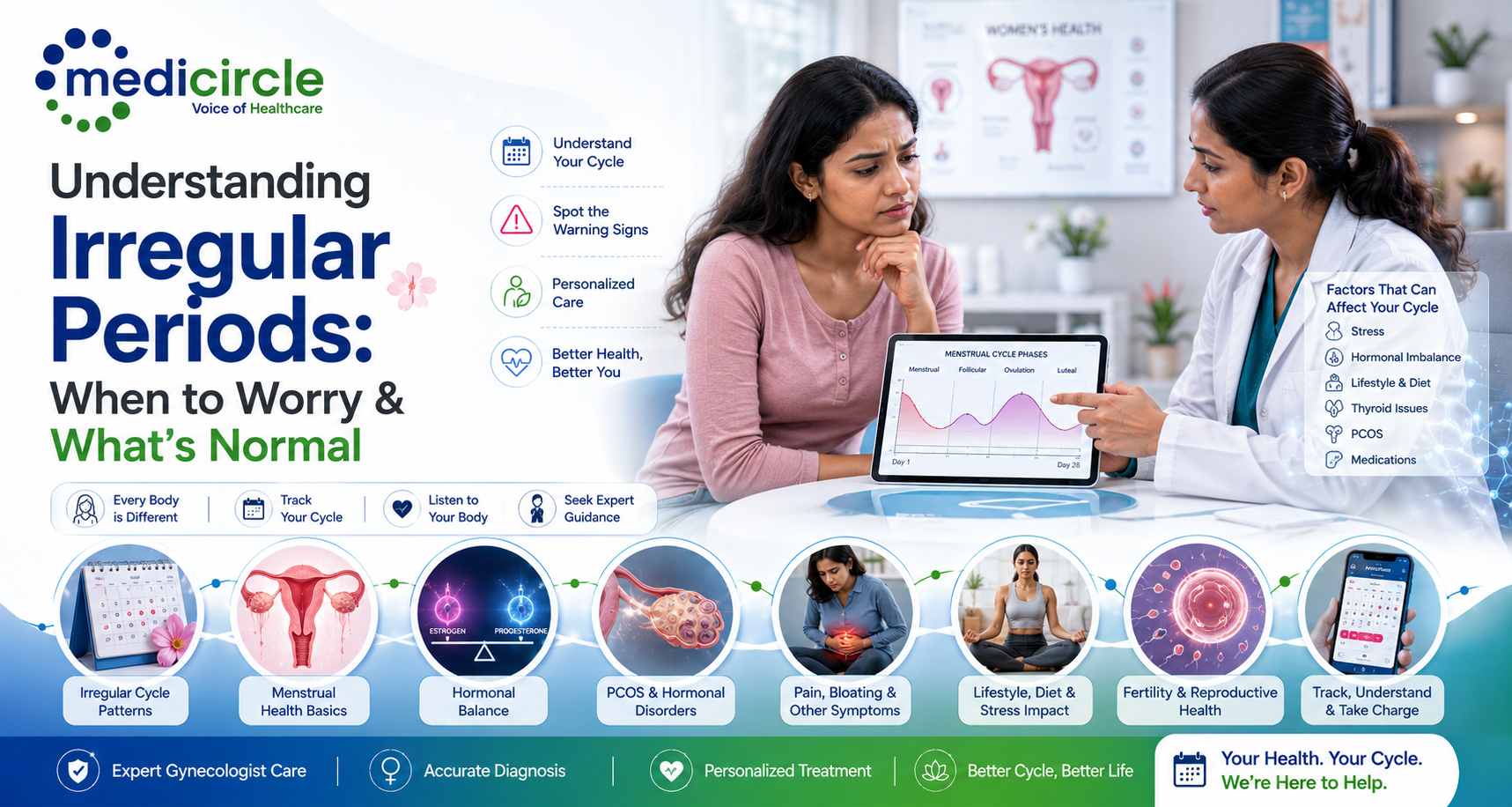
 Discover the clear differences between normal menstrual fluctuations and critical warning signs. This guide explores lifestyle triggers like stress, weight shifts, and conditions that require medical support.




Understanding Irregular Periods
Your menstrual cycle is much more than just a monthly inconvenience because it serves as a vital window into your overall physical health. When your period arrives on time, it generally signals that the complex internal systems of your body are running smoothly. If your calendar starts looking unpredictable, it is completely natural to feel a wave of anxiety. For millions of women, tracking irregular periods symptoms becomes a regular necessity when the predictable rhythm of their bodies changes.
The truth is that very few people have a cycle that follows a rigid, textbook schedule month after month. Subtle changes in timing, length, and flow happen to almost everyone at some point in life. The key is discovering what a baseline normal looks like for your unique body. This understanding makes it much easier to spot the difference between a temporary, harmless shift and a true warning sign that deserves professional medical attention.
Defining Typical Cycles
Before identifying an irregularity, you need a clear baseline of what a typical cycle looks like. Gynecologists in India generally tells that, conventionally, a standard menstrual cycle spans anywhere from 21 to 35 days, counting from the very first day of one period to the first day of the next cycle. Within that window, active bleeding usually lasts between three to seven days. This biological standard is the foundation for calculating a healthy menstrual cycle length.
An irregular period simply means your cycle consistently steps outside these boundaries. This variation can look like a gap between periods that shrinks to under three weeks, stretches past 35 days, or constantly shifts without a predictable pattern. For instance, if your cycle lasts 28 days this month, jumps to 42 days the next, and vanishes the following month, it is classified as irregular. Drastic changes in flow volume, whether it becomes unusually light or exceptionally heavy, are also key indicators that your reproductive rhythm is off balance.
Expected Life Phases
There are specific seasons in life where an erratic period is not a sign of an underlying illness. Instead, it is just your body navigating a major, perfectly natural hormonal milestone.
The Teenage Years
When a young person gets their first period, the delicate communication line between the brain and the ovaries is still a work in progress. For the first few years after menarche, it is incredibly common to experience anovulatory cycles, which are months where the body does not actually release an egg. Because of this hormonal learning curve, periods can frequently be skipped, arrive late, or vary wildly in flow.
Postpartum and Nursing
Bringing a new life into the world triggers an immediate rewrite of your internal hormonal chemistry. If you choose to breastfeed, your body produces high amounts of prolactin, which is the hormone responsible for milk production. Prolactin naturally puts the brakes on ovulation. As a result, your period might go missing entirely or return in a highly sporadic fashion until nursing begins to wind down.
Transition to Menopause
As individuals enter their 40s, the ovaries gradually begin to slow down their reproductive functions. This transitional phase, known as perimenopause, features sharp, unpredictable spikes and drops in estrogen and progesterone. Consequently, the time between periods might stretch out significantly, contract into frequent cycles, or bring unexpectedly heavy bleeding before the menstrual cycle stops permanently.
Common Hormonal Triggers
When you are not going through a major life transition, everyday lifestyle factors and specific medical conditions can subtly throw your endocrine system off course, pausing or delaying your normal cycle. This biological shift is one of the most common causes of irregular periods in healthy adults.
Chronic Stress
When your body deals with prolonged mental or physical pressure, it pumps out cortisol, which is famously known as the stress hormone. High levels of cortisol tell your hypothalamus, which is the master control center for reproduction in the brain, that it is not a safe time to sustain a pregnancy. In response, the brain slows down the signals required to trigger ovulation, which ultimately pushes back or cancels your period.
Weight and Exercise
Your reproductive system relies on a steady, healthy energy balance. Dropping weight too quickly or maintaining a very low body fat percentage can force your body into a survival mode, where it temporarily pauses nonessential functions like ovulation. On the flip side, gaining weight rapidly can cause insulin levels to spike, which alters estrogen levels and disrupts the regular release of an egg. Pushing your physical limits with extreme, grueling exercise routines can trigger the exact same biological pause.
Polycystic Ovary Syndrome
This condition has become a highly prevalent hormonal and metabolic concern, especially among young individuals in India. Many patients seek clinical advice after researching common PCOS symptoms and irregular periods to understand their bodies better. The condition causes the body to produce a slight excess of male hormones, which stops eggs from fully maturing and releasing from the ovaries. Instead, these immature follicles remain in the ovaries, resulting in long stretches without a period, skipped months, or sudden, unpredictable bleeding.
Thyroid Imbalances
Your thyroid gland sits in the neck and acts as the ultimate speedometer for your metabolism. When it produces too much hormone or far too little, the disruption ripples through your entire reproductive system. This hormonal mismatch frequently causes periods to become either completely unnoticeable and light, or exceptionally long and heavy.
Critical Warning Signs
While minor fluctuations should not cause panic, certain definitive symptoms mean it is time to schedule a consultation with a healthcare professional. Recognizing when your cycle crosses the line into abnormal territory is the first step in learning how to treat irregular periods effectively. Keeping an eye out for these signs helps catch potential health issues early.
- If you suddenly miss your period for three or more consecutive months, and pregnancy is ruled out, your body is signaling a deeper hormonal pause.
- Cycles that consistently wrap up in fewer than 21 days or drag out past 45 days mean your body is not ovulating on a reliable timeline.
- Bleeding so heavily that you soak through a standard pad or tampon every single hour for a few hours in a row is not normal and can quickly sap your energy.
- Mild discomfort is expected, but if you experience intense pelvic pain that leaves you unable to function, you need an evaluation to check for conditions like endometriosis.
- Noticing blood between your regular periods or experiencing bleeding after intimacy should always be checked out by a professional to ensure your reproductive tract is healthy.
Better Menstrual Health
Managing an irregular cycle is all about looking at the big picture of your daily wellness. Making small, intentional adjustments to your routine can go a long way in helping your hormones find their natural rhythm. Incorporating holistic habits is a proven approach for anyone looking into how to regularize periods naturally.
Accurate Tracking
Using a classic calendar or a dedicated tracking app to note down the exact days your bleeding starts and stops is incredibly empowering. Do not just track the dates, but write down changes in your flow, pain levels, and even your moods. Having this detailed record gives your doctor an objective, clear map of what is happening inside your body.
Nutrition and Lifestyle
Giving your body a steady supply of whole grains, clean proteins, healthy fats, and fresh produce provides the literal building blocks your hormones need to thrive. Evaluating your lifestyle is essential when investigating reasons for irregular periods because nutritional gaps often play a major role. Pair this balanced nutrition with consistent, moderate movement like brisk walking or yoga. Finally, making time for intentional relaxation, whether through deep breathing exercises or prioritizing a solid night of sleep, helps keep stress hormones from hijacking your cycle.
Frequently Asked Questions
Missed Period Concerns
A solitary late or missed period is often just a quick reaction to a stressful week, a brief bout of flu, or a sudden change in your sleep or travel schedule. If your period gets back on track the following month, it was likely just a temporary glitch. If it stays missing, then it is a good idea to check in with a doctor.
The Medical Evaluation
Your physician will likely start with a detailed conversation about your lifestyle, stress levels, and family history. To get a clear look at what is happening under the surface, they may order basic blood panels to check your thyroid and hormone levels, along with a pelvic ultrasound to take an inside look at your uterus and ovaries.
Pregnancy and Irregularity
Yes, you absolutely can get pregnant. Having irregular periods simply means that your body ovulates on an unpredictable schedule, which makes tracking your most fertile window a bit of a guessing game. Because you can never be entirely sure when an egg might be released, using reliable protection is essential if you are trying to avoid a pregnancy.
Listening to Body Signals
Ultimately, an irregular period is your body’s unique way of starting a conversation with you. Special milestones or temporary adjustments explain many variations, but long-term irregularities deserve direct attention. Partnering with a trusted healthcare specialist allows you to replace anxiety with accurate answers, helping you build a simple, personalized strategy to feel your absolute best.






.jpeg)








.jpg)
.jpg)
.jpg)
.jpg)
.jpg)
.jpg)


.jpg)
.jpg)
.jpg)