Is Mental Health the Biggest Public Health Emergency of Our Time

▴ Health Emergency
Governments must increase their budgets, train more mental health workers, and shift from hospital-centered models to community-based systems that are more human and effective.

Hello! If you're looking for high-quality genericmedications, fast delivery and excellent customer service, ourstore is the right choice for you. With over 20 years of onlineexperience, we guarantee safe, effective products that are alwaysin stock. Delivery within 48 hours, free shipping from $200, and 100% money-back guarantee if your order doesn't arrive on time.

👉 Order now at BestCheapPills and discover exclusive discounts for registeredcustomers!
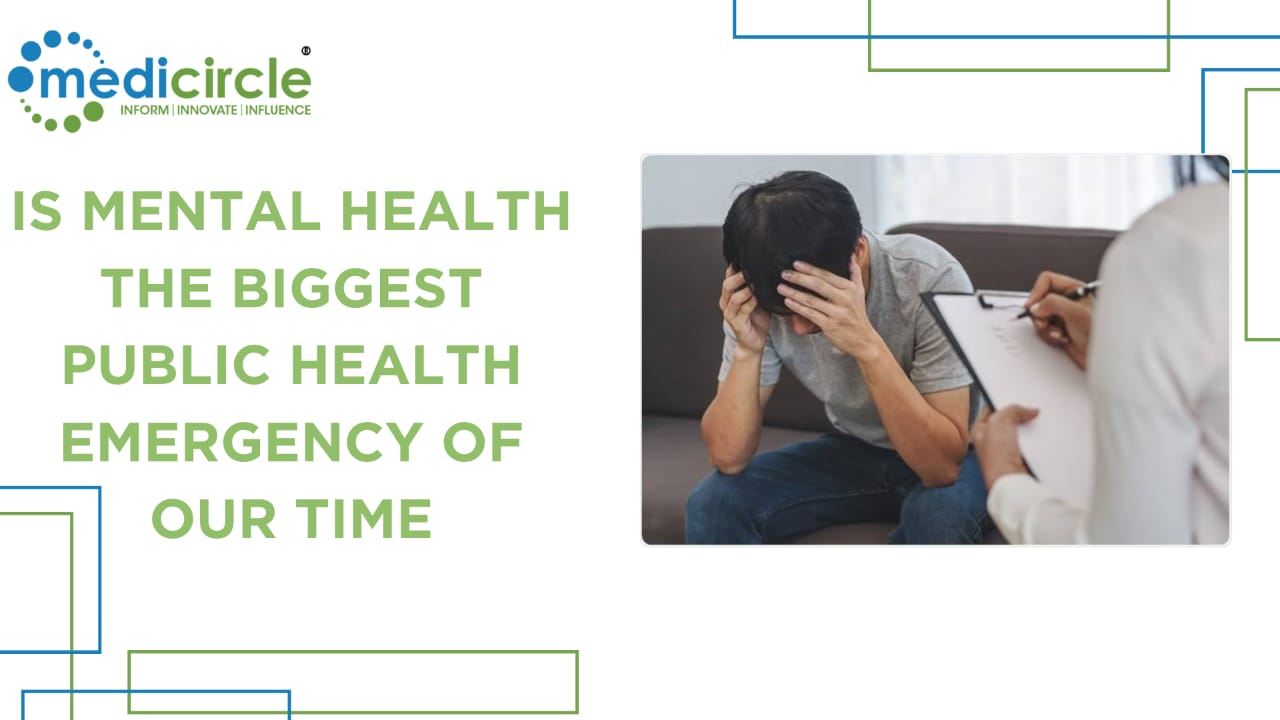
Across continents, cultures, and classes, there is a crisis that quietly grips more than one billion people on our planet. It is not a virus, not a visible wound, but a silent burden carried in minds and hearts. Anxiety and depression have become the most common companions of modern life, creeping into bedrooms, boardrooms, classrooms, and even the most intimate spaces of families. The latest data released by the World Health Organization paints a picture that is as alarming as it is heartbreaking. Mental health conditions are no longer rare; they are now among the most pressing challenges of human health, tearing through communities, economies, and generations. Women, in particular, are disproportionately affected, and young people are increasingly vulnerable, with suicide emerging as one of the leading causes of death for those between 15 and 29 years of age.

Numbers tell part of the story, yet behind each figure lies a face, a family, and an unfinished story. In 2021 alone, more than 7,27,000 lives were lost to suicide. That is more than one life every 40 seconds, silenced by pain too heavy to bear. For every life lost, there are over 20 attempts and millions of cries for help that too often go unheard. Men are statistically more likely to die by suicide, while women are more often caught in the web of depression, anxiety, and trauma-related conditions, especially when linked to violence, abuse, and societal pressures. Each suicide is not just a personal tragedy, it is a public failure, a collective inability to protect the vulnerable from invisible wounds.

Mental health disorders are now among the top causes of disability worldwide. Anxiety and depression alone account for the second-largest burden of long-term disability, robbing people of productive years and draining the vitality of entire societies. The economic cost of mental illness is shocking, estimated to exceed one trillion dollars every year due to lost productivity, absenteeism, reduced work capacity, and increased health-care expenses. Yet, even with such colossal losses, mental health remains shamefully underfunded and underprioritized. While physical illnesses receive attention and resources, conditions of the mind are still treated with hesitation, stigma, and neglect.

The gender divide in mental health is also a reminder of the social forces at play. Women bear the greater share of anxiety and depression across their lifespan. Experiences of intimate partner violence and sexual abuse dramatically increase their vulnerability, often leading to depression, post-traumatic stress, and suicidal ideation. On the other hand, men are more likely to be diagnosed with neurodevelopmental disorders such as ADHD and autism spectrum conditions, highlighting the complex biological and social intersections that shape mental health. The data is undeniable: while 581.5 million women live with a mental health disorder, the figure for men is 513.9 million. Behind each number lies an untold story of suffering, resilience, and the desperate need for care.

The tragedy deepens when we look at the fragile state of mental health systems worldwide. Despite decades of advocacy, only a tiny fraction of national health budgets is spent on mental health with an embarrassing global median of just 2%. This figure has not shifted since 2017, showing that progress is stalled. The disparities between nations are quite visible. In high-income countries, governments may spend up to 65 dollars per person on mental health. In low-income countries, the spending drops to a mere four cents. Such numbers reflect real-life consequences where millions go untreated, millions suffer in silence, and millions are pushed to the edge without access to the care they deserve.

Workforce shortages make matters worse. Globally, there are only 13 mental health professionals for every 100,000 people. In low and middle-income countries, the numbers are shockingly low, leaving millions with no realistic access to psychiatrists, psychologists, or social workers. Fewer than 10% of nations have successfully transitioned their mental health systems to community-based care models. Instead, outdated reliance on psychiatric hospitals continues, often leading to involuntary admissions and long, isolating stays. This model does little to promote recovery or reintegration into society. What is needed is a person-centered, community-driven approach, but progress is slow, and lives are being lost in the meantime.

The COVID-19 pandemic briefly brought mental health into the spotlight, showing the world how fragile minds could be in the face of isolation, uncertainty, and fear. Since then, many countries have updated policies and included psychosocial support in their emergency response plans. Telehealth services for mental health have grown, school-based programs have expanded, and awareness campaigns have gained momentum. Yet, momentum alone is not enough. Laws still lag behind. Only 45% of countries have mental health legislation that fully aligns with international human rights standards, leaving countless patients vulnerable to neglect, discrimination, and even abuse.

The truth is that mental health cannot be treated as a luxury or a privilege. It is as essential as clean water, safe food, or shelter. Every government that sidelines mental health is gambling with the productivity, stability, and humanity of its own people. The WHO Director-General, Dr. Tedros Adhanom Ghebreyesus, has rightly said that investing in mental health means investing in people, communities, and economies. It is a truth that policymakers cannot afford to ignore. Failing to act decisively today will only multiply the suffering, stigma, and financial burden tomorrow.

There is hope, but it requires courage. Communities worldwide are beginning to recognize that silence is the greatest enemy of mental well-being. Schools that embrace early mental health interventions protect children from lifelong scars. Workplaces that prioritize mental well-being reduce burnout and improve productivity. Families that replace shame with compassion create environments where healing becomes possible. And societies that challenge stigma free countless individuals from the prison of secrecy and fear.

The future of mental health care depends on collective willpower. Governments must increase their budgets, train more mental health workers, and shift from hospital-centered models to community-based systems that are more human and effective. International cooperation is crucial, because mental health does not recognize borders. The burden is global, and so must be the response. Civil society, too, has a powerful role challenging stigma, amplifying voices of those who suffer, and holding leaders accountable for promises made and broken.

The tragedy of mental illness is that it is treatable, yet untreated for millions. The cost of inaction is not only measured in lost dollars, but in lost dreams, lost families, and lost futures. The epidemic of the mind is the greatest health emergency of our time, and until the world treats it with the urgency it deserves, the numbers will keep climbing, and silence will keep claiming lives.

The question is not whether we can afford to act, but whether we can afford the price of continuing to look away.

Tags : #EndTheStigma #AnxietyAndDepression #RightToHealth #InvisibleIllness #SuicidePrevention #InvestInMentalHealth #GlobalHealthCrisis #BreakTheSilence #HopeNotStigma #MentalWellbeing #smitakumar #medicircle

Related Stories

Loading Please wait...

-Advertisements-


Trending Now

Cholesterol Explained: Good vs Bad Cholesterol and What It Means for Your HeartJuly 11, 2026
Role of Technology in Hospitals: How Indian Healthcare is Being ReshapedJuly 11, 2026
175 years after ancestors left UP, Indo-Trinidadian infant receives rare liver transplant at Apollo DelhiJuly 10, 2026
Fortis Escorts Faridabad Strengthens Advanced Care Ecosystem with Launch of: Fortis Cancer Institute Institute of Neurosciences Centre of Excellence in Critical Care and ECMOJuly 10, 2026
India’s first focused health AI Conclave unites doctors and AI expertsJuly 10, 2026
University of Leeds Opens Applications for MSc Biotechnology with Business Enterprise for Indian StudentsJuly 10, 2026
How Doctors Are Changing the Face of Indian HealthcareJuly 10, 2026
Medical Innovations to Watch in 2026: How Technology Is Reshaping Healthcare in IndiaJuly 10, 2026
Government of India Notifies Polymatech Electronics’ Semiconductor and Electronic Components SEZ at Nava Raipur, ChhattisgarhJuly 09, 2026
Iswarya Fertility Center Raises Over INR 350 Crore from OrbiMed AsiaJuly 09, 2026
Happiest Health Announces Launch of Speciality Clinics Happiest Paediatrics, Happiest Orthopaedics, Happiest Gynaecology, Happiest Endocrinology & Your Personal PhysicianJuly 09, 2026
Cetaphil launches new AM/PM Antioxidant Serum Duo in India July 09, 2026
THIP Partners with ISSRF to Launch Digital Patient Education Programme for EndometriosisJuly 09, 2026
Blood Tests Everyone Should Understand: A Complete Guide for Indian AdultsJuly 09, 2026
CT Scan vs MRI: Understanding the Difference and Choosing the Right Diagnostic Imaging TestJuly 09, 2026
Robotic Surgery in Modern Urology and Gynecology: Precision, Recovery, and SafetyJuly 08, 2026
Apollo Hospitals Gives Filipino Twin Brothers a New Lease of Life Through Rare Twin Liver TransplantsJuly 08, 2026
Fibroheal Raises ₹14 Crore to Fuel Next Phase of Growth and Entry in Developed MarketsJuly 08, 2026
Veda Rehabilitation & Wellness Opens Himalayan Mental Health Recovery Retreat in Sikkim for Addiction Recovery and Mental WellbeingJuly 08, 2026