 Tuesday, October 27, 2026
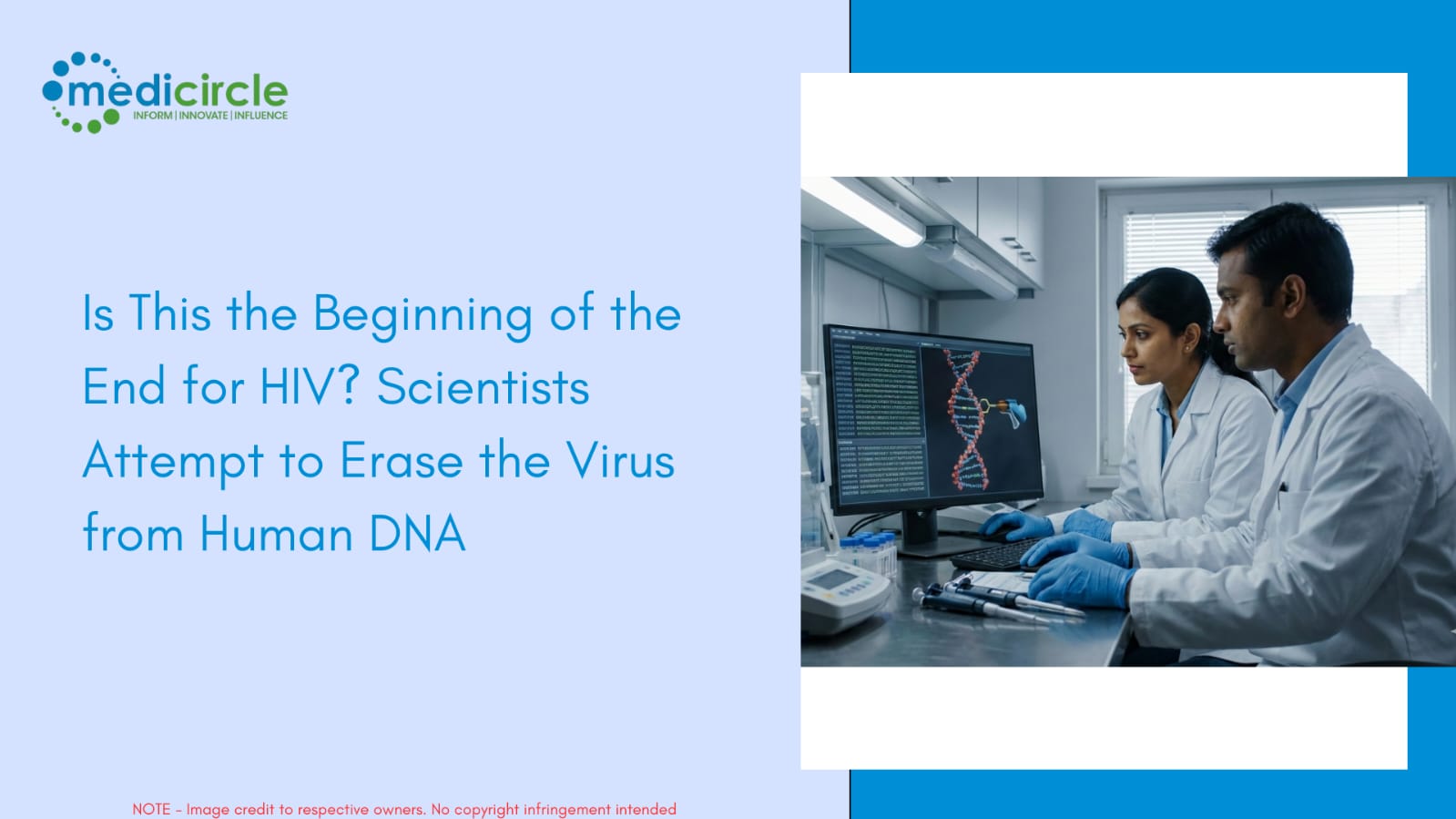
 The story of HIV has always been one of resilience of patients, clinicians, and researchers refusing to surrender to biological complexity




For more than four decades, HIV has stood as one of modern medicine’s most complex and persistent adversaries. It has reshaped public health systems, redefined infectious disease management, and demanded lifelong vigilance from nearly 40 million people worldwide who live with the virus. Antiretroviral therapy has transformed HIV from a near-certain death sentence into a chronic, manageable condition. The virus hides. It integrates itself into human DNA, forming a reservoir that evades even the most advanced treatments. Now, a new study from China has reignited global debate by reporting that scientists have successfully removed HIV genetic material from human cells using CRISPR gene-editing technology. The announcement has traveled quickly across medical circles and social media platforms, raising hope, curiosity, and caution in equal measure.
To understand the weight of this development, one must first understand how HIV behaves inside the body. Human Immunodeficiency Virus does not simply float in the bloodstream. It invades immune cells, particularly CD4 T cells, and inserts its own genetic code into the DNA of those cells. Once embedded, the virus can remain dormant. Antiretroviral therapy, often referred to as ART, works by blocking the virus from replicating. With consistent medication, viral load can drop to undetectable levels, allowing patients to live long and productive lives. However, ART does not remove the viral DNA already stitched into the human genome. If treatment stops, the virus can rebound. This viral reservoir is the main reason why a definitive HIV cure has remained elusive.
The Chinese research team explored a different strategy. Instead of suppressing viral replication, they attempted to excise the virus entirely. They used CRISPR, a powerful gene-editing tool often described as molecular scissors. CRISPR allows scientists to identify a precise DNA sequence and cut it out. In theory, if the viral DNA integrated into human cells can be accurately targeted and removed, the infected cell would be cleared of HIV. That idea has captivated researchers for years. The new study claims to have demonstrated this removal in laboratory conditions using human cells, marking a significant technical achievement in the field of gene editing and HIV research.
CRISPR technology has already made headlines in oncology, rare genetic disorders, and inherited blood diseases. It has shown potential in correcting mutations responsible for conditions such as sickle cell anemia. Applying the same approach to an infectious disease like HIV introduces new complexity. The virus does not insert itself into a single, predictable spot in every cell. Its integration sites vary. This variability creates a moving target. To remove HIV from DNA, gene-editing tools must recognize and cut viral sequences without damaging surrounding human genes. Precision becomes everything.
The recent findings suggest that researchers were able to design CRISPR systems capable of targeting HIV genetic sequences embedded in infected cells. The edited cells reportedly showed removal of viral DNA segments under controlled laboratory conditions. Such a result represents a promising step in HIV cure research. But laboratory success does not automatically translate into clinical reality. Many therapies that perform well in cell cultures or animal models encounter obstacles when tested in humans.
Safety remains one of the most pressing concerns in gene-editing therapy. CRISPR is precise, but it is not infallible. Off-target effects, where unintended sections of DNA are cut or altered, pose serious risks. Even a small error could disrupt essential genes or trigger long-term complications, including cancer. In the context of HIV treatment, gene-editing tools would need to reach millions of infected cells scattered throughout the body. Delivering CRISPR components safely and efficiently into these cells is a significant challenge in itself. Viral vectors, lipid nanoparticles, and other delivery systems are under investigation, but each carries its own safety profile.
Another complexity lies in the diversity of HIV strains. The virus mutates rapidly. A CRISPR strategy designed to recognize one sequence might not effectively target another variant. Global HIV epidemiology shows considerable genetic diversity across regions. For a gene-editing therapy to become a universal solution, it would need to account for this variation. Otherwise, resistant strains could persist.
Despite these challenges, the potential implications are profound. A therapy capable of permanently removing HIV from infected cells would redefine HIV treatment protocols. Patients would no longer depend on lifelong daily medication. The financial and psychological burden of chronic treatment could diminish. Health systems, particularly in low- and middle-income countries where access to ART can be inconsistent, would experience a paradigm shift. The idea of a functional cure or even a sterilizing cure, where the virus is entirely eliminated, has long been considered the ultimate goal of HIV research.
Globally, approximately 39 to 40 million people live with HIV, according to international health agencies. While antiretroviral therapy has significantly reduced AIDS-related deaths and improved quality of life, adherence remains critical. Interruptions in medication can lead to viral rebound and drug resistance. Stigma continues to affect testing and treatment uptake in many communities. A curative therapy could alter the social narrative around HIV. But that future is not guaranteed by a single laboratory study.
Medical experts urge restraint in interpreting early-stage research. Breakthrough headlines often create public excitement, sometimes overshadowing the rigorous process required before new therapies reach patients. Clinical trials must evaluate safety, dosing, long-term effects, and effectiveness across diverse populations. Regulatory approvals require extensive evidence. In gene therapy, the bar for safety is especially high.
There is also an ethical dimension to gene editing. Altering human DNA, even in somatic cells, raises important questions. While CRISPR interventions for HIV would target infected immune cells rather than reproductive cells, public perception of gene editing remains sensitive. Transparent communication and strict regulatory oversight are essential. Past controversies in gene-editing research have demonstrated the consequences of moving too quickly without broad scientific consensus.
In the meantime, existing HIV prevention and treatment strategies remain the cornerstone of care. Antiretroviral therapy continues to save lives daily. Pre-exposure prophylaxis, commonly known as PrEP, reduces the risk of acquiring HIV in high-risk populations. Early testing, condom use, safe needle programs, and public health education are proven interventions. Even if gene-editing therapies progress successfully, they will likely complement rather than immediately replace current standards of care.
The economic implications of a CRISPR-based HIV therapy also warrant attention. Gene-editing treatments currently approved for other conditions are expensive, sometimes costing millions of dollars per patient. Scaling such technology for millions of individuals worldwide presents logistical and financial hurdles. Global health equity must remain central to any discussion of future HIV cures. A breakthrough that remains accessible only to wealthy populations would deepen existing disparities.
Still, scientific optimism is not misplaced. HIV research has consistently evolved in unexpected ways. From the development of combination antiretroviral therapy in the 1990s to the understanding that undetectable viral load means untransmittable virus, progress has often outpaced predictions. Gene editing may represent the next chapter in this story. The idea of directly removing viral DNA addresses the core biological obstacle that has frustrated cure efforts for decades.
The broader significance of this research extends beyond HIV alone. If gene-editing platforms can safely remove viral sequences from human DNA, similar approaches might be explored for other persistent viral infections. Hepatitis B virus, for example, also integrates genetic material into host cells. Advances in CRISPR precision, delivery methods, and safety mechanisms could influence multiple branches of infectious disease research.
Public interest in gene editing has grown steadily over the past decade. Search trends for CRISPR technology, HIV cure research, and gene therapy have surged whenever major announcements emerge. This reflects a society eager for transformative medical solutions. However, science advances incrementally. Each experiment builds upon previous work. Each trial refines understanding.
The Chinese study serves as a reminder that global collaboration drives progress. HIV is a global challenge. Research efforts in Asia, Africa, Europe, and the Americas collectively contribute to innovation. Sharing data, standardizing methodologies, and coordinating clinical trials will accelerate validation of promising strategies.
For patients living with HIV, hope is powerful. It fuels resilience and advocacy. It supports engagement with healthcare systems. At the same time, unrealistic expectations can lead to disappointment or risky decisions. Clear communication between researchers, clinicians, and patients remains essential.
In the coming years, the scientific community will likely see expanded animal studies, followed by carefully monitored human trials assessing CRISPR-based HIV therapies. Safety endpoints will be scrutinized. Long-term monitoring will examine whether viral DNA truly remains absent or whether hidden reservoirs persist. Only through meticulous investigation can a laboratory achievement evolve into a safe and scalable medical treatment.
The phrase “cutting HIV out of DNA” captures imagination because it suggests finality. For decades, treatment has meant control, not eradication. The possibility of excision changes that narrative. Yet medicine has taught us that complexity often hides beneath simple metaphors. DNA editing is a sophisticated biological intervention. Its ripple effects must be understood comprehensively.
HIV research is entering a bold new phase. Gene editing represents both promise and peril. It challenges scientists to refine precision, regulators to strengthen oversight, and healthcare communicators to provide balanced information. The world watches closely, aware that history has seen many promising leads in HIV cure research before.
For now, antiretroviral therapy remains the standard of care. Prevention strategies remain vital. Routine testing and early diagnosis continue to save lives. The new findings add momentum to the long pursuit of an HIV cure, but they do not replace current medical guidance.
The story of HIV has always been one of resilience of patients, clinicians, and researchers refusing to surrender to biological complexity. CRISPR gene editing introduces a daring possibility that the virus embedded within human DNA might one day be precisely removed. Whether that possibility becomes safe, effective reality will depend on careful science, ethical responsibility, and sustained global collaboration.
Until then, the announcement from China stands as a compelling chapter in an unfinished narrative. It invites cautious optimism. It demands rigorous scrutiny. And above all, it reminds us that in the fight against HIV, innovation continues to push the boundaries of what once seemed impossible
Source: indiatoday.in





-23-300x250.png)

.jpeg)






.jpg)
.jpg)
.jpg)
.jpg)
.jpg)
.jpg)
.jpg)
.jpg)
.jpg)



