Tuesday, October 27, 2026
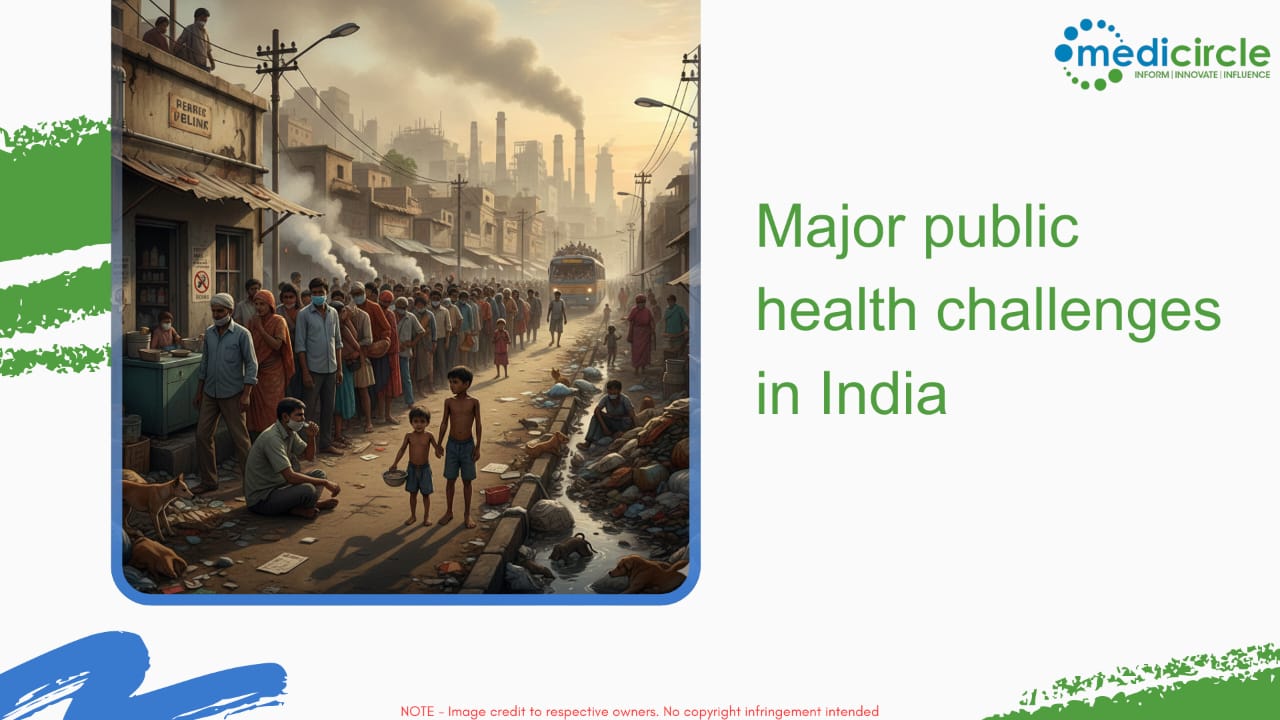
 India’s health journey reflects remarkable public health successes alongside rising chronic diseases, persistent infections, environmental threats and systemic gaps, demanding coordinated policy, community action and individual responsibility.




Think about the health of a nation as a vast, intricate tapestry. For India, this tapestry tells a compelling story. On one hand, there are brilliant threads of success such as smallpox eradicated, polio defeated and life expectancy stretching further than ever before. But look closer and you will find frayed edges and complex, overlapping patterns that reveal a struggle. Today, India stands at a critical juncture in its health story, balancing remarkable achievements against a set of deep rooted and emerging challenges. It is a tightrope walk that affects every one of us.
The two sided epidemic:
A quiet transformation has reshaped our health landscape. We are now living longer, but not necessarily healthier. Diseases that were once considered problems of affluent nations, such as diabetes, hypertension and heart conditions, have become common in our cities, towns and increasingly, our villages. The numbers are startling, research suggests that if current trends hold India might see hundreds of millions of its citizens grappling with obesity within a few decades. This is not merely a cosmetic concern; it is a fundamental shift that places a heavy load on our families and the medical system.
But here is the twist. Even as we confront this new reality, old adversaries refuse to retreat. Take tuberculosis, for instance. It is an ancient disease, yet it claims hundreds of lives in India every single day. Millions of new cases are reported each year. The recent pandemic served as a brutal reminder of how quickly progress can unravel, pushing life expectancy backward for the first time in decades. This is the double burden in action, fighting wars on two fronts simultaneously, with one foot in the past and one in an uncertain future.
Hidden forces making it worse:
What makes this battle even tougher are the underlying, often invisible forces at play. Consider malnutrition, it presents a cruel irony. In the same country, you can find children suffering from stunted growth due to lack of food, while adults in other households face health risks from eating too much of the wrong kinds of food. For a disease like tuberculosis, being undernourished is like throwing petrol on a smoldering fire; it triples or quadruples the risk of the illness taking hold, trapping people in a cycle of poor health and poverty.
Then there is the air. In many of our cities, simply breathing deeply is a health hazard. Emerging science tells us that the polluted air we inhale day after day does not just hurt our lungs; it can also awaken dormant tuberculosis infections and slow down recovery for those already sick. When the environment itself becomes a trigger for disease, the challenge multiplies exponentially.
Healthcare under pressure:
Naturally, this perfect storm of health issues tests the very framework meant to protect us. We have more hospitals and clinics than before, but the question remains whether they are accessible, affordable and good enough for everyone. The gap between urban and rural healthcare is wide, but even in bustling cities, government hospitals often overflow with patients. Finding a qualified doctor or getting timely care in a village can feel like a distant dream for many.
Above all, the fear of medical bills looms large. For a vast number of families, a major illness does not just mean a health crisis; it spells financial ruin. This fear forces people to delay seeing a doctor, turning small, manageable problems into life threatening emergencies.
The way forward:
So, where do we go from here? The situation is serious, but it is far from hopeless. The solution lies in a tapestry of efforts, woven together by different hands.
Change must begin with robust, forward thinking policies. This means championing cleaner air, regulating unhealthy food and drink and making preventive care a true priority. But policy alone is not enough. The real impact happens in our communities and homes. Reviving knowledge of local, nutritious diets, creating safe spaces for children to play and adults to walk and supporting grassroots health awareness drives build resilience from the bottom up.
And finally, it comes down to personal power. Each choice to eat a little better, to move a little more or to go for that routine check-up is a stitch in the fabric of a healthier nation. This is where platforms like Medicircle.in seek to make a difference. In a world flooded with confusing information, they aim to be a trusted space, a place where people can find clear insights, understand innovations and see how they can be part of this collective journey toward wellness.
India’s health crossroads is not a sign of failure, but a call for unity and smart action. By seeing the connections between our lifestyles, our environment, and our economy, we can find better answers. The goal is simple yet profound: a nation where a long, healthy life is not a privilege, but a promise within reach for all. The next chapter of our health story is ours to write, together.





-23-300x250.png)

.jpeg)






.jpg)
.jpg)
.jpg)
.jpg)
.jpg)
.jpg)
.jpg)
.jpg)
.jpg)