 Thursday, October 08, 2026
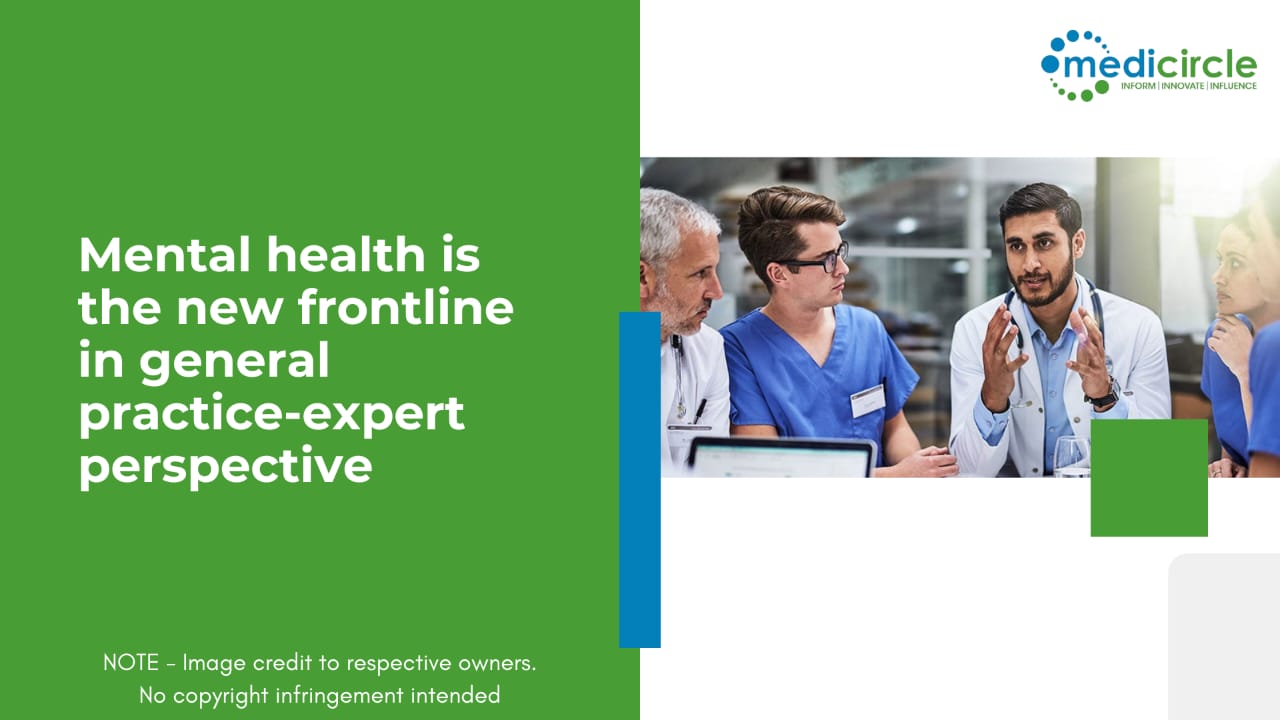
 India’s family doctors are emerging as first responders in mental health care, bridging gaps through empathy, early detection and innovative solutions that integrate mind and body wellness.




Walk into any neighborhood clinic today and you will see a scene that has become quite common. A college student is there about his insomnia. A working professional has come in for her recurring migraines. An elderly person waits to discuss their unexplained stomach pain. On the surface, these are physical complaints. But a significant shift is happening. General practitioners across India are now recognizing that these aches and pains are often the body's way of sounding an alarm about a different kind of distress, the kind that lives in the mind. Without fanfare, the local clinic has become the first line of defense in our country's mental health landscape.
The unseen crisis:
To understand the scale of the challenge, we need to look at the figures. The data tells a story of a vast gap between need and care. Studies indicate that India has one of the largest mental health treatment gaps globally. What does that mean in human terms? It means that for every ten people struggling with a mental health condition, seven to nine never receive any professional help. They battle their anxieties, depressions and fears in silence, often alone.
The number of people affected is equally staggering. Current estimates suggest around 150 million Indians are in need of mental health care interventions. Yet, only a small fraction, roughly 10 to 15 percent manage to access it. This gap is not just about the availability of doctors; it is also about awareness. A National Mental Health Survey finding that startles many is that a large percentage of our population has never heard of conditions like schizophrenia or bipolar disorder. This lack of awareness, woven together with deep-seated social stigma, builds a wall that keeps millions from seeking the help they deserve.
Your GP: The first responder
This brings us to a critical question: why has this responsibility fallen onto the shoulders of general practitioners? The reasons are both straightforward and complex.
First and most practically, there is a severe shortage of specialists. The World Health Organization recommends at least one psychiatrist for every 100,000 people. In India, we have about 0.75. For those living outside major cities, accessing a psychiatrist can be an impossible task. The local family doctor is not just the first point of contact; they are often the only one.
Second, there is a cultural dimension. In India, it is common for emotional and psychological pain to manifest as physical discomfort. People might find it more acceptable to complain of chronic fatigue or body aches than to say, "Doctor, I feel deeply sad" or "I am overwhelmed with worry." The GP's crucial role is to listen carefully, to look beyond the stated symptom and to gently uncover the root of the problem. This makes them indispensable in our current healthcare reality.
Building bridges:
Thankfully, this is not a story of crisis without solution. Across the country, practical and scalable models are emerging to empower general practitioners and bridge the care gap.
Sharing the load:
A powerful approach called task-sharing is gaining ground. In states like Kerala and Tamil Nadu, GPs are receiving specialized training to diagnose and manage common mental health conditions like depression and anxiety. They use simple checklists and have access to mentoring from specialists. The outcomes are promising. For instance, one program in Kerala reported recovery rates of 68 percent, a success rate similar to specialist-led care but achieved at a fraction of the cost, making it sustainable.
Technology lends a hand:
Digital innovation is providing a much-needed backbone for support. The government's National Tele Mental Health Programme (NTMHP), with its Tele-MANAS helpline cells, has already become a lifeline, fielding millions of calls since its inception. This system offers remote counselling and crucially, provides a safety net for GPs in remote areas, who can seek specialist guidance for complex cases.
Power of simple question:
Another significant change is the adoption of short, standardized questionnaires. Tools like the PHQ-9 for depression or the GHQ-12 for general psychological distress are becoming a routine part of check-ups. These are not complex psychological evaluations; they are a series of simple questions that take just a few minutes. Yet, their impact is profound, helping doctors identify hidden struggles and start conversations that might otherwise never happen.
A unified vision:
This evolution in general practice signals a deeper, more meaningful change in how we view health itself. It is the recognition that there is no true health without mental health. The mind and body are not separate entities; they are intimately connected, each influencing the other.
This integrated vision is slowly becoming a reality through the national network of Health and Wellness Centers (Ayushman Arogya Mandirs). These 1.5 lakh centers are progressively weaving mental health services into the fabric of primary care, ensuring that support is available closer to people's homes than ever before.
A collective journey:
So, where do we go from here? The responsibility does not rest with doctors alone. As a society, we all have a part to play. We can begin by talking about mental wellbeing openly in our homes and communities, replacing shame with understanding. We can take the time to learn about the signs and symptoms of common conditions. Most importantly, we can normalize the act of reaching out for help, whether that means talking to a trusted GP, calling a helpline or consulting a therapist.
The journey to a mentally healthier India is a collective one. It requires GPs to acquire new skills, policymakers to allocate sufficient resources and every one of us to be a little more compassionate, a little more aware. Our family doctors are holding the front line, but they cannot win this battle alone. It is a fight that we must all join, for the wellbeing of our nation depends on it.






.jpeg)








.jpg)
.jpg)
.jpg)
.jpg)
.jpg)
.jpg)


.jpg)
.jpg)
.jpg)