 Wednesday, October 28, 2026
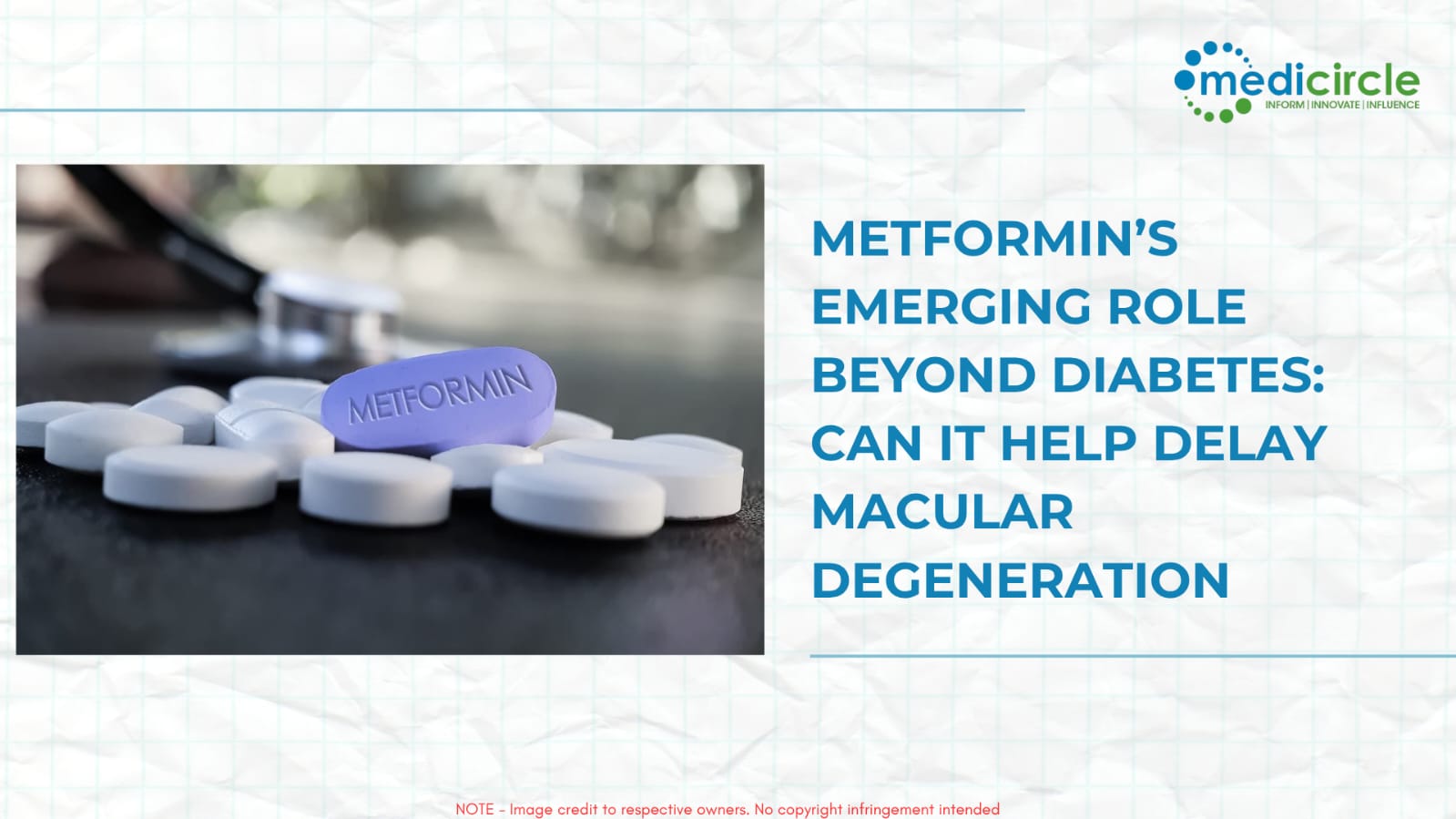
 The connection between a diabetes pill and eye health may seem unlikely at first glance, but it highlights the complexity of the human body and the potential for innovation within existing knowledge.




There are some medicines that quietly do their job, year after year, without ever stepping into the spotlight. They are prescribed routinely, trusted widely, and rarely questioned beyond their original purpose. Metformin is one such drug. For decades, it has been the backbone of treatment for Type 2 Diabetes, helping millions control blood sugar levels and avoid long-term complications. Yet, emerging research now suggests that this humble tablet may be doing far more than managing glucose. It may be protecting something far more fragile i.e. the human ability to see.
In recent years, the conversation around eye health has taken on a new urgency, particularly with the rising burden of Age-related Macular Degeneration, often abbreviated as AMD. This condition targets the central portion of the retina, known as the macula, which is responsible for sharp, detailed vision. When the macula begins to deteriorate, the world does not go dark all at once. Instead, it fades in the most frustrating way possible where faces blur, words lose clarity, and everyday tasks slowly become difficult. For millions of older adults, this is not a distant possibility but a present reality.
Globally, AMD has established itself as one of the leading causes of vision loss, particularly in ageing populations. In high-income countries, it stands at the forefront of blindness-related conditions, and with increasing life expectancy, its impact is expected to grow. The disease typically appears in two forms. The first, often referred to as dry AMD, progresses gradually and leads to the thinning and eventual loss of retinal cells. The second, known as wet AMD, is more aggressive and involves the growth of abnormal blood vessels that damage the retina. While treatments exist for wet AMD, they are far from convenient, often requiring repeated injections into the eye i.e. an experience that many patients find physically and emotionally taxing. For dry AMD, especially in its advanced stages such as geographic atrophy, treatment options remain limited, leaving patients with little more than monitoring and hope.
Against this backdrop, the possibility that a widely used diabetes drug could slow the progression of AMD feels both surprising and significant. A recent study conducted by researchers at the University of Liverpool has added weight to this idea. By examining retinal images from nearly 2,000 individuals over a five-year period, the researchers observed a striking pattern. Among people with diabetes aged over 55, those taking metformin were significantly less likely to develop intermediate stages of AMD compared to those who were not using the drug. The reduction in risk was estimated at around 37 percent. A figure that cannot be ignored, especially in a field where treatment breakthroughs are rare.
What makes this finding particularly compelling is the method used to arrive at it. Earlier studies had hinted at a possible link between metformin and reduced AMD risk, but many relied on indirect data sources such as insurance claims or diagnostic codes. In contrast, this research took a more direct approach by analysing retinal photographs and grading the severity of disease progression. This shift from assumption to visual evidence strengthens the credibility of the findings and opens the door to more targeted investigations.
To understand why metformin might influence eye health, it is important to look beyond its role in blood sugar control. The drug is known to affect several biological pathways that are closely linked to ageing and inflammation. Chronic inflammation, oxidative stress, and metabolic imbalance are all factors that contribute to the development of AMD. Metformin appears to interact with these processes, potentially reducing cellular damage and improving the resilience of retinal tissue. While the exact mechanisms are still being explored, the broader picture suggests that the drug may have protective effects that extend far beyond diabetes management.
This idea fits into a larger shift in modern medicine, where researchers are increasingly looking at existing drugs through a new lens. Instead of developing entirely new treatments from scratch, a process that is both time-consuming and expensive, scientists are exploring how well-established medications can be repurposed for other conditions. Metformin has already been studied for its potential role in ageing, cardiovascular health, and even certain cancers. Its possible impact on eye diseases adds another layer to its growing profile as a multi-dimensional therapeutic agent.
The implications of this research are particularly relevant in countries like India, where the burden of diabetes is among the highest in the world. With millions of individuals already taking metformin as part of their daily routine, the possibility that the same medication could offer additional protection against vision loss is both practical and promising. India is also witnessing a steady rise in age-related eye conditions, driven by longer life expectancy and changing lifestyles. In such a scenario, a cost-effective and widely available drug could play a crucial role in preventive healthcare.
However, it is important to approach these findings with measured optimism. While the study provides strong observational evidence, it does not establish a direct cause-and-effect relationship. In other words, while metformin use is associated with a lower risk of developing intermediate AMD, it cannot yet be confirmed that the drug is solely responsible for this effect. Other factors, such as overall health, lifestyle, and access to healthcare, may also play a role. This is why researchers emphasize the need for controlled clinical trials to test metformin specifically as a treatment for AMD.
The economic dimension of this discussion cannot be overlooked. Eye diseases like AMD carry a substantial financial burden, not just for individuals but for healthcare systems as a whole. The cost of managing advanced AMD, particularly in its wet form, includes frequent medical visits, expensive treatments, and long-term care. In countries like the United Kingdom, the annual cost associated with AMD runs into billions, reflecting both direct medical expenses and indirect costs such as loss of productivity and caregiving. If a relatively inexpensive drug like metformin can delay the progression of the disease, even by a modest margin, the savings could be significant.
For patients, the value of such a development goes beyond economics. Vision is deeply tied to independence, dignity, and quality of life. The gradual loss of central vision can affect everything from reading and driving to recognizing loved ones. Unlike many other health conditions, vision loss often carries an emotional weight that is difficult to quantify. The possibility of slowing this process, even slightly, can make a meaningful difference in how people experience ageing.
At the same time, the study raises important questions about how we approach chronic diseases in general. Conditions like diabetes and AMD are often treated in isolation, with separate specialists, medications, and care pathways. Yet, the human body does not operate in compartments. Metabolic health, vascular function, and cellular ageing are interconnected in ways that we are only beginning to understand. The emerging link between metformin and AMD highlights the need for a more integrated approach to healthcare, where treatments are evaluated not just for their primary effects but for their broader impact on overall health.
There is also a cautionary aspect to this narrative. As promising as the findings may be, they should not lead to self-medication or changes in treatment without medical guidance. Metformin, like any medication, has its own set of indications, contraindications, and potential side effects. Its use must be guided by a qualified healthcare professional, particularly when considering applications beyond its approved purpose. The excitement around new possibilities should be balanced with clinical responsibility.
What lies ahead is a crucial phase of research. Clinical trials will need to confirm whether metformin can actively slow or prevent the progression of AMD in a broader population, including those without diabetes. Researchers will also need to determine the optimal dosage, duration, and patient profile for such treatment. If these trials yield positive results, the implications could be far-reaching, potentially reshaping the way AMD is managed worldwide.
In many ways, this story reflects a larger theme in modern medicine i.e. the rediscovery of familiar tools. Sometimes, the next breakthrough does not come from a new molecule or a cutting-edge technology, but from looking at what we already have with fresh perspective. Metformin, a drug that has been prescribed for decades, may now be offering a glimpse into a future where vision loss is not an inevitable part of ageing.
For now, the findings serve as a reminder that medicine is constantly evolving, often in unexpected directions. The connection between a diabetes pill and eye health may seem unlikely at first glance, but it highlights the complexity of the human body and the potential for innovation within existing knowledge. The fight against blindness may not always require new weapons. Sometimes, it begins with understanding the hidden strengths of the ones we already hold.





-23-300x250.png)

.jpeg)








.jpg)
.jpg)
.jpg)
.jpg)
.jpg)
.jpg)
.jpg)
.jpg)
.jpg)

