Tuesday, October 27, 2026
 Hospitals must invest not only in equipment and infrastructure but also in the training, empathy, and accountability of their staff.




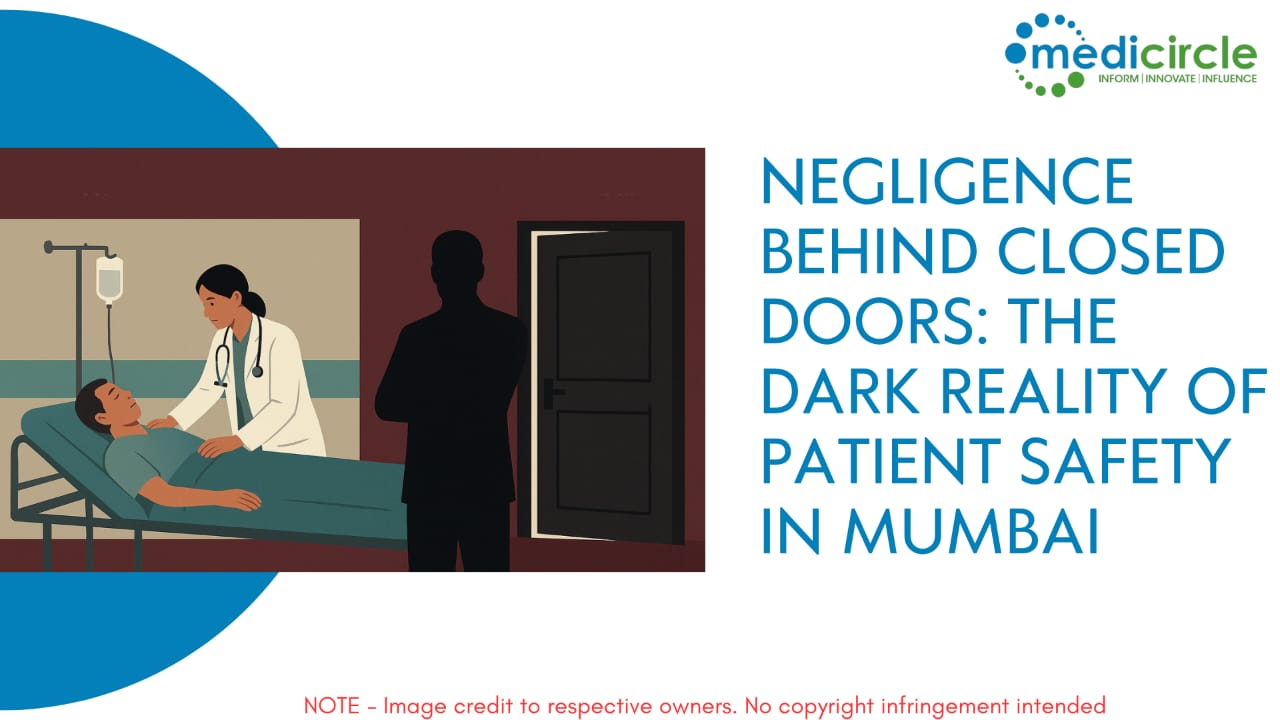
Hospitals are meant to be sanctuaries of healing, places where the sick and the vulnerable surrender their trust in exchange for care, dignity, and safety. Yet, when these sanctuaries falter, the betrayal cuts deeper than any illness. The recent case from Kurla in Mumbai, where hospital negligence has been alleged in the treatment of a seventy-one-year-old woman, is one such reminder that patient safety in India is still far from being assured. The episode has sparked outrage not just because of the political profile of the complainant but because it highlights the everyday dangers that countless families may silently endure in hospitals across the country.
Haji Arafat, the president of the Maharashtra State Minority unit of the Bharatiya Janata Party, has lodged a serious complaint against Fauzia Hospital in Kurla West, alleging gross negligence in the treatment of his mother, Shama, who was admitted after falling ill on September 15. According to his complaint, what should have been a routine hospital admission for an elderly patient turned into an ordeal of pain, neglect, and humiliation. Within a day of admission, at around five in the morning on September 16, the seventy-one-year-old reportedly fell off her bed, which had no safety railing. Instead of being shielded from harm in a place designed for care, she sustained injuries to her face, eyes, stomach, legs, and knees. The fall itself tells a story of carelessness, but the aftermath paints an even grimmer picture.
The complaint alleges that despite repeated calls for help, no nurse or doctor attended to the injured woman for nearly twenty minutes, a delay that in the world of emergency care is inexcusable. More shocking is the claim that treatment for her injuries was delayed for almost twelve hours, leaving her in avoidable pain and distress. For an elderly patient whose health is already fragile, every passing minute without care magnifies the risk of complications. These accusations, if proven true, not only expose the hospital’s negligence but also question the very culture of accountability within private healthcare institutions in India.
The FIR registered by the Vinobha Bhave Nagar police has named night-duty nurses Amisha Mali and Pratima Gupta for their alleged failure to respond promptly. It also brings into the frame the hospital’s director, Dr. Anjum Deshmukh, and administrator Usman Sheikh, placing responsibility at both the individual and institutional level. Even more disturbing is the allegation that an X-ray technician, identified as Riyaz Sheikh, used abusive language towards the elderly patient, compounding medical negligence with emotional trauma. For families entrusting their loved ones to a hospital’s care, such behavior is nothing short of betrayal.
This case, however, is more than a personal grievance filed by a political leader. It shines light on a systemic problem that India has failed to confront head-on: hospital negligence and the lack of strict enforcement of patient safety protocols. Across the country, cases of delayed care, unresponsive staff, poor infrastructure, and inadequate monitoring surface frequently, yet accountability is elusive. Too often, hospitals are allowed to function with minimal oversight, and when tragedies occur, families find themselves entangled in lengthy legal and bureaucratic battles while institutions escape with minor penalties or none at all.
The Kurla case becomes particularly emblematic because the patient at the center of it is not just a statistic in an annual health report but a mother whose suffering has been made public by her son’s position. For every such case that reaches headlines, there are countless others where patients endure in silence, their voices drowned in fear, lack of resources, or sheer exhaustion. When political influence is required to bring negligence to the surface, what hope remains for the poor, the marginalized, and the voiceless patients who experience similar or worse neglect every day?
The story also underlines the vulnerability of elderly patients in India’s healthcare system. Senior citizens, often frail and dependent, require extra safeguards. Simple measures such as safety railings on beds, timely monitoring by nurses, fall-prevention protocols, and empathetic caregiving can make the difference between recovery and catastrophe. Yet, in many hospitals, particularly smaller or mid-sized institutions, such precautions are treated as optional rather than essential. Elderly care demands patience, vigilance, and compassion, qualities that cannot be replaced by technology or infrastructure alone.
The presence of abusive language in the complaint also points to another dimension of patient care that is rarely discussed but deeply significant i.e. the dignity of the patient. Healthcare is not only about treatment of the body but also about respect, empathy, and trust. For an elderly woman to allegedly be subjected to verbal abuse in the very institution where she sought healing is a violation of her basic rights. Hospitals must recognize that patient safety includes emotional well-being, and any culture that tolerates disrespect undermines the very foundation of healthcare.
The Kurla case is a mirror reflecting uncomfortable truths. It shows how negligence is not always about the failure of machines or lack of resources but about human apathy and systemic complacency. It questions how many hospitals take night shifts seriously, how often staff are trained to handle emergencies, and how rigorously administrators ensure that patient safety protocols are followed. It is easy to blame individuals, but the reality is that such failures often indicate deeper structural issues of understaffed wards, inadequate training, or a culture where accountability is diffuse.
If India wants to restore faith in its healthcare system, it must treat this case as more than a local scandal. Regulatory bodies, medical associations, and hospital boards must recognize the need for change. Independent audits, surprise inspections, transparent grievance redressal platforms, and stronger patient rights charters must become the norm, not the exception. Hospitals must invest not only in equipment and infrastructure but also in the training, empathy, and accountability of their staff. Patient safety should not depend on luck, influence, or media coverage; it should be guaranteed.
The lesson from Kurla is clear, when a hospital becomes a place of harm instead of healing, it does not just fail one patient, it fails society. The case is a wake-up call, not just for one institution, but for every hospital in India. If reforms do not follow swiftly, the next story may not involve a political leader’s mother, but an unknown patient whose suffering will remain invisible. A nation that calls itself a rising healthcare power cannot afford to let its hospitals become hazards.




-23-300x250.png)

.jpeg)





.jpg)
.jpg)
.jpg)
.jpg)
.jpg)
.jpg)
.jpg)
.jpg)
.jpg)