 Tuesday, October 27, 2026
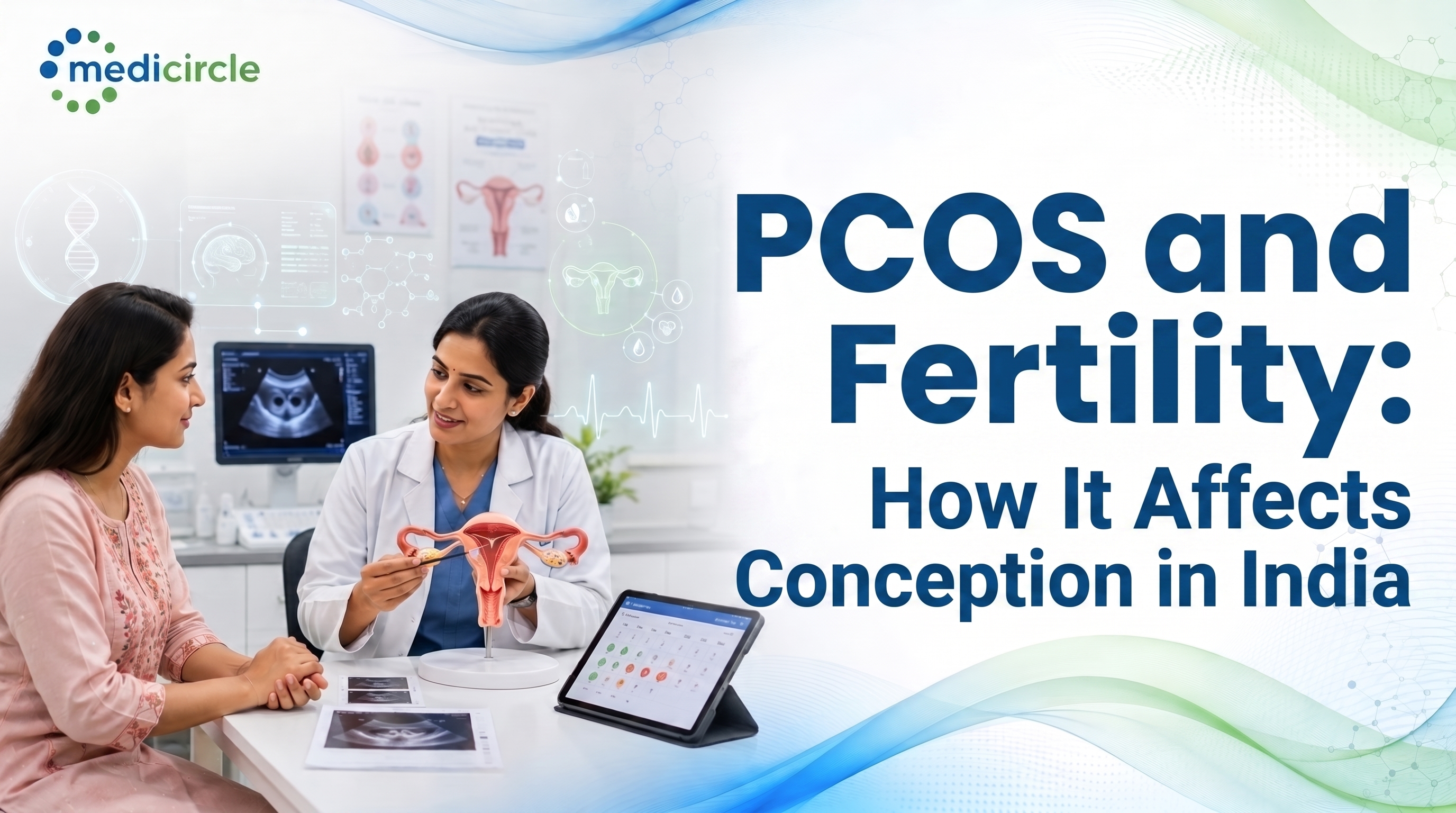
 PCOS disrupts ovulation through hormonal imbalance, making it a leading cause of infertility among Indian women. With early diagnosis, lifestyle changes, and medical treatment, most women with PCOS can still conceive successfully.





Introduction
Polycystic ovary syndrome, widely known as PCOS, has become one of the most common reasons Indian women consult a gynaecologist when trying to conceive. It is a hormonal condition that disrupts ovulation, and this disruption is precisely why PCOS is so closely linked to fertility difficulties. For many women, the connection between PCOS and fertility is not fully understood until they begin trying for a baby and encounter delays.
This is an important topic for Indian women specifically, because the prevalence of PCOS in India appears to be considerably higher than the global average. Recent research from Delhi NCR found a PCOS prevalence of 17.4 percent among college-going women, sharply higher than earlier pooled estimates of around 8.4 percent for the country as a whole. Other Indian studies place the range anywhere between 3.7 percent and over 20 percent depending on region, diagnostic criteria, and population studied, with urban centres in Central and North India generally reporting higher rates than rural and northeastern regions. This means a significant proportion of women of reproductive age in India are living with a condition that can directly affect their ability to conceive, often without realising it.
Understanding how PCOS influences fertility, what can be done about it, and when to seek specialist care can make a meaningful difference to a woman's reproductive journey. This article explains the connection in a clear, medically grounded manner, with attention to what Indian women and couples need to know before and during their fertility journey.
Understanding PCOS and Why It Affects Fertility
PCOS is an endocrine disorder, meaning it involves an imbalance in the hormones that regulate the reproductive cycle. In a healthy menstrual cycle, one follicle in the ovary matures each month and releases an egg, a process called ovulation. In women with PCOS, this process is frequently disrupted. Multiple small follicles begin to develop, but they do not mature fully or release an egg on a regular basis. Instead, they remain as small fluid-filled sacs within the ovary, visible on an ultrasound scan, which is where the term polycystic, meaning many cysts, originates.
This disruption occurs largely because of two closely linked hormonal issues: elevated androgens, which are often described as male hormones though present naturally in all women, and insulin resistance. Excess androgens interfere with the normal maturation of follicles, while insulin resistance causes the body to produce more insulin than usual, which in turn stimulates the ovaries to produce even more androgens. This creates a cycle that keeps reinforcing itself, making ovulation increasingly irregular or, in some cases, absent altogether.
Since ovulation is central to natural conception, any disruption to this process directly reduces fertility. Ovulatory disorders account for around one in four cases of infertility in couples, and PCOS is understood to be the leading cause of this type of anovulatory infertility, responsible for the majority of such cases. It is worth emphasising that PCOS does not mean a woman cannot conceive. It means that conception may require closer monitoring, lifestyle adjustments, or medical support to help the body ovulate more consistently.
Recognising the Symptoms of PCOS
PCOS symptoms vary considerably from one woman to another, which is part of why the condition can go undiagnosed for years. A landmark study by PGIMER Chandigarh found that even after starting treatment, a large proportion of patients had very limited understanding of their own condition, with only a small percentage learning about it directly from their doctors. This points to a genuine awareness gap that Indian women need better information to close.
Common signs to watch for include irregular periods or the absence of periods, excessive facial or body hair growth, acne or oily skin, thinning hair on the scalp, and weight gain or difficulty losing weight. Some women also notice darkened patches of skin in body folds such as the neck or underarms, or small skin tags in these areas. Difficulty conceiving is often the symptom that finally prompts a medical consultation, particularly among women who had mild or unnoticed symptoms earlier in life.
It is also worth noting that hormonal contraceptive pills can mask PCOS symptoms for years, since they regulate bleeding patterns artificially. Many women only discover they have PCOS after stopping contraception in preparation for pregnancy, when their natural, irregular cycle resurfaces.
Diagnosis and Medical Evaluation
A diagnosis of PCOS in India is typically made using the Rotterdam criteria, which is also the internationally accepted standard. According to this framework, a woman needs to show at least two of the following three features: irregular or absent ovulation, clinical or biochemical signs of excess androgens such as hirsutism or elevated blood testosterone, and polycystic ovaries visible on a transvaginal ultrasound scan.
A gynaecologist will usually begin with a detailed history of menstrual patterns, followed by blood tests to check hormone levels including testosterone, luteinising hormone, follicle-stimulating hormone, and markers of insulin resistance. A pelvic ultrasound is used to examine the ovaries for the characteristic follicle pattern. It is important that other conditions with similar symptoms, such as thyroid disorders, are ruled out before a PCOS diagnosis is confirmed.
For women in India who are also trying to conceive, additional fertility-related tests may be recommended alongside the PCOS workup. This can include an assessment of tubal patency and, where relevant, a semen analysis for the male partner, since infertility can involve more than one contributing factor.
Treatment Options and Management Strategies for PCOS Related Infertility
International and Indian clinical guidelines are consistent in recommending lifestyle modification as the first line of treatment for women with PCOS who are trying to conceive, particularly those with a higher body mass index. Even a modest reduction in body weight, in the range of five percent, has been associated with restored menstrual regularity and a better response to fertility treatment in several studies. A diet with a low glycaemic index, rich in whole grains, pulses, vegetables, and lean protein, combined with regular physical activity, forms the foundation of this approach. For Indian households, this often means moderating the intake of refined carbohydrates such as white rice and maida-based foods, and being mindful of portion sizes of traditional fried snacks, while retaining the nutritional strengths of a typical Indian diet such as dals, seasonal vegetables, and whole grains like bajra and jowar.
When lifestyle changes alone are not sufficient, medical ovulation induction becomes the next step. Letrozole, an aromatase inhibitor, is now widely regarded by international guidelines as the first choice medication for inducing ovulation in women with PCOS, given evidence of higher live birth rates compared to older alternatives. Clomiphene citrate, an older and still commonly used medication in India, remains an effective second-line option, sometimes combined with metformin, particularly for women who also show signs of insulin resistance. Metformin itself, while primarily used for diabetes management, has a role in improving hormonal balance and is frequently prescribed alongside other fertility medications for women with PCOS.
If these approaches do not result in pregnancy, gonadotrophin injections may be considered under close specialist supervision, since they carry a higher risk of multiple pregnancy and ovarian hyperstimulation syndrome. For women who do not respond to medication, or where there are additional fertility factors involved, assisted reproductive technologies such as intrauterine insemination or in vitro fertilisation may be recommended. Laparoscopic ovarian drilling, a minor surgical procedure, is occasionally used for women who do not respond to medical treatment, though it is generally considered after other options have been explored.
It is worth noting that supplements such as inositol and vitamin D have gained popularity in wellness circles, and some studies suggest they may support metabolic and hormonal balance in PCOS. However, current evidence is not yet strong enough for these to be recommended as standalone fertility treatments, and they should only be used under medical guidance rather than self-prescribed.
For Indian women navigating this journey, platforms and healthcare networks that simplify access to verified specialists and credible medical information play an important role. Understanding which fertility clinic, endocrinologist, or gynaecologist to consult, and what questions to ask, can meaningfully shorten the time to effective treatment.
Prevention and Proactive Health Measures
While PCOS itself cannot always be prevented, since genetic and hereditary factors play a significant role, its impact on fertility can often be minimised through early awareness and proactive health management. Women with a family history of PCOS, irregular periods since adolescence, or unexplained weight gain should consider consulting a gynaecologist early, well before they begin actively trying to conceive, rather than waiting until fertility becomes a concern.
Maintaining a healthy body weight through consistent physical activity and a balanced diet reduces insulin resistance, which is central to managing PCOS symptoms over the long term. Regular menstrual cycle tracking can help identify irregularities early, and using period tracking applications or simply maintaining a diary can provide useful information for a doctor. Routine health checkups that include blood sugar and hormone screening are particularly valuable for women in Tier 1 and Tier 2 Indian cities, where sedentary lifestyles and dietary shifts towards processed foods have been associated with rising rates of metabolic conditions, including PCOS.
Mental health also deserves attention in this context. Receiving a PCOS diagnosis, or facing delays in conception, can bring on feelings of anxiety, frustration, or guilt. These emotional responses are valid and common, and speaking with a counsellor or joining a support group can ease the psychological burden that often accompanies a fertility journey. Involving a partner in this process, so that both individuals understand the condition and its treatment, tends to make the experience considerably less isolating.
Conclusion
PCOS remains one of the most significant yet manageable causes of fertility difficulty among Indian women today. The connection between PCOS and fertility lies primarily in disrupted ovulation, driven by a combination of excess androgens and insulin resistance, but a PCOS diagnosis is far from a diagnosis of permanent infertility. With early detection, lifestyle changes, and appropriate medical treatment ranging from ovulation induction medication to assisted reproductive technologies where necessary, most women with PCOS go on to conceive. Given how widespread PCOS appears to be among Indian women, particularly in urban settings, greater awareness, timely diagnosis, and open conversations with qualified specialists remain the most valuable steps a woman can take toward protecting her reproductive health and fertility.
Frequently Asked Questions
Q1: Can women with PCOS get pregnant naturally?
Yes, many women with PCOS conceive naturally, especially after lifestyle changes that restore regular ovulation. The likelihood depends on the severity of the hormonal imbalance and individual health factors, so a consultation with a gynaecologist is recommended for personalised guidance.
Q2: Does PCOS mean permanent infertility?
No, PCOS causes reduced fertility due to irregular ovulation rather than permanent infertility. Most women with PCOS are able to conceive with appropriate medical guidance, lifestyle adjustments, or fertility treatment when required.
Q3: What is the best diet for PCOS and fertility in India? A: A balanced, low glycaemic index diet including whole grains such as bajra and jowar, pulses, seasonal vegetables, and lean protein, combined with regular physical activity, is generally recommended to improve insulin sensitivity and support ovulatory function.
Q4: How long does it take to conceive with PCOS after starting treatment?
This varies considerably between individuals. Some women begin ovulating within a few cycles of lifestyle changes or medication, while others may require several months of monitored treatment or assisted reproductive techniques such as IUI or IVF.
Q5: Is IVF always required for women with PCOS?
No, IVF is generally considered only after first-line treatments such as lifestyle modification and ovulation induction medications have not resulted in pregnancy, or when additional fertility factors are present alongside PCOS.
Resources
- Indian Council of Medical Research (ICMR): Guidelines and publications on reproductive health and endocrine disorders in Indian women
- World Health Organization (WHO): Global reports and evidence summaries on polycystic ovary syndrome and infertility management
- Indian Journal of Medical Research: Peer-reviewed epidemiological studies on PCOS prevalence, pathogenesis, and management in India
- National Health Portal of India (NHP): Public health resources on women's reproductive health and hormonal disorders
- PubMed Central (PMC): Access to peer-reviewed clinical research on PCOS-related infertility management and treatment guidelines
Interlinking Keywords
PCOS symptoms, ovulation induction, fertility treatment options in India, IVF process, infertility causes in women, hormonal imbalance treatment, gynaecologist consultation, insulin resistance and PCOS, IUI treatment, reproductive health awareness
Last medically reviewed by:
Medicircle Editorial Team on July 13, 2026
Medical Disclaimer:
This article is intended for general informational and educational purposes only and does not constitute medical advice. PCOS and its impact on fertility vary significantly between individuals. Readers should consult a qualified gynaecologist, endocrinologist, or fertility specialist for diagnosis, personalised treatment recommendations, and before making any changes to medication, diet, or lifestyle.





-23-300x250.png)

.jpeg)






.jpg)
.jpg)
.jpg)
.jpg)
.jpg)
.jpg)
.jpg)
.jpg)
.jpg)

