 Tuesday, October 27, 2026
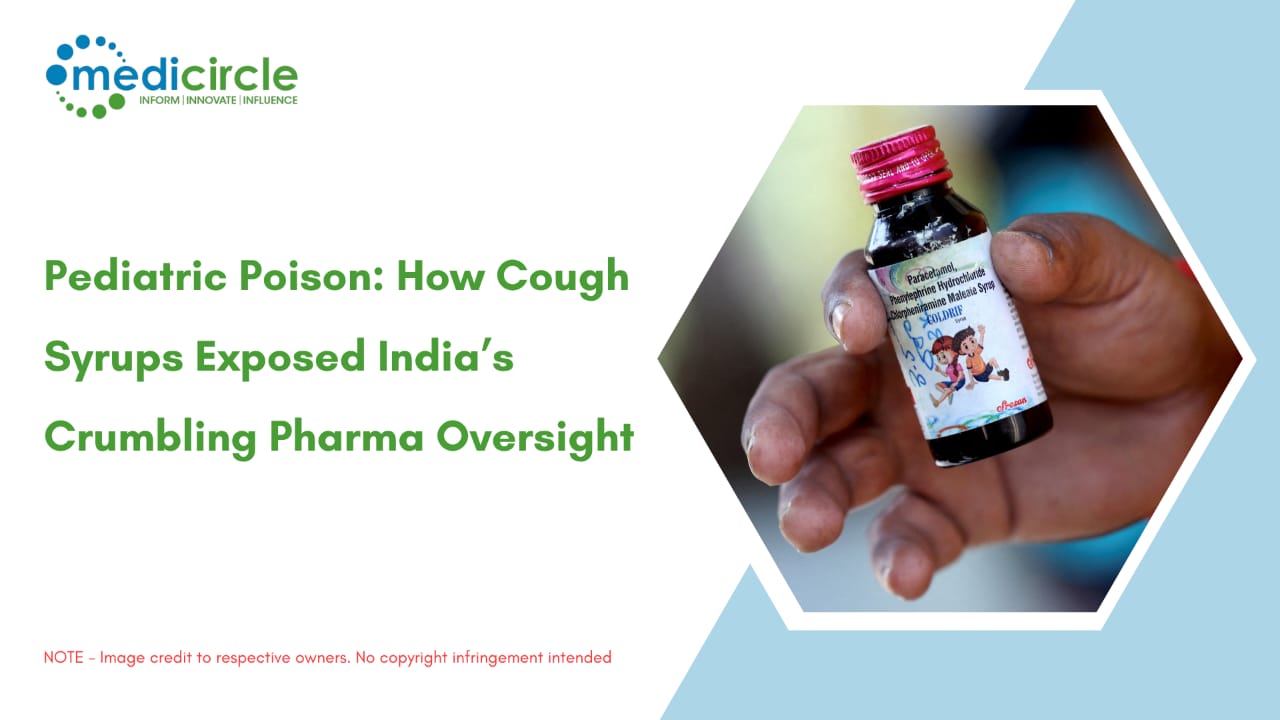
 The syrups under scrutiny may have been pulled from shelves, but the real cure lies in building a culture of accountability, transparency, and science-backed regulation.




The recent clampdown on certain pediatric medicines in Kerala has brought back a disturbing question that India keeps ignoring. How many more children must suffer before the country fixes its broken drug safety system? The Kerala Health Minister Veena George’s announcement banning all medicines manufactured by Sresan Pharmaceuticals, a Tamil Nadu-based company, along with the immediate suspension of Respifresh TR syrup distribution made by Rednex Pharmaceuticals in Gujarat, is an emergency alert for a nation that has witnessed too many tragedies caused by substandard drugs.
The Tamil Nadu Drugs Controller’s decision to revoke Sresan Pharmaceuticals manufacturing license has set off a chain reaction across states, signaling a rare instance of swift coordination between drug regulators. Kerala’s action to immediately ban the company’s medicines and restrict the circulation of Respifresh TR syrup in the market shows a state trying to stay one step ahead of a crisis. But behind these official orders lies a painful truth that these interventions came only after quality failures and fatalities were reported elsewhere in the country. The pattern remains hauntingly familiar: an unsafe drug finds its way into homes, children suffer, outrage follows, bans are imposed, and the system waits for the next tragedy to unfold.
According to the Gujarat Drugs Controller, Respifresh TR syrup (60ml, Batch No. R01GL2523) failed to meet the required quality standards. The Kerala Drugs Control Department wasted no time and instructed all five suppliers distributing the syrup in the state to halt its sale immediately. Pharmacies have been warned, and anyone caught selling it will face strict action. The public has been advised to avoid the syrup entirely if they already have it. The Health Minister also clarified that these medicines are not part of the government hospital supply chain, offering a small measure of reassurance. Yet, that comfort feels incomplete when one realizes that many parents purchase cough syrups directly from private pharmacies without prescriptions, relying on brand names and habit rather than verified safety.
Kerala’s strong stance did not emerge in isolation. It follows the shocking deaths of at least 14 children in Madhya Pradesh’s Chhindwara after consuming Coldrif cough syrup. That tragedy forced the Kerala government to form a dedicated committee to review the safety and management of pediatric cough syrups. Health Minister Veena George stated that the committee’s task is to study the formulations available in the market and recommend specific measures to eliminate “irrelevant combinations” from children’s medicines. Her statement highlights a larger concern that some cough syrups being sold today contain ingredients that do not belong in pediatric formulations at all.
In an interview with ANI, Veena George called the deaths “unfortunate” but also “a lesson the healthcare ecosystem cannot afford to ignore.” She pointed out that the Government of India had already issued an advisory regarding cough syrup consumption, yet cases like this keep reappearing across different states. Kerala’s Drugs Controller has since banned Coldrif completely across all pharmacies in the state. “We don’t have it in our essential drugs list,” the minister said, explaining that the Kerala Medical Services Corporation (KMSCL) does not procure or distribute such syrups to government hospitals. Despite this, she added that the state is working hard to ensure that private hospitals and retail pharmacies also stop the sale of unsafe or unverified cough syrups.
The Kerala government’s approach seems both preventive and corrective. The newly formed committee on pediatric cough management is expected to submit its report soon, likely leading to new guidelines on which ingredients should be allowed in children’s cough formulations. Veena George mentioned that Kerala has already adopted similar steps in the case of antibiotics, enforcing strict control over irrational prescriptions and over-the-counter sales. “Irrelevant combinations should not be part of pediatric syrups,” she emphasized, highlighting how some drugs in the market mix multiple agents without clear scientific justification.
The minister’s concern about doctors prescribing cough syrups to children under two years of age adds another troubling layer. While the medical community is aware that cough syrups are not recommended for infants, the reality in many private practices tells a different story. The Health Department has now directed the Drugs Controller to issue notices to all pharmacies, warning them not to sell pediatric medicines without a doctor’s prescription. Veena George’s words were sharp yet necessary: “It is not advisable to give cough syrups to children under two years old, but this case shows that doctors are still prescribing them, which is unscientific and unacceptable.”
How many such prescriptions go unnoticed every day across India? In a country where antibiotics, painkillers, and syrups are routinely bought without prescriptions, the lines between treatment and self-harm have blurred dangerously. While Kerala may be tightening its grip, other states remain lenient, allowing unregulated sales to continue. The deaths in Madhya Pradesh were not isolated incidents they were symptoms of a national disorder in the drug supply chain.
The global spotlight on India’s drug manufacturing practices is another pressing concern. Over the past few years, several Indian-made cough syrups have been linked to child deaths abroad in Gambia, Uzbekistan, and Cameroon. Each of these tragedies has stained the reputation of Indian pharmaceuticals, once hailed as the “pharmacy of the world.” The repeated failures suggest not just lapses in quality testing but a deeper erosion of ethical responsibility. When pediatric medicines, meant to comfort a child’s cough, turn into poison, it is not a manufacturing defect it is a moral collapse.
Kerala’s decision to ban suspect medicines may seem like a state-level reaction, but it reflects the deeper anxiety running through the entire healthcare system. The state has positioned itself as a vigilant gatekeeper, yet it cannot function in isolation. For a drug manufactured in one state to reach another, several checkpoints like manufacturing, licensing, testing and distribution must fail simultaneously. That means Kerala’s caution is a reaction to other states regulatory weaknesses. This interlinked failure makes India’s drug safety challenge a national emergency that can’t be solved through fragmented action.
The pediatric cough syrup committee’s upcoming report could become a landmark in reshaping India’s approach toward child healthcare. If implemented well, it could set a precedent for other states to conduct similar audits of commonly sold pediatric medicines. Experts believe that beyond banning unsafe drugs, India needs a strong pharmacovigilance network, an alert system that constantly tracks the safety of drugs once they reach the market. Such a mechanism could help identify harmful side effects or quality lapses before they result in fatalities.
Another dimension to this issue is public awareness. Many parents in India still believe that a cough syrup is a harmless remedy for any cough or cold, unaware that such products can suppress the body’s natural defense mechanisms or contain ingredients that strain a child’s liver and kidneys. Education, therefore, becomes as vital as enforcement. Kerala’s move to advise pharmacies against dispensing pediatric drugs without prescriptions should ideally be complemented by campaigns that inform parents about the potential dangers of self-medicating their children.
It is also important to consider the burden placed on small pharmaceutical companies operating with limited oversight. When companies cut corners to meet market demand or profit margins, the weakest link i.e. often the child patient pays the price. Stronger state-level testing facilities, surprise inspections, and better coordination with central regulatory authorities could ensure that every batch released into the market is safe. The tragedy in Madhya Pradesh and the subsequent preventive action in Kerala serve as painful reminders of what happens when vigilance fails.
India’s drug regulatory system stands at crossroads. On one side lies the country’s vast pharmaceutical industry, capable of producing life-saving drugs at affordable costs. On the other side lies the harsh reality of recurring lapses, where untested, poor-quality, or irrational formulations slip through cracks and cause irreversible damage. Kerala’s decision to tighten the noose around suspect medicines is not an isolated event it is a reflection of growing public demand for accountability.
The state’s proactive stance could very well become a blueprint for national reform if others follow suit. Every child deserves medicine that heals, not harms. Every parent deserves assurance that what they buy over the counter is safe. Every doctor deserves the support of a transparent system that upholds ethical prescribing practices. Kerala’s step, though limited in jurisdiction, speaks loudly to all of India: drug safety cannot wait for another tragedy.
As the dust settles over these bans and inquiries, one message should resonate across the nation that a syrup meant to soothe a cough should never take a child’s life. The loss of those 14 young lives in Madhya Pradesh is a wound that the healthcare system must carry as a reminder of its failure and a motivation for reform. The syrups under scrutiny may have been pulled from shelves, but the real cure lies in building a culture of accountability, transparency, and science-backed regulation.
For now, Kerala has set an example of decisive action. But India must go further. It must reclaim the integrity of its pharmaceutical industry before the world and its own children lose faith in the medicines meant to save them




-23-300x250.png)

.jpeg)







.jpg)
.jpg)
.jpg)
.jpg)
.jpg)
.jpg)
.jpg)
.jpg)
.jpg)

