 Thursday, October 08, 2026
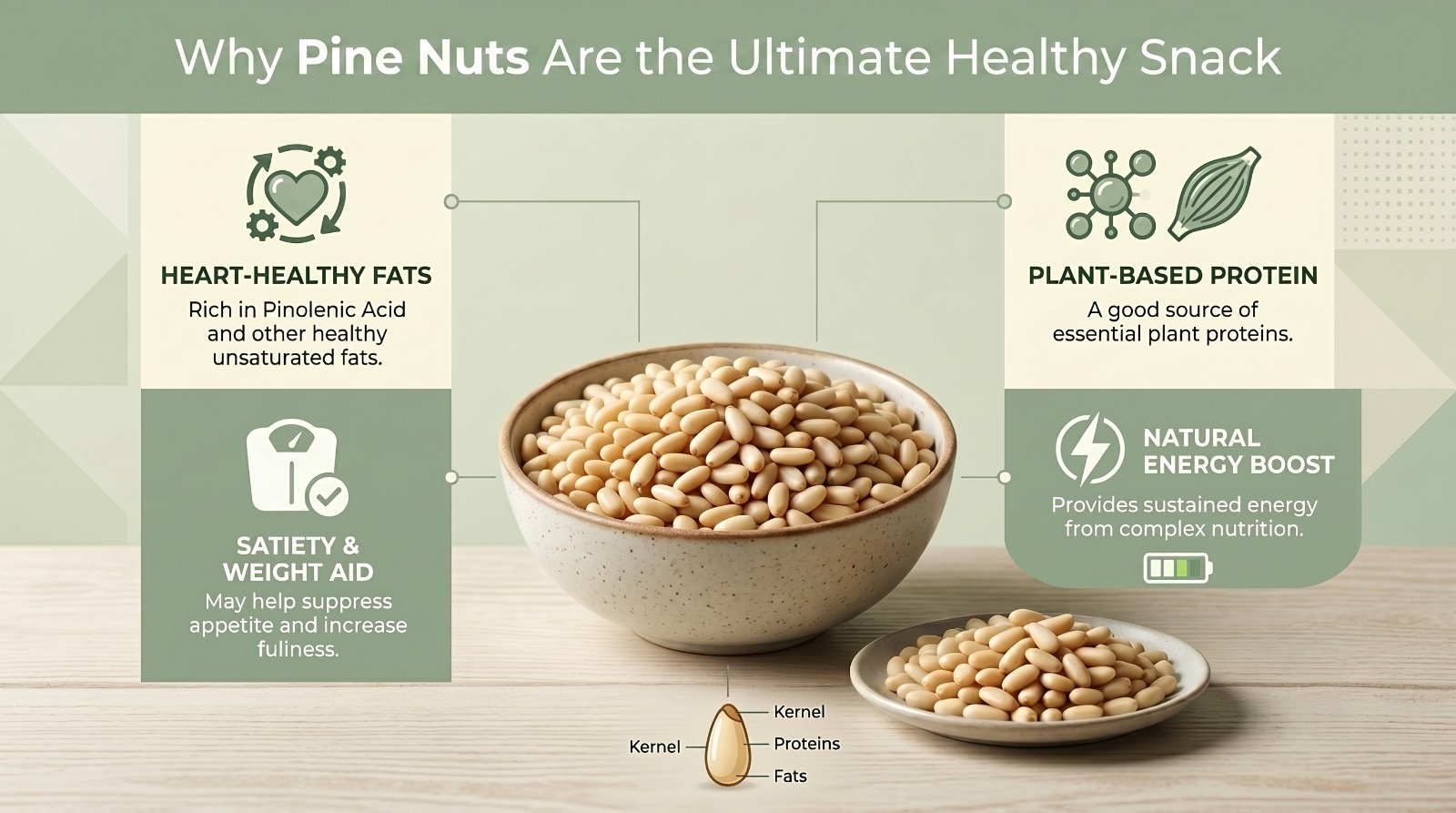
 Pine nuts nutrition offers a unique mix of healthy fats, plant-based protein, and essential minerals that support gut health and sustained energy. Including Chilgoza Giri as a low glycemic index snack helps improve nutrient density, heart health, and daily energy balance naturally.




Finding a snack that is both satisfying and genuinely healthy is not always easy. Many options feel convenient but lack real nutrition. This is where pine nuts nutrition stands out. These small seeds, also known as Chilgoza Giri, offer a powerful combination of healthy fats, plant-based protein, and essential minerals. Understanding the benefits of pine nuts helps you see why they are more than just a garnish. They are a nutrient-dense snack that fits naturally into modern lifestyles.
What Makes Pine Nuts Nutritionally Unique
When you look at pine nuts nutrition, you are not just looking at calories. You are looking at a concentrated source of nutrients that support multiple systems in the body. Unlike many snacks that provide empty calories, pine nuts deliver nutrient density in a small serving.
One of the key components is pinolenic acid, a unique fatty acid that plays a role in appetite regulation. This is why people often feel satisfied after eating a small portion. The fat profile includes oleic acid, linoleic acid, and omega-6, which contribute to heart health and energy balance.
Another important aspect is their mineral content. Pine nuts are considered a high manganese food, contributing significantly to daily requirements. They are also magnesium-rich nuts, supporting muscle function and overall metabolic processes.
When comparing raw vs roasted pine nuts nutrition, the core nutrients remain similar, but roasting may slightly affect heat-sensitive compounds like Vitamin E. However, both forms remain valuable as heart-healthy nuts.
This combination of fats, minerals, and vitamins explains why pine nuts behave differently in the body compared to processed snacks. They provide sustained energy instead of quick spikes.
Understanding Calories and Macronutrient Profile
Many people hesitate to include nuts in their diet because of calorie concerns. However, understanding calories in pine nuts in context is important.
A small serving contains concentrated energy, but it also delivers satiety. For example, calories in 10g pine nuts are relatively moderate, yet they provide enough fat and protein to reduce hunger. Similarly, calories in 1 chilgoza may seem small individually, but the cumulative effect of multiple seeds creates a balanced energy intake.
Looking at carbs in pine nuts, the levels are relatively low, making them a low glycemic index snack. This means they do not cause rapid spikes in blood sugar levels. Instead, they release energy gradually, which supports stable metabolism.
The presence of plant-based protein adds another layer of value. While not as high as legumes, the protein content contributes to muscle repair and daily nutritional needs.
Understanding cedar nuts nutrition also highlights how these seeds differ from other nuts. They are lighter in texture but rich in essential fats, making them easy to consume without feeling heavy.
This balance between calories, fats, and protein explains why pine nuts work well as a snack rather than just a cooking ingredient.
Benefits of Pine Nuts in Everyday Health
The benefits of pine nuts go beyond basic nutrition. They influence multiple aspects of health in subtle but meaningful ways.
The presence of Vitamin E and K supports skin health and blood function. These vitamins act as antioxidants, helping the body manage everyday stress from environmental factors.
Another important factor is their impact on heart health. The healthy fats in pine nuts support cholesterol balance, making them part of a heart-healthy nuts category. This does not mean they replace other foods, but they contribute positively when included in a balanced diet.
The benefit of eating pine nuts also includes improved energy levels. Because they release energy slowly, they help maintain focus and reduce fatigue during long workdays or physical activity.
For individuals following plant-based diets, pine nuts provide a valuable source of plant-based protein and essential fats. This makes them suitable for a wide range of dietary preferences.
These combined effects explain why pine nuts are often included in traditional diets and modern health-focused meal plans.
Benefits of Chilgoza Dry Fruit and Cultural Relevance
The benefits of chilgoza dry fruit are widely recognized in regions where they are traditionally consumed. Known as Chilgoza Giri, these seeds have been valued for their richness and energy content.
The benefits of eating chilgoza include improved stamina and nourishment, especially in colder climates where high-energy foods are essential. This cultural usage reflects how pine nuts adapt to different environmental needs.
From a nutritional perspective, chilgoza calories provide concentrated energy, making them useful in small quantities. This is particularly helpful for individuals who need quick yet sustained energy without consuming large meals.
The benefits of eating pine seeds also extend to digestive comfort. Their fat content supports smooth digestion when consumed in moderate amounts.
These traditional and modern perspectives combine to show how pine nuts fit into both cultural and global dietary patterns.
How Pine Nuts Fit Into Real-Life Eating Patterns
Understanding pine nuts benefits becomes more practical when you see how they fit into daily routines.
- As a mid-day snack for sustained energy
A small portion can prevent energy crashes during long working hours. The combination of healthy fats and protein helps maintain focus without the heaviness of processed snacks. - As a topping that enhances nutrient intake
Adding pine nuts to salads or meals increases nutrient density without significantly increasing portion size. This is especially useful for people trying to balance calorie intake with nutrition. - As a key pesto ingredient in modern diets
Pine nuts are commonly used in pesto, which combines healthy fats with herbs. This creates a nutrient-rich addition to meals that supports overall dietary balance. - As a travel-friendly healthy snack option
Their small size and high energy content make them convenient for travel, reducing reliance on less nutritious packaged foods.
These use cases show how pine nuts adapt to different lifestyles without requiring major dietary changes.
Factors That Influence Pine Nuts Nutrition in Daily Use
Not all pine nuts are consumed in the same way, and this affects their nutritional impact.
The difference between raw vs roasted pine nuts nutrition depends on preparation methods. Raw pine nuts retain more natural oils and vitamins, while roasted ones may offer enhanced flavor but slightly reduced nutrient sensitivity.
Storage also plays a role. Because of their fat content, pine nuts can become rancid if not stored properly. This affects both taste and nutritional quality.
The time of consumption also matters. Eating pine nuts as a snack between meals supports better energy balance compared to consuming them in large quantities at once.
These factors highlight how pine nuts nutrition is not just about the food itself but also about how it is used.
Benefits and Limitations of Pine Nuts as a Snack
While the benefits of pine nuts seeds are significant, it is also important to understand their limitations.
They are calorie-dense, which means portion control is important. Overconsumption can lead to excess calorie intake, even though the nutrients are beneficial.
They can also be relatively expensive compared to other nuts, which may limit accessibility for some people.
However, when used in moderate amounts, they provide a balance of nutrients that is difficult to match. Their combination of healthy fats, minerals, and protein makes them a valuable addition rather than a replacement for other foods.
Practical Tips for Including Pine Nuts in Daily Diet
Incorporating pine nuts into your routine does not require major changes. Small adjustments can make a noticeable difference.
- Use them as a topping rather than the main ingredient to control portion size
- Combine them with other foods to create balanced meals
- Store them properly to maintain freshness and nutritional value
- Choose between raw and roasted forms based on preference and usage
These simple steps help maximize the benefit of eating pine nuts without overcomplicating dietary habits.
Conclusion
Pine nuts are more than just a culinary ingredient. They are a compact source of nutrition that supports energy, heart health, and overall well-being. Understanding pine nuts nutrition and the benefits of pine nuts helps you make informed choices about your daily snacks.
When used thoughtfully, they provide a balance of nutrients that fits into modern lifestyles without requiring drastic changes. Their value lies in consistency and moderation, making them a reliable option for long-term health.
Frequently Asked Questions (FAQs)
1. Are pine nuts a good snack for daily health?Yes, pine nuts are considered a smart daily snack because of their strong nutrient density and balanced fat profile. They provide healthy fats like oleic acid and linoleic acid, along with plant-based protein that supports steady energy. Since they are also a low glycemic index snack, they help avoid sudden energy crashes and keep you feeling satisfied for longer.
2. How do pine nuts support heart health naturally?Pine nuts fall under the category of heart-healthy nuts due to their rich content of monounsaturated and polyunsaturated fats. These fats help maintain cholesterol balance and support overall cardiovascular function. Their magnesium-rich nuts profile also contributes to better blood circulation and muscle relaxation, which plays a role in heart health.
3. Can pine nuts help with weight management?Yes, pine nuts may support weight balance because of pinolenic acid, which influences appetite signals and promotes a feeling of fullness. Their combination of plant-based protein and healthy fats slows digestion, helping reduce unnecessary snacking. When consumed in moderation, they fit well into a balanced eating pattern.
4. What makes pine nuts different from other nuts nutritionally?What sets pine nuts apart is their unique fatty acid profile and mineral richness. They are a high manganese food, contributing significantly to daily mineral needs. Along with that, their Vitamin E & K source benefits support skin health and blood function, making them nutritionally distinct from many other nuts.
5. Are raw or roasted pine nuts better for nutrition?Both forms offer benefits, but raw vs roasted pine nuts nutrition differs slightly. Raw pine nuts retain more sensitive nutrients like Vitamin E, while roasted ones offer better flavor and convenience. Regardless of the form, they remain rich in healthy fats and maintain their core nutritional value.
6. How many calories are in a small serving of pine nuts?A small portion provides concentrated energy. For example, calories in 10g pine nuts are moderate but nutrient-rich, offering fats and protein that support satiety. Understanding pine nuts nutrition helps you see that these calories come with valuable nutrients rather than empty energy.
7. Do pine nuts help improve gut health?Yes, pine nuts support digestion indirectly by providing fats that help nutrient absorption and maintain gut balance. Their role in supporting the gut microbiome is linked to their nutrient profile. Combined with other foods, they contribute to better digestion and overall gut function.
8. Can pine nuts be included in plant-based diets?Absolutely, pine nuts are a useful addition to plant-based diets because they provide plant-based protein and essential fats. They also supply important micronutrients, making them a practical option for those looking to maintain balanced nutrition without animal-based foods.
9. What is the best time to eat pine nuts for maximum benefit?Pine nuts can be eaten between meals or as part of balanced dishes. Consuming them as a snack helps maintain energy due to their low glycemic index snack nature. Their nutrient density ensures that even small portions provide meaningful nutritional support throughout the day.
10. How are pine nuts commonly used in meals?Pine nuts are widely used as a pesto ingredient, adding both flavor and nutrition to meals. They can also be added to salads, grains, or light dishes to increase nutrient intake. Their combination of healthy fats and minerals enhances both taste and overall meal quality.






.jpeg)








.jpg)
.jpg)
.jpg)
.jpg)
.jpg)
.jpg)


.jpg)
.jpg)
.jpg)