 Thursday, October 08, 2026
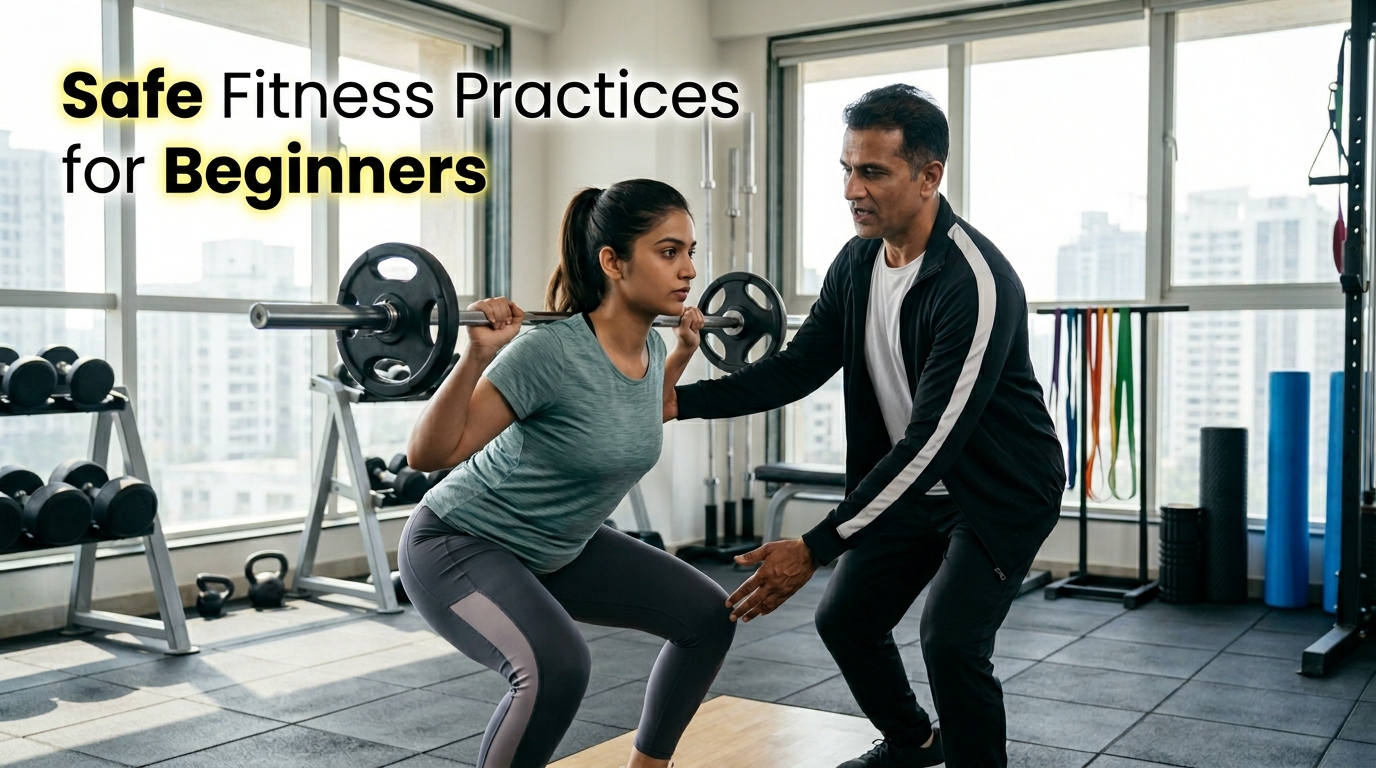
 Starting fitness without proper guidance often leads to injury, fatigue, and frustration. Building a safe, gradual routine helps the body adapt, ensuring consistency and long-term success. Sustainable progress comes from understanding limits, prioritizing recovery, and developing a strong, injury-free foundation.




Safe Fitness Practices for Beginners
Starting a fitness journey is exciting—but it can also feel overwhelming. With so much advice online, many beginners jump into intense routines without understanding what their body actually needs.
The result? Fatigue, injuries, frustration, and eventually giving up.
This is why understanding safe fitness practices for beginners is not just important—it is essential. Fitness is not about doing everything at once. It is about building a strong foundation that supports long-term health and consistency.
Because the goal is not quick results.
The goal is sustainable progress.
Why Safety Matters in Fitness
When you are new to exercise, your body is not yet adapted to physical stress. Muscles, joints, and even your cardiovascular system need time to adjust.
Pushing too hard too soon can lead to injuries such as muscle strains, joint pain, or exhaustion. Many beginners quit not because fitness is hard, but because they start the wrong way.
Safe practices ensure that your body gradually adapts, making workouts more effective and enjoyable over time.
Fitness should make you feel stronger—not broken.
Start Slow and Build Gradually
One of the most important beginner workout tips is to start slow.
You don’t need to exercise for hours or lift heavy weights on day one. In fact, doing too much early on can slow your progress.
Begin with short sessions, focusing on basic movements. As your strength and endurance improve, you can gradually increase intensity and duration.
This gradual approach allows your body to adapt naturally, reducing the risk of injury while improving performance.
Consistency always beats intensity.
Focus on Proper Form First
Many beginners make the mistake of focusing on how many repetitions they can do instead of how well they perform them.
But proper technique is everything.
Maintaining correct posture and movement ensures that the right muscles are engaged while protecting your joints. Poor form not only reduces effectiveness but also increases the risk of injury.
Learning the basics of movement—such as squats, lunges, push-ups, and planks—is crucial for building a strong foundation.
Think of it this way: doing fewer repetitions correctly is far better than doing more incorrectly.
Choose Simple and Effective Workouts
You don’t need complicated routines to get started. In fact, simplicity is your greatest advantage.
At home workouts for beginners can be incredibly effective. Basic bodyweight exercises like squats, push-ups, lunges, and planks target multiple muscle groups and require no equipment.
These exercises improve strength, flexibility, and endurance, making them ideal for beginners.
The beauty of simple workouts is that they are easy to follow and sustainable, helping you stay consistent over time.
Warm-Up and Cool-Down Are Non-Negotiable
Skipping warm-up is one of the most common mistakes beginners make.
A proper warm-up prepares your body for exercise by increasing blood flow, loosening muscles, and improving flexibility. This reduces the risk of injury and enhances performance.
Similarly, cooling down after exercise helps your body recover. Gentle stretching reduces muscle stiffness and improves flexibility.
These steps may seem small, but they make a big difference in how your body responds to exercise.
Listen to Your Body
Your body is your best guide.
If something feels wrong, it probably is. Pain, dizziness, or extreme fatigue are signals that you need to slow down or stop.
Beginners often confuse discomfort with progress. While mild soreness is normal, sharp pain is not.
Learning to differentiate between the two is crucial for safe training.
Fitness is not about ignoring your body—it is about understanding it.
Stay Consistent, Not Perfect
One of the biggest challenges beginners face is inconsistency.
Many people start with high motivation, pushing themselves too hard, and then burn out within weeks.
Instead of aiming for perfection, focus on consistency. Even short, regular workouts can deliver significant results over time.
Building a habit is more important than chasing immediate results.
Remember, progress is not about one perfect workout—it is about showing up regularly.
Hydration and Nutrition Matter
Exercise is only one part of the equation. What you eat and drink plays a major role in your performance and recovery.
Staying hydrated helps regulate body temperature, improve energy levels, and prevent fatigue.
A balanced diet provides the nutrients your body needs to repair muscles and build strength.
Skipping meals or not drinking enough water can reduce your performance and increase the risk of injury.
Your body needs fuel to function effectively.
Rest and Recovery Are Essential
Rest is often overlooked, but it is one of the most important safe fitness practices for beginners.
When you exercise, your muscles experience small tears. During rest, these muscles repair and become stronger.
Without proper recovery, your body cannot adapt, leading to fatigue and potential injury.
Taking rest days allows your body to recharge, ensuring long-term progress.
Fitness is not just about working hard—it is about recovering smart.
Set Realistic Goals
Unrealistic expectations can lead to disappointment.
Beginners often expect rapid transformations, but real progress takes time. Setting small, achievable goals helps you stay motivated and focused.
Instead of aiming for drastic changes, focus on gradual improvements. Whether it is completing a workout, improving stamina, or feeling more energetic, every step counts.
Success in fitness is built on patience.
Create a Comfortable Environment
Your workout environment plays a significant role in your consistency.
Whether it is a dedicated space at home or a quiet corner, having a comfortable and distraction-free area makes exercise more enjoyable.
Wearing proper clothing and supportive footwear also reduces the risk of injury and improves performance.
Comfort leads to consistency.
My Perspective: Fitness Is a Long-Term Commitment
Many beginners approach fitness as a short-term goal rather than a lifelong habit.
But real transformation happens when fitness becomes part of your lifestyle.
You don’t need to do everything at once. You just need to start—and keep going.
Safe practices ensure that your journey is not only effective but also enjoyable.
Because the best fitness routine is the one you can maintain for life.
Conclusion
Starting your fitness journey can be challenging, but following safe fitness practices for beginners makes the process smoother and more effective.
From starting slow and focusing on form to staying consistent and prioritizing recovery, every step plays a role in building a strong foundation.
Fitness is not about extremes—it is about balance, patience, and persistence.
Take it one step at a time.
Because every small effort brings you closer to a healthier, stronger version of yourself.
FAQs
- What are safe fitness practices for beginners?
Starting slow, using proper form, and allowing recovery are key practices.
- How often should beginners exercise?
3–4 times per week is a good starting point.
- Are home workouts effective for beginners?
Yes, they are simple, convenient, and effective.
- Should beginners use weights?
Light weights can be introduced gradually.
- How long should a beginner workout be?
20–30 minutes is sufficient to start.
- Is soreness normal after exercise?
Yes, mild soreness is normal, but sharp pain is not.
- Why is warm-up important?
It prepares muscles and reduces injury risk.
- Can beginners work out every day?
Rest days are important for recovery.
- How important is diet in fitness?
It plays a crucial role in energy and recovery.
- What is the biggest mistake beginners make?
Doing too much too soon without proper guidance.






.jpeg)








.jpg)
.jpg)
.jpg)
.jpg)
.jpg)
.jpg)


.jpg)
.jpg)
.jpg)