Tuesday, October 27, 2026
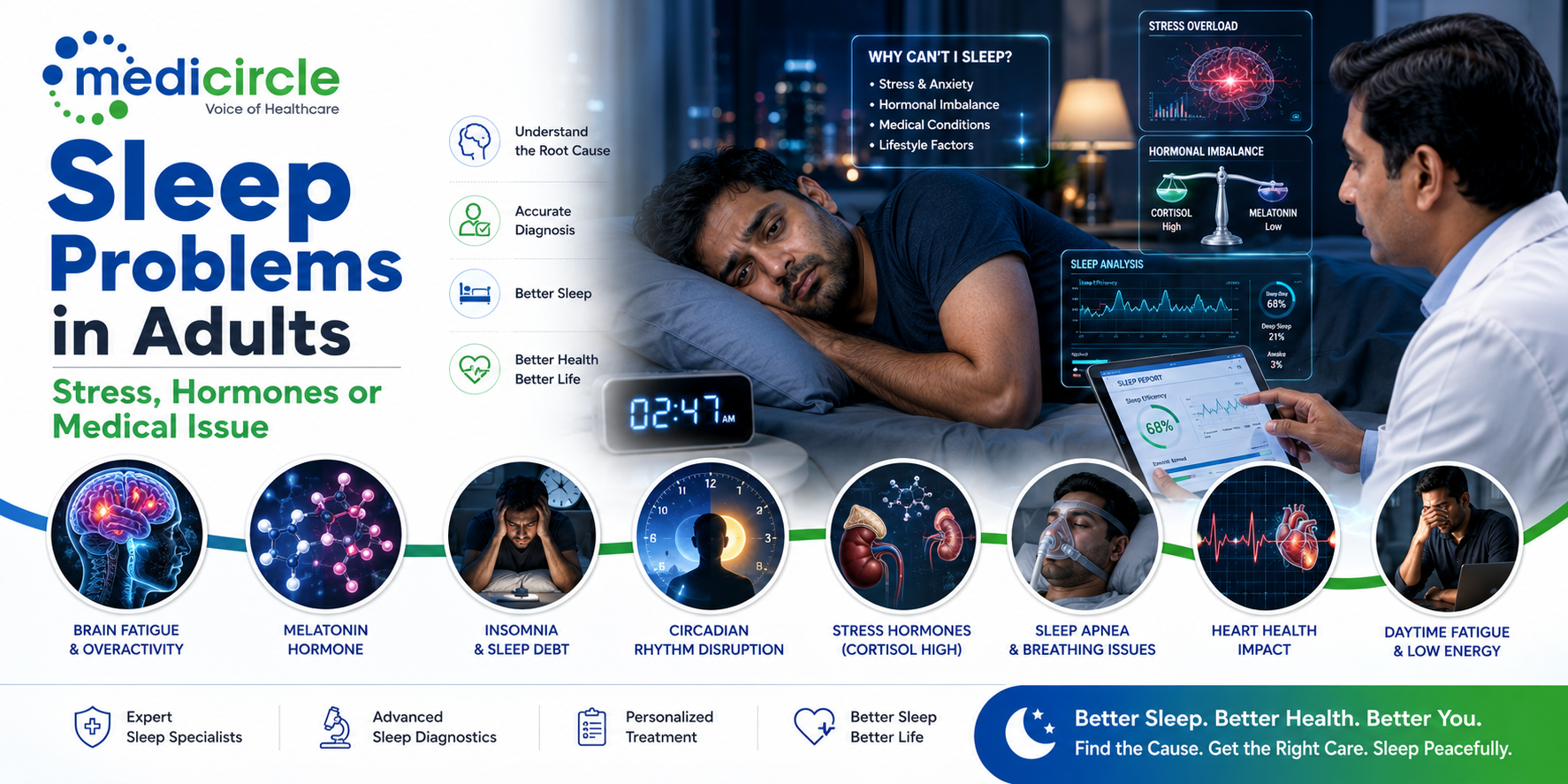
 Adult sleep issues generally stem from a complex web where daily lifestyle demands, internal chemical shifts, and underlying health profiles collide. Understanding these factors is the first step toward recovery.




Sleep Problems in Adults
For a significant number of adults across India, the concept of turning off the lights and immediately drifting into a deep, uninterrupted slumber feels like a distant memory. Whether it is an IT professional in Bengaluru tracking late-night client deployments or a parent in Mumbai managing early morning school routines, midnight often finds people wide awake, watching the hours slip away. Doctors always reclaiming natural rest requires an understanding of your sleep architecture, as chronic sleep deprivation quietly damages immune function, metabolic health, and emotional regulation over time.
An isolated night of poor rest is usually just a temporary inconvenience. However, when sleeplessness becomes a regular feature of your week, the consequences quickly compound, eroding your daytime focus, emotional stability, and long-term physical health. The reality of sleep problems in adults is that they are rarely caused by a single isolated factor; instead, they generally stem from a complex web where daily lifestyle demands, internal chemical shifts, and underlying health profiles collide.
Getting to the bottom of what keeps your mind racing or your body tossing is essential to recovering your vitality. Clinical insights show that chronic sleep disruptions point back to three primary culprits: psychological stress, hormonal imbalances, and structural or metabolic medical issues. Exploring how these specific pathways alter your physiology makes it possible to understand your symptoms and choose a definitive path toward recovery.
Stress Hijacks Brain
The demanding pace of modern professional and personal life places a constant, heavy cognitive load on the mind. This mental strain is a primary driver of chronic insomnia, acting as a direct barrier to biological relaxation. When your thoughts are consumed by financial targets, family obligations, or career performance, your central nervous system behaves as though it is under constant threat.
From a clinical perspective, ongoing worry keeps your sympathetic nervous system firing, forcing your adrenal glands to flood your bloodstream with cortisol and adrenaline. In nature, these hormones serve to keep you hyper-alert and ready to face danger. But when they pump through your system at midnight, they actively prevent your brain from descending into the deep, slow-wave states necessary for physical restoration.
Furthermore, trying to solve life problems while staring at the bedroom ceiling creates an unfortunate psychological association. The brain stops viewing the bed as a sanctuary for rest and begins treating it as a high-stress environment, trapping the individual in a frustrating cycle of bedtime anxiety.
Impact of Hormonal Imbalances
We frequently focus on comfort and noise when trying to fix our sleep, completely missing the silent influence of our internal biochemistry. Hormones serve as the body primary communication network, directing everything from metabolic rates to the precise timing of our internal clock. When these chemical levels drift outside their optimal ranges, nighttime patterns break down rapidly.
The most famous of these sleep regulators is melatonin, a hormone synthesized by the pineal gland when ambient light fades. Melatonin acts as an internal cue, telling our systems that conditions are ideal for rest. Unfortunately, habits like reading on tablets late into the evening or staying under bright overhead fluorescent lights block this natural release, confusing the brain into thinking the sun is still up.
|
Biological Regulator |
Primary Physical Function |
Direct Consequence of Imbalance |
|
Melatonin |
Coordinates the circadian sleep-wake cycle |
Lack of release delays sleep and lowers sleep depth |
|
Cortisol |
Coordinates stress response and daytime energy |
Nighttime spikes cause hyper-arousal and wakefulness |
|
Estrogen / Progesterone |
Manages reproductive systems and mood stability |
Drastic drops cause night sweats and shallow sleep |
|
Thyroid Hormones (T3/T4) |
Sets the pace for systemic cellular metabolism |
Elevation causes physical racing; drops cause chronic lethargy |
Beyond melatonin, shifts in reproductive hormones introduce unique sleep vulnerabilities, particularly for women. Significant biological transitions, such as pregnancy, the postpartum phase, and perimenopause, frequently alter sleep architecture. A sharp reduction in progesterone, which naturally promotes calm and muscle relaxation, can cause sudden spikes in nighttime anxiety and light, fragmented sleep.
Simultaneously, plunging estrogen levels frequently cause vasomotor symptoms like severe hot flashes and sudden night sweats, waking an individual up drenched and uncomfortable. Additionally, thyroid irregularities disrupt sleep from two opposite directions; an overactive thyroid drives metabolic rates too high, causing a racing heart and anxious thoughts in bed, whereas an underactive thyroid causes intense daytime exhaustion without delivering restful sleep at night.
Undiagnosed Medical Conditions
When a disciplined routine and relaxation techniques fail to fix your sleep, the root cause may be a hidden physical ailment. Several chronic health issues disrupt our sleep architecture silently, without causing obvious daytime symptoms that point to an illness.
A common example is obstructive sleep apnea, a structural breathing issue that is heavily underdiagnosed. This occurs when the soft tissues in the throat relax too much during sleep, creating a physical blockage in the airway. As air struggles to pass, blood oxygen levels drop sharply, sending an emergency signal to the brain to briefly wake up and restore muscle tone.
During a normal sleep cycle, a clear airway allows for unobstructed airflow while sleeping, which naturally transitions the body into restorative, deep sleep cycles. Conversely, an obstructed airway occurs when throat tissues collapse completely, causing immediate drops in blood oxygen levels that trigger frequent micro-awakenings throughout the night.
Because these micro-awakenings take only moments, most people have no memory of them the following morning. Yet, they slice through your sleep cycles, preventing you from reaching deep rapid eye movement and slow-wave sleep. This leaves you feeling profoundly fatigued, foggy, and short-tempered during the day. Telltale signs include loud, habitual snoring, waking up with a parched throat, or fighting off a dull morning headache.
Furthermore, chronic pain conditions like rheumatoid arthritis, fibromyalgia, or recurring disc issues present constant physical barriers to standard rest. The persistent discomfort makes finding a pain-free position difficult and causes frequent awakenings. Other medical triggers include gastroesophageal reflux disease, where stomach acid moves up the esophagus when you lie flat, and restless legs syndrome, which forces an uncomfortable, urgent need to move your legs during periods of stillness.
Steps to Better Sleep
Overcoming long-term sleep problems in adults requires a deliberate strategy that combines environmental control, strict habit formation, and lifestyle awareness. Giving your body clear, repetitive cues helps reset your internal biological clock.
Standardizing Your Environment
- Stick to a Fixed Wake-Up Time: Set your alarm for the identical time every single morning, including holidays and weekends. This predictability anchors your circadian rhythm, making evening sleepiness more consistent.
- Prioritize Darkness and Temperature: Keep your bedroom as dark, quiet, and cool as possible. Consider blackout drapes to block out intrusive streetlights and use white noise if you live near busy roads.
- Evaluate Your Sleep Surface: Invest in a mattress and pillow configuration that keeps your spine aligned and prevents structural aches from waking you up.
Adjusting Your Evening Transitions
- Initiate a Screen Blackout: Power down your phones, laptops, and smart televisions at least sixty minutes before hitting the pillow. Avoiding blue light allows your brain to produce melatonin naturally.
- Adopt Quiet Evening Rituals: Spend your final waking hour reading a printed book, stretching gently, or practicing targeted breathing patterns to lower your heart rate.
- Watch Your Evening Intake: Avoid caffeinated drinks, large rich dinners, or heavy alcohol consumption in the hours leading to bedtime, as they disrupt your digestion and ruin your deep sleep stages.
Seeking Professional Care
While optimizing your daily choices can mend mild sleep disruptions, chronic insomnia warrants expert medical assessment. If you have maintained excellent sleep habits for over four weeks and still find yourself exhausted, seeking clinical guidance is the smartest choice.
Do not delay a professional consultation if you frequently wake up gasping for air, snore loudly enough to disrupt others, or feel so tired during the day that it impairs your ability to drive safely. A doctor or sleep medicine specialist can order diagnostic tests, such as an overnight sleep study, to track your brain waves, breathing patterns, and oxygen levels.
Identifying the exact medical or chemical cause allows for tailored medical therapies, moving you past generic, over-the-counter remedies. Resolving your sleep issues is an essential investment in protecting your long-term cardiovascular health, mental sharpness, and daily well-being.
Frequently Asked Questions
What is the Optimal Sleep Duration?
While eight hours is a great average benchmark, healthy adults generally need anywhere between seven and nine hours of continuous sleep to feel fully restored. The focus should be on sleep quality rather than just the number of hours; waking up feeling refreshed without relying on caffeine is the best sign that your body is getting what it needs.
What will be the Evening Exercise Impact?
Yes, high-intensity workouts right before bed can interfere with your sleep because they raise your core body temperature and flood your system with stimulating endorphins and adrenaline. To get the sleep benefits of exercise, such as lower stress and deeper rest, try to wrap up heavy workouts at least three hours before your planned bedtime.
What all are the Over-the-Counter Risks?
Non-prescription sleep supplements and antihistamines are meant for temporary, short-term disruptions, such as overcoming jet lag. Utilizing them as a long-term solution can cause your body to build a tolerance, mask serious underlying medical conditions, and leave you dealing with daytime drowsiness or a psychological dependence on them to sleep.
What is Vivid Stress Dreams?
When you carry high levels of anxiety during the day, your brain works overtime to process those difficult emotions during rapid eye movement sleep, which is the peak stage for dreaming. This emotional processing often triggers intense, realistic, or stressful dreams that can startle you awake, leaving your heart racing and making it difficult to calm down and fall back asleep.





-23-300x250.png)

.jpeg)






.jpg)
.jpg)
.jpg)
.jpg)
.jpg)
.jpg)
.jpg)
.jpg)
.jpg)