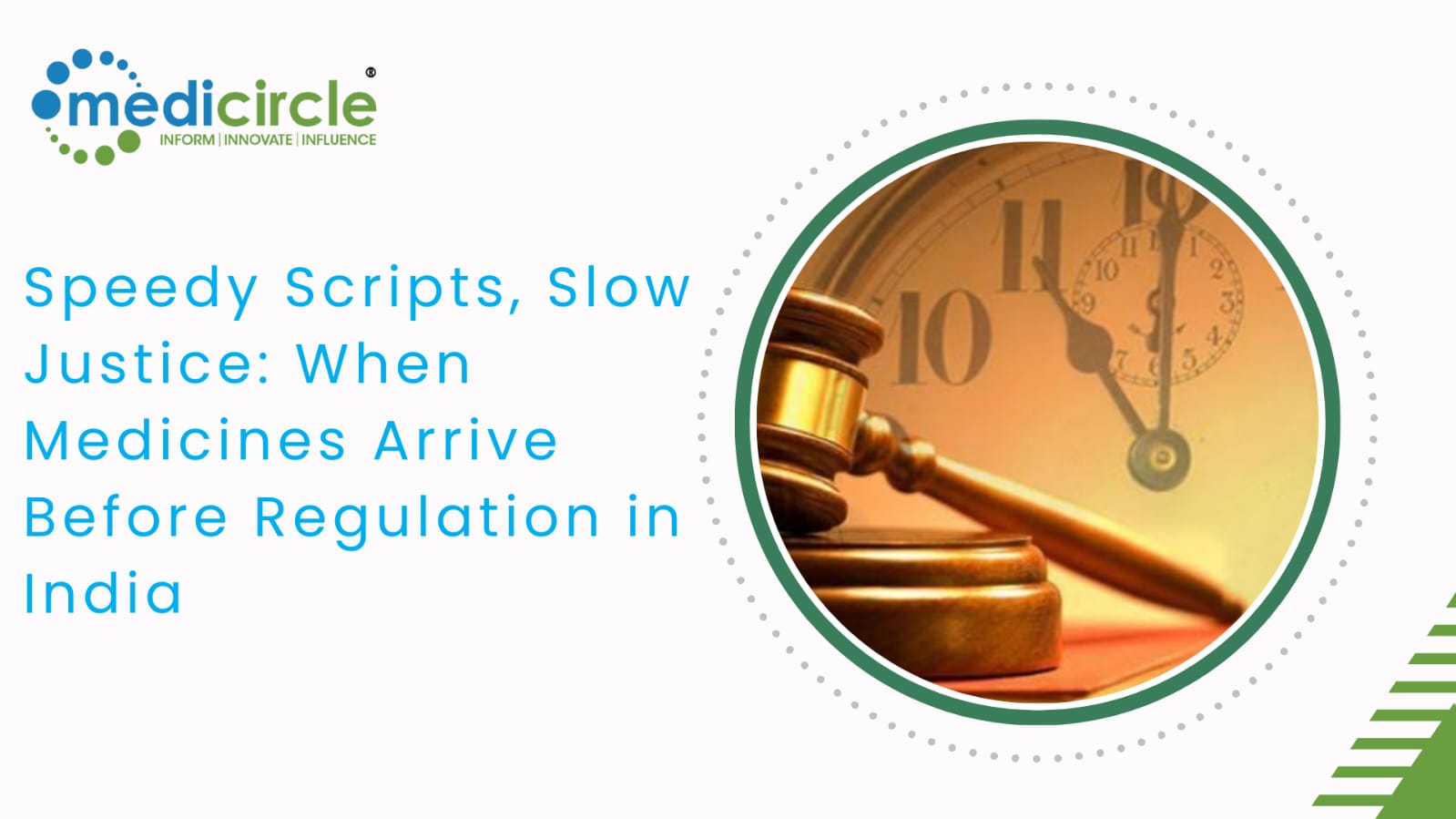
Speedy Scripts, Slow Justice: When Medicines Arrive Before Regulation in India

▴ Regulation in India
Licensing e-pharmacies strictly, enforcing real-time prescription authentication, introducing delivery tracking, and training riders like pharmacists could preserve safety without ditching speed.

Hello! If you're looking for high-quality genericmedications, fast delivery and excellent customer service, ourstore is the right choice for you. With over 20 years of onlineexperience, we guarantee safe, effective products that are alwaysin stock. Delivery within 48 hours, free shipping from $200, and 100% money-back guarantee if your order doesn't arrive on time.

👉 Order now at BestCheapPills and discover exclusive discounts for registeredcustomers!
In an era where food, essentials, even clothes arrive at your door in record time, life-saving medicines have also joined the fast lane. Tap, click, and receive within minutes is no longer a futuristic promise it’s reality. But as zepto offers same-day food and grocery delivery, platforms like their pharmacy counterpart claim to deliver prescription drugs like pregabalin within ten minutes of ordering. What happens when speed outruns safety in the delicate realm of prescription medicine? That question forms the heart of a crisis unfolding across India’s healthcare narrative.

For decades, pharmacies operated under tight scrutiny in India. Every Schedule H or H1 drug, from antibiotics to narcotics, required a written stamp from a qualified physician. Retail chemists cross-checked bills, pharmacists asked questions, and recorded dispensing diligently. The system was slow but safe. Into that carefully calibrated system enter quick e-commerce players like Zepto, Blinkit, and other startups treating medicines like milk and bread. Their pitch: one-click convenience, no paperwork, no delay. A life flipped from clinic waiting rooms to home deliveries, and patients cheered.

But experts began to notice cracks. The All India Organisation of Chemists & Druggists (AIOCD), representing over a million pharmacists, raised alarm. These platforms were delivering Schedule H/H1/X drugs which are medicines only legal with prescriptions without verifying them. Doctors prescriptions were scanned, faked, or ghost-written. Delivery riders handed controlled substances to anyone with a phone. A 2025 letter from the AIOCD to the Home Minister warned these practices flagrantly violated existing drug laws, fostering misuse and putting public health at risk especially among young people.

Indeed, the scale of misuse was rising. AIOCD claimed a 55% surge in addiction linked to easy access through quick commerce. Drugs like pregabalin, known for being habit-forming, were flying off digital shelves unchecked. Worse, telemedicine guidelines meant to help during the pandemic were being twisted to bypass prescription verification entirely. A system designed for care was being manipulated for convenience and it was dangerous.

Behind the scenes, the Drug Technical Advisory Board (DTAB) was reviewing the March 2020 notification that allowed doorstep medicine delivery during COVID-19 lockdowns. Originally intended to protect vulnerable patients, the rule had outlived its emergency and was being misused. A subcommittee was tasked with deciding whether the government should retract the privilege. Meanwhile, the Delhi High Court’s 2018 judgment banning online drug sales threatened to be nullified by this creeping reality unless policymakers acted decisively.

On the policy front, a tangled web remains. E-pharmacies operate in regulatory grey zones. The Drugs & Cosmetics Act mandates prescriptions for many medicines, yet these platforms claim e-prescriptions are valid under pharmacy practice rules. Simultaneously, the IT Act governs digital operations. Without coherent integration, e-pharmacy regulation is gaping at the seams.

But this isn't just regulatory red tape it’s real people, real stakes. Imagine a struggling young professional in Delhi, prescribed pain medication. Instead of visiting a chemist under scrutiny, he orders same-dose pills in minutes without a word. Behind convenience lie threats of overdose, addiction, and systemic breakdown.

Thin of small towns, a local chemist once patiently explained how to take antibiotics or manage antiretrovirals. Now, deliveries arrive with no one to counsel. Missed doses or misuse risk worsening outcomes. We are piecing together a future where care becomes a click, not a conversation.

Retail chemists warn that these platforms also effect local economies. When foreign-funded quick commerce sees medicine as commodity, family-run pharmacies buckle under unfair competition. Jobs vanish and patients lose trusted guides in return.

Yet, what’s the path forward? A potential win-win would embrace digital convenience while keeping safeguards intact. Licensing e-pharmacies strictly, enforcing real-time prescription authentication, introducing delivery tracking, and training riders like pharmacists could preserve safety without ditching speed. Crucially, the Telemedicine Guidelines must be tightened and not expanded by loophole. The system must understand that while emergencies pass, ethical delivery norms remain.

Above all, people must stay at the center. Convenience matters but it must not override responsibility. A trained pharmacist questioning a dosage, a rider verifying identity, a system flagging addictions all these checks matter. Even the wisest algorithm cannot replace human care. India stands at a crossroads: Will it allow medicines to become mere e-commodities, or will speed and safety coexist? The choice now determines whether healthcare thrives on trust or crumbles under unchecked clicks.

Tags : #MedicinesAtRisk #SpeedVsSafety #RegulateEPharmacy #DigitalHealthDilemma #AddictionAlert #YouthAtRisk #TrustYourPharmacist #SmartPharmacy #SafeDigitalCare #EthicalEPharmacy #HealthWithChecks #TechWithTrust #smitakumar #medicircle

Related Stories

Loading Please wait...

-Advertisements-


Trending Now

Cholesterol Explained: Good vs Bad Cholesterol and What It Means for Your HeartJuly 11, 2026
Role of Technology in Hospitals: How Indian Healthcare is Being ReshapedJuly 11, 2026
175 years after ancestors left UP, Indo-Trinidadian infant receives rare liver transplant at Apollo DelhiJuly 10, 2026
Fortis Escorts Faridabad Strengthens Advanced Care Ecosystem with Launch of: Fortis Cancer Institute Institute of Neurosciences Centre of Excellence in Critical Care and ECMOJuly 10, 2026
India’s first focused health AI Conclave unites doctors and AI expertsJuly 10, 2026
University of Leeds Opens Applications for MSc Biotechnology with Business Enterprise for Indian StudentsJuly 10, 2026
How Doctors Are Changing the Face of Indian HealthcareJuly 10, 2026
Medical Innovations to Watch in 2026: How Technology Is Reshaping Healthcare in IndiaJuly 10, 2026
Government of India Notifies Polymatech Electronics’ Semiconductor and Electronic Components SEZ at Nava Raipur, ChhattisgarhJuly 09, 2026
Iswarya Fertility Center Raises Over INR 350 Crore from OrbiMed AsiaJuly 09, 2026
Happiest Health Announces Launch of Speciality Clinics Happiest Paediatrics, Happiest Orthopaedics, Happiest Gynaecology, Happiest Endocrinology & Your Personal PhysicianJuly 09, 2026
Cetaphil launches new AM/PM Antioxidant Serum Duo in India July 09, 2026
THIP Partners with ISSRF to Launch Digital Patient Education Programme for EndometriosisJuly 09, 2026
Blood Tests Everyone Should Understand: A Complete Guide for Indian AdultsJuly 09, 2026
CT Scan vs MRI: Understanding the Difference and Choosing the Right Diagnostic Imaging TestJuly 09, 2026
Robotic Surgery in Modern Urology and Gynecology: Precision, Recovery, and SafetyJuly 08, 2026
Apollo Hospitals Gives Filipino Twin Brothers a New Lease of Life Through Rare Twin Liver TransplantsJuly 08, 2026
Fibroheal Raises ₹14 Crore to Fuel Next Phase of Growth and Entry in Developed MarketsJuly 08, 2026
Veda Rehabilitation & Wellness Opens Himalayan Mental Health Recovery Retreat in Sikkim for Addiction Recovery and Mental WellbeingJuly 08, 2026