 Tuesday, October 27, 2026
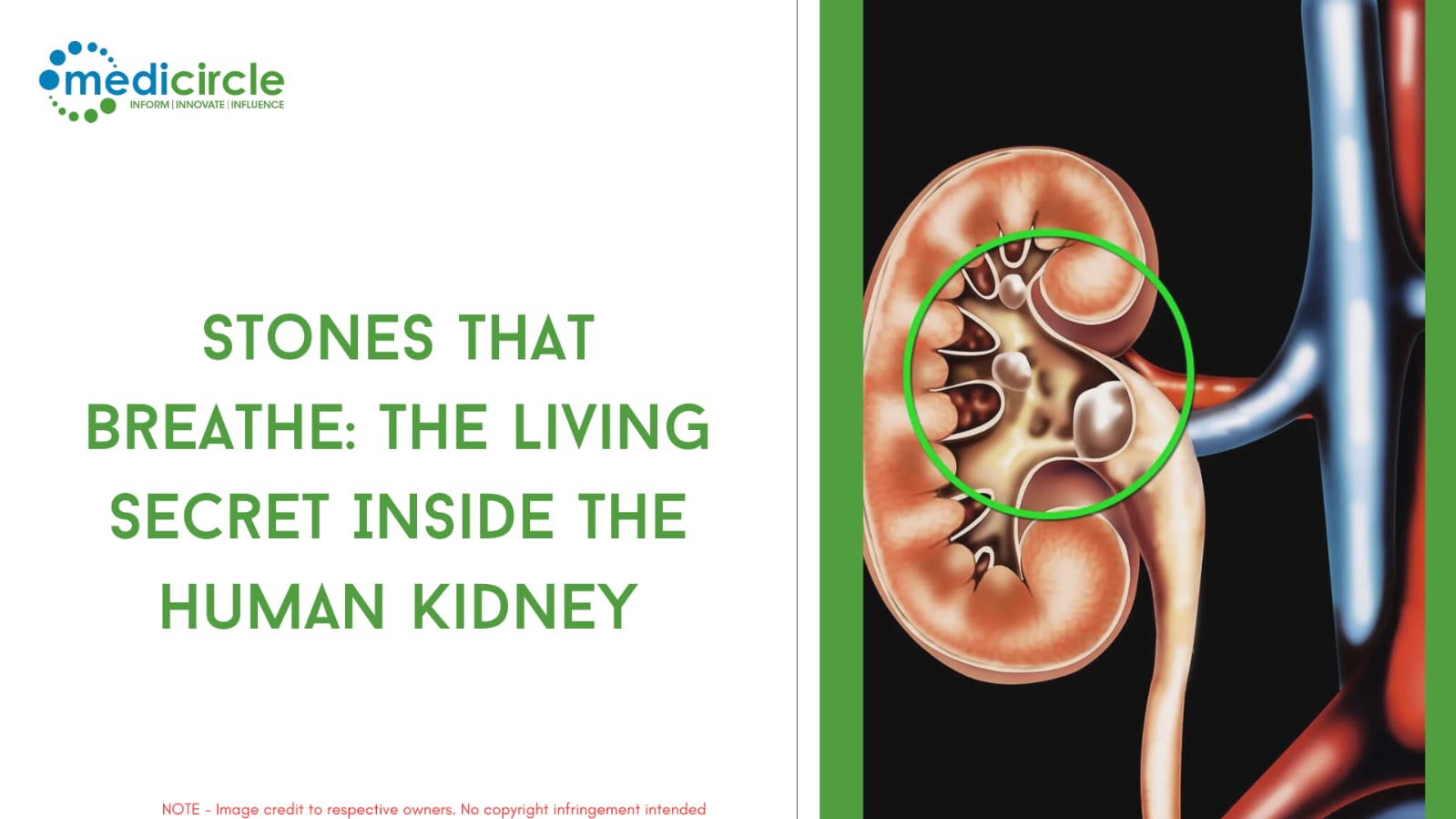
 Kidney stone research has entered a new chapter that acknowledges the possibility of hidden infection within what was once considered an inert mass.




Kidney stones have been described in medical texts for thousands of years. Archaeologists have even identified stones in ancient mummies, evidence that this painful condition has shadowed humanity across centuries. Despite remarkable advances in modern medicine, from minimally invasive surgery to high-resolution imaging, kidney stone disease remains common, recurrent, and deeply disruptive. For many patients, the agony arrives without warning, sending them to emergency rooms with severe flank pain, nausea, and difficulty passing urine. Physicians have long understood the chemical processes behind most stones. Now a new research suggests we may have missed a critical piece of the story.
A recent investigation led by researchers at the University of California, Los Angeles has uncovered something unexpected within the most common type of kidney stones. Using advanced microscopy techniques, scientists identified living bacteria and complex microbial communities embedded inside calcium oxalate stones. These stones account for nearly 80 percent of kidney stone cases worldwide. Until now, they were widely believed to form purely through mineral crystallization from supersaturated urine.
The findings, published in the prestigious journal Proceedings of the National Academy of Sciences, challenge a long-standing assumption in urology and nephrology. For decades, calcium oxalate kidney stones were considered the result of chemical imbalance. When urine becomes concentrated with calcium and oxalate, tiny crystals begin to form. Over time, these crystals grow, clump together, and develop into solid stones. Bacteria were known to contribute to a rarer category called struvite stones, often linked to chronic urinary tract infections. But the dominant calcium-based stones were thought to be sterile mineral structures.
This new research calls that belief into question.
By employing electron microscopy and fluorescence imaging, the team discovered bacterial cells lodged deep within the crystalline framework of calcium oxalate stones. Even more striking was the presence of biofilms i.e. organized communities of bacteria encased in a protective matrix. Biofilms are notorious in medicine. They are resilient, difficult to eradicate, and often resistant to antibiotics. They are implicated in chronic infections involving catheters, prosthetic joints, and dental plaque. Finding them within kidney stones suggests a far more dynamic biological process than previously imagined.
Kidney stones may not be solely mineral deposits. They may represent a hybrid structure, a blend of inorganic crystals and organic microbial material. In simple terms, the stone could be forming around bacteria, with microbes acting as microscopic seeds that encourage crystal growth.
Kidney stone formation has always been described as a process of nucleation and aggregation. When urine becomes oversaturated with certain salts, crystals begin to form. These crystals either pass unnoticed or attach to kidney tissue, gradually accumulating into larger masses. Researchers have spent years identifying molecules that promote or inhibit this process. Dietary factors, hydration status, genetics, and metabolic disorders are all known contributors. But the exact triggers that initiate stone formation in some individuals remain elusive.
The discovery of live bacteria within calcium stones introduces a new variable into that equation. It suggests that microbes may play a more active role in crystal nucleation than previously recognized. Bacteria could alter the microenvironment within the kidney, influencing pH levels, binding minerals, or providing a scaffold upon which crystals can attach. Once trapped within the developing stone, they may continue to survive, shielded by layers of mineral deposits.
This may help explain a puzzling clinical observation of the frequent overlap between recurrent urinary tract infections and recurrent kidney stones. While struvite stones are clearly linked to infection, calcium stones were not traditionally associated with bacterial involvement. But many patients report repeated infections alongside stone episodes. If bacteria are embedded within calcium stones, they could serve as hidden reservoirs of infection. Even when urine tests appear negative, microbes inside stones might persist, contributing to ongoing inflammation and stone recurrence.
Kidney stones affect millions of people worldwide each year. In the United States alone, approximately one in ten individuals will experience a kidney stone during their lifetime. Risk factors include dehydration, high-sodium diets, excessive animal protein intake, obesity, diabetes, and certain metabolic conditions. Climate change and rising global temperatures have also been linked to increasing kidney stone incidence due to chronic dehydration.
Standard treatment focuses on pain management, hydration, medications that alter urine chemistry, and surgical procedures such as lithotripsy or ureteroscopy. Preventive strategies emphasize dietary modifications, increased fluid intake, and sometimes medications that reduce calcium or oxalate levels in urine. Antibiotics are typically reserved for confirmed infections.
If bacteria are indeed contributing to calcium oxalate stone formation, prevention and treatment strategies may need to expand. Instead of viewing kidney stones purely as a chemical imbalance, clinicians may need to consider the urinary microbiome. The urinary tract was once believed to be sterile. Recent advances in microbial sequencing have revealed that it hosts a diverse microbial community. This urinary microbiome may influence susceptibility to infection, inflammation, and potentially stone formation.
The concept of stones as “organic–inorganic biocomposites” reframes the condition. It positions kidney stones at the intersection of microbiology and mineral chemistry. This interdisciplinary perspective may open new avenues for research in urology, nephrology, and infectious disease.
The study does not suggest that all kidney stones are caused by infection. Nor does it imply that antibiotics should become a routine preventive measure. The researchers emphasize that more investigation is necessary to determine how bacteria interact with calcium crystals, which bacterial species are involved, and why some individuals are more vulnerable than others. It remains unclear whether bacteria initiate stone formation or become incorporated during early crystal growth.
Still, the discovery shifts the scientific conversation. It underscores the complexity of kidney stone disease and challenges the simplicity of previous models. The human body rarely operates through single-factor mechanisms. Conditions that appear straightforward often involve layered biological interactions.
Recurrence rates remain high, with many individuals experiencing repeated episodes within five years of their first stone. Chronic stone formation can lead to complications such as urinary obstruction, kidney damage, and repeated surgical interventions. Understanding whether bacteria play a contributory role could help identify new preventive therapies.
Emerging research may explore antimicrobial coatings, targeted probiotics, or therapies designed to disrupt biofilms. Biofilm disruption is already an active area of study in other medical fields. If biofilms are confirmed as structural components of calcium oxalate stones, targeting them could reduce recurrence risk.
At the same time, this discovery highlights the importance of comprehensive kidney health strategies. Adequate hydration remains one of the most effective preventive measures. Diluting urine reduces supersaturation of stone-forming salts. Balanced nutrition, moderated sodium intake, and appropriate calcium consumption are essential components of kidney stone prevention. The potential microbial dimension does not replace these fundamentals; it adds depth to our understanding.
The broader implication extends beyond kidney stones. It reminds us that many chronic conditions may involve microbial contributions previously overlooked. The human body hosts trillions of microorganisms. Their influence extends to digestion, immunity, mental health, and metabolic regulation. It is increasingly evident that microbial ecosystems interact with nearly every organ system. The kidneys may be no exception.
As multi-institutional research continues, scientists aim to clarify how specific bacterial species interact with calcium-based stones. They are investigating whether certain microbes possess properties that enhance mineral binding or crystal formation. They are examining whether bacterial enzymes alter urine chemistry in subtle ways that promote nucleation. They are also exploring why some patients experience repeated stones despite optimal hydration and dietary management.
These questions matter deeply for patient care. Kidney stone pain is often described as one of the most severe forms of physical discomfort. Emergency departments see a steady stream of patients doubled over, seeking relief. Beyond the acute episode lies the psychological burden of recurrence anxiety. Each new insight into prevention carries real human value.
The study also reinforces the importance of interdisciplinary collaboration in healthcare research. Urologists, microbiologists, nephrologists, and imaging specialists worked together to reach this conclusion. Complex diseases require equally complex investigative frameworks.
For now, patients should not interpret this discovery as a signal to self-medicate with antibiotics or pursue unproven treatments. Clinical guidelines remain grounded in established evidence. Yet it is reasonable to anticipate that future recommendations may incorporate microbial assessment, particularly for individuals with recurrent stones linked to infection.
Medicine evolves through incremental revelations. Sometimes progress comes through revolutionary therapies. At other times, it emerges from looking more closely at what we thought we understood. Calcium oxalate stones were assumed to be sterile mineral formations. By peering inside with advanced microscopy, researchers uncovered life where none was expected.
In that discovery lies both humility and promise. Humility, because it reminds us how much remains unseen in familiar diseases. Promise, because every new understanding carries the potential to reduce suffering.
Kidney stone research has entered a new chapter that acknowledges the possibility of hidden infection within what was once considered an inert mass. As science continues to reveal the interaction between bacteria and minerals inside the kidney, patients and clinicians alike may benefit from more precise prevention strategies and innovative treatments.
For a condition as ancient as kidney stones, this fresh perspective feels almost revolutionary. It urges us to reconsider the boundaries between infection and metabolism, between biology and chemistry. And it reminds us that in medicine, even the most established explanations deserve a second look.





-23-300x250.png)

.jpeg)








.jpg)
.jpg)
.jpg)
.jpg)
.jpg)
.jpg)
.jpg)
.jpg)
.jpg)

