 Sunday, October 04, 2026
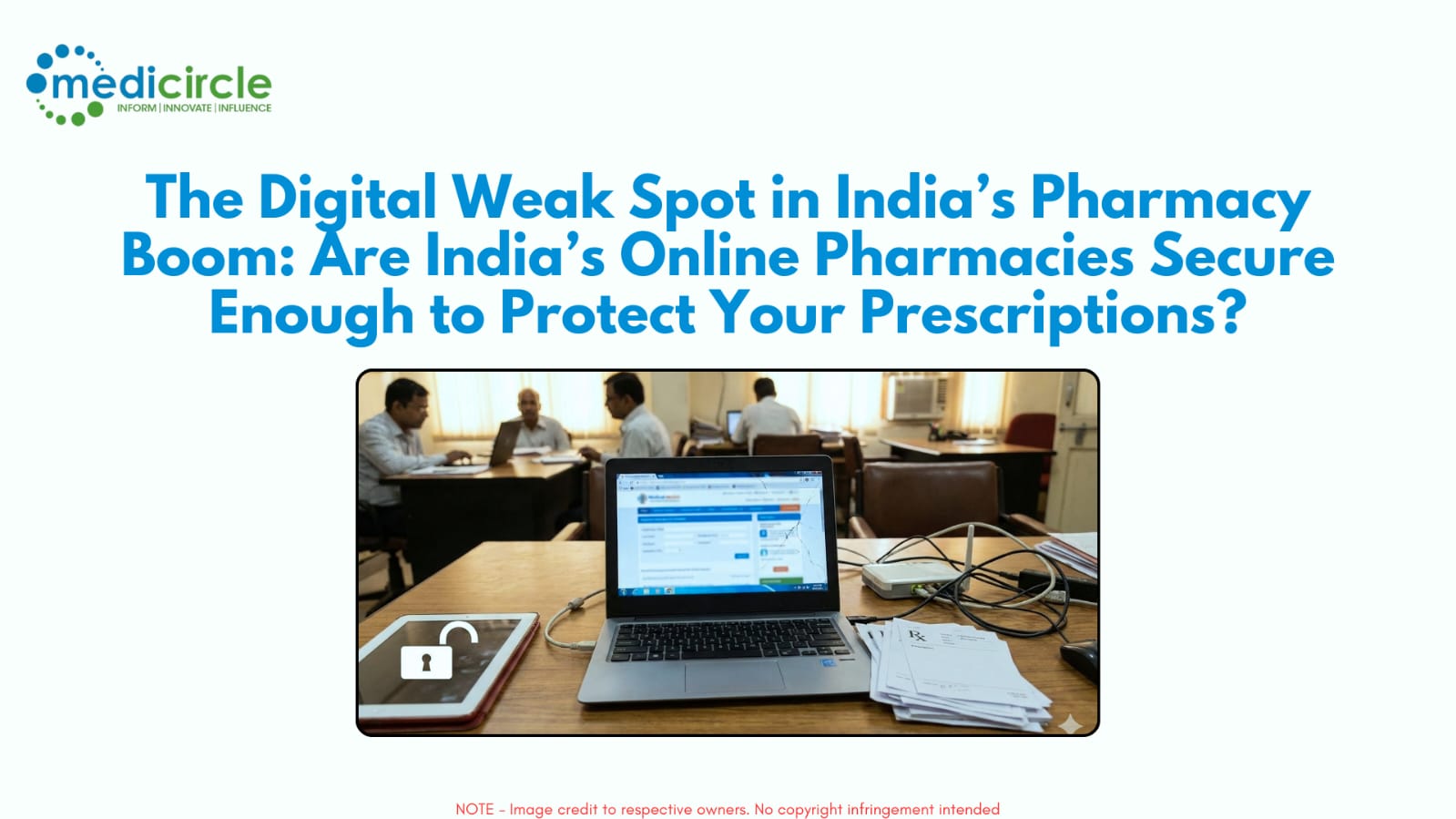
 A prescription is a symbol of trust between doctor and patient. In the digital era, that trust extends to the platforms that deliver the medicine.




In the age of digital healthcare, trust is fragile. We hand over more than money when we place an online pharmacy order. We share our names, our addresses, our phone numbers, and, often without thinking twice, the details of our medical needs. Every prescription uploaded, every medicine added to a cart, and every checkout completed leaves behind a digital trail that speaks volumes about our health conditions. When that trust is shaken, the consequences extend far beyond a technical glitch.
A recent cybersecurity incident involving DavaIndia Pharmacy, the retail arm of Zota Healthcare, has raised uncomfortable questions about data protection in India’s fast-growing online pharmacy ecosystem. As one of the country’s largest pharmacy chains, with more than 2,300 stores across multiple states and ambitious expansion plans underway, DavaIndia represents the new face of accessible, affordable medicines. But rapid growth can sometimes move faster than digital safeguards.
The vulnerability, uncovered by cybersecurity researcher Eaton Zveare, reportedly allowed unauthorized users to gain high-level administrative access to DavaIndia’s digital platform. This was not a minor flaw buried deep within the system. The issue centered around poorly secured administrative interfaces that could, under certain circumstances, permit the creation of powerful “super admin” accounts without proper authentication. In simple terms, someone from outside the organization could potentially grant themselves the keys to the entire digital pharmacy.
Such access is not trivial. Administrative control in an online pharmacy system can extend to viewing customer orders, altering medicine listings, modifying prices, generating promotional discounts, and even adjusting prescription requirements for specific drugs. These functions are designed for internal management. In the wrong hands, they represent a serious risk to patient safety and public trust.
According to the researcher’s findings, the vulnerable interfaces appeared to have been active since late 2024. During that period, access could have exposed close to 17,000 online orders across hundreds of stores. Each of those orders may have included personal identifiers such as names, contact details, delivery addresses, payment amounts, and the list of medicines purchased. When the business in question is a pharmacy, that data carries a unique sensitivity. It can reveal information about chronic illnesses, mental health treatment, reproductive health, or other private medical concerns.
Healthcare data breaches are unlike ordinary consumer data leaks. If a retail fashion platform is compromised, the damage may involve credit card details or purchase histories. When a pharmacy platform is exposed, the impact touches medical privacy. A list of medicines can act as a window into a person’s medical history. For many patients, the idea that such information might be accessed or misused is deeply distressing.
The vulnerability was reportedly disclosed to India’s national cyber emergency response team, CERT-In, in August 2025. The flaw was patched within weeks, though public acknowledgment came later. There has been no confirmed evidence that malicious actors exploited the issue before it was fixed. That detail offers some relief. However, in cybersecurity, the absence of proof is not always proof of absence.
India’s healthcare sector has undergone rapid digitization in recent years. Online pharmacies, telemedicine platforms, digital prescription services, and health-tech startups have flourished. Convenience and affordability drive adoption. Consumers appreciate home delivery of essential medicines, transparent pricing, and online discounts. Companies compete aggressively to expand into smaller towns and underserved regions. In this environment, cybersecurity must evolve at the same pace as retail ambition.
The DavaIndia case highlights a broader reality: healthcare platforms are attractive targets. Pharmacy databases contain personal and medical data that can be monetized, exploited for identity theft, or misused in targeted scams. Beyond financial fraud, there are public health implications. If administrative controls governing prescription-only medicines are altered, even briefly, it could enable unauthorized drug sales or incorrect dispensing practices.
Prescription governance is a critical component of pharmacy regulation. Many medicines require a valid prescription to prevent misuse, antibiotic resistance, or adverse reactions. Administrative systems determine whether an order can proceed without uploading a doctor’s prescription. A compromised backend could, in theory, alter those safeguards. Even if no such manipulation occurred in this case, the possibility underscores why digital controls must be airtight.
There is also the question of reputational harm. For a pharmacy chain that positions itself as a trusted healthcare partner, news of a cybersecurity lapse can erode consumer confidence. Patients may hesitate before entering their health details online. Trust, once shaken, is slow to rebuild. In healthcare, where relationships are built on discretion and reliability, digital credibility is inseparable from clinical credibility.
India is in the process of strengthening its data protection framework. The Digital Personal Data Protection Act aims to create clearer obligations for organizations handling personal data, including health information. Compliance requires companies to implement reasonable security safeguards, report significant breaches, and limit data collection to what is necessary. The pharmacy sector falls squarely within the scope of these responsibilities.
Consumers often assume that large brands automatically maintain robust cybersecurity practices. Size and scale, however, do not guarantee invulnerability. Patients should consider using strong passwords, enabling two-factor authentication where available, and monitoring transaction alerts. These steps do not replace institutional responsibility, but they add a layer of personal protection.
Secure coding practices, regular penetration testing, third-party audits, and prompt vulnerability patching are essential. Administrative interfaces require strict authentication protocols. Role-based access control should ensure that only authorized personnel can modify prescription rules or pricing structures. Logging and monitoring systems must detect unusual activity quickly. Cybersecurity cannot be an afterthought appended to expansion plans. It must be embedded into the architecture from day one.
The rapid growth of DavaIndia’s retail footprint reflects a larger trend in Indian pharmacy chains. Expansion into tier-two and tier-three cities increases access to affordable medicines, a vital public health objective. Yet scaling physical stores must be matched by scaling digital safeguards. A platform that connects thousands of outlets becomes a high-value digital asset. Its protection demands constant vigilance.
Healthcare data security is often discussed in abstract terms until a real-world example surfaces. When a breach or vulnerability is reported, it serves as a wake-up call. The pharmacy industry, in particular, sits at the intersection of commerce and care. It handles products that directly affect human health. Errors in pricing may cause financial inconvenience. Errors in prescription governance may carry clinical consequences.
Stigma is another dimension that deserves attention. Certain medical conditions remain sensitive topics in Indian society. Patients purchasing medications related to mental health, sexual health, HIV treatment, fertility, or chronic diseases may already navigate social barriers. The possibility that such purchases could be exposed heightens anxiety. Protecting pharmacy data is therefore about dignity as much as compliance.
It is important to acknowledge that vulnerabilities are not uncommon in complex digital systems. What distinguishes responsible organizations is how quickly they respond and how transparently they communicate. Timely reporting to authorities, rapid patching, and cooperation with cybersecurity experts demonstrate accountability. Silence or delay can amplify suspicion.
The involvement of an independent researcher in identifying the flaw reflects the value of ethical hacking and coordinated vulnerability disclosure. Cybersecurity researchers play a crucial role in testing digital defenses. Many global companies run formal bug bounty programs to encourage responsible reporting. The healthcare sector in India may benefit from adopting similar structured initiatives, inviting scrutiny before malicious actors exploit weaknesses.
As telehealth adoption increases and e-pharmacy services become routine, regulators may also need to revisit compliance audits. Regular security assessments, mandated reporting standards, and clear penalties for negligence can strengthen the ecosystem. Data privacy in healthcare is not a luxury. It is a fundamental component of patient rights.
At Medicircle, we have consistently highlighted the importance of digital health literacy. Understanding how health data is stored, shared, and protected empowers patients. Before uploading prescriptions, users can check whether a website uses secure connections, read privacy policies carefully, and verify the authenticity of pharmacy apps. These actions, though simple, foster awareness.
The DavaIndia incident should not discourage innovation in healthcare delivery. Online pharmacies expand access, reduce travel burdens, and offer competitive pricing. They play a valuable role in bridging gaps in India’s healthcare infrastructure. However, innovation without security creates fragility. The same digital tools that enhance convenience can magnify risk if mismanaged.
Cybersecurity in healthcare is an ongoing process, not a one-time fix. Systems must be tested against evolving threats. Employees require training to recognize phishing attempts and social engineering tactics. Backup systems must be prepared for potential ransomware attacks. Encryption should protect sensitive data at rest and in transit. Each layer adds resilience.
Patients deserve confidence that their prescription orders will remain confidential. They deserve assurance that prescription controls cannot be altered by unauthorized actors. They deserve transparency when vulnerabilities are discovered and resolved. These expectations are not unreasonable. They form the ethical backbone of digital health.
The story of DavaIndia’s security lapse is a reminder that healthcare data protection must evolve alongside retail expansion and technological adoption. The digital transformation of pharmacies holds promise. With that promise comes responsibility. The health of a nation rests on more than medicine availability. It rests on safeguarding the privacy and integrity of those who seek care.
As India’s healthcare sector continues to modernize, cybersecurity will define the credibility of digital platforms. Pharmacies, hospitals, telemedicine providers, and health-tech startups must treat data security as integral to patient care. A prescription is a symbol of trust between doctor and patient. In the digital era, that trust extends to the platforms that deliver the medicine.
When you click “place order” on a pharmacy website, you are entrusting more than a transaction. You are sharing a piece of your health story. The systems behind that click must be built with the same care and precision as the medicines they dispense. Only then can digital healthcare fulfill its promise without compromising the privacy and safety of the people it serves.






.jpeg)
.jpg)
.jpg)
.jpg)
.jpg)
.jpg)
.jpg)







.jpeg)

.jpeg)


.png)