 Thursday, October 08, 2026
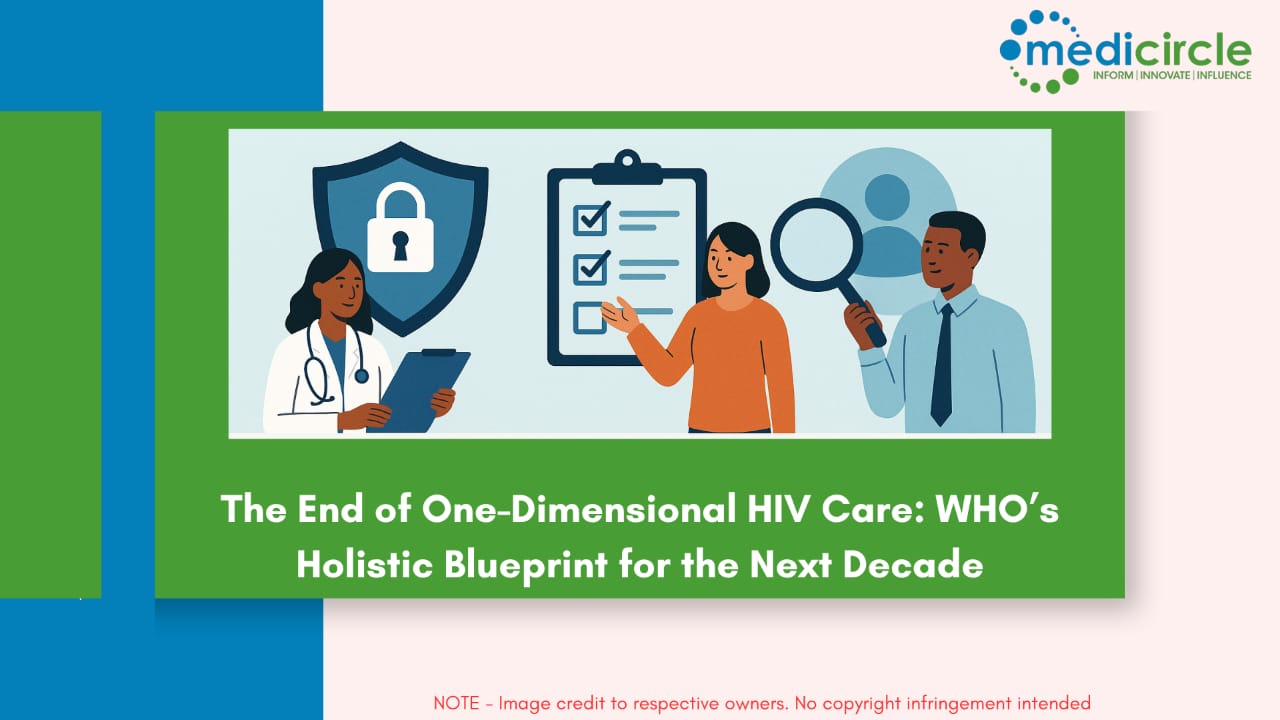
 The WHO’s updated guideline is a moral statement, urging healthcare systems to evolve beyond disease management into life enhancement.




The fight against HIV has come a long way from being a desperate race for survival to a global movement of resilience, medical innovation, and compassion. What once symbolized fear and stigma is now increasingly becoming a story of life management, empowerment, and holistic care. In its latest step toward transforming this narrative, the World Health Organization (WHO) has released new guidelines aimed at making HIV care more integrated, human-centric, and sustainable. This updated approach emphasizes not just the continuity of antiretroviral therapy (ART) but also the overall well-being of people living with HIV.
For decades, HIV services have revolved around a single focus which is ensuring patients take their medications regularly to suppress the virus. While ART has undeniably been a game-changer, the healthcare community is increasingly recognizing that long-term success depends on much more than pills and prescriptions. People living with HIV often face multiple co-existing health challenges, such as hypertension, diabetes, and mental health disorders, which can compromise both treatment adherence and quality of life. The WHO’s updated guideline embraces this broader reality, calling for the integration of chronic disease and mental health management into HIV care. It reflects a shift from a disease-centred to a person-centred philosophy where the patient is not defined by the virus but seen as an individual with diverse needs, aspirations, and challenges.
The new recommendations call for a strong integration of hypertension and diabetes management into HIV programs. According to WHO data, up to 25% of people living with HIV worldwide may have high blood pressure, and around 5% may suffer from diabetes, figures that mirror the general population but are often overlooked in HIV care settings. With ART improving longevity, individuals are living longer lives, but that longevity brings new challenges like aging, lifestyle-related conditions, and chronic comorbidities. By merging HIV care with routine checks for blood pressure and glucose levels, healthcare providers can identify risks early, ensure timely treatment, and prevent long-term complications. This approach eliminates the traditional silos that have long separated infectious disease management from chronic disease care and reflects the new era of integrated medicine.
Equally crucial is the emphasis on mental health i.e. a subject that has long remained in the shadows of HIV treatment. Studies show that nearly one-third of people living with HIV experience depression or anxiety, while alcohol use disorder is reported in at least one in five individuals. These conditions often go unaddressed, silently eroding adherence to treatment and diminishing quality of life. The WHO now strongly recommends embedding mental health screening and support within HIV services, making counseling and therapy as integral to care as ART refills. This step is deeply human in its intent and recognizes that health is not simply the absence of disease but the presence of emotional balance, dignity, and purpose.
Mental health challenges among people living with HIV are often rooted in stigma and social isolation. Despite progress, discrimination continues to persist in many communities, particularly in low and middle-income countries. This invisibility of suffering creates barriers to care and discourages individuals from seeking help. Integrating mental health support within HIV clinics offers a safe and non-judgmental space where individuals can express themselves freely and receive help without feeling alienated. It also ensures that the conversation around HIV evolves beyond survival to living well with emotional resilience, hope, and community belonging.
The WHO guideline also reaffirms the significance of adherence support interventions for ART. While adherence has always been the backbone of HIV management, the organization highlights the importance of personalized strategies that reflect real-world human behaviour. Counselling sessions, peer support, digital reminders, and tailored education are now being recognized as equally vital as medical prescriptions. These interventions are not about compliance but about connection and understanding the struggles of individuals who manage medication routines amidst poverty, stigma, and fatigue. When adherence support is empathetic and contextual, viral suppression rates improve dramatically, and patients feel more empowered to take charge of their health.
The philosophy behind these new recommendations is deeply rooted in the belief that healthcare should adapt to the lives of people, not the other way around. Over the years, many HIV programs have adopted a standardized, one-size-fits-all model. But human lives are diverse and dynamic. A young woman living with HIV may struggle with body image and depression; an older man may be dealing with hypertension and loneliness; a migrant worker might skip medication because of job insecurity. The person-centred approach advocated by WHO acknowledges these realities. It promotes flexibility, empathy, and continuity in care where every encounter between a healthcare worker and a patient becomes an opportunity to build trust and healing, not just to deliver medicine.
Dr. Tereza Kasaeva, Director of WHO’s Department for HIV, Tuberculosis, Hepatitis and Sexually Transmitted Infections, rightly described this update as a commitment to holistic, person-centred care that helps people living with HIV lead healthier, longer lives. Her words reflect a fundamental shift in global health thinking: that progress in HIV care can no longer be measured solely by viral load suppression but by the overall well-being and life satisfaction of those affected. This evolution in thought signals that the age of fragmented healthcare is coming to an end, giving way to a future where integration, compassion, and prevention work hand in hand.
The timing of these guidelines is significant. As of 2024, more than 39 million people globally are living with HIV, with millions on ART. While medical advancements have turned the infection from fatal to manageable, the burden of associated conditions has increased. People on long-term ART face risks of metabolic syndrome, cardiovascular disease, and mental burnout. These are integral to the story of modern HIV management. Ignoring them would mean winning the battle against the virus but losing the war for holistic health.
Integrating services can also improve healthcare efficiency, particularly in resource-limited settings. For instance, in sub-Saharan Africa and South Asia, where healthcare infrastructure is often overstretched, combining HIV, diabetes, and mental health services under one roof can save time, reduce costs, and increase patient retention. It helps in optimizing limited resources while ensuring that people living with HIV receive well-rounded care. Moreover, when communities see health centres addressing multiple issues instead of one, the stigma associated with HIV reduces, encouraging more people to come forward for testing and treatment.
The updated WHO guideline is also an invitation to policymakers and governments to strengthen the public health ecosystem. Integrating HIV care with other health services requires robust coordination between departments, adequate funding, and supportive policies. Countries like India, which have large numbers of people living with HIV and an increasing burden of diabetes and hypertension, stand to benefit immensely from this model. If implemented thoughtfully, it could transform primary healthcare systems into inclusive platforms that provide comprehensive, continuous care for all.
At its core, the guideline redefines what it means to “live well” with HIV. Living well means being able to manage one’s health without constant fear of relapse or rejection. It means having access to both medical and emotional support. It means being treated as a person, not a statistic. This shift towards whole-person care echoes a larger truth that medicine is not merely about treating organs; it is about restoring balance to the human experience.
As the world moves toward achieving the 95-95-95 targets, 95% of people with HIV diagnosed, 95% of those on treatment, and 95% of those achieving viral suppression such integrated care models will play a defining role. They bridge the gap between science and humanity, between survival and well-being. The WHO’s updated guideline is a moral statement, urging healthcare systems to evolve beyond disease management into life enhancement.
In a world where health challenges are increasingly complex, this integrated approach can serve as a blueprint for future care models beyond HIV. Chronic diseases, mental health issues, and infectious illnesses are all interconnected. The sooner healthcare systems embrace this reality, the closer humanity gets to achieving true universal health coverage where no one is left behind, and every individual has the right to holistic, compassionate care





.jpeg)








.jpg)
.jpg)
.jpg)
.jpg)
.jpg)
.jpg)


.jpg)
.jpg)
.jpg)