Tuesday, October 27, 2026
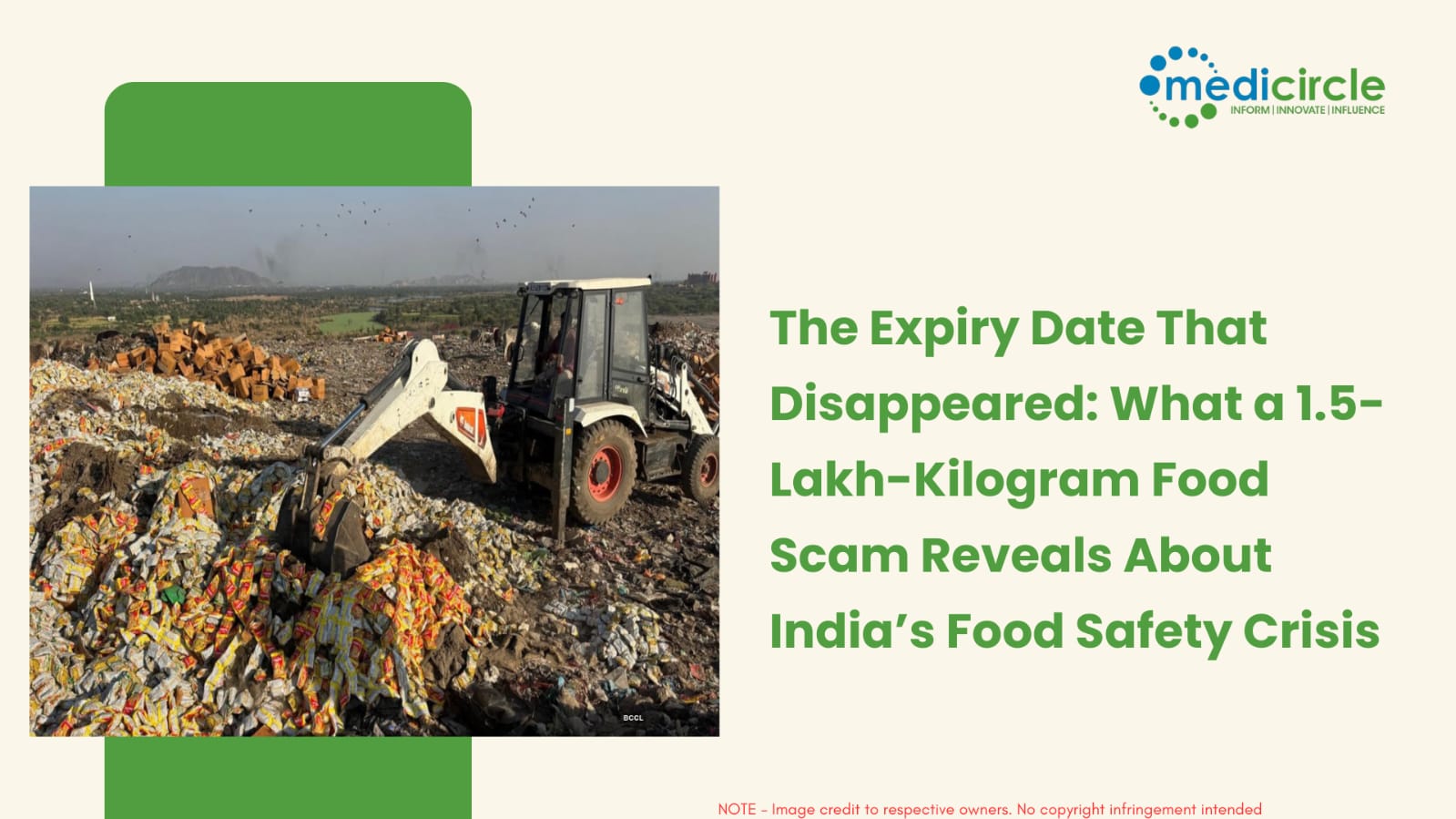
 A single erased expiry date may appear like a small detail on a piece of plastic packaging. But that tiny alteration has the power to turn a trusted food product into a hidden health risk.




One small detail printed in tiny font on the back of a food packet carries enormous meaning. The expiry date is meant to reassure the consumer that what they are about to eat has been produced, stored, and distributed within a safe time window. For millions of people buying packaged food every day, that printed date functions almost like a promise from the food suppliers which assures that the product is safe for our body. But what happens when that promise can be erased with a few drops of acetone and replaced with a freshly printed lie?
That unsettling question came sharply into focus in Jaipur recently, when authorities uncovered a disturbing operation involving nearly 1.5 lakh kilograms of expired packaged food products bearing the brand name of the dairy cooperative giant Amul. What appeared at first to be an ordinary warehouse inspection soon revealed an alleged attempt to chemically remove expiry dates from expired food products and print new ones so that the items could be reintroduced into the market as if they were fresh.
The discovery began with a simple complaint lodged through the Rajasthan government’s 181 public grievance helpline, a reminder that sometimes the first alarm about public health threats comes not from laboratories or surveillance systems but from observant citizens. Acting on the complaint, officials from the Chief Medical and Health Officer’s office conducted an inspection of a warehouse located in Jaipur’s Kho Nagoriyan area. What they found inside the premises was massive in scale.
Thousands of cartons filled with non-dairy packaged products were stacked across the warehouse. The items reportedly included everyday grocery staples such as noodles, ketchup, mayonnaise, and energy drinks that routinely enter Indian households and are often consumed by children and families without much second thought. Many of these goods were originally produced by the Kaira District Co‑operative Milk Producers Union in Gujarat and distributed through Advansys India Pvt. Ltd., part of the complex supply chain that moves packaged food across the country.
Investigators reported that around 12,000 cartons had already crossed their expiry date, meaning the products were officially no longer safe for sale or consumption. More troubling was what they found in another 3,000 cartons. In these boxes, officials suspected that the expiry dates had been deliberately erased using chemicals such as thinner and acetone. These substances, commonly used in paint or industrial cleaning, can dissolve printed ink from packaging surfaces. Once the original date disappears, a new one can easily be printed or stamped, giving the product an artificial extension of life.
If the plan had succeeded, thousands of consumers could have unknowingly purchased and consumed expired packaged food. According to investigators, authorities suspect that the warehouse operator intended to repackage the items into nearly 4,500 newly labelled cartons before sending them back into the market. In other words, the expired products were being prepared for a second life on store shelves.
The scale of the seized goods made disposal a logistical exercise of its own. Over four days, authorities transported 27 truckloads of expired food to a landfill site, where the material was destroyed to prevent it from re-entering circulation. Officials confirmed that the entire quantity had been declared unfit for human consumption, emphasising the potential health risks involved if such products were eaten.
Behind the operation was a distribution unit reportedly run under the name M/s Athlete Distributor, allegedly operated by an individual whose food licence had already expired. That detail adds another layer to the story because food safety regulation in India depends heavily on licensing systems that allow authorities to monitor businesses handling edible products. Once a licence lapses, the operation technically loses legal permission to store or distribute food. When such a facility continues operating without oversight, the chances of regulatory violations increase dramatically.
Perhaps the most surprising detail in the investigation was the claim made by the accused operator during questioning. According to officials, he allegedly admitted learning how to erase and alter expiry dates through YouTube videos. The internet, which has democratized access to knowledge and skills, has also inadvertently made it easier for individuals to learn methods that can be misused in commercial fraud. What may appear online as a simple packaging hack or industrial technique can quickly turn into a public health hazard when applied to food distribution.
Modern food systems rely heavily on trust. Consumers trust manufacturers to produce safe products, distributors to maintain proper storage conditions, retailers to sell goods within safe timelines, and regulators to monitor compliance. When even one link in that chain breaks, the consequences ripple across the entire system.
Expiry dates themselves are not arbitrary numbers printed by manufacturers. They are based on extensive shelf-life studies that determine how long a food product can remain safe under recommended storage conditions. Factors such as microbial growth, chemical degradation, moisture content, and packaging stability all influence how long food can be safely consumed. Once that timeline passes, the risk of contamination or nutritional deterioration rises significantly.
The idea of expired food entering the market carries serious implications. Consuming expired processed food may lead to food poisoning, gastrointestinal infections, and exposure to harmful microorganisms. Some packaged products contain preservatives that slow down spoilage, but that does not mean they remain safe indefinitely. Bacterial contamination, fungal growth, or chemical breakdown can occur after the expiry period, particularly if storage conditions are poor.
Certain food items, especially sauces and ready-to-eat products, may also undergo subtle chemical changes over time that are not immediately visible. While a packet may appear normal to the naked eye, the internal composition may have already changed. For vulnerable populations such as children, elderly individuals, or people with weakened immune systems, even mild contamination can trigger serious illness.
Food safety experts often emphasise that expiry dates serve as a public health tool rather than merely a marketing detail. When those dates are tampered with, the entire protective mechanism collapses.
India’s Food Safety and Standards Authority of India has established strict guidelines for food labelling and shelf-life declarations. Under the Food Safety and Standards Act, altering expiry dates or mislabelling food products can lead to heavy penalties, including fines and imprisonment. However, enforcement remains a persistent challenge, particularly in large distribution networks where products move through multiple intermediaries before reaching consumers.
The Jaipur incident highlights another reality of India’s fast-growing packaged food industry: the rise of secondary markets for near-expiry products. Distributors sometimes sell goods approaching their expiry date at discounted prices to smaller traders. In legitimate situations, these products must still be sold within their valid shelf life. But when unethical operators enter the chain, the temptation to manipulate packaging can become a profitable shortcut.
Such practices thrive in environments where monitoring is inconsistent and consumers rarely verify packaging details closely. Many shoppers glance at the brand name or price but overlook the small printed date indicating when the product should no longer be consumed. Retail shelves in crowded markets may carry thousands of items, making thorough inspection difficult.
This is why food safety enforcement relies heavily on surprise inspections, consumer complaints, and whistleblower information. In this case, neighbours reportedly noticed unusual activity at the warehouse including workers arriving early, the gate remaining closed throughout the day, and limited visible movement of goods. These small observations eventually triggered the investigation.
For public health authorities, such vigilance from the community can be invaluable. Many large-scale food safety violations are uncovered not through routine checks but through tips from people who observe irregular patterns.
The discovery of chemical solvents inside the warehouse further strengthened investigators suspicion that expiry dates were being deliberately altered. Equipment, packaging materials, and machinery found at the site have since been seized, and the premises have been sealed pending further legal proceedings.
The case now moves towards prosecution under food safety laws, while investigators attempt to determine whether any of the tampered goods had already reached retail markets before the raid. Samples collected from the seized products are undergoing laboratory analysis to confirm the extent of contamination or degradation.
For the average consumer, the story may appear like an isolated case of fraud. But for doctors, nutritionists, and public health professionals, it represents something more systemic. Food safety is an invisible layer of healthcare that often goes unnoticed until something goes wrong. Every meal people eat carries an implicit assumption that it will nourish rather than harm.
When expired food enters the market, the consequences can be unpredictable. Outbreaks of foodborne illness can strain hospitals, disrupt communities, and erode trust in the food system. Even isolated incidents can damage the reputation of trusted brands and create anxiety among consumers.
The Jaipur seizure also illustrates how modern food safety challenges extend beyond factories. Manufacturers may follow rigorous quality standards at production sites, but once products enter complex distribution networks, oversight becomes more difficult. Warehouses, transporters, wholesalers, and retailers all become part of the safety chain.
In many ways, the small expiry date printed on a food packet symbolises the intersection of science, regulation, and ethics. It reflects laboratory research, regulatory guidelines, and the manufacturer’s commitment to consumer safety. Altering that date is not merely a technical violation, it is a breach of trust with potentially serious health consequences.
As India’s packaged food market continues to expand rapidly, the need for stronger monitoring systems becomes increasingly clear. Technologies such as digital traceability, QR code-based product tracking, and tamper-proof packaging could offer new tools to detect manipulation. At the same time, public awareness about checking expiry dates and reporting suspicious products remains equally important.
The Jaipur case reminds us that food safety is not just about hygiene inside kitchens or factories. It is about safeguarding the integrity of the entire supply chain from production to the moment a consumer opens a packet at home.
A single erased expiry date may appear like a small detail on a piece of plastic packaging. But that tiny alteration has the power to turn a trusted food product into a hidden health risk. In the dark corners of warehouses and distribution networks, where such manipulations may occur, the stakes extend far beyond business profits. They reach into the everyday lives and health of millions of people who assume that what they eat has been honestly labelled and responsibly handled.
In a nation where food safety and public health are closely intertwined, the disappearance of an expiry date is a reminder that vigilance must remain constant in a rapidly expanding food economy.
Source: ndtv.com





-23-300x250.png)

.jpeg)






.jpg)
.jpg)
.jpg)
.jpg)
.jpg)
.jpg)
.jpg)
.jpg)
.jpg)