The Ghost of Japanese Encephalitis Haunts Again: Why India Cannot Ignore the Signs

▴ Ghost of Japanese Encephalitis
That child’s life may now stand as privacy’s first wave prompting renewed defenses across hospitals, labs, and field units.

Hello! If you're looking for high-quality genericmedications, fast delivery and excellent customer service, ourstore is the right choice for you. With over 20 years of onlineexperience, we guarantee safe, effective products that are alwaysin stock. Delivery within 48 hours, free shipping from $200, and 100% money-back guarantee if your order doesn't arrive on time.

👉 Order now at BestCheapPills and discover exclusive discounts for registeredcustomers!
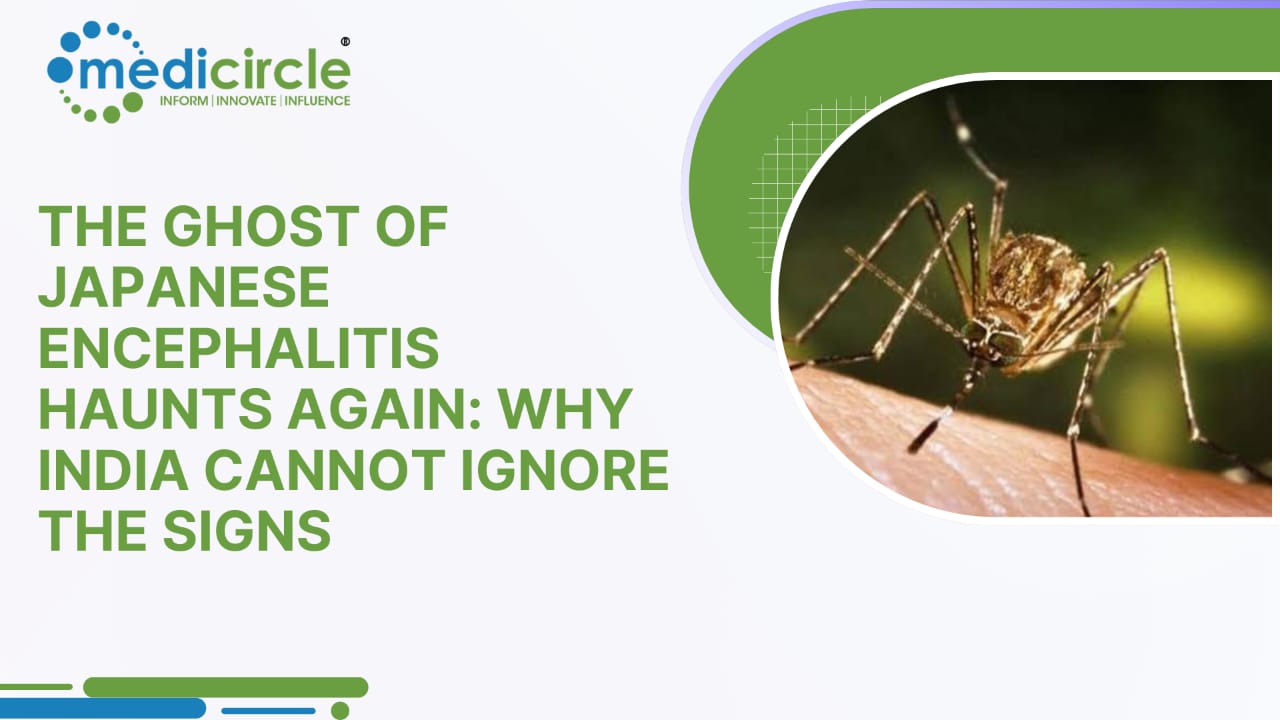
Five quiet years can seem like a lifetime in public health. Years without a single case of Japanese encephalitis (JE) cast Madhya Pradesh into a calm that felt entirely earned. But on August 10, that quiet shattered. A six-year-old boy from a remote Bahera village in Dindori awoke with fever, seizures, and confusion that spiraled into tragedy. He arrived at Netaji Subhash Chandra Bose Medical College not long after, where a preliminary lab result suggested JE. The confirmation remained elusive, for by the time a second sample could be processed, the child had passed away. That’s how a silence became a siren.

The state had not recorded even a suspected JE case in half a decade, and then, in a single moment, the threat returned. It was a reminder that viruses rest, but they rarely vanish. In the child’s final hours, the buzz of mosquito-born diseases returned to central India's worry list. Health officials, caught off guard and issued a tacit warning.

JE, most often marked by fever, headache, and brain inflammation, can be lethal and leave survivors with devastating after-effects. Though it's largely preventable with vaccines and vector control, death still follows delayed diagnosis. Scientists estimate that for every child diagnosed, more walk unknowingly at the edge. The state’s Director of Health, Dr. Ramesh Marawi, confirmed only a “presumed” positive result because without the second test, JE cannot be verified. It remains an unwelcome, posthumous hypothesis.

This kind of ambiguity is more than a procedural hiccup, it is the shadow side of medical uncertainty. Families face not just grief, but also cold doubt. Doctors worry about launching mass screening operations without confirmation. But the logical pivot arrived quickly: whether or not JE is confirmed, the protocols exist for a reason. Dr. Marawi announced that the state will proceed with surveillance and possible vaccination drives to prevent further cases. The line between prevention and admission is often a faint one.

Madhya Pradesh's JE history is a patchwork: recorded clusters over previous years, eight deaths since 2019, and sudden outbreaks in distant reaches like Mandla, Seoni and Balaghat. But the lull in confirmed cases bred a false quiet, a false sense of control. The broader region i.e. India’s Gangetic belt has long been known for seasonal flare-ups coinciding with monsoons and post-monsoons when mosquito populations peak. JE, after all, is part of India’s monsoon story as much as heavy rain.

And the numbers offer subtle warning. A retrospective analysis from 2016 to 2020 revealed 81 lab - confirmed JE cases in the state, with ten deaths suggesting both persistence and lethal potential.

This sudden resurfacing highlights how fast vigilance must respond. In northern India, Uttar Pradesh has weakened JE positivity over the past five years, thanks largely to expanded immunization. Yet Maharashtra, Bihar, Assam, and West Bengal continue to report cases every monsoon cycle. When Madhya Pradesh seemed off the map, the other states carried the virus’s persistence.

Now the urgency falls upon Madhya Pradesh’s health system: reinforce surveillance, test returning or symptomatic children, stock vaccines, train frontline clinicians to recognize early symptoms of acute encephalitis syndrome (AES), and re-energize vector-control teams. Without such preparation, even a single case may spiral into a community crisis and children pay the price.

The bigger lesson here brings us back to human frailty and institutional memory. Disease doesn’t operate only in proximities; it operates in gaps around remoteness, poor sanitation, lagging infrastructure and lapsed immunization. JE committees must remember that disease ecology can shift within years. No province is ever completely “clean,” only at rest.

That single twilight of hope and tragedy in Dindori is the sound of precaution. That child’s life may now stand as privacy’s first wave prompting renewed defenses across hospitals, labs, and field units. JE threatened once more, not just with possibility, but with prophecy.

The test is not just medical; it is collective. Will the state now strengthen rural health networks? Will health workers be equipped with rapid testing kits and isolation protocols? Will districts map out vulnerable villages and raise awareness through schools and anganwadis? JE survival today means preparedness tomorrow.

In the end, this case is more than news. It is an appeal: an infectious whisper turned into an institutional alarm. In the absence of confirmation, the health system must treat potential as real not as if suspect, but as if imminent. Because when viral shadows return, they're followed by consequences.

Tags : #JapaneseEncephalitis #EncephalitisAwareness #VectorBorneDiseases #PublicHealthAlert #MonsoonDiseases #DiseaseSurveillance #MadhyaPradeshHealth #CentralIndiaHealth #RuralHealthcare #IndiaHealthCrisis #HealthInMonsoon #HealthForAll #ProtectOurChildren #HealthEquity #StrongerTogether #PublicHealth #smitakumar #medicircle

Related Stories

Loading Please wait...

-Advertisements-


Trending Now

Cholesterol Explained: Good vs Bad Cholesterol and What It Means for Your HeartJuly 11, 2026
Role of Technology in Hospitals: How Indian Healthcare is Being ReshapedJuly 11, 2026
175 years after ancestors left UP, Indo-Trinidadian infant receives rare liver transplant at Apollo DelhiJuly 10, 2026
Fortis Escorts Faridabad Strengthens Advanced Care Ecosystem with Launch of: Fortis Cancer Institute Institute of Neurosciences Centre of Excellence in Critical Care and ECMOJuly 10, 2026
India’s first focused health AI Conclave unites doctors and AI expertsJuly 10, 2026
University of Leeds Opens Applications for MSc Biotechnology with Business Enterprise for Indian StudentsJuly 10, 2026
How Doctors Are Changing the Face of Indian HealthcareJuly 10, 2026
Medical Innovations to Watch in 2026: How Technology Is Reshaping Healthcare in IndiaJuly 10, 2026
Government of India Notifies Polymatech Electronics’ Semiconductor and Electronic Components SEZ at Nava Raipur, ChhattisgarhJuly 09, 2026
Iswarya Fertility Center Raises Over INR 350 Crore from OrbiMed AsiaJuly 09, 2026
Happiest Health Announces Launch of Speciality Clinics Happiest Paediatrics, Happiest Orthopaedics, Happiest Gynaecology, Happiest Endocrinology & Your Personal PhysicianJuly 09, 2026
Cetaphil launches new AM/PM Antioxidant Serum Duo in India July 09, 2026
THIP Partners with ISSRF to Launch Digital Patient Education Programme for EndometriosisJuly 09, 2026
Blood Tests Everyone Should Understand: A Complete Guide for Indian AdultsJuly 09, 2026
CT Scan vs MRI: Understanding the Difference and Choosing the Right Diagnostic Imaging TestJuly 09, 2026
Robotic Surgery in Modern Urology and Gynecology: Precision, Recovery, and SafetyJuly 08, 2026
Apollo Hospitals Gives Filipino Twin Brothers a New Lease of Life Through Rare Twin Liver TransplantsJuly 08, 2026
Fibroheal Raises ₹14 Crore to Fuel Next Phase of Growth and Entry in Developed MarketsJuly 08, 2026
Veda Rehabilitation & Wellness Opens Himalayan Mental Health Recovery Retreat in Sikkim for Addiction Recovery and Mental WellbeingJuly 08, 2026